


Yes, applying body oil after a shower works, and timing is the whole point: apply it to damp skin within a few minutes of stepping out, before you towel off completely. The oil does not add hydration; it seals the water your skin just absorbed. The American Academy of Dermatology and DermNet both back this approach, though people with severe eczema or cracked skin often need a cream or ointment instead.
TL;DR:
- Applying body oil within two to three minutes after showering ensures it seals in remaining dampness effectively.
- Lighter oils like jojoba and squalane absorb quickly and are best suited for normal or oily skin, while drier skin benefits from mid-weight or heavier options.
- Severe dry skin, cracking, or eczema require creams or ointments first, with oil used as a secondary seal to prevent natural water loss.
- Pat your skin until damp, then layer in small amounts of oil with gentle pressing, waiting a minute before dressing to prevent transfer and ensure absorption.
- The focus should be on timing and texture choice; proper application consistently yields better results than expensive formulas.
Table of Contents
- Benefits of Body Oil After Shower Timing
- How Do You Apply Body Oil After Showering?
- Which Body Oils Work Best for Your Skin Type?
- When Should You Layer Cream Under Body Oil?
- When Is Body Oil Not Enough for Dry Skin?
- How Crisanbeauty Formulates Body Oils for Damp Skin
- Our Take: Skip the Hype, Nail the Timing
- Bring This Routine Into Your Bathroom
- Sources
- FAQ
Benefits of Body Oil After Shower Timing
Skin that’s still damp from the shower holds water in its outer layer. Oil applied at that moment traps the water before it evaporates, which is the mechanism dermatologists point to when they recommend moisturizing right after bathing. Wait too long, and the water is already gone. You’re oiling dry skin instead of sealing damp skin, and the result feels heavier without doing more good.
The areas that respond best are the ones that dry out fastest: elbows, knees, heels, and shins. These spots have fewer oil glands and thinner skin, so they lose water quickly and show flakiness first. A few drops of the right oil after every shower keeps that rough, ashy texture from building up.
Body oil after shower use also delivers a cosmetic payoff that creams don’t always match:
- Smoother texture within days, especially on legs and arms
- A visible glow from light reflecting off a thin oil layer
- Softer feel on rough patches without a heavy, tacky finish
One limitation worth stating plainly: oil is an emollient, not a treatment. For genuinely severe dry skin, DermNet notes that creams and ointments provide stronger occlusion than oils alone.
How Do You Apply Body Oil After Showering?
Getting the timing and amount right matters more than which oil you buy. Follow this sequence every time you shower.
- Turn off the water and pat, don’t rub. Use your towel to blot skin until it’s damp, not soaking or bone dry. A few beads of water left on the skin is exactly what you want.
- Apply within two to three minutes. This is the window where remaining water is still sitting in the epidermis, waiting to be sealed in rather than evaporated into the air.
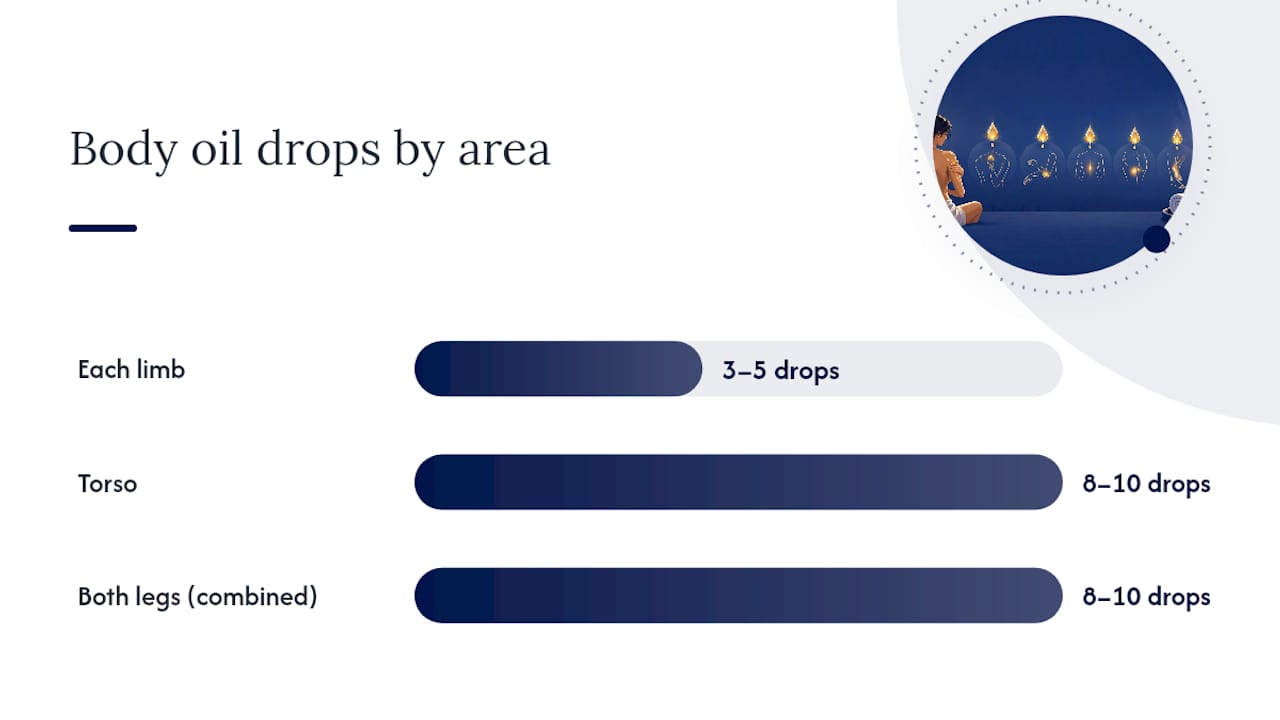
- Warm 3 to 5 drops in your palms for each limb, and closer to 8 to 10 drops for the torso or both legs combined. Rub your palms together first so the oil spreads thin instead of pooling.
- Press and smooth, don’t massage aggressively. Light pressure over rough areas like knees and elbows helps absorption without irritating the skin.
- Layer in the right order. If you use a serum or water-based cream, apply that first, then follow with oil to lock everything in. Oil always goes last.
- Wait about a minute before dressing so the oil has time to settle instead of transferring onto fabric.
Pro Tip: If you towel off too aggressively, you strip the very water you’re trying to trap. Pat until just damp, then move fast. Speed matters more than product choice here.
A few cautions belong in this routine too. Patch-test any new oil on your inner forearm before using it body-wide, skip fragranced essential oil blends if your skin reacts easily, and if you use straight oil in the tub itself rather than after you towel off, know that bath oils make porcelain and tile genuinely slippery. Wipe the tub down after.
Which Body Oils Work Best for Your Skin Type?
Not every oil behaves the same way on skin, and picking the wrong texture is the most common reason people give up on oiling altogether. The right choice depends on how oily or dry your skin already runs.
- Light, fast-absorbing oils like squalane and jojoba mimic skin’s own lipids and sink in within a minute. Testing roundups consistently point to these as go-to choices for normal or oil-prone skin because they leave almost no residue.
- Mid-weight oils like grapeseed, avocado, and sweet almond sit a step heavier and suit drier or more mature skin that needs a bit more richness without full occlusion.
- Heavier occlusives such as olive oil, coconut oil, plant butters, or petrolatum are worth reaching for on cracked heels or very dry patches, but they’re often too thick for daily full-body use.
- Watch for irritants. Added fragrance and essential oils are the most common triggers on reactive or eczema-prone skin, and some heavier oils are comedogenic enough to clog pores if used on the chest or back where breakouts happen.
A travel-size facial oil is a useful way to test how a lighter texture feels on your skin before committing to a full-size body bottle.
When Should You Layer Cream Under Body Oil?
Oil alone works fine for mild dryness or a quick post-shower routine focused on glow and smoothness. But for skin that’s genuinely tight, flaky, or eczema-prone, oil by itself often isn’t enough.
- Cream first, oil second is the stronger combination for very dry skin: the cream’s water content hydrates, and the oil on top slows evaporation even further.
- Oil alone is enough when your goal is a fast routine, a cosmetic finish, or your skin is only mildly dry to begin with.
- Give it a minute between layers so each product has time to settle before the next goes on, and before you dress.
Readers managing flare-ups may find more specific guidance in this breakdown of body oil vs. lotion and this eczema-focused oil routine.
When Is Body Oil Not Enough for Dry Skin?
Oils qualify as emollients, and DermNet’s clinical guidance is clear that creams and ointments typically provide stronger occlusion for skin that’s severely dry or scaly. Oil is a maintenance tool, not a fix for a skin condition that’s actively flaring.
Skin that is painful, cracked, bleeding, or intensely itchy has moved past what any over-the-counter oil or cream can manage on its own, and the AAD advises seeing a dermatologist rather than continuing to self-treat.
A short safety checklist before you make any oil part of your routine: patch-test on your forearm first, skip fragranced oils on skin that’s already irritated or broken, and towel the tub floor dry after using bath oils since the residue makes surfaces slippery for the next person too.
How Crisanbeauty Formulates Body Oils for Damp Skin
Some body oils are built around a simple test: do they seal damp skin without sitting heavy or leaving a film on clothes? Some formulas draw on a blend of botanical ingredients rooted in Ayurvedic tradition. Fragrance-free options often exist for people managing reactive or sensitive skin, and a number of such products may be manufactured in the USA.
The texture question matters more than most product pages admit. A body oil that’s too thick fights the whole point of a fast post-shower routine, so lighter, fast-absorbing textures get priority in how these formulas are built. That focus on how an oil actually feels on damp skin, not just what’s listed on the label, shapes every product in the collection.
Our Take: Skip the Hype, Nail the Timing
Most of the advice around body oil focuses on which bottle to buy, and that’s backwards. The research is consistent on a simpler point: an oil’s ingredient list matters far less than whether you apply it while your skin is still damp. A $12 jojoba oil used correctly outperforms a $60 luxury blend applied to bone-dry skin every time.
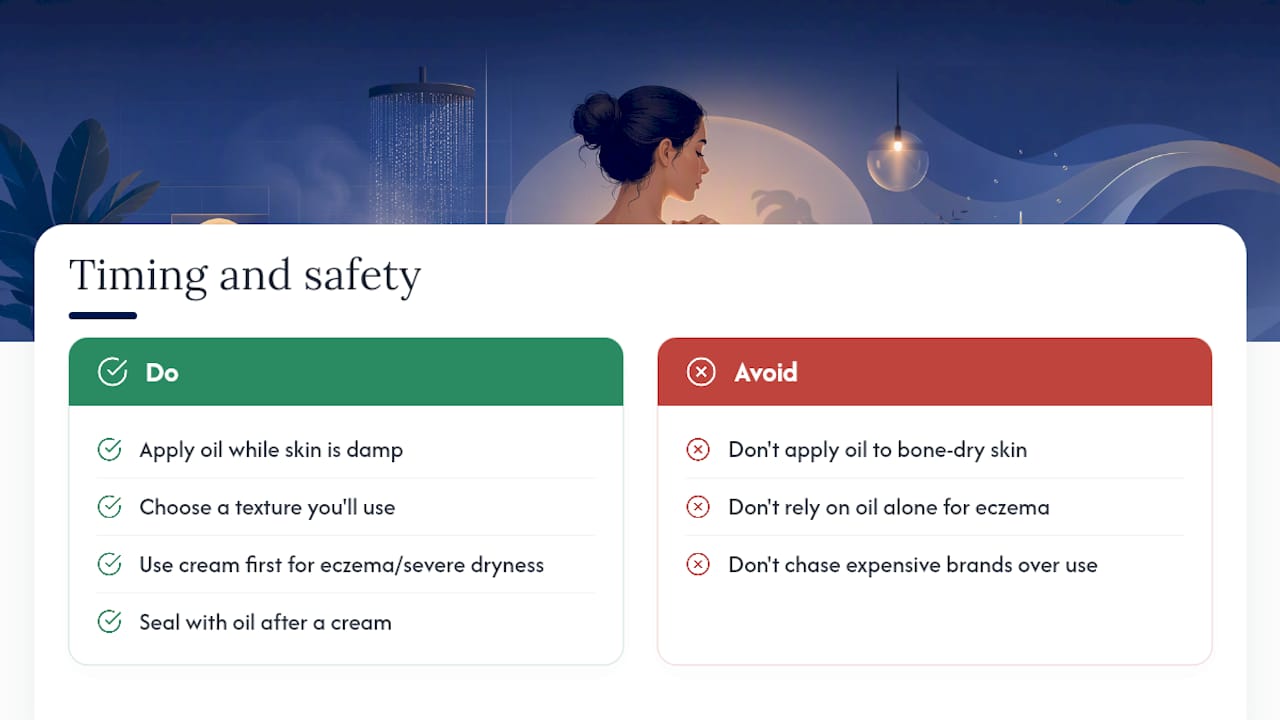
Where conventional advice falls short is safety nuance. Most articles tell you to “moisturize after showering” without mentioning that severe dryness, cracked skin, or eczema flares need a cream or ointment first, with oil as a secondary seal, not a replacement. That distinction gets lost in most quick-tip roundups.
If you take one thing from this routine, make it timing. Buy a texture you actually enjoy using, because the oil you’ll apply consistently for months beats the “perfect” oil that sits in a cabinet after week two.
— CRISAN
Bring This Routine Into Your Bathroom
Crisanbeauty’s oils are built around the exact routine this article describes: lightweight, fast-absorbing textures with fragrance-free options, formulated to seal damp skin without leaving a greasy film on your towels or sheets.

The full CRISAN Oils collection lists ingredients and fragrance-free labeling on every product page, so you can match a texture to your skin type before you buy. If you’re managing thinning hair alongside dry skin, the 3-piece hair and skin bundle covers both at once and saves 15% over buying separately. Once your order arrives, keep the bottle by the shower, not in a cabinet. The oil that’s easiest to reach is the one you’ll actually use on damp skin every time.
Sources
- How to pick the right moisturizer for your skin
- Emollients and Moisturisers (Moisturisers) — DermNet
- 9 Best Body Oils in 2026, According to Experts
FAQ
Should I use body oil after a shower?
Yes, for most people applying oil to damp skin within a few minutes of showering is an effective way to lock in hydration, according to AAD guidance. If you have severe dryness, cracked skin, or an active eczema flare, use a cream or ointment first, or check with a dermatologist.
What is the best body oil to use after showering?
Light, fast-absorbing oils like jojoba and squalane work well for most skin types because they mimic natural skin lipids and leave minimal residue. Drier or more mature skin often does better with a mid-weight oil like avocado or sweet almond, while very dry patches may need a heavier option like coconut oil or a plant butter.
What body oil should I apply after showering?
Choose based on your skin’s needs rather than trends: lightweight oils for normal or oil-prone skin, richer oils for dryness, and always a fragrance-free option if your skin reacts easily. Crisanbeauty’s oil collection lists ingredients and fragrance-free labeling on each product page to help you match a formula to your skin type.
What oil is good for after a shower?
Any oil that absorbs without leaving a heavy film works well when applied to damp skin, which is the part that actually matters most. Testing roundups consistently favor squalane and jojoba for daily use because they sink in fast and suit most skin types.


