



FINE-HAIR ROUTINE
Strengthening care without the greasy finish
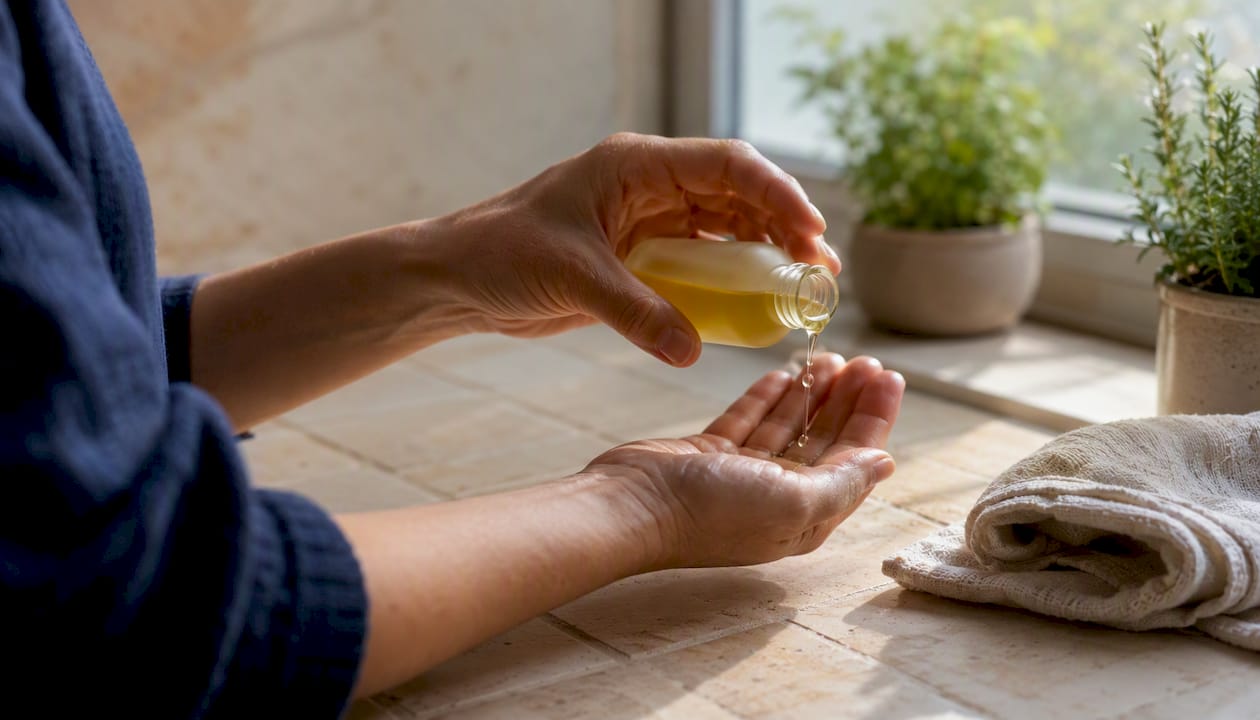
Fine hair can benefit from oil when placement and dosage are controlled. Use CRISAN as a pre-wash treatment or apply the smallest amount only to dry, fragile ends.
- Start with less and keep daily applications off the roots
- Pre-wash use makes rinsing excess oil easier
- The 16 oz size supports a long-term, consistent routine
Full-size 16 oz bottle · Ayurvedic-inspired botanical formula · Made in the USA
Questions about this routine
Can fine hair use CRISAN Hair Oil?
Yes. Begin with a small amount, concentrate on the lengths and ends, and use it before shampooing if your hair becomes weighed down easily.
Why does hair oil make fine hair look greasy?
The most common causes are using too much, applying too close to the roots, or adding oil when the hair already has product buildup.
How often should fine hair be oiled?
Start with one pre-shampoo treatment per week and adjust according to how your hair responds. The correct schedule is the one that leaves hair soft without heaviness.
Build consistency into your hair-oiling routine
The CRISAN 16 oz bottle is made for repeat treatments—not a one-time fix.
See the 16 oz CRISAN OilThe best hair oil for fine hair is a lightweight, silicone-free, plant-based formula, applied sparingly to mid-lengths and ends only. CRISAN Ayurvedic Hair Oil is the practical pick here: its Ayurvedic botanical blend sits light on strands, adds visible shine, and supports fuller-looking hair without the greasy weight that flattens fine hair. Start with a small amount, warm it between your palms, and smooth from mid-shaft to ends. That’s it. Hairstylists consistently confirm that fine-haired people can and should use oils — the key is choosing a fast-absorbing formula and keeping it off the scalp.
Table of Contents
- Which hair oil types actually work for fine hair?
- How do you apply hair oil to fine or thin hair?
- How do you choose the right oil for your fine-hair concern?
- What should you avoid putting on fine or thin hair?
- How long before you see results from hair oil?
- How does hair oil fit into a full fine-hair care routine?
- Common mistakes that go beyond using too much oil
- Why CRISAN Ayurvedic Hair Oil is the recommended pick for fine or thinning hair
- Key Takeaways
- Why fine and thinning hair is personal to us at CRISAN
- CRISAN Ayurvedic Hair Oil: where to start
Which hair oil types actually work for fine hair?
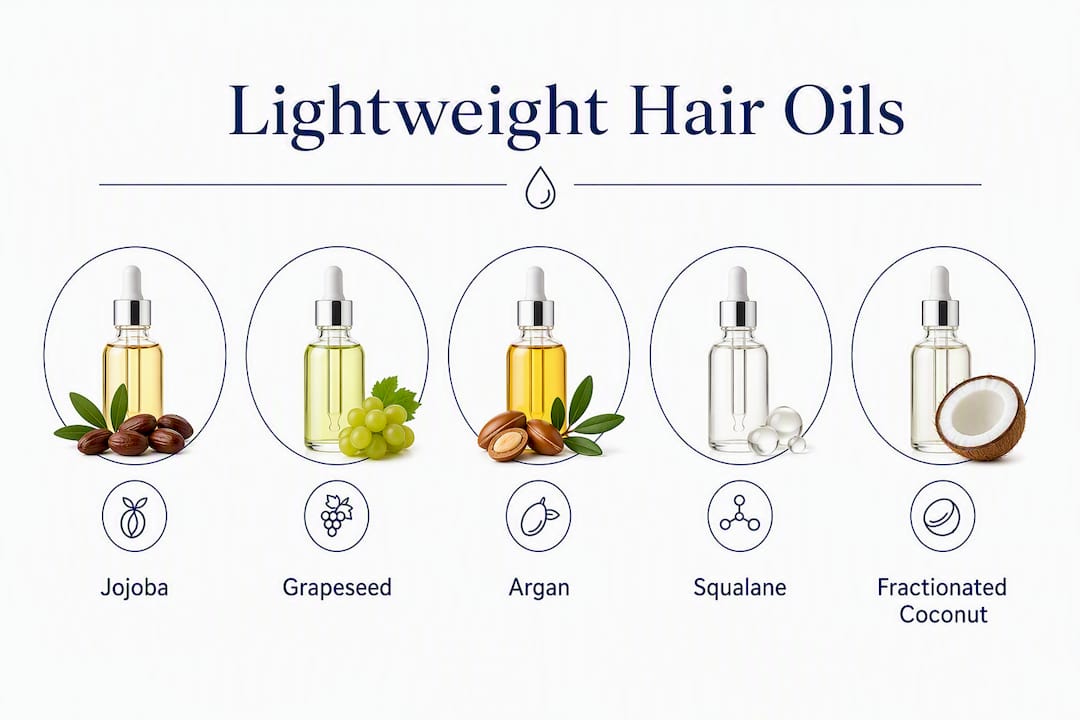
Not all oils behave the same on fine strands. The difference between hair that looks glossy and hair that looks greasy usually comes down to molecular weight and absorption speed. Here’s how the main lightweight oil types stack up.
Jojoba oil
Technically a liquid wax, jojoba closely mimics the scalp’s natural sebum. It absorbs quickly, adds a soft sheen, and rarely causes buildup. Best for: everyday shine and scalp-sensitive users who want a single-ingredient option.
Grapeseed oil
One of the lightest true oils available. Grapeseed has a thin, almost watery texture that disappears into strands fast. It’s low on the comedogenicity scale, which matters if you occasionally get oil near the hairline. Best for: heat protection on damp hair before styling.
Argan oil
Slightly heavier than grapeseed but still considered lightweight in the oil world. Argan is rich in oleic and linoleic acids, which help smooth the cuticle and reduce frizz. A little goes a long way. Best for: frizz control and shine on dry hair as a finishing touch.
Squalane
Derived from sugarcane or olives, squalane is a saturated hydrocarbon that feels almost weightless on hair. It doesn’t oxidize, has no scent, and layers well under styling products. Best for: color-treated fine hair or anyone sensitive to fragrance.
Fractionated coconut oil (MCT)
Regular coconut oil is too heavy for fine hair. Fractionated coconut, also called MCT oil, has had the long-chain fatty acids removed, leaving a clear, thin liquid that stays liquid at room temperature. Best for: pre-wash treatments and overnight conditioning without residue.
Dry-touch blends and lightweight esters
These are formulated products rather than single-ingredient oils. They combine light carrier oils with synthetic or plant-derived esters to create a “dry” finish — slip without surface greasiness. Modern dry-touch and silicone-free blends offer the protective benefits of classical oils with far less surface weight, making them a strong fit for fine hair when used sparingly.
| Oil Type | Weight | Absorption Speed | Best-Use Timing |
|---|---|---|---|
| Jojoba | Light | Fast | Damp or dry |
| Grapeseed | Very light | Very fast | Damp (pre-heat) |
| Argan | Light–medium | Moderate | Dry (finishing) |
| Squalane | Very light | Fast | Damp or dry |
| Fractionated coconut | Light | Moderate | Pre-wash treatment |
| Dry-touch blends | Very light | Fast | Damp or dry |
How do you apply hair oil to fine or thin hair?
Application is where most people go wrong, not product selection. Fine hair is structurally delicate, and applying oil only to mid-lengths and ends protects strands without flattening roots. Follow this routine.
For damp hair (pre-styling):
- Towel-dry hair until it’s damp, not dripping.
- Dispense a small amount into your palm. That’s genuinely enough for most fine hair lengths.
- Rub palms together to warm the oil slightly.
- Smooth from mid-shaft to ends, avoiding the area near the scalp.
- Comb through with a wide-tooth comb to distribute evenly.
- Style as usual. The oil acts as a lightweight heat protectant and frizz shield.
For dry hair (finishing):
- Start with a single drop on your fingertips.
- Press lightly onto ends and any frizzy sections.
- Avoid the crown entirely.
Layering with other products: Pair oil with a low-residue leave-in conditioner by applying the leave-in first, letting it absorb for 60 seconds, then adding your 1–2 drops of oil on top. This sequence locks in moisture without product overload. A healthy hair care routine for fine hair often uses oil as a finishing polish rather than a primary treatment, which keeps volume intact.
Timing and frequency: Use a lightweight oil a few times per week on damp hair before styling. For dry-hair finishing, less frequent application is recommended. Pre-wash treatments (applying oil 30–60 minutes before shampooing) can be done weekly without buildup risk because the shampoo removes the excess.
Pro Tip: If your hair looks flat after oiling, you used too much. Cut the amount in half next time — even a single drop can be enough for short or very fine hair.
How do you choose the right oil for your fine-hair concern?
The label matters, but not in the way most people think. Here’s what to actually look for.
Selection checklist:
- Viscosity: Pick up the bottle and tip it. A thin, fast-moving liquid is a good sign. Thick, slow-moving oil will sit on fine strands rather than absorb.
- Silicone-free claim: Silicones like dimethicone coat the hair shaft and can build up over time, eventually dulling fine hair. A silicone-free formula avoids that cycle.
- Dry-touch or dry-oil label: These terms signal that the formula uses esters or lighter carriers designed to leave a non-greasy finish.
- Fragrance level: Heavy fragrance often means a higher concentration of additives. For fine hair, a lightly scented or fragrance-free option reduces the chance of scalp irritation.
- Heat-protection claim: If you blow-dry or flat-iron, look for oils that explicitly list heat protection. Grapeseed and lightweight blends handle this well.
- Size and price: A travel size or small bottle is the right starting point. You’ll use so little per application that a large bottle lasts months.
Label terms to seek: squalane, fractionated coconut oil, argan oil, jojoba oil, dry oil, lightweight serum, silicone-free.
Label terms to avoid for fine hair: coconut oil (unspecified or solid), shea butter, castor oil, heavy conditioning agents listed in the first three ingredients.
| Claim on Label | What It Means for Fine Hair | Worth It? |
|---|---|---|
| “For all hair types” | Formulated broadly; may be heavier than ideal | Check viscosity before buying |
| “Lightweight” or “light” | Thinner formula; faster absorption | Yes, if silicone-free |
| “Dry oil” or “dry-touch” | Ester-based; minimal surface residue | Strong choice |
| “For fine or color-treated hair” | Specifically formulated for delicate strands | Best option |
| “Natural” or “organic” | Refers to sourcing, not weight or performance | Verify ingredient list |
A product labeled “natural” or “organic” isn’t automatically right for fine hair. Unrefined coconut oil is completely natural and completely wrong for thin strands. Ingredient transparency matters far more than a certification badge.
Pro Tip: Scan the ingredient list, not just the front label. If a heavy oil or butter appears in the first five ingredients, put it back regardless of what the packaging promises.
What should you avoid putting on fine or thin hair?
A few common habits and ingredients consistently produce flat, greasy-looking results on fine hair.
- Unrefined or solid coconut oil. Its large molecular structure sits on the hair surface rather than absorbing, leaving a heavy, waxy coating that’s especially visible on fine strands.
- Dense butters (shea, mango, cocoa). These are designed for thick, coarse, or very dry hair. On fine hair, they coat strands and kill volume within hours.
- Applying oil at the scalp. The scalp already produces sebum. Adding oil there accelerates greasiness and weighs roots flat.
- Over-application. More oil does not mean more benefit. Starting with 1–2 drops and building only if needed is the rule that product usage guidance consistently reinforces.
- Heavy silicone-only serums. These create short-term shine but accumulate on the hair shaft over weeks, eventually making fine hair look dull and limp.
- Layering multiple oil products without cleansing. Using a pre-wash oil, a leave-in oil, and a finishing oil in the same wash cycle is too much for fine hair to handle.
Fixing buildup: Use a clarifying shampoo periodically if you oil regularly to prevent buildup. Clarifying shampoos remove residue that regular shampoos leave behind. Avoid clarifying more than twice a week, as that can strip fine hair and trigger dryness. A common hair-care mistake is skipping the clarifying step entirely and wondering why hair looks progressively duller over time.
How long before you see results from hair oil?
Expect visible shine and smoother texture within the initial uses. That’s the immediate payoff from sealing the cuticle and adding a light reflective layer to the strand surface.
Longer-term benefits take more time. Reduced breakage and improved overall hair condition typically become noticeable after consistent use over several weeks with multiple applications per week. Scalp-nourishing benefits from Ayurvedic botanical oils, such as those in CRISAN’s formulas, tend to show up gradually as part of a sustained routine rather than overnight.
Set a realistic window of 6–8 weeks before evaluating whether a product is working for you. Track two things: how your hair looks on wash day versus day three, and whether you’re seeing less breakage in your brush. Those two markers tell you more than any mirror check on day one.
How does hair oil fit into a full fine-hair care routine?
Oil works best as one piece of a routine, not a standalone fix. Here’s how to build a routine where everything supports each other.
Shampoo: Use a volumizing or lightweight shampoo. Avoid shampoos with heavy conditioning agents built in, since those add weight before you’ve even styled. Wash regularly, about two or three times per week, for most fine hair types.
Conditioner: Apply a lightweight conditioner to ends only, never the roots. Rinse thoroughly. A conditioner left on too long or applied too close to the scalp flattens fine hair the same way a heavy oil does.
Oil application: On damp hair post-wash, apply 1–2 drops to mid-lengths and ends before heat styling. This is also when the oil does its best work as a heat-damage buffer, sitting between the strand and the tool.
Styling products: Choose lightweight mousses or volumizing sprays rather than creams or serums. Apply styling products before the oil when building volume, or after the oil when prioritizing smoothness. Crisanbeauty’s oiling routine guidance recommends pairing botanical oils with a consistent wash schedule to prevent residue and maintain scalp health.
Dry hair: Reserve oil for ends only on non-wash days. A single drop pressed into the tips refreshes the look without adding weight to roots that haven’t been washed.
Common mistakes that go beyond using too much oil
Over-application gets all the attention, but these habits cause just as many problems.
- Using oil every single day. Daily application on fine hair leads to buildup faster than weekly clarifying can clear it. Two to three times per week is the ceiling for most people.
- Applying oil to completely dry, unwashed hair. Oil applied to hair that already has product residue or natural sebum buildup traps that residue against the strand. Always apply to freshly washed or at least clean hair.
- Skipping the warm-up step. Oil applied cold from the bottle sits on the surface longer before absorbing. Warming it in your palms for a few seconds changes the viscosity and helps it spread more evenly.
- Using the wrong shampoo to remove oil. A gentle, sulfate-free shampoo may not fully remove a heavier oil. If your hair still feels coated after washing, double-shampoo: apply shampoo to dry hair first, work it in, then rinse and repeat with wet hair.
- Expecting oil to fix damage it can’t fix. Oil seals and protects; it doesn’t repair split ends or reverse chemical damage. Trim regularly and use oil as a maintenance tool, not a repair treatment.
Why CRISAN Ayurvedic Hair Oil is the recommended pick for fine or thinning hair
CRISAN offers two products specifically suited to fine and thinning hair: the CRISAN Ayurvedic Hair Oil and the CRISAN Hair Growth Oil. Both are built around a plant-based, multi-oil Ayurvedic formulation designed to nourish strands and support a healthier scalp environment without the heavy residue that most oils leave on fine hair.
Key formulation highlights:
- Plant-based botanical actives drawn from Ayurvedic tradition, including scalp-nourishing herbs that complement lightweight carrier oils
- Low-viscosity profile designed to absorb rather than coat
- Silicone-free formulation, which avoids the buildup cycle that dulls fine hair over time
- Made in the USA with ingredient transparency as a stated brand value
Brand proof points worth knowing: Crisanbeauty is a family-owned, women-led company based in Texas. The brand was founded after the founder’s personal experience with postpartum hair loss, which shaped the product’s focus on thinning and fine hair specifically. Every product is manufactured in the United States. The thinning hair product page outlines the formulation rationale and founder context in detail.
Pro Tip: If you’re new to Crisanbeauty, the travel-size option is the lowest-risk way to test whether the formula works for your hair texture before committing to a full-size bottle.
Key Takeaways
Lightweight, silicone-free oils applied sparingly to mid-lengths and ends give fine or thin hair shine and protection without flattening it, with visible results typically appearing within the initial uses and fuller improvement after 6–8 weeks of consistent use.
| Point | Details |
|---|---|
| Start with 1–2 drops | Apply to mid-lengths and ends only; never at the scalp to preserve root volume. |
| Choose lightweight carriers | Jojoba, grapeseed, squalane, and fractionated coconut oil absorb fast and won’t weigh fine hair down. |
| Clarify weekly | Use a clarifying shampoo every 1–2 weeks to prevent buildup from regular oil use. |
| Expect a 6–8 week window | Shine appears quickly; reduced breakage and improved condition take consistent use over weeks. |
| Crisanbeauty’s recommended option | CRISAN Ayurvedic Hair Oil offers a plant-based, silicone-free formula built specifically for thinning and fine hair. |
Why fine and thinning hair is personal to us at CRISAN
Fine hair and thinning hair aren’t abstract problems here. CRISAN was founded after a real experience with postpartum hair loss, and that experience shaped every product decision we’ve made since. We know what it feels like to look for something that actually works without making thin hair look worse. That’s why our formulas are plant-based, lightweight, and built around Ayurvedic ingredients that have supported hair health for generations. We’re a family-owned, women-led company manufacturing in the United States, and we’re proud of that. If you’ve been hesitant to try a hair oil because you’re worried it will flatten your hair, we built these products for exactly that concern. Try the travel size, use two drops, and give it six to eight weeks.
CRISAN Ayurvedic Hair Oil: where to start
Fine hair deserves a formula built for it, not a heavy oil diluted and relabeled. CRISAN Ayurvedic Hair Oil gives you a plant-based, silicone-free treatment that adds shine and supports fuller-looking hair without the weight.
New to the formula? Start with the travel-size Hair Growth Oil — it’s the lowest-commitment way to test the formula on your hair before buying a full bottle. If you’re ready to commit, the 4-pack bundle offers the best per-ounce value. For the full product overview and formulation details, visit the CRISAN Ayurvedic Hair Oil page and pick the size that fits your routine.
Useful sources and further reading
- 11 Best Hair Oils for Fine Hair — Allure’s editor-tested roundup with hairstylist input on lightweight oil picks for fine hair.
- Hair science: hair damage — Dyson’s technical overview of how formulation texture and ingredients influence heat protection and frizz control.
- Hair Care Mistakes: Prevent Damage Easily — Salon Brandz’s practical guide to avoiding common habits that damage and weigh down hair.
- The Best Hair Oiling Routine for Hair Growth — CRISAN’s in-depth routine guide covering oiling frequency, scalp herbs, and product pairing for thinning hair.
Fine-hair rule: start small. More oil is not more effective.
A lightweight way to use the CRISAN 16 oz bottle
- Start with a few drops on the ends, or a small measured amount for a pre-shampoo treatment.
- Keep leave-in application away from the roots if your hair flattens easily.
- Increase only after you see how your hair responds.
The 16 oz size is for repeat routines; dosage—not bottle size—determines how light the application feels.
See exact hair-oil amounts by length and texture before applying.


