


Hair oiling is one of the oldest self-care rituals on earth; its connection to natural oils is similar to practices like oil pulling for oral health and wellness. Rooted in Ayurveda, the practice involves massaging natural oils into the scalp and hair to nourish, protect, and support overall wellness. The Sanskrit word sneha captures it perfectly: it means both “to oil” and “to love,” which tells you everything about how this tradition was always meant to feel. Documented in the Charak Samhita, the oldest Ayurvedic text, hair oiling has been practiced for over 5,000 years and passed down through generations, most often from mothers and grandmothers to daughters.
Here is what the hair oiling tradition actually involves:
- Applying natural oils directly to the scalp and hair lengths
- Massaging the scalp (a technique known as champi) to stimulate circulation
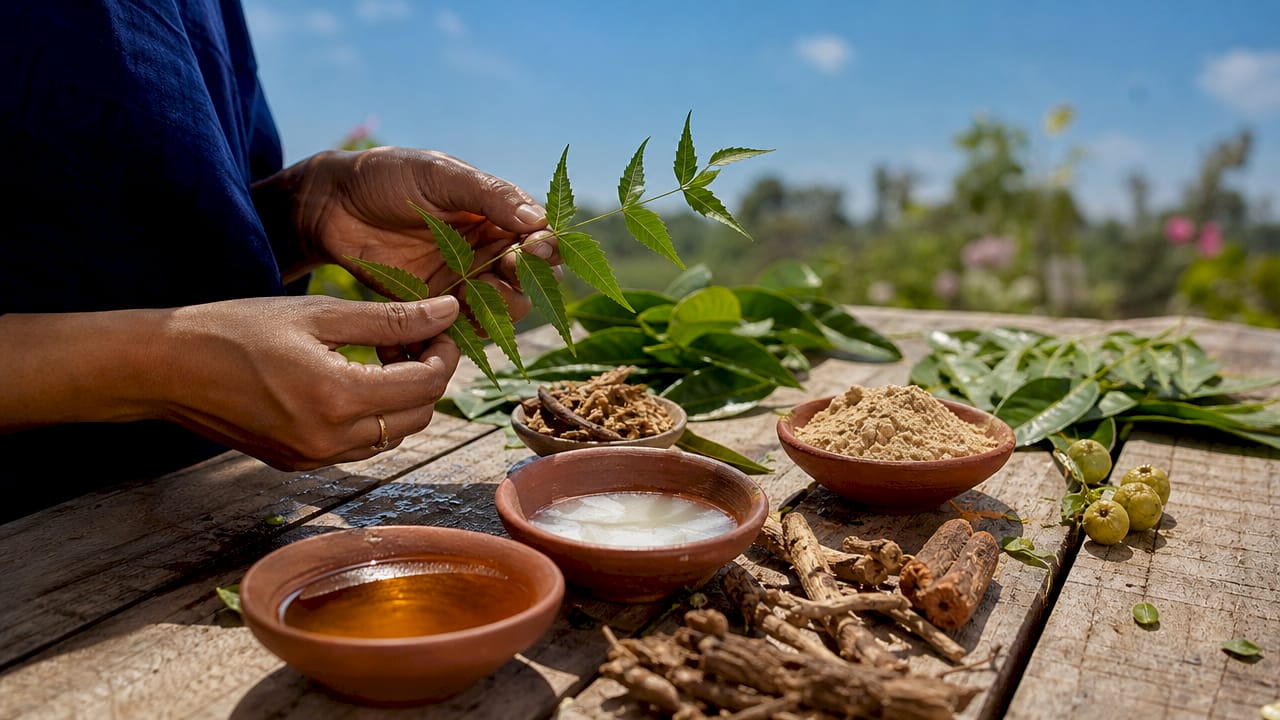
- Using Ayurvedic herbs and oils like coconut oil, sesame oil, amalaki, bhringraj, and brahmi
- Leaving oil on for a set period, from 30 minutes to overnight, before washing
- Repeating regularly, whether daily in traditional practice or a few times per week or month in modern routines
- Sharing the ritual as a bonding experience between family members and across generations
This is not just a beauty routine. It is a practice that connects hair health, scalp care, and emotional well-being in one simple act.
Where does the hair oiling tradition come from?
The roots of hair oiling go back more than five millennia to ancient India. Ayurvedic physicians documented the practice in texts like the Charak Samhita, prescribing specific oils and massage techniques as part of a daily wellness regimen called dinacharya. Hair care was never treated as vanity. It was considered an expression of physical health, mental balance, and respect for the body.
Culturally, the ritual carried deep social meaning. Mothers oiled their daughters’ hair as a weekly or daily act of care, and grandmothers passed down family oil recipes that had been refined across generations. As Nikita Charuza, founder of Squigs Beauty, shared with Harper’s Bazaar, her family’s hair oil recipe came from her great-grandmother and was later modernized for easier use today. That kind of living inheritance is what makes the tradition so durable.
Hair oiling also served as a marker of identity and community. In South Asian households, the smell of warm coconut oil, the feel of a scalp massage, and the act of braiding oiled hair were woven into everyday life. The intergenerational transmission of this knowledge, from how to warm the oil to which herbs to add, kept both the practice and the cultural connection alive. Beyond India, variations of hair oiling appear across West Africa, the Middle East, and the Caribbean, each with its own oils and methods but the same core intention: nourish the hair, care for the person.
Ayurvedic principles and the herbs behind the ritual
Ayurveda approaches hair health as a reflection of the whole body. A healthy scalp signals balanced digestion, good circulation, and a calm nervous system. The oils and herbs used in the tradition were chosen not just for their effect on hair strands, but for their broader influence on the body’s energy and balance.
The most widely used oils and herbs in Ayurvedic hair oiling each bring specific properties:
- Coconut oil: The most common base oil. It penetrates the hair shaft deeply, reducing protein loss and protecting against damage from washing and heat.
- Sesame oil: Warming and grounding in Ayurvedic terms, sesame oil is rich in fatty acids and traditionally used to support scalp circulation and reduce dryness.
- Hibiscus: Known in Ayurveda as a conditioning herb, hibiscus is added to oils to soften hair, reduce breakage, and support scalp health.
- Amalaki (Indian gooseberry): One of the most revered Ayurvedic ingredients, amalaki is rich in vitamin C and antioxidants. It strengthens hair at the root and is believed to slow premature graying.
- Bhringraj: Called the “king of herbs” for hair in Ayurveda, bhringraj is traditionally used to support hair thickness, reduce shedding, and calm the scalp.
- Brahmi: A cooling herb used to soothe the nervous system and scalp. Brahmi-infused oils are often used for stress-related hair concerns and to promote a sense of calm during the oiling ritual.
These ingredients are not chosen at random. Ayurvedic practitioners select them based on a person’s dosha, or constitutional type, matching warming oils like sesame to those who run cold and dry, and cooling herbs like brahmi to those prone to inflammation or stress. You can explore plant-based scalp ingredients in more depth to understand how each one supports scalp wellness.
What does science say about the benefits of hair oiling?
Science backs hair oiling primarily as a protective practice, not a direct hair growth stimulant. Coconut oil penetrates the hair shaft more effectively than most other oils, reducing protein loss and minimizing hygral fatigue, the damage that occurs when hair repeatedly swells with water and then dries out. A 2021 study with 140 women found that coconut oil treatments improved scalp bacteria and reduced dandruff over 12 weeks.
The visible improvement people notice, longer and fuller-looking hair, usually comes from reduced breakage rather than accelerated follicle growth. When the hair shaft stays intact instead of snapping at the ends, length accumulates faster. That is a real and meaningful benefit, even if it is different from what social media often claims.
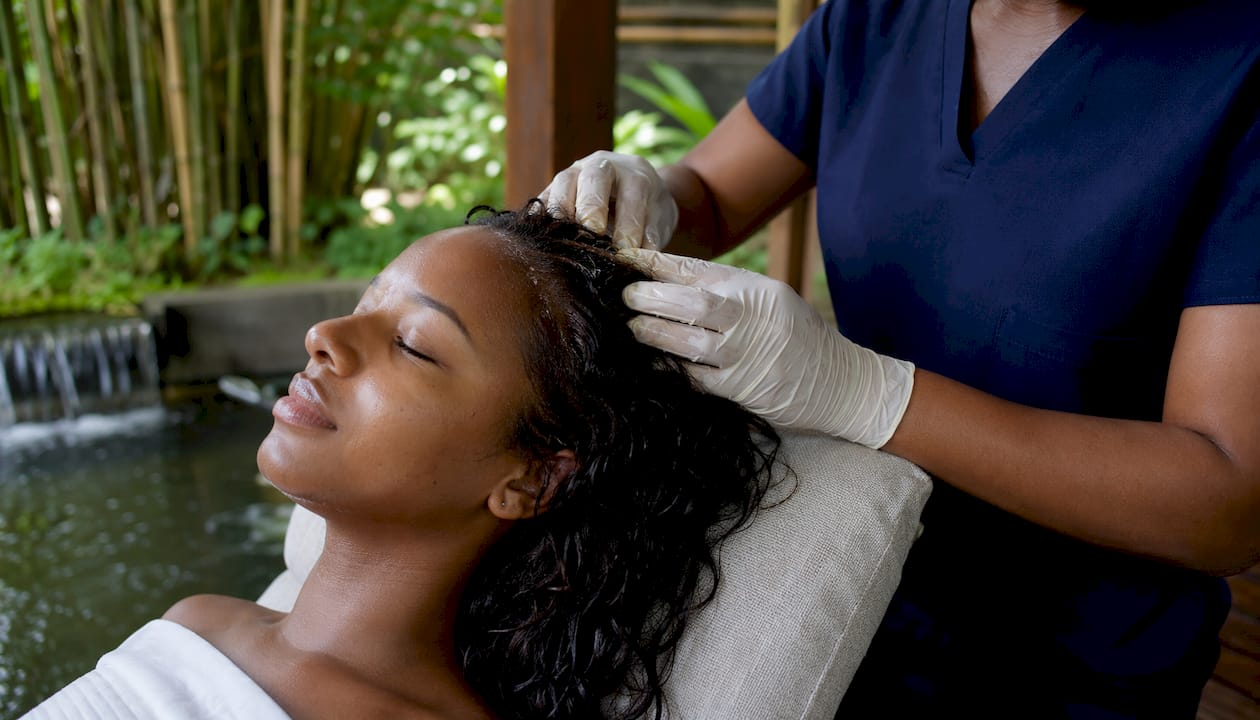
Scalp massage, the champi technique central to the tradition, adds another layer of benefit. Regular head massage stimulates circulation to the scalp, soothes the nervous system, and may reduce tension headaches. Ayurvedic practitioners have long described champi as a way to calm the mind while caring for the hair, and that dual function is part of why the ritual has lasted so long. For a closer look at the mechanics, Crisanbeauty’s guide on scalp massage for hair growth covers what the research actually supports.
Pro Tip: Apply your oil to slightly damp hair rather than completely dry strands. The moisture helps the oil distribute more evenly and penetrate more effectively, especially for thicker or coarser hair types.
How to practice hair oiling: traditional steps and modern adaptations
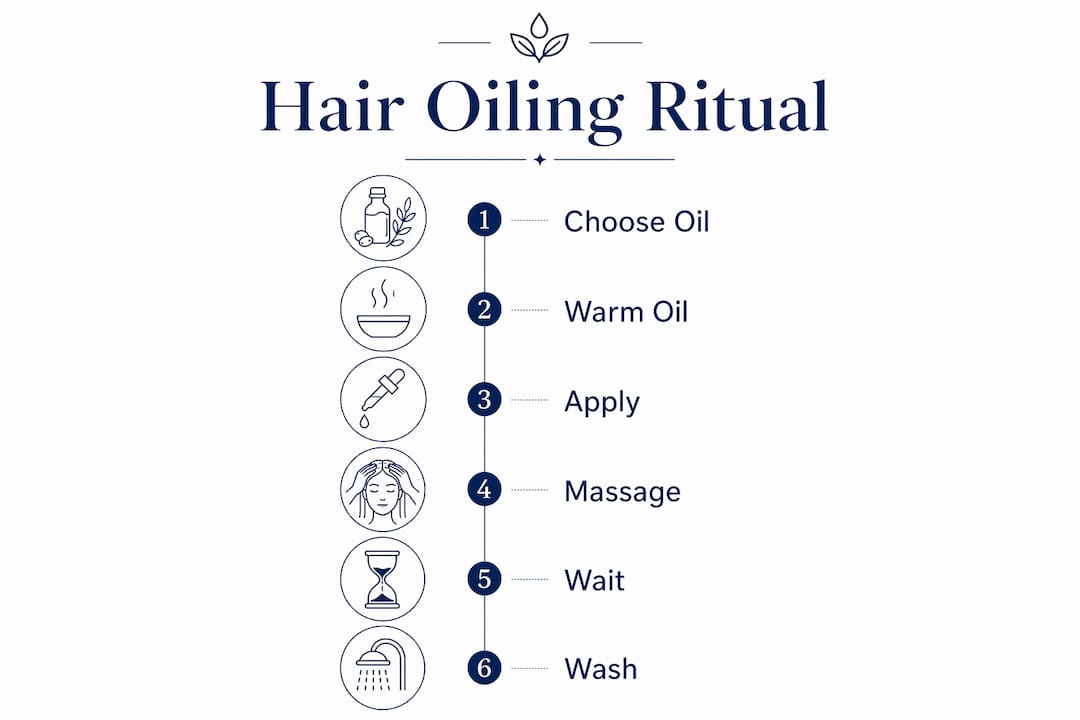
The traditional practice of hair oiling follows a clear sequence, though modern life has prompted plenty of practical adjustments.
Traditional steps:
- Warm the oil gently (never boiling) to improve absorption and make the massage more soothing.
- Section the hair and apply oil directly to the scalp using fingertips or a dropper.
- Massage the scalp in slow, circular motions for at least 5–10 minutes using the champi technique.
- Work the remaining oil through the hair lengths.
- Braid or loosely tie the hair to keep it contained.
- Leave the oil on overnight or for a minimum of 30 minutes before shampooing.
The traditional Ayurvedic daily regimen recommends daily oiling, but modern practitioners and experts typically suggest 2–3 times monthly or weekly, depending on your hair type and scalp condition. For those who cannot manage overnight oiling, leaving oil on for 30 minutes to 3 hours before washing still delivers meaningful benefit.
Regional and community variations are wide. In South India, sesame oil is the base of choice. In West Africa, shea butter and palm oil serve similar purposes. Caribbean traditions often feature castor oil for thickness. Each community has adapted the core idea to local ingredients and climate, which is part of why the practice has spread so far beyond its Ayurvedic origins.
Modern adaptations have also changed the format. Pre-mixed herbal oils, lightweight formulas designed to wash out easily, and shorter application windows have made the ritual more accessible without stripping its core purpose. The connection to Ayurvedic hair care remains the thread that ties old and new together.
Traditional vs. modern hair oiling at a glance:
- Traditional: Daily application, overnight wear, single-base oils like pure coconut or sesame, family-blended herbal infusions
- Modern: 1–3 times weekly or monthly, 30-minute to 3-hour sessions, pre-formulated herbal blends, lighter oils for easier washout
Pro Tip: If your scalp tends toward oiliness or you notice buildup after oiling, apply oil only to the mid-lengths and ends rather than the scalp itself. This preserves the nourishing benefits for your strands without congesting the scalp.
Who should be careful with hair oiling?
Hair oiling is safe for most people, but a few conditions call for a modified approach. Applying oil directly to the scalp can worsen symptoms for those with seborrheic dermatitis or active dandruff, since oil can feed the yeast that drives those conditions. In those cases, limiting oil to the mid-lengths and ends protects the hair without aggravating the scalp.
Allergic reactions to specific plant oils are also possible, particularly with nut-based oils like coconut or sesame. Always patch test a new oil on a small area of skin before applying it to your full scalp. This step takes two minutes and can prevent a frustrating reaction. Beyond these considerations, the practice is gentle, low-risk, and adaptable to nearly every hair type when approached thoughtfully. Crisanbeauty’s resource on botanical oils for hair loss covers ingredient-specific guidance for those navigating thinning or sensitive scalps.
Crisanbeauty brings the tradition to you
Crisanbeauty was built on exactly this tradition. Founded in Texas by a family passionate about Ayurvedic plant-based care, every Crisanbeauty formula draws from the same herbal wisdom that has supported hair health for thousands of years, made with botanical ingredients and manufactured in the USA.
If you are ready to bring this ritual into your own routine, Crisanbeauty’s Ayurvedic hair growth oil is a practical place to start. Formulated for thinning hair and rooted in the same principles covered throughout this article, it is designed to protect, nourish, and support visibly healthier hair over time.
Key Takeaways
Hair oiling is an ancient Ayurvedic ritual that protects hair, supports scalp health, and connects generations through a shared act of care.
| Point | Details |
|---|---|
| Ancient Ayurvedic roots | The practice originates over 5,000 years ago in India, documented in the Charak Samhita. |
| Science supports protection | Coconut oil penetrates the hair shaft to reduce protein loss; a 2021 study with 140 women showed improved scalp bacteria and reduced dandruff over 12 weeks. |
| Key herbs and oils | Coconut oil, sesame oil, hibiscus, amalaki, bhringraj, and brahmi each serve specific Ayurvedic and hair health functions. |
| Modern frequency | Experts recommend 2–3 times monthly or weekly; 30 minutes to 3 hours before washing is effective for those who cannot oil overnight. |
| Know your scalp | Those with seborrheic dermatitis or dandruff should limit oil to mid-lengths and ends to avoid worsening scalp conditions. |


