


Hormonal hair loss is defined as the disruption of the normal hair growth cycle caused by shifts in androgens, estrogen, cortisol, and thyroid hormones acting on hair follicles. Understanding what triggers hormonal hair loss matters because the root cause is often not a hormone level that looks abnormal on a lab test. It is frequently the sensitivity of the follicle itself to those hormones. Women between 25 and 55 face this at multiple life stages, from postpartum recovery to perimenopause, and the triggers are specific and manageable once you know what to look for. You can also review common causes of hair loss to see how hormonal factors fit into the broader picture.
What triggers hormonal hair loss at the follicle level?
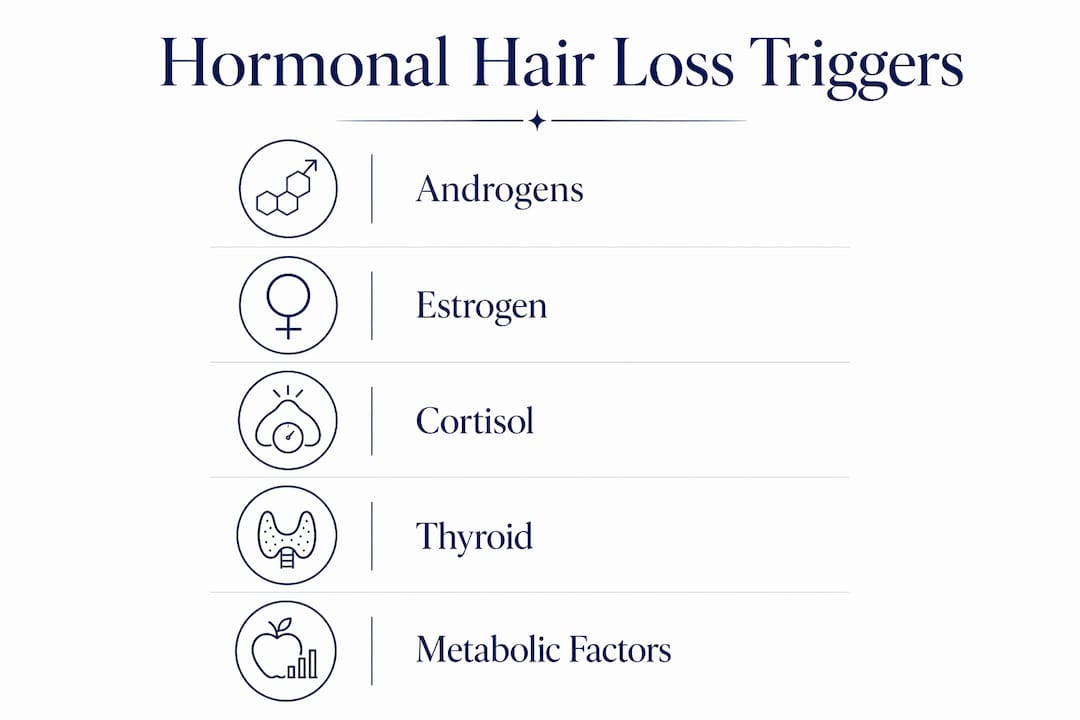
The four hormones most responsible for hair loss are androgens (including DHT), estrogen, cortisol, and thyroid hormones. Each one affects the hair follicle differently, and their interactions are what make hormonal hair loss so complex.
Androgens and DHT
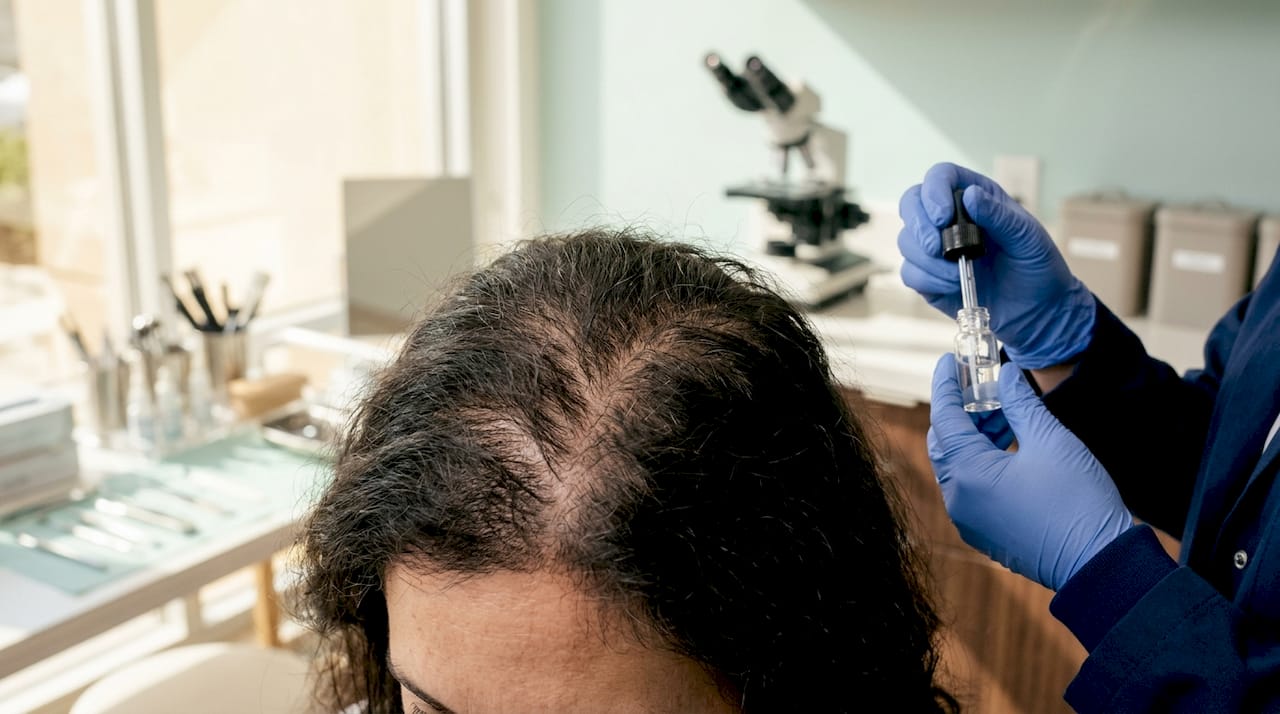
Dihydrotestosterone (DHT) is the most studied driver of follicle miniaturization. DHT binds to androgen receptors in the follicle and progressively shrinks it, producing finer, shorter strands over time. The critical point is that follicular sensitivity to androgens is often the primary cause of hormonal hair loss, even when circulating hormone levels appear completely normal. This explains why many women receive a “normal” lab result and still experience significant thinning.
Estrogen
Estrogen sustains the anagen (active growth) phase of the hair cycle. When estrogen levels drop, the anagen phase shortens and more follicles shift into the resting phase simultaneously. Estrogen’s decline during menopause and postpartum recovery causes increased shedding and visible thinning across the scalp. This is why hair loss in women often accelerates at predictable hormonal transition points.
Cortisol
Chronic stress raises cortisol, which pushes hair follicles into the telogen (resting) phase and triggers inflammation that disrupts the growth cycle. Cortisol also interferes with thyroid and reproductive hormone balance, creating a cascade effect that compounds hair loss beyond what stress alone would suggest.
Thyroid hormones
Thyroid dysfunction, both hypothyroidism and hyperthyroidism, causes diffuse shedding and changes hair texture toward brittle and coarse. Hypothyroidism is particularly associated with dry, fragile strands and thinning of the outer eyebrows. Because thyroid symptoms develop gradually, many women attribute the hair changes to aging before a diagnosis is made.
How do internal factors amplify hormonal hair loss triggers?
Hormone levels alone do not tell the full story. Three internal factors determine how aggressively those hormones affect your follicles.
-
Follicular androgen sensitivity. Your follicles can be genetically primed to react strongly to androgens even at low concentrations. This is why two women with identical hormone panels can have very different hair outcomes. Increased follicular sensitivity explains thinning despite normal lab results and is the reason a standard hormone test often misses the real driver.
-
Insulin resistance. Elevated insulin increases free androgen levels by reducing sex hormone-binding globulin (SHBG). Insulin resistance elevates androgens and accelerates follicle miniaturization even in women who do not have a formal diabetes diagnosis. Blood sugar management is therefore a direct hair health variable, not just a metabolic one.
-
Chronic inflammation. Persistent low-grade inflammation disrupts the signaling environment around follicles. Inflammatory cytokines interfere with the anagen phase and make follicles more reactive to androgens. Diet, gut health, and sleep quality all feed into this inflammatory load.
-
Liver function. The liver clears excess hormones from the bloodstream. When liver function is compromised, estrogen and androgens accumulate, shifting the hormonal balance toward conditions that favor hair loss. Supporting liver health through diet and reducing alcohol intake directly affects hormone clearance.
Pro Tip: If your hormone panel looks normal but you are still losing hair, ask your doctor to test fasting insulin and SHBG alongside standard sex hormones. These two markers often reveal the metabolic driver that standard panels miss.
What life stages and conditions commonly trigger hormonal hair loss?
Several predictable life events and medical conditions create the hormonal conditions that cause hair loss in women.
| Trigger | Mechanism | Typical Timeline |
|---|---|---|
| Postpartum | Rapid estrogen and progesterone withdrawal | 2–5 months after delivery |
| Menopause | Sustained estrogen decline shortening anagen phase | Gradual, over years |
| PCOS | Elevated androgens or high follicular sensitivity | Ongoing, worsens without treatment |
| Thyroid dysfunction | Diffuse shedding from disrupted follicle metabolism | Gradual, often missed early |
| Chronic stress | Cortisol-driven telogen shift and inflammation | Weeks to months after onset |
Postpartum telogen effluvium is one of the most common and least discussed forms. Rapid estrogen and progesterone decline 2–5 months after childbirth pushes a large proportion of follicles into the resting phase at once. The result is a sudden, alarming shed that feels much worse than it looks on a density scan. It is temporary and self-limiting for most women, though the timeline varies. You can read more about postpartum hair shedding and what to expect during recovery.
PCOS-related hair loss follows a different pattern. Elevated androgens in PCOS cause miniaturization that produces thinning at the part line, temples, and crown. Unlike postpartum shedding, PCOS-related loss is progressive without treatment. The symptoms often include irregular cycles, acne, and excess facial hair alongside the scalp thinning.
Stress-driven hair loss is frequently underestimated because the shed appears weeks after the stressful event. High cortisol disrupts follicle function and impairs thyroid and reproductive hormone balance, meaning one prolonged stressful period can trigger multiple hormonal pathways simultaneously.
How can knowing your triggers guide better management?
Knowing the specific trigger changes the treatment approach entirely. A woman losing hair from postpartum estrogen withdrawal needs a different response than one losing hair from insulin-driven androgen excess.
The most effective approach starts with testing. A complete panel should include thyroid function (TSH, free T3, free T4), sex hormones (total and free testosterone, DHEA-S, estradiol), fasting insulin, SHBG, and inflammatory markers like CRP. This combination identifies whether the driver is hormonal, metabolic, or inflammatory.
Lifestyle interventions address the metabolic layer directly. Reducing refined carbohydrates lowers fasting insulin and, in turn, reduces free androgen levels. Consistent sleep and stress management lower cortisol and protect thyroid function. These changes do not replace medical treatment but they remove the fuel that makes hormonal triggers more damaging.
Topical and oral treatments work best when the systemic driver is also addressed. Minoxidil remains the most widely studied topical option for androgenic alopecia. Spironolactone is commonly prescribed for androgen-driven loss in women. Neither works as well when insulin resistance or chronic inflammation remains unaddressed.
Pro Tip: Early intervention produces better outcomes. Follicle miniaturization is reversible in early stages but becomes permanent once the follicle is fully scarred. If you notice consistent thinning at the part line or temples, act within the first 6–12 months for the best chance of recovery.
Key Takeaways
Hormonal hair loss is driven more by follicular sensitivity and systemic metabolic factors than by absolute hormone levels, making targeted testing and lifestyle changes the most effective starting point.
| Point | Details |
|---|---|
| Follicular sensitivity is the key driver | Hair loss can occur even with normal hormone labs if follicles are highly reactive to androgens. |
| Estrogen protects the growth phase | Drops in estrogen during menopause or postpartum directly shorten the anagen phase and increase shedding. |
| Insulin resistance fuels androgen excess | Elevated insulin lowers SHBG and raises free androgens, accelerating follicle miniaturization. |
| Cortisol triggers telogen shift | Chronic stress pushes follicles into the resting phase and disrupts thyroid and reproductive hormones. |
| Test beyond standard hormone panels | Include fasting insulin, SHBG, and thyroid markers to identify metabolic and inflammatory drivers. |
What I have learned about hormonal hair loss after years of watching it up close
Most women who come to us have already been told their hormones are “fine.” That phrase does more harm than almost anything else in this space. Normal on a standard panel does not mean normal for your follicles. The science on follicular androgen sensitivity is clear, and yet it rarely comes up in a routine checkup.
The other thing I have seen repeatedly is that women treat hair loss as a cosmetic problem when it is actually a systemic signal. Thinning hair at the temples or part line is your body telling you something is off metabolically or hormonally. Ignoring it or covering it up without investigating the cause means the underlying driver keeps running.
The psychological weight of hair loss is real and should not be minimized. Losing hair affects how you show up in every area of your life. Getting a real diagnosis and a real plan is not vanity. It is self-care grounded in evidence.
Crisanbeauty was founded because of firsthand experience with postpartum hair loss. That experience shaped everything about how we approach education and product development. We believe you deserve honest information, not just reassurance.
— CRISAN
Crisanbeauty’s approach to supporting thinning hair
Addressing the root cause of hormonal hair loss takes time, and your scalp needs support throughout that process.
Crisanbeauty’s Ayurvedic Hair Growth Oil is formulated with plant-based botanical ingredients rooted in generations of Ayurvedic tradition, designed to nourish the scalp and support follicle health during periods of hormonal change. Every product is manufactured in the USA with carefully selected ingredients and no unrealistic promises. For women managing thinning hair from postpartum recovery, PCOS, or menopause, the hair growth oil for fuller hair offers a practical, plant-based complement to your systemic care plan. Pair it with hair growth vitamins for a complete daily routine that supports hair from the inside out.
FAQ
What is the most common hormonal cause of hair loss in women?
Androgen-driven follicle miniaturization, often linked to elevated DHT or high follicular sensitivity to androgens, is the most common hormonal cause of hair loss in women. This occurs in conditions like PCOS and androgenic alopecia, and it can happen even when hormone levels test within the normal range.
Does stress cause hormonal hair loss?
Yes. Chronic stress raises cortisol, which pushes follicles into the telogen resting phase and disrupts thyroid and reproductive hormone balance. The resulting shed typically appears 6–12 weeks after the stressful period, which is why many women do not connect the two events.
How is hormonal hair loss different from hair breakage?
Hormonal hair loss involves the follicle shedding the entire strand from the root, producing a telogen bulb at the end of the fallen hair. Hair breakage snaps mid-shaft from mechanical damage or dryness and does not involve the follicle. Checking the root end of shed hairs is the fastest way to tell the difference.
Can postpartum hair loss be permanent?
Postpartum telogen effluvium is almost always temporary. The rapid estrogen and progesterone withdrawal after delivery triggers a mass telogen shift, but most women see regrowth within 6–12 months as hormone levels stabilize. Persistent loss beyond that point warrants further hormonal and metabolic testing.
How do you stop hormonal hair loss from getting worse?
The most effective approach combines targeted testing (including fasting insulin, SHBG, and thyroid markers), lifestyle changes that address insulin resistance and chronic stress, and evidence-based topical or oral treatments where appropriate. Addressing the systemic driver, not just the scalp symptom, produces the most durable results.


