


For breakage-prone, thinning hair, the most practical approach is matching oil weight to your hair type and scalp needs. The CRISAN Ayurvedic Hair Growth Oil is the ready-made pick here: a plant-based, multi-oil formula rooted in Ayurvedic tradition, manufactured in the USA, and designed specifically for thinning and breakage-prone hair. If you want one product that covers scalp nourishment, strand sealing, and consistent strengthening, that is the one to start with.
TL;DR: This recommendation fits best if you have thinning, breakage-prone hair and want a scalp-nourishing routine built on botanical oils. The honest caveat: botanical oils condition and protect your strands, but they are not medical treatments. If you are experiencing pattern hair loss or sudden shedding, a dermatologist visit belongs on your list alongside any oil routine.
Table of Contents
- Which oils actually strengthen hair, and what does each one do?
- How do you choose the right strengthening oil for your hair?
- How to use hair-strengthening oils: routines that work
- What ingredients should you look for on the label?
- When will you actually see results?
- What can botanical oils actually do, and what can’t they?
- How much should you spend on a hair-strengthening oil?
- Key Takeaways
- Why a plant-based approach makes sense for long-term hair health
- CRISAN Ayurvedic Hair Growth Oil: the ready-made option for breakage-prone hair
- Authoritative sources and further reading
Which oils actually strengthen hair, and what does each one do?
Not all hair oils work the same way. They fall into two functional categories, and knowing which is which helps you read any product label with confidence.
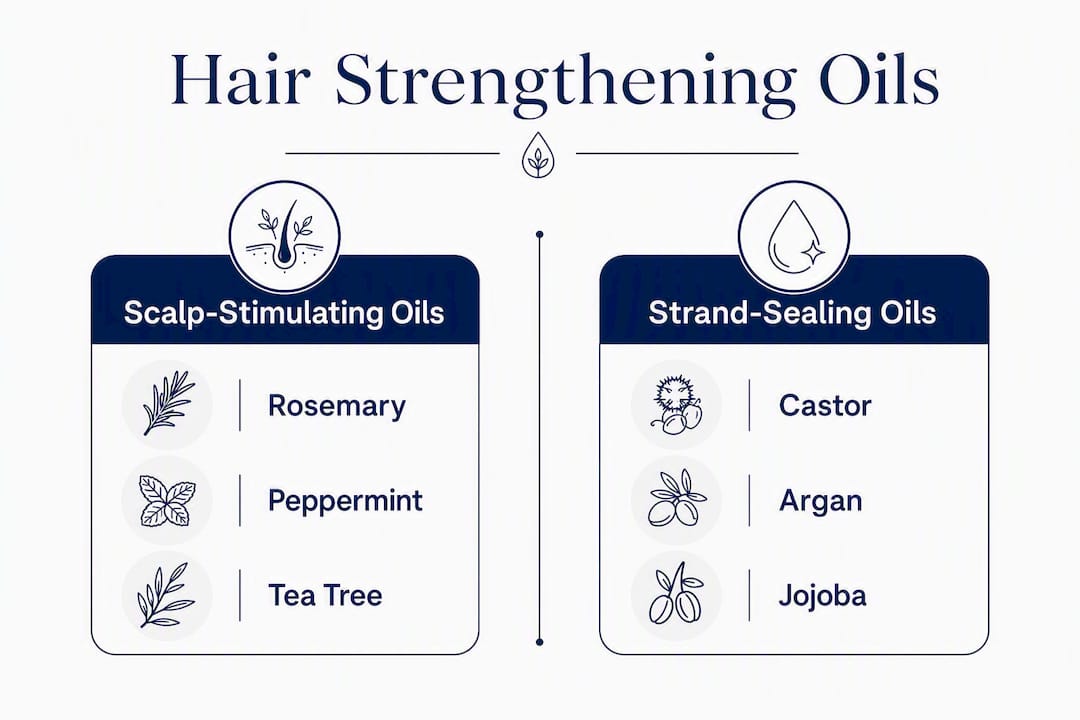
Scalp-stimulating oils target circulation and follicle health. Rosemary, peppermint, and tea tree are the most common. Dermatologist roundups consistently flag rosemary as a scalp active worth using consistently over months for results, not just once. Peppermint adds a cooling, circulation-boosting effect. Tea tree brings antimicrobial properties that help with flaky or congested scalps.
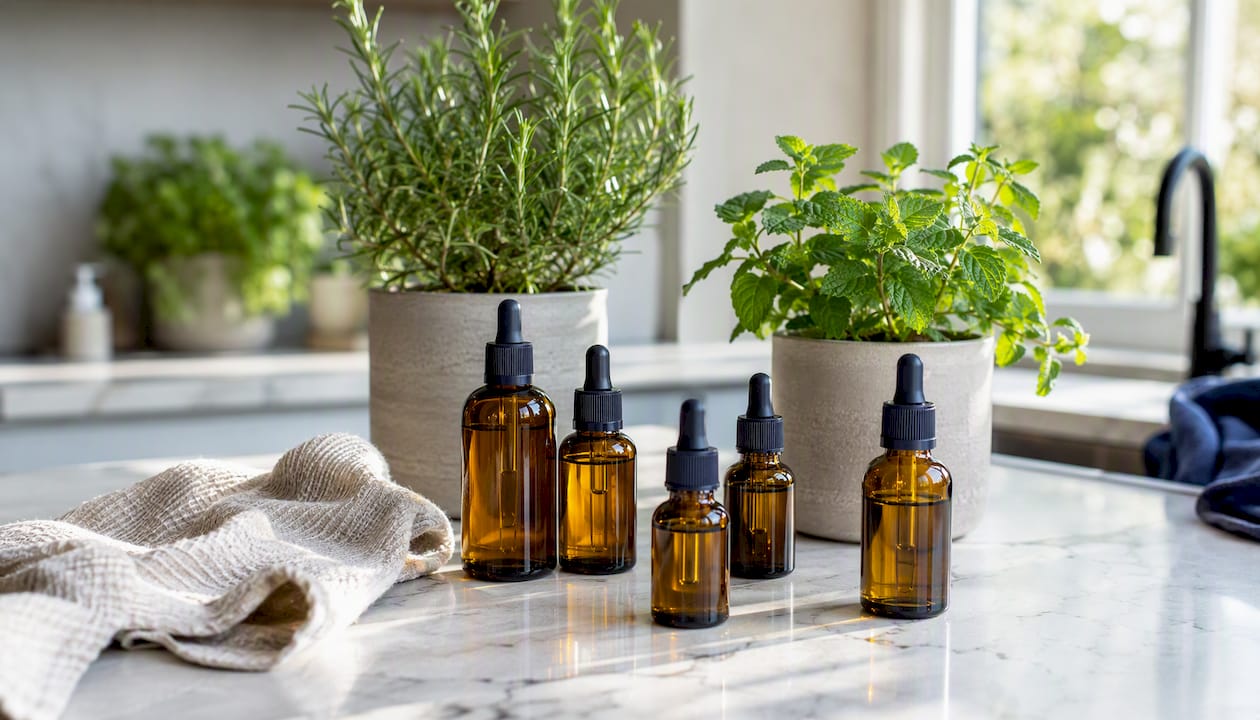
Strand-sealing and nourishing oils work on the hair shaft itself. Castor oil is thick, viscous, and rich in ricinoleic acid, which supports local circulation when massaged in and helps reduce breakage by coating the strand. Argan and jojoba are lightweight, absorb quickly, and add elasticity without greasiness. Coconut oil is the most studied: a 2003 study referenced by Healthline found it reduces protein loss in both damaged and undamaged hair. Jojoba closely mimics the scalp’s natural sebum, making it one of the most compatible carrier oils for sensitive scalps.
| Feature | Scalp-focused oil | Strand-sealing oil |
|---|---|---|
| Best for | Stimulating follicles, dry or flaky scalp | Sealing cuticle, reducing breakage, adding shine |
| How to apply | Massage into scalp; leave overnight or pre-wash | Apply to mid-lengths and ends; can leave in |
| Rinse or leave-in | Rinse out (to avoid buildup) | Leave-in or light rinse depending on weight |
| Oil weight | Light to medium (rosemary, peppermint) | Light (jojoba, argan) to heavy (castor, coconut) |
WebMD notes that essential oils like rosemary must always be diluted in a carrier oil before scalp application. That distinction matters practically: you never apply undiluted rosemary or peppermint directly to skin.
How do you choose the right strengthening oil for your hair?
The fastest way to narrow your options is a four-point check before you buy.
Hair texture and porosity first. Fine hair needs lightweight oils like jojoba, moringa, or almond. Coarse or thick hair handles richer options like camellia or coconut. InStyle’s testing confirmed that texture matching is the single biggest factor in whether an oil helps or weighs hair down. High-porosity hair absorbs oils quickly and benefits from heavier, sealing oils. Low-porosity hair resists penetration, so lighter oils applied with gentle heat work better.
Scalp condition. Oily scalps do better with lighter, non-comedogenic oils applied only to the mid-lengths and ends. Dry or flaky scalps benefit from scalp-specific treatments with rosemary or tea tree diluted in a carrier.
Label reading checklist:
- Named botanical oils using their Latin names (e.g., Rosmarinus officinalis, Ricinus communis, Argania spinosa) signal quality and transparency.
- “Fragrance” or “parfum” listed high in the ingredients can irritate a sensitive scalp.
- Actives like biotin or peptides are supportive but not miracle ingredients on their own.
- Clear usage instructions (scalp treatment vs. finishing oil, rinse vs. leave-in) are a reliable buying signal that the brand has tested its formula.
- U.S. manufacturing claims add a layer of quality accountability.
Pro Tip: Always patch-test essential-oil blends on your inner arm 24 hours before scalp use. Match oil weight to your hair’s porosity: heavy oils on low-porosity hair cause buildup fast.
How to use hair-strengthening oils: routines that work
Application method changes everything. The same castor oil that transforms a dry scalp routine can flatten fine hair if applied the wrong way.

Overnight scalp treatment
Apply your chosen scalp oil directly to the scalp in sections, massaging gently for 3–5 minutes to boost circulation. Cover with a shower cap or old towel and sleep in it. Wash out thoroughly in the morning with a clarifying or sulfate-based shampoo applied directly to the scalp, as the AAD advises for removing buildup without stripping lengths. Frequency: once or twice per week for most hair types.
Pre-shampoo hot-oil treatment
Warm a small amount of oil (coconut or castor work well here) by placing the bottle in a bowl of hot water for a few minutes. Apply to mid-lengths and ends, cover with a shower cap, and leave on for 20–30 minutes. The warmth helps the oil penetrate the cuticle. Rinse, then shampoo as normal. Coconut oil’s protein-loss reduction makes it a strong candidate for this treatment. Do this once a week for noticeably softer, more elastic strands over time.
Daily light finishing oil
One or two drops of a lightweight oil like argan or jojoba on dry ends seals the cuticle, reduces frizz, and adds slip. Apply after styling, never at the roots. This is the one routine you can do daily without risking buildup. For nourishing scalp treatments that go deeper, reserve heavier oils for your weekly routine.
What ingredients should you look for on the label?
A clean, honest label tells you more about a product than any marketing claim.
Positive signals: Look for named botanical oils listed by their Latin names near the top of the ingredient list. Argania spinosa (argan), Ricinus communis (castor), and Rosmarinus officinalis (rosemary) are all well-documented for hair and scalp health. A product that specifies whether it is a scalp treatment or a finishing oil is one that has been formulated with intent. Made-in-USA manufacturing is a meaningful quality signal, not just a marketing line.
Supportive actives: Biotin strengthens hair follicles and is worth having in a formula, though topical absorption differs from supplemental intake. Peptides and adaptogenic extracts can support scalp conditioning. None of these are substitutes for medical treatment. Minoxidil, for example, is a pharmacological ingredient regulated separately from cosmetic oils. It belongs in a different conversation entirely.
What to approach with caution: High fragrance concentration is the most common scalp irritant in hair oils. “Fragrance” or “parfum” listed without further detail can mask dozens of undisclosed compounds. Heavy silicones (dimethicone, cyclopentasiloxane) smooth the hair shaft temporarily but can build up over time and mask underlying damage. They are not inherently harmful, but they require regular clarifying to prevent accumulation.
One safety rule: stop using any oil blend immediately if you notice redness, itching, or swelling. Patch-test every new formula before full application, especially blends with multiple essential oils. For a deeper look at botanical oils for hair loss, Crisanbeauty’s journal covers efficacy and safety in detail.
When will you actually see results?
Realistic expectations make the difference between sticking with a routine and abandoning it after two weeks.
- Immediately (first use): Smoother ends, added shine, and reduced frizz. These are surface-level effects from cuticle sealing, not structural repair.
- Weeks 6–12: Measurably less breakage and improved slip during detangling. Editorial testing from Byrdie and InStyle found reduced shedding and better manageability with consistent use over this window.
- Months 3–6: Visible new growth and noticeably stronger strands from root to end, provided the routine stays consistent and includes regular clarifying to prevent buildup.
Hair breakage is irreversible because hair cannot regenerate. As Vogue’s expert guide puts it, the most effective oils increase elasticity and protect the cuticle to prevent future damage. You are not repairing existing damage; you are protecting what grows next.
Red flags that need medical attention, not more oil: sudden patchy shedding, a rapidly widening part, or diffuse thinning across the whole scalp. Cosmetic oils will not reverse androgenetic (pattern) hair loss. A dermatologist or trichologist is the right next step in those cases. For context on when oil routines end and clinical care begins, this scalp health guide from a hair restoration clinic is worth reading.
What can botanical oils actually do, and what can’t they?
Botanical oils improve cuticle sealing, elasticity, and scalp conditioning. They do not replicate pharmacological treatments for diagnosed pattern hair loss, and that distinction is worth making clearly.
Trichologists advise matching oil weight to hair porosity and density as the primary selection criterion, not brand or price. Dermatologists recommend medical treatment when pattern loss or diffuse shedding is present, because no cosmetic oil addresses the hormonal or genetic drivers of androgenetic alopecia. Medical treatments like minoxidil work through a different mechanism entirely.
This framing holds up across expert guidance. The traditional botanical oils used in Ayurvedic practice have centuries of application behind them, and modern research on ingredients like rosemary and coconut oil supports their role in scalp health and strand protection. The key word is support: oils are one part of a strengthening plan, not the whole plan.
How much should you spend on a hair-strengthening oil?
Price range varies widely, and cost does not always track with quality.
Entry-level single-ingredient oils (pure castor, pure argan, pure jojoba) typically run $8–$20 for a standard bottle. These are solid options if you want to build your own blend or test individual oils before committing to a formula. The trade-off is that you do the formulation work yourself.
Mid-range multi-oil formulas, including products like Mielle Rosemary Mint Scalp & Hair Strengthening Oil and Purador Scalp & Hair Strengthening Oil, generally fall in the $10–$25 range. These are pre-blended, convenient, and come with usage instructions.
Premium Ayurvedic blends with multiple botanical actives, like the CRISAN Ayurvedic Hair Growth Oil, sit at the higher end of the market. You are paying for formulation complexity, U.S. manufacturing, and a product designed around a specific hair concern rather than a general-purpose oil. For readers who want a bundle value, the CRISAN 4-pack option brings the per-unit cost down meaningfully.
The honest guidance: spend more on a formula that matches your specific hair type and concern. A $10 oil used consistently and correctly will outperform a $40 oil used wrong.
Key Takeaways
Matching oil weight to hair type and using it consistently is the foundation of any effective strengthening routine. CRISAN Ayurvedic Hair Growth Oil is the recommended ready-made option for thinning and breakage-prone hair.
| Point | Details |
|---|---|
| Match oil to hair type | Lightweight oils for fine hair; richer oils like castor or coconut for coarse or thick hair. |
| Follow frequency guidance | Scalp treatments a few times weekly; daily heavy oiling causes buildup and weighs hair down. |
| Patch-test essential oils | Always test blends 24 hours before full scalp application to avoid irritation or allergic reaction. |
| Set realistic timelines | Expect reduced breakage after several weeks; visible new growth may take months of consistent use. |
| Crisanbeauty’s recommendation | CRISAN Ayurvedic Hair Growth Oil is a plant-based, USA-made multi-oil formula for thinning and breakage-prone hair. |
Why a plant-based approach makes sense for long-term hair health
The honest reason Crisanbeauty exists is postpartum hair loss. After experiencing it firsthand, the founder built a product line around what actually helped: a multi-oil Ayurvedic formula with botanical ingredients that support scalp health and strand strength over time, not overnight.
Plant-based oils are not a trend. Ayurvedic hair care has been practiced for generations, and the botanical ingredients at its core, rosemary, castor, argan, and others, now have peer-reviewed research supporting their roles in scalp stimulation and cuticle protection. What makes a multi-oil formula practical for long-term maintenance is that it combines these actives in calibrated ratios, so you are not guessing at dilution or layering five separate bottles.
Every CRISAN product is manufactured in the USA. That matters for quality control, ingredient sourcing, and accountability. For a community of over 1.3 million followers who rely on honest guidance, that is not a small thing.
CRISAN Ayurvedic Hair Growth Oil: the ready-made option for breakage-prone hair
If you want a formula that does the work of matching and blending for you, the CRISAN Ayurvedic Hair Growth Oil is built for exactly that. It combines a multi-oil Ayurvedic blend designed for thinning, breakage-prone hair, with clear usage guidance for both scalp treatment and finishing use.
How to use it: For a scalp treatment, apply directly to the scalp in sections, massage for 3–5 minutes, and leave overnight or for at least 30 minutes before washing out. For ends, use 1–2 drops on dry lengths as a finishing oil. Start with once or twice a week and adjust based on how your hair responds. Pair with a clarifying shampoo every 1–2 weeks to prevent buildup, and patch-test before your first full application.
Manufactured in the USA, plant-based, and formulated around Ayurvedic botanical tradition. For readers who want to pair topical oil use with internal support, Crisanbeauty’s hair growth vitamins complement the topical routine with biotin and other nutrients that support follicle health from within.
Authoritative sources and further reading
- American Academy of Dermatology: Tips for Healthy Hair — Dermatologist guidance on wash frequency, scalp care, and preventing buildup.
- Byrdie: Best Hair Growth Oils, According to Derms — Derm-recommended scalp actives, ingredient breakdowns, and realistic timelines.
- Healthline: How to Strengthen Hair — Covers the 2003 coconut oil protein-loss study and hot-oil treatment benefits.
- Vogue: How to Strengthen Hair by Hair Type — Expert framing on prevention vs. repair and cuticle protection.
- InStyle: Best Hair Oils, Tested and Reviewed — Texture-matching guidance and hands-on testing across hair types.
- WebMD: Essential Oils for Your Hair — Explains carrier vs. essential oil roles, dilution, and safety.
- Cleveland Clinic: Vitamins and Supplements for Hair Growth — Dermatologist context on biotin, vitamin A, and omega-3s as internal support.
- CRISAN Ayurvedic Hair Growth Oil — Product page with full ingredient list, usage instructions, and Ayurvedic formulation context.
Recommended
- Hair Growth Oil That Helps Thinning Hair Look Fuller | CRISAN – CRISAN Beauty
- Best Hair Growth Oil for Thinning Hair & Hair Loss | CRISAN – CRISAN Beauty
- The Best Hair Oiling Routine for Hair Growth: – CRISAN Beauty
- Best Sulfate-Free Shampoo for Hair Growth & Thickness | CRISAN – CRISAN Beauty
Compare the full-size hair-oiling option
CRISAN 16 oz Hair Oil is designed for a consistent cosmetic routine focused on lubrication, softness, shine and easier manageability—especially for lengths that feel dry or breakage-prone.
- Large 16 oz size for repeat oiling routines.
- Use on the scalp or lengths according to your routine.
- Review the full ingredient list before use.
Use the CRISAN hair-oiling guide to choose a practical amount and frequency.
Cosmetic hair-care product. It does not treat medical hair loss. No subscription is started.


