


The most reliable way to stop ingrown hairs is avoiding overly close hair removal, and when shaving is necessary, prepping skin, using proper technique, exfoliating regularly, and moisturizing afterward. If you stop removing hair altogether, most cases clear within 1 to 6 months. If a bump turns red, swollen, or painful, a clinician can offer treatments that speed things along.
TL;DR:
- Using a single-blade razor and shaving in the direction of hair growth significantly reduces the risk of ingrown hairs compared to multi-blade razors and against-the-grain shaving.
- Exfoliating with physical or chemical methods two to three times weekly helps prevent hairs from curling back into the skin, especially when skin is not irritated.
- Proper post-shave care includes applying a cool compress and fragrance-free moisturizer to calm inflammation and support skin healing, while avoiding picking or digging at bumps.
- Laser or electrolysis hair removal may offer permanent solutions but require multiple sessions and are best suited for those with darker hair and lighter skin or with recurrent ingrowns.
- Signs like spreading redness, pus, or increasing pain indicate the need to consult a doctor rather than waiting for ingrown hairs to resolve naturally.
Table of Contents
- Priority Checklist for Ingrown Hair Prevention
- How Do You Prep, Shave, and Care for Skin the Right Way?
- When Should You Consider Laser, Electrolysis, or Other Alternatives?
- What Are the Warning Signs You Shouldn’t Ignore?
- CRISAN’s Routine-Based Take on Gentle Prevention
- Our Take: What Actually Moves the Needle
- A Simple Next Step for Smoother Skin
- Sources
Priority Checklist for Ingrown Hair Prevention
Start with these habits before your next shave. Small changes at the razor stage prevent most of the irritation you’d otherwise be treating later.
- Warm water first. Softens hair and opens pores, making removal easier on skin.
- Regular exfoliation several times a week is recommended. Clears dead skin that traps hairs before they can curl back in.
- Use a shaving gel or oil. Reduces friction, which is the main driver of both razor burn and ingrown hairs.
- Shave with the direction of growth. Cutting against the grain increases the chance a hair snaps below the skin’s surface.
- Don’t stretch skin taut. A flatter shave feels closer but tucks hairs deeper into the follicle.
- Moisturize immediately after. Calms inflammation and rebuilds the skin barrier while it’s most vulnerable.
- Skip tight clothing for a few hours. Friction from fabric aggravates freshly shaved skin.
- Stop plucking and tweezing. These methods pull hair below the skin, the single biggest cause of ingrown hairs.
How Do You Prep, Shave, and Care for Skin the Right Way?
Prevention works in three stages: what you do before you shave, how you shave, and what you do in the minutes and hours after. Skip any one of them and the other two carry more weight than they should.
Prep the skin first. A warm shower or a warm compress for a few minutes softens the hair shaft and opens follicles, which is exactly why most dermatology guidance points to shaving right after a shower rather than before one. Cleanse the area to clear away oil, sweat, and dead skin cells that would otherwise clog the razor.
Exfoliate on a schedule, not randomly. You have two real options. Physical exfoliation, a soft brush or a washcloth in gentle circular motions, sloughs off surface buildup mechanically. Chemical exfoliation with glycolic acid or another alpha hydroxy acid works differently: it loosens the bond between dead skin cells and can reduce how sharply hair curves back into the follicle, which is often the deeper problem for people who get ingrown hairs repeatedly. Two to three sessions a week is a reasonable target for either method. Skip exfoliation entirely on irritated, broken, or actively inflamed skin.
Choose your tools deliberately.
- A single-blade razor cuts hair at skin level and lowers the odds of the hair retracting below the surface, compared with multi-blade cartridges that tug hair upward before cutting it shorter than the follicle opening.
- Replace blades regularly to ensure they stay sharp and effective. A dull blade drags and tears rather than slicing clean.
- Shave in short, light strokes in the direction hair grows, not against it. Rinse the blade after every stroke to clear clogged hair and buildup.
- Never pull skin tight while shaving. It feels like a closer shave, but it’s the exact mechanism that buries hair below the surface.
This distinction matters because razor burn and ingrown hairs are not the same problem. Razor burn is immediate friction irritation from a dry or dull blade, showing up as redness right after shaving. Ingrown hairs (also called razor bumps or pseudofolliculitis) show up days later, after a cut hair curves back and re-enters the skin, triggering inflammation. One responds to better lubrication; the other responds to exfoliation and technique changes.
Aftercare finishes the job. A cool, damp cloth calms redness in the first few minutes. Follow with a soothing, fragrance-free moisturizer or a plant-based oil to help repair the skin barrier while it’s most reactive. A thin layer of over-the-counter 1% hydrocortisone can help short-term inflammation if a spot is flaring, but it isn’t meant for daily long-term use. Whatever you do, don’t pick, dig, or tweeze at anything you see forming under the skin.
Pro Tip: If you have curly or coarse hair, leaving a small amount of stubble instead of shaving flush to the skin often prevents more ingrown hairs than any product you could add afterward. Switching to clippers or an electric shaver for a slightly longer cut length gives curved hair less opportunity to grow back into the follicle.
When Should You Consider Laser, Electrolysis, or Other Alternatives?
If shaving keeps producing ingrown hairs no matter how carefully you do it, the calculation shifts toward reducing hair removal frequency altogether rather than perfecting technique.
- Laser hair removal targets the hair follicle directly and typically requires multiple sessions spaced weeks apart, since it only affects hair in an active growth phase. It works best on darker hair against lighter skin, though modern lasers have expanded that range. Possible side effects include temporary blistering and changes in skin pigmentation, particularly for those with a history of scarring.
- Electrolysis delivers a more permanent result by destroying the hair follicle with an electric current, but it demands a real time investment. Multiple sessions per area over months are standard, and some people report notable discomfort during treatment.
- Depilatory creams dissolve hair at the surface using chemical compounds, offering a same-day alternative to shaving without a blade at all. Always patch test 24 hours before full application, and never leave the cream on longer than the label states.
- Trimming or clipping rather than shaving flush to the skin is the simplest fix for people whose ingrown hairs stem mainly from overly close cuts.
If you have a history of scarring, keloids, or pigmentation changes, talk to a dermatologist before committing to laser or electrolysis. Getting that assessment first avoids a costly trial-and-error process.
What Are the Warning Signs You Shouldn’t Ignore?
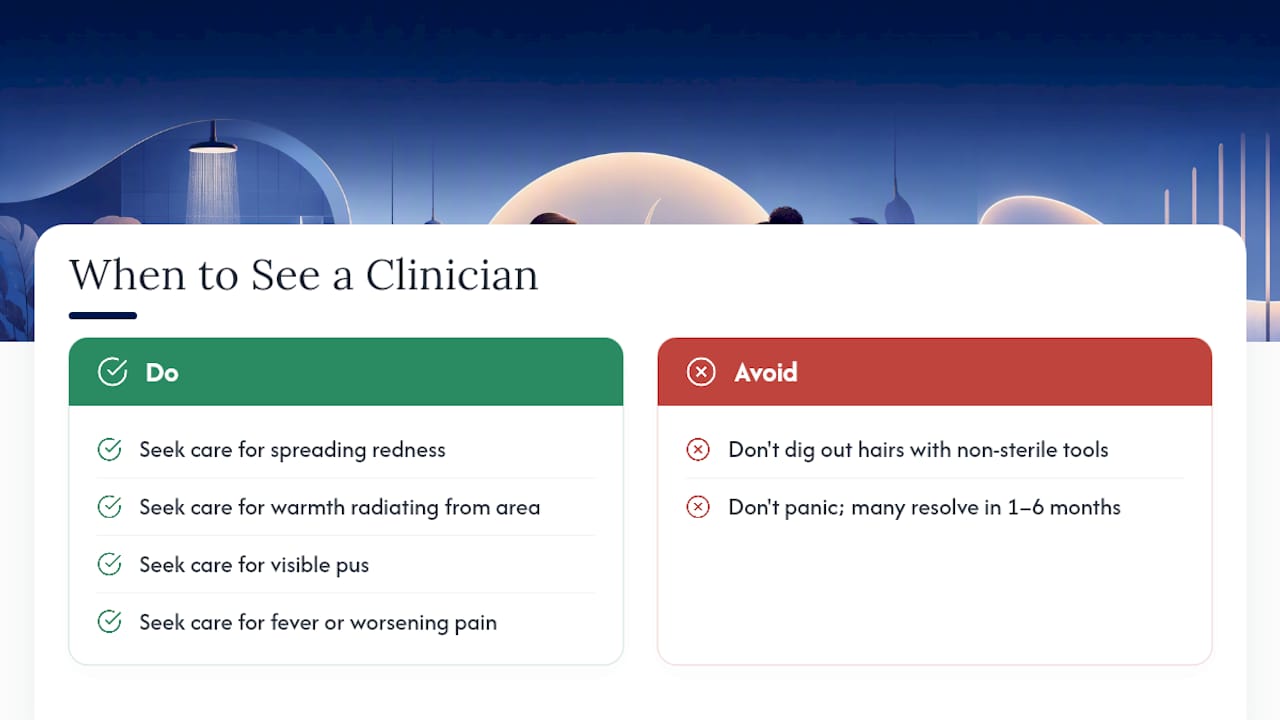
Most ingrown hairs resolve on their own once you stop the hair removal method causing them. Mayo Clinic notes that clearing typically takes one to six months depending on how inflamed the area is, and that timeline alone should keep you from panicking over a bump that shows up this week.
That said, some signs mean it’s time to see a clinician rather than wait it out: spreading redness, warmth radiating from the area, visible pus, fever, or pain that’s getting worse instead of better. A doctor may prescribe a topical retinoid like tretinoin to speed up skin turnover, a topical steroid to calm inflammation, or antibiotics if there’s a genuine infection. For chronic, recurring cases, a referral for laser hair removal is common.
Never dig out an ingrown hair with tweezers, a pin, or your fingernails. Non-sterile home extraction raises the risk of infection and scarring considerably more than simply letting the hair work its way out on its own.
CRISAN’s Routine-Based Take on Gentle Prevention
A simple sequence beats a complicated one. Warm compress first, then a gentle physical scrub two times a week (never right before a shave on already-irritated skin), then careful shaving with the grain, then an oil-based moisturizer to seal everything back in. That order matters more than any single product in it.
Plant-based scrubs and oils earn their place here by reducing friction during the shave itself and supporting the skin’s natural barrier afterward, which general dermatologic principles around exfoliation and hydration both support. If you’re adding a chemical exfoliant like glycolic acid to your routine, introduce it slowly and patch test first. Layering a strong acid on top of a fresh shave is a common way people accidentally trade one irritation for another.
Our Take: What Actually Moves the Needle
Most ingrown hair advice treats every case the same, and that’s the biggest gap in the conventional wisdom. Someone with fine, straight hair and someone with tightly coiled hair are not solving the same problem. The person with curly hair needs to change how close they cut, not just how often they exfoliate.

We’d also push back on how much weight gets put on the “right razor” question. Technique and consistency matter more than brand. A cheap single-blade razor used correctly, with the grain, rinsed often, on prepped skin, outperforms an expensive cartridge used carelessly.
If you take one thing from this, prioritize exfoliation frequency and shave direction before you spend money chasing a better tool. Get those two habits locked in, then layer in barrier support with a good moisturizer or oil. That order gets results faster than any single product swap.
— CRISAN
A Simple Next Step for Smoother Skin
If friction and dryness are working against you between shaves, the fix usually isn’t a new razor. It’s what touches your skin before and after one. Crisanbeauty’s truAge exfoliating body scrub is built for exactly the physical exfoliation step this routine calls for, and it’s manufactured in the USA with plant-based ingredients rather than harsh synthetic beads that can over-irritate already reactive skin.

Pair it with a lightweight hair growth oil as your post-shave step to help calm freshly shaved skin and support the barrier while it recovers. Start with a patch test on your inner arm, then work the scrub into your routine two to three times a week, never immediately before or after a shave on sensitive skin. If you want both pieces in one order, the body scrub and facial oil set covers the exfoliation and aftercare stages in a single checkout.
Sources
For deeper verification: Mayo Clinic covers clinical treatment and healing timelines. The NHS details practical shaving prevention. Medical News Today separates razor burn from razor bumps. WebMD explains higher risk in curly, coarse hair.
This article is general information, not a substitute for advice from a qualified doctor. Consult a qualified healthcare professional about your own circumstances before acting on anything here.


