


The five main types of natural scalp treatments for adults are carrier oils and emollients (best for dryness), essential oil blends and botanical antimicrobials (best for flaking with a microbial cause), hydrating gels and kitchen masks (best for irritated or sun-exposed scalps), exfoliants and clay scrubs (best for product buildup), and herbal rinses and infusions (best for maintenance and shine). Each category works differently, so matching the right type to your scalp condition matters more than picking the most popular ingredient.
- Carrier oils (coconut, jojoba, avocado): moisturize and support the skin barrier on dry or sensitive scalps
- Essential oils and botanical antimicrobials (tea tree, rosemary, neem): address flaking and fungal-related irritation when properly diluted
- Hydrating gels and kitchen masks (aloe vera, honey, yogurt): calm inflammation and add moisture to irritated or mildly dry scalps
- Exfoliants and clay scrubs (baking soda, kaolin clay, brown sugar): lift product buildup and dead skin from congested scalps
- Herbal rinses and infusions (rosemary, chamomile, nettle): support circulation, reduce redness, and add shine as a low-risk maintenance step
The clinical evidence is strongest for tea tree oil. A randomized trial found that a shampoo with 5% tea tree oil reduced dandruff by 41% after one month of daily use. A 2024 study published in Scientific Reports also found that a standardized rosemary and neem extract outperformed ketoconazole in lab assays against Malassezia and Trichophyton, two fungi linked to scalp flaking. Most other botanicals have smaller or in-vitro-only evidence, so treat them as supportive options rather than proven treatments. The 2012 National Health Interview Survey found that 17.7% of Americans used natural products for dermatologic conditions, making scalp home remedies one of the most common forms of complementary self-care in the country.
Table of Contents
- Quick relief options you can try today
- 1. Carrier oils and emollients: how to use them safely
- 2. Essential oils and botanical antimicrobials: evidence, dilution, and safe use
- 3. Hydrating gels, kitchen masks, and probiotic options: simple recipes
- 4. Scalp exfoliation: how and when to do it safely
- 5. Herbal rinses and infusions: how to make and use them
- 6. Daily habits and lifestyle choices that support scalp health
- 7. Red flags that mean you should see a clinician
- 8. How long natural scalp treatments take to work and what they cost
- 9. What the research actually says and a safety summary
- Key Takeaways
- Why plant-based scalp care deserves more credit than it gets
- Crisanbeauty’s plant-based scalp oil fits right into these routines
- Useful sources
Quick relief options you can try today
Two protocols work well for fast, short-term symptom relief: a diluted apple cider vinegar (ACV) rinse and a timed coconut oil scalp massage.
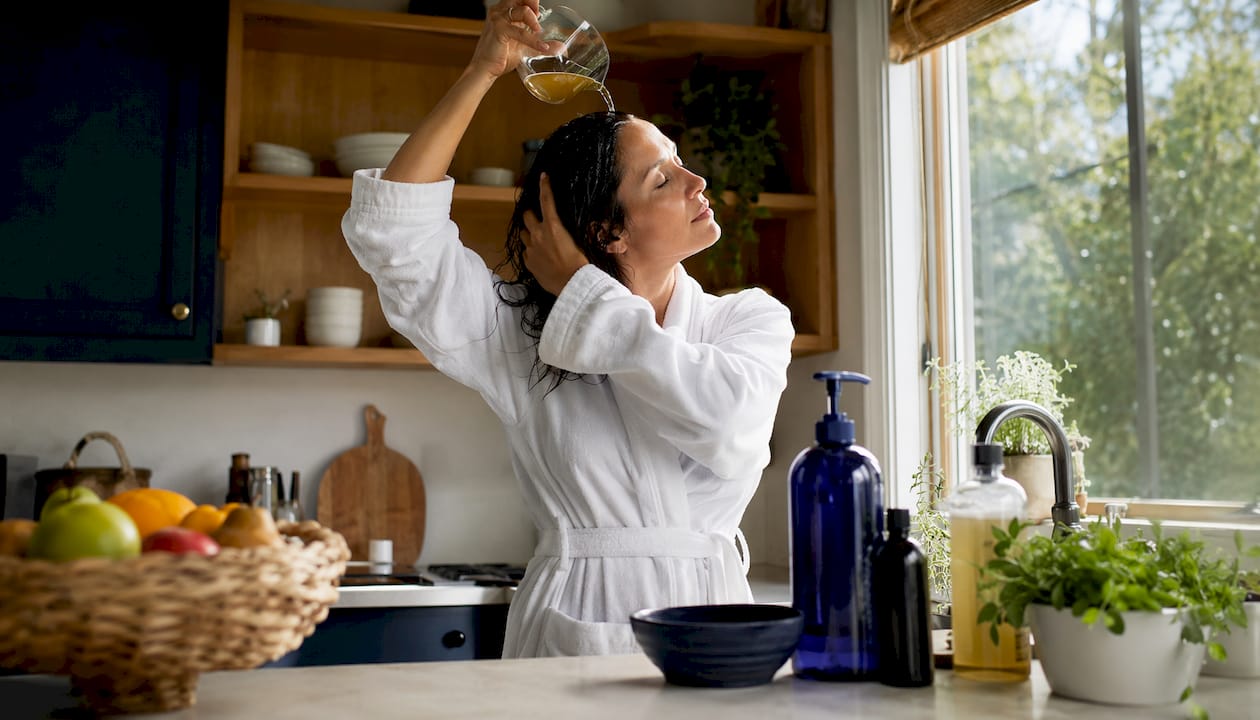
ACV rinse: Mix 1–2 tablespoons of raw apple cider vinegar into one cup of water. After shampooing, pour the mixture over your scalp, let it sit for two to three minutes, then rinse thoroughly with cool water. The mild acidity can temporarily calm itching and reduce surface flaking. Do not use this on an open wound, cracked skin, or an actively inflamed scalp. The acidity will sting and may worsen irritation.
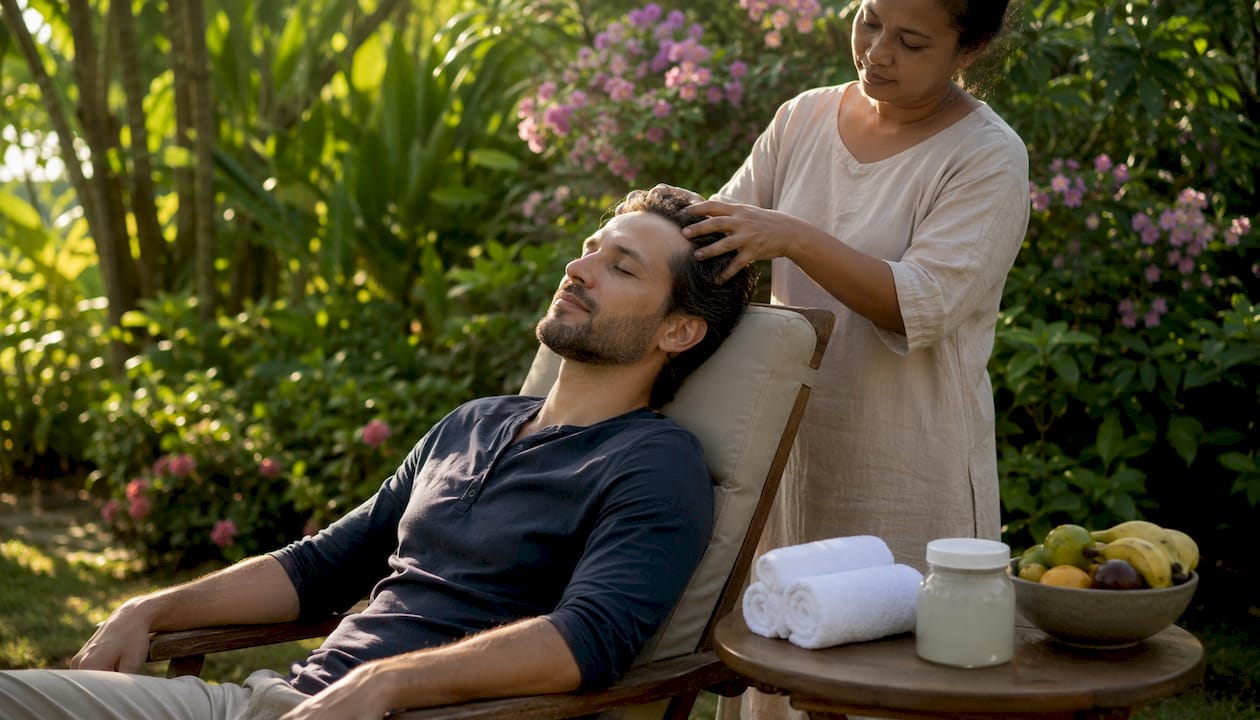
Coconut oil massage: Warm a small amount of coconut oil (about a teaspoon for short hair, two for longer) between your palms, then massage it into your scalp for three to five minutes. Leave it on for no longer than 30 minutes, then wash out with a gentle shampoo. This is a short-term fix for tightness and dryness, not a leave-in treatment.
Both options carry allergy risk. Patch-test each one on your inner forearm for 24 hours before applying to your full scalp.
Pro Tip: After any oil treatment, apply shampoo directly to dry hair before adding water. This pre-emulsifies the oil and makes it far easier to rinse clean, reducing the greasy buildup that can clog follicles over time.
1. Carrier oils and emollients: how to use them safely
Coconut, jojoba, olive, and avocado oils are the most widely used emollients for scalp care. Their primary job is to moisturize the skin surface, reduce transepidermal water loss, and soften dry, flaky skin. They suit dry, sensitive, and brittle-hair scalp types best. If your scalp is already oily or acne-prone, skip heavy oils like coconut and olive; jojoba’s composition is closer to the scalp’s natural sebum and tends to be better tolerated.
How to apply:
- Start with a clean or lightly damp scalp.
- Warm a small amount of oil (half a teaspoon to one teaspoon) between your fingertips.
- Part your hair into sections and apply directly to the scalp, not just the hair shaft.
- Massage in slow, circular motions for three to five minutes to support circulation.
- Leave on for 15–30 minutes. Overnight treatments are fine occasionally but increase buildup risk.
- Rinse with a gentle, sulfate-free or low-sulfate shampoo. Apply shampoo before water to pre-emulsify the oil.
- Use once or twice a week for dry scalps; reduce to once a week or less if you notice heaviness or increased shedding.
Pro Tip: If oil residue persists after washing, a diluted clarifying shampoo used once a month will clear buildup without stripping your scalp. Avoid using a clarifying shampoo more than monthly on a dry scalp — it can undo the moisture you just added.
The AANMC notes that coconut oil is one of the most commonly recommended natural options for scalp dryness, with practical guidance emphasizing thorough removal to prevent pore clogging.
2. Essential oils and botanical antimicrobials: evidence, dilution, and safe use
Tea tree, rosemary, neem, and lavender oils are the most studied botanical antimicrobials for scalp conditions. Tea tree has the strongest clinical backing: the 5% tea tree shampoo trial showed a 41% reduction in dandruff severity after one month. The 2024 Scientific Reports RN-E 2:1 study showed that a rosemary-neem extract outperformed ketoconazole in antifungal assays, though this was a lab-based finding, not a large clinical trial. Lavender has anti-inflammatory properties and is often added to blends for its calming effect on irritated skin. For a deeper look at antifungal scalp botanicals, the evidence picture is promising but still developing.
Dilution reference:
| Essential Oil | Recommended Dilution | Carrier Oil | Notes |
|---|---|---|---|
| Tea tree | 2–5% | Coconut or jojoba | 5% is the clinically studied concentration in shampoo |
| Rosemary | 2–3% | Jojoba or olive | Pair with neem for antifungal synergy |
| Neem | 1–2% | Coconut | Strong odor; blend with lavender to offset |
| Lavender | 2–3% | Jojoba | Calming; suitable for sensitive scalps |
A 2% dilution means roughly 12 drops of essential oil per one ounce (30 mL) of carrier oil. Never apply any essential oil directly to the scalp without diluting it first. Undiluted essential oils can cause chemical burns and contact dermatitis.
- Patch-test every new essential oil blend on your inner forearm for 24 hours before scalp use.
- Apply diluted blends no more than two to three times per week.
- Stop immediately if you notice redness, burning, or increased itching.
- Avoid neem oil during pregnancy without consulting a clinician.
- Children and people with nut allergies should check carrier oil ingredients carefully.
3. Hydrating gels, kitchen masks, and probiotic options: simple recipes
Aloe vera, honey, yogurt, egg, and avocado are the most common food-based and gel options for scalp hydration and soothing. They work best for irritated, mildly dry, or sun-exposed scalps. Aloe vera contains polysaccharides that act as humectants, drawing moisture into the skin. Honey is both a humectant and a mild antimicrobial. Plain yogurt delivers lactic acid, which gently exfoliates while its fat content moisturizes. A survey of herbal and home remedy use documented coconut oil, aloe, yogurt, eggs, and honey as among the most widely used kitchen-based scalp treatments across cultures.
Three simple recipes:
- Aloe and honey mask: Mix 3 tablespoons of pure aloe vera gel with 1 tablespoon of raw honey. Apply to the scalp, leave for 20 minutes, then rinse with lukewarm water and a gentle shampoo. Use once a week for dry or irritated scalps.
- Yogurt and olive oil mask: Combine 4 tablespoons of plain, full-fat yogurt with 1 teaspoon of olive oil. Apply to the scalp, leave for 15–20 minutes, then rinse thoroughly. The lactic acid provides light exfoliation; the oil adds moisture. Use every 10–14 days.
- Avocado and jojoba mask: Mash half a ripe avocado with 1 teaspoon of jojoba oil until smooth. Apply to the scalp and hair, leave for 20 minutes, then rinse well. Best for very dry or brittle scalps.
Safety notes:
- If you have an egg allergy, skip any recipe that includes egg.
- Honey can be sticky and difficult to rinse fully; follow with a thorough shampoo wash.
- Do not apply raw egg to a scalp with open sores or suspected infection.
- Always use plain, unflavored yogurt. Flavored varieties contain sugars that can feed yeast on the scalp.
4. Scalp exfoliation: how and when to do it safely
Scalp exfoliation removes dead skin cells, product buildup, and excess sebum that can clog follicles and worsen flaking. There are two main approaches: physical scrubs and chemical exfoliants.
Physical scrubs use gentle abrasives like brown sugar or finely ground oats mixed with a carrier oil. Baking soda is sometimes used, but its high pH can disrupt the scalp’s acid mantle if used too often. Limit baking soda scrubs to once a month at most. Brown sugar scrubs are gentler and can be used every two to three weeks.
Chemical exfoliants include scalp treatments containing salicylic acid, which dissolves the bonds between dead skin cells without physical friction. These are better suited to dandruff-prone or oily scalps and are available in over-the-counter shampoos and serums.
Do and don’t list:
- Do use light, circular pressure. Scrubbing hard damages the scalp barrier.
- Do rinse completely. Residue from scrubs can irritate the scalp.
- Do follow exfoliation with a moisturizing treatment or gentle conditioner.
- Don’t exfoliate an inflamed, bleeding, or actively irritated scalp.
- Don’t exfoliate more than once a week with any method.
- Don’t use coarse salts or large sugar granules directly on the scalp.
Pro Tip: Exfoliate before shampooing, not after. Applying a scrub to a wet scalp reduces friction and makes it easier to rinse clean. Follow with your regular shampoo to remove any oily residue from the scrub base.
5. Herbal rinses and infusions: how to make and use them
Herbal rinses are one of the lowest-risk home remedies for scalp health. They require no dilution math and leave no oily residue. The three most useful herbs for scalp rinses are rosemary, chamomile, and nettle.
Three infusion recipes:
- Rosemary rinse (antimicrobial and circulation support): Steep 2 tablespoons of dried rosemary in 2 cups of boiling water for 20–30 minutes. Strain, cool completely, and pour over the scalp after shampooing. Leave in or rinse out. Use two to three times per week. Rosemary’s antimicrobial properties make it a good maintenance rinse for dandruff-prone scalps, and scalp nourishing herbs like rosemary have been studied for their role in supporting scalp circulation.
- Chamomile rinse (calming for red or sensitive scalps): Steep 2 chamomile tea bags (or 2 tablespoons of dried chamomile) in 2 cups of hot water for 15 minutes. Cool, strain, and apply as a final rinse after shampooing. Rinse out after two to three minutes. Use once or twice a week. Chamomile’s anti-inflammatory compounds can reduce surface redness and mild itching.
- Nettle rinse (mineral support and shine): Steep 2 tablespoons of dried nettle leaf in 2 cups of boiling water for 20 minutes. Strain and cool. Apply as a leave-in rinse after washing. Use once or twice a week. Nettle is rich in silica and iron, which may support hair strength over time.
Practical sourcing notes:
- Dried rosemary, chamomile, and nettle are available at most health food stores, co-ops, and online retailers like Mountain Rose Herbs.
- Chamomile tea bags work as a convenient substitute for loose dried chamomile.
- Store unused infusions in the refrigerator and use within 48 hours. They have no preservatives and will grow bacteria if left at room temperature.
- If you wear protective styles, applying a light herbal rinse before braiding can support scalp health without adding heavy product buildup. Readers who braid regularly can find tailored guidance on scalp care with braids.
6. Daily habits and lifestyle choices that support scalp health
Consistent habits matter as much as any single treatment. A few adjustments to your routine can make natural scalp remedies work significantly better.
- Shampoo frequency: Wash every two to four days for most scalp types. Over-washing strips sebum; under-washing allows buildup. Check sebum and scalp health for guidance on finding your personal balance.
- Water temperature: Use lukewarm water. Hot water disrupts the skin barrier and increases dryness.
- Scalp massage: Three to five minutes of daily scalp massage increases blood flow to follicles and helps distribute natural oils.
- Ingredients to avoid on sensitive scalps: Sodium lauryl sulfate (SLS), high-concentration denatured alcohol, synthetic fragrance, and parabens can all trigger irritation or dryness. Look for sulfate-free or low-sulfate formulas.
- Diet: Omega-3 fatty acids from fatty fish, flaxseed, or walnuts support the skin barrier from the inside. The AANMC includes omega-3 intake as part of its practical guidance for scalp health.
- Pairing treatments: Alternate a hydrating mask one week with a light oiling the next. Stacking both in the same week can cause buildup on fine or oily scalps.
- Stress management: Chronic stress elevates cortisol, which can worsen inflammatory scalp conditions. Sleep and stress reduction are not optional extras.
7. Red flags that mean you should see a clinician
Home remedies for scalp health are appropriate for mild, stable conditions. Stop self-treating and see a dermatologist, primary care provider, or urgent care clinic if you notice any of the following:
- Spreading redness or swelling that moves beyond the scalp to the face or neck. This may indicate cellulitis or a severe allergic reaction.
- Oozing, crusting, or pus. These are signs of bacterial infection that require prescription treatment.
- Fever alongside scalp symptoms. Fever with scalp inflammation suggests a systemic infection.
- Sudden, patchy hair loss. Rapid or patchy shedding can indicate alopecia areata, tinea capitis (scalp ringworm), or scarring alopecia, none of which respond to home remedies.
- Bleeding that does not stop after gentle cleansing.
- Severe, unrelenting itch that disrupts sleep or daily function, especially if accompanied by thick silvery scales. This pattern is more consistent with scalp psoriasis than simple dryness.
- No improvement after six to eight weeks of consistent at-home care.
For mild symptoms, a dermatologist or primary care provider is the right first call. For signs of infection or fever, go to urgent care or an emergency room. A comprehensive review of complementary treatments for alopecia is clear that botanical approaches are supportive, not curative, for diagnosed scalp disorders. Readers dealing with psoriasis specifically can find condition-specific guidance on natural remedies for scalp psoriasis.
This article is general information, not medical advice. Confirm any treatment approach with a qualified clinician for your specific situation.
8. How long natural scalp treatments take to work and what they cost
Setting realistic expectations prevents you from abandoning a treatment that is actually working.
| Timeframe | What to expect | Action |
|---|---|---|
| Immediately to 48 hours | Temporary itch or tightness relief from ACV rinse or oil massage | Fine to repeat 1–2x per week |
| 2–4 weeks | Reduced flaking with consistent tea tree or rosemary use | Continue; note any irritation |
| 4–8 weeks | Visible improvement in dryness, texture, or flaking frequency | Reassess and adjust frequency |
| 8+ weeks with no change | Treatment is likely insufficient for your condition | See a clinician |
Typical cost and availability:
- Kitchen staples (coconut oil, apple cider vinegar, honey, yogurt, olive oil): $3–$10 per item at any grocery store. Most adults already have these at home.
- Carrier oils (jojoba, avocado oil): $8–$20 for a 4–8 oz bottle at health food stores or online.
- Essential oils (tea tree, rosemary, lavender): $8–$18 for a 0.5–1 oz bottle. A single bottle lasts months at proper dilution rates.
- Dried herbs (rosemary, chamomile, nettle): $5–$12 per bag at health food stores or online herb retailers.
- Specialty botanical extracts (standardized neem, rosemary-neem blends): $15–$35 and typically available only online or through specialty retailers.
Most adults can build a complete natural scalp care kit for under $40 using kitchen staples and one or two essential oils.
9. What the research actually says and a safety summary
The clinical evidence for natural scalp treatments is real but uneven. The 5% tea tree oil shampoo trial remains the most cited controlled study, showing a 41% reduction in dandruff. The 2024 Scientific Reports rosemary-neem extract study is promising for antifungal applications, though it is a lab study, not a large human trial. A systematic review of herbal remedies for hair loss found that rosemary, aloe vera, green tea, and saw palmetto showed promising results in some randomized controlled trials, but study design limitations and outcome variability make definitive conclusions difficult.
A comprehensive review of complementary treatments for alopecia confirms that most botanical approaches lack large, standardized clinical trials. The 2012 NHIS data showing 17.7% of Americans using natural products for skin conditions reflects popularity, not proof of efficacy. Widespread use and clinical validation are two different things.
A survey of home remedy use for hair and scalp found 41 plants and 11 home remedies in active use, with no standardized preparation instructions for most. That gap between cultural practice and clinical guidance is where most safety problems arise.
Safety checklist before starting any natural scalp treatment:
- Patch-test every new ingredient on your inner forearm for 24 hours.
- Dilute all essential oils in a carrier oil before scalp contact.
- Limit oil treatments to 15–30 minutes unless you are doing an intentional overnight treatment.
- Rinse thoroughly after every treatment. Residue causes buildup and can worsen the problem.
- Stop any treatment immediately if you notice burning, increased redness, or new hair shedding.
- Do not use multiple new treatments at the same time. Introduce one at a time so you can identify what works or causes a reaction.
Key Takeaways
The most effective approach to natural scalp care for adults is pairing one hydrating option with one antimicrobial option, patch-testing both, and giving each at least four to eight weeks before drawing conclusions.
| Point | Details |
|---|---|
| Match treatment to scalp type | Use carrier oils for dryness, diluted essential oils for flaking, and herbal rinses for maintenance. |
| Patch-test everything | Apply any new ingredient to your inner forearm for 24 hours before full scalp use. |
| Tea tree has the strongest evidence | A 5% tea tree shampoo reduced dandruff by 41% in a randomized trial; most other botanicals have weaker or lab-only data. |
| Expect 4–8 weeks for visible results | Immediate relief is possible, but lasting improvement in dryness or flaking takes consistent use over weeks. |
| Crisanbeauty’s plant-based approach | Crisanbeauty’s Ayurvedic hair oil combines pre-diluted botanicals and carrier oils aligned with the treatment types covered here. |
Why plant-based scalp care deserves more credit than it gets
The conventional beauty industry has spent decades treating scalp care as an afterthought, something you address only when a problem becomes obvious. Plant-based scalp treatments challenge that assumption, and the evidence, while still developing, supports taking them seriously.
What most people underestimate is how much the method matters. A well-diluted tea tree blend used consistently for six weeks will outperform a concentrated essential oil applied once in a panic. The same is true for carrier oils: a small amount massaged in and rinsed properly does more than a heavy overnight soak that clogs follicles and requires three shampoo cycles to remove. The research on multi-targeted approaches, pairing an antimicrobial botanical with a moisturizing carrier, reflects how scalp conditions actually work. Most adult scalp issues are multifactorial. A single ingredient rarely fixes them.
Crisanbeauty was founded on exactly this principle. The brand grew out of a real experience with postpartum hair loss and a commitment to formulations that are honest about what they do and why. With a community of more than 1.3 million followers and products manufactured in the USA, the brand’s perspective on plant-based scalp care is grounded in both Ayurvedic tradition and a practical understanding of what adults actually need. The invitation here is simple: start small, track what changes, and see a clinician if the problem is beyond what a home remedy can address.
Crisanbeauty’s plant-based scalp oil fits right into these routines
If you want a ready-made option that skips the dilution math, Crisanbeauty’s Ayurvedic Hair Growth Oil combines pre-diluted botanical actives and carrier oils in a single formula designed for adults dealing with thinning hair and scalp dryness. It is manufactured in the USA using plant-based ingredients rooted in Ayurvedic tradition, which means the botanicals are already at safe, functional concentrations.
Use it the same way this article recommends for carrier oil treatments: apply a small amount to a clean scalp, massage for three to five minutes, and leave on for 20–30 minutes before washing out. Patch-test on your forearm first, especially if you are new to botanical oils. If you are experiencing any of the red-flag symptoms listed above, consult a dermatologist before adding any new product to your routine. For adults ready to build a consistent, plant-based scalp routine, the oil is a practical starting point. Visit the product page to see the full ingredient list and usage guidance.
Useful sources
- PubMed — 5% tea tree oil shampoo RCT: Randomized trial documenting a 41% reduction in dandruff after one month of daily use; the primary clinical evidence for tea tree oil in scalp care.
- Scientific Reports (2024) — RN-E 2:1 rosemary-neem extract: Lab and model study showing superior antifungal activity of a rosemary-neem extract versus ketoconazole; supports botanical antimicrobial research with noted in-vitro limitations.
- PMC — 2012 NHIS complementary medicine use: Survey data showing 17.7% of Americans use natural products for dermatologic conditions; provides usage prevalence context.
- PMC — Survey of herbal and home remedy use for hair and scalp: Documents 41 plants and 11 home remedies in active use; supports caution about variable preparation and safety.
- PMC — Complementary and alternative treatments for alopecia (review): Comprehensive review confirming widespread CAM use for hair loss but noting limited large-scale standardized trials for most botanicals.
- PubMed — Herbal remedies for hair loss: systematic review: Systematic review of 16 RCTs evaluating herbal remedies including rosemary, aloe vera, and green tea; notes promising results alongside study design limitations.
- AANMC — Natural dandruff treatments: Clinical-style practical guidance on coconut oil, tea tree oil, aloe vera, and omega-3 intake for scalp health, including dilution warnings and removal advice.
- Healthline — Home remedies for dry scalp: Overview of common home remedies with application notes and when-to-see-a-doctor guidance.
- Verywell Health — 11 home remedies for dry scalp: Practical recipe-style tips for ACV, coconut oil, jojoba, aloe, yogurt, and more with dilution and timing notes.


