


Excess sebum from overactive sebaceous glands is the root cause of an oily scalp, usually driven by hormones, genetics, or an underlying skin condition. The fastest fix is adjusting how often you wash and which products touch your roots. If you notice marked redness, severe itching, heavy flaking, odor, or hair falling out in patches, see a dermatologist rather than troubleshooting alone.
TL;DR:
- Most oily scalps result from overactive sebaceous glands triggered by hormones, genetics, or skin conditions, not product buildup alone.
- Frequent washing with scalp-focused techniques and avoiding rich conditioners at the roots can manage oil without stripping the scalp’s barrier.
- Using ingredients like zinc pyrithione or salicylic acid can target yeast overgrowth and oil buildup effectively, especially if flakes or itch occur.
- Sudden or severe symptoms such as sores, hair loss, or persistent inflammation require evaluation by a dermatologist rather than home treatment.
- Improvements typically take at least two weeks; switching to gentle, properly formulated hair care products is essential for long-term balance.
Table of Contents
- What Causes Oily Scalp Problems in the First Place?
- Is Oily Scalp the Same as Dandruff?
- How Do You Fix an Oily Scalp Day to Day?
- When Should You See a Dermatologist?
- CRISAN’s Take on Oil, Balance, and What Actually Helps
- A Realistic Timeline for Getting This Under Control
- Where CRISAN Fits Into Your Oily Scalp Routine
- Sources
- FAQ
What Causes Oily Scalp Problems in the First Place?
Every hair follicle sits next to a sebaceous gland, and that gland’s job is to coat your scalp and hair shaft in sebum, a waxy substance that locks in moisture and shields skin from friction and microbes. When those glands run in overdrive, oil builds up faster than it can be absorbed or washed away, and that is the mechanical story behind almost every “why is my scalp so oily” complaint. The Cleveland Clinic notes that sebum serves a genuine protective function, so the goal is never to eliminate it, just to bring production back into balance.
Several factors push sebaceous glands into overdrive:
- Genetics and hair type. Fine, straight hair shows oil faster because there is less texture to trap sebum away from the scalp, while coarser or curlier hair can go longer between washes.
- Hormones. Puberty, the menstrual cycle, pregnancy, and certain medications all shift androgen levels, and androgens are a direct trigger for sebaceous gland activity, according to MedlinePlus.
- Scalp skin conditions. Seborrheic dermatitis, psoriasis, and eczema all change how the scalp barrier functions and often show up alongside visible oiliness.
- Stress and environment. Cortisol spikes, high humidity, heavy sweating, and tight hats trap oil against the scalp and can worsen an already active gland.
- Diet and medications. Some prescriptions and dietary patterns are linked anecdotally to oil changes, though the evidence here is weaker than that for hormones.
- Product buildup. Heavy conditioners applied at the roots, silicone-based serums, and daily dry shampoo layering can all mimic or worsen genuine oiliness.
That last point trips up more people than any biological cause. If you have swapped shampoos recently or started using a rich conditioner closer to your roots, product residue, not your glands, might be the real driver of causes of greasy hair you are dealing with this month.
Is Oily Scalp the Same as Dandruff?
No. An oily scalp is a description of oil volume; dandruff and seborrheic dermatitis are diagnoses that involve inflammation and flaking on top of that oil. The connection is real, though: Malassezia is a yeast that lives on everyone’s scalp and feeds on sebum, and when oil accumulates, it can overgrow, breaking down oils into byproducts that irritate skin and trigger the itch and white or yellow flakes associated with dandruff.
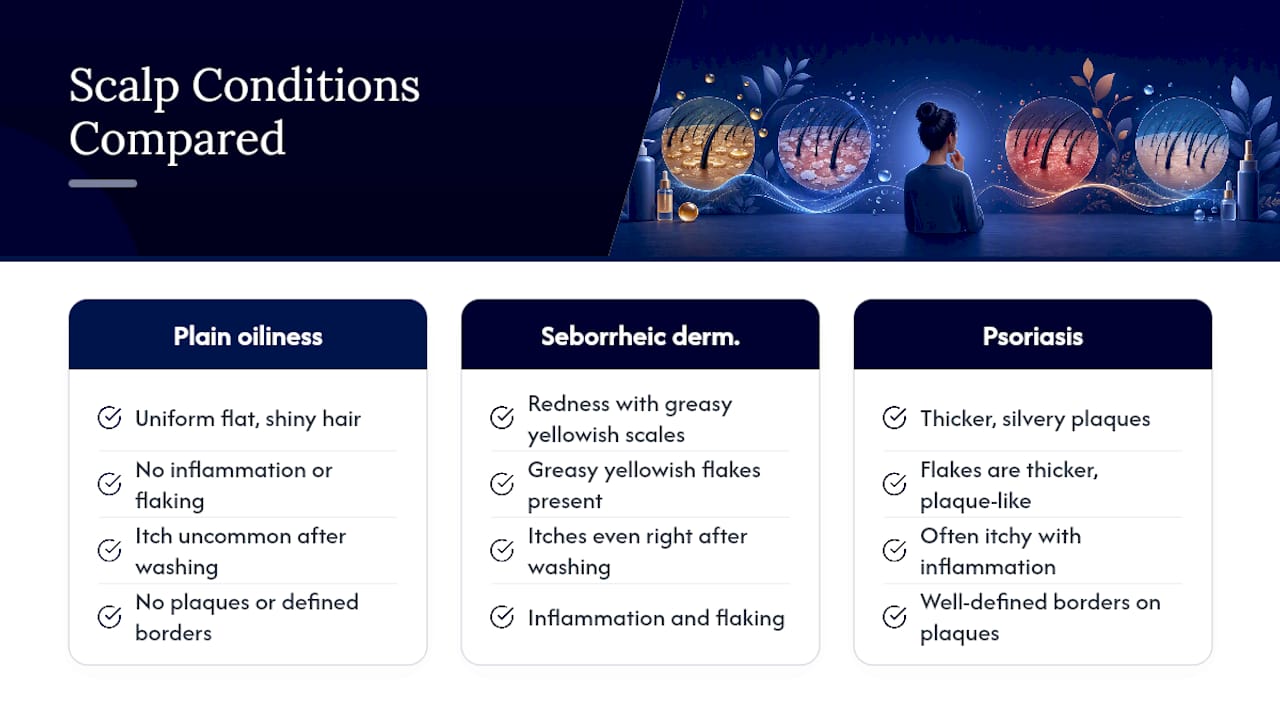
Plain oiliness usually looks and feels fairly uniform, with hair that goes flat and shiny within a day or two of washing. Seborrheic dermatitis adds redness, greasy yellowish scales, and a scalp that itches even right after washing. Psoriasis tends to bring thicker, silvery plaques with more defined borders. If oiliness comes with patchy hair thinning, sores, pain, or a smell that does not resolve with washing, that pattern points toward inflammation rather than simple excess oil, and it is worth a closer look rather than another shampoo swap.
How Do You Fix an Oily Scalp Day to Day?
Wash frequency should match your scalp, not a rule you read somewhere. The American Academy of Dermatology recommends washing as often as your scalp actually needs it, with some very oily scalps benefiting from daily washing while overwashing with harsh surfactants can strip the barrier and trigger it to produce even more oil in response. The popular idea that you can “train” your scalp to produce less oil by skipping washes is not well supported. Skipped washes tend to just build up more sebum and dead skin, which can make an existing problem worse rather than teaching glands to slow down.
Here’s a routine that reflects current dermatology guidance:
- Wet thoroughly with warm, not hot, water; heat strips oil too aggressively and can backfire.
- Apply shampoo at the scalp, not just down the lengths, and massage with fingertips for 30 to 60 seconds to actually lift oil and buildup.
- Rinse completely. Leftover residue is one of the most overlooked causes of ongoing oiliness and itch.
- Reserve heavy conditioners for mid-lengths and ends, keeping them away from the roots entirely.
- Add a weekly clarifying wash or gentle chemical exfoliation if you notice waxy buildup, using an ingredient suited to your specific issue.
Ingredient choice matters more than most people realize. Ketoconazole and zinc pyrithione both target Malassezia directly and work well for oily scalp and hair fall connected to dandruff or seborrheic dermatitis. Salicylic acid, a beta hydroxy acid, dissolves oil-bound flakes without the harshness of a physical scrub. Selenium sulfide and coal tar are older but still effective options for stubborn flaking. If your scalp is oily but otherwise calm, a gentle sulfate-free surfactant is usually enough, saving the medicated options for when symptoms actually show up.
As for home remedies, apple cider vinegar rinses and tea tree oil get a lot of attention online, but the evidence supporting them is thin and largely anecdotal. They are not harmful for most people in small amounts, but they should not replace ingredients with actual clinical backing.
Pro Tip: Buildup usually shows up as a waxy film that stays put even after a normal shampoo, and hair that looks dull rather than shiny. When you spot it, skip the physical scrub. A weekly chemical exfoliant with salicylic acid clears oil-bound residue with far less risk of micro-injury to the scalp than bristles or granules.
When Should You See a Dermatologist?
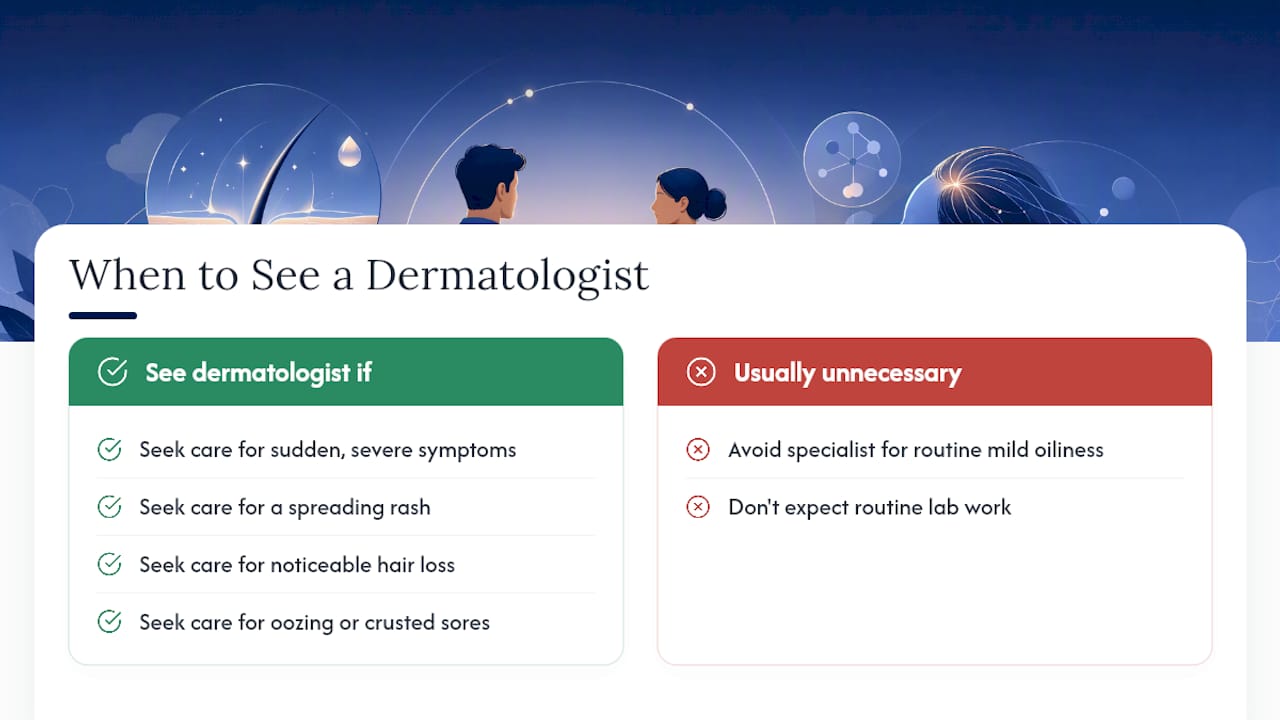
Most oily scalps do not need lab work or a specialist visit. See a dermatologist if oiliness arrives with sudden, severe symptoms, a spreading rash, noticeable hair loss, or sores that ooze or crust over. A typical visit involves a history and a visual scalp exam, sometimes followed by a prescription-strength topical antifungal or steroid if seborrheic dermatitis or psoriasis is suspected. Reviews of scalp biology in the dermatology literature confirm that these topical treatments remain the standard first line before anything more invasive gets considered.
CRISAN’s Take on Oil, Balance, and What Actually Helps
Sebum protects your scalp; the goal is balance, not elimination. Our guide to using hair oil without greasy roots covers where to apply oil so it strengthens hair without adding to existing oiliness. Every formula is plant-based and manufactured in the USA.
A Realistic Timeline for Getting This Under Control
New routines take time to show results, so give any change at least a couple of weeks before judging it. Skip the trendy quick fixes and stick with evidence-based steps instead. Try one change this week: move your conditioner off your roots and see what happens by next wash day.
— CRISAN
Where CRISAN Fits Into Your Oily Scalp Routine
Crisanbeauty built its shampoo and conditioner line around the same idea this article keeps circling back to: your scalp needs cleansing that respects its barrier instead of stripping it bare. Our Shampoos and Conditioners collection is formulated to cleanse thoroughly without the harsh surfactants that can push oily glands into overdrive, and it is manufactured in the USA using plant-based ingredients drawn from Ayurvedic tradition.
For readers whose scalp tolerates lightweight oiling between washes, our CRISAN Oils collection is worth exploring, paired with our guide on oiling without weighing hair down. One honest caveat: if your scalp is dandruff-prone or already inflamed, skip heavy overnight oiling until symptoms calm down, since trapped oil can feed the same yeast that causes flaking. Browse the shampoo and conditioner collection and pick the formula that matches where your scalp actually is right now, not where you wish it was.
This article is general information, not a substitute for advice from a qualified doctor. Consult a qualified healthcare professional about your own circumstances before acting on anything here.
Sources
- Seborrheic dermatitis
- MedlinePlus: Sebaceous glands
- American Academy of Dermatology: Healthy hair tips
- NCBI PMC article (review) on scalp biology and disorders
- Cleveland Clinic: Sebaceous glands
FAQ
How Do You Stop an Oily Scalp?
Wash with a gentle, scalp-focused technique at a frequency that matches your actual oil production, keep conditioner off your roots, and add a weekly clarifying or salicylic-acid treatment if buildup appears.
Why Is My Scalp Greasy All of a Sudden?
A sudden change usually points to a new hormonal shift, a product switch, increased stress, or heavier sweating and heat exposure rather than a permanent change in your skin.
How Can I Get Rid of Greasy Scalp?
Focus on scalp-targeted washing, avoid overloading roots with rich conditioners or oils, and use ingredients like zinc pyrithione or salicylic acid if flaking or itch shows up alongside the oil.
Is Greasy Hair a Symptom of Anything?
It can be tied to hormonal changes, seborrheic dermatitis, or psoriasis, and it sometimes contributes to buildup and shedding when left untreated, though it does not usually cause permanent hair loss on its own.


