


Sebum is the scalp’s built-in protection system. Produced by sebaceous glands packed densely across the scalp at 400 to 900 glands per cm², this lipid-rich oil does far more than make your roots look greasy by day three. It waterproofs the scalp surface, delivers vitamin E as an antioxidant, and keeps the microbial community on your skin in check. When sebum is balanced, your scalp stays comfortable, your hair shaft stays flexible, and your follicles stay clear. When it tips too far in either direction, you get dryness, flaking, or oiliness that no amount of dry shampoo fully fixes.
Here is what sebum actually does for your scalp:
- Hydration: Sebum reduces water loss from the scalp surface, keeping the skin barrier intact.
- Protection: It forms a physical barrier against bacteria, fungi, and environmental irritants.
- Antioxidant delivery: Vitamin E reaches the scalp surface exclusively through sebaceous secretions, not through the epidermis.
- Natural humectant: Lipase activity inside the sebaceous gland breaks triglycerides into glycerol, a humectant that draws moisture into the stratum corneum.
- Microbiome support: Antimicrobial free fatty acids in sebum help regulate which microbes thrive on the scalp surface.
- Hair shaft lubrication: Sebum coats the follicle canal, allowing the hair shaft to exit without friction-related damage.
What causes sebum imbalance on your scalp?
Sebum production does not run on autopilot. Androgens, particularly testosterone and dihydrotestosterone (DHT), are the primary drivers of sebaceous gland activity, which is why hormonal fluctuations at puberty, pregnancy, and menopause often shift how oily or dry the scalp feels. Production increases significantly during puberty.
Several factors push sebum out of balance:
- Androgens and hormonal cycles: Testosterone and DHT bind to sebaceous gland receptors and directly stimulate sebum synthesis, explaining why hormonal conditions like polycystic ovary syndrome often come with an oilier scalp.
- Diet and metabolic pathways: High glycemic diets overstimulate insulin and IGF-1 signaling, which amplifies lipogenesis inside sebaceous cells and increases sebum output.
- Stress: The hypothalamic-pituitary-adrenal axis releases corticotropin-releasing hormone (CRH), which sebocytes respond to directly through CRH receptors, linking chronic stress to sebum dysregulation.
- Overwashing: Stripping the scalp with harsh cleansers removes protective fatty acids and often triggers compensatory overproduction, making oiliness worse over time.
- Insufficient cleansing: Product buildup and dead skin cells block follicle openings, trapping sebum and creating conditions where Malassezia fungi thrive.
- Environmental exposure: Pollution and UV radiation alter sebum lipid composition, increasing oxidized squalene, which is pro-inflammatory.
- Linoleic acid deficiency: When sebum lacks adequate linoleic acid, the follicle lining becomes hyperkeratinized and the scalp barrier weakens, setting the stage for dandruff and seborrheic dermatitis.
- Nutritional gaps: Deficiencies in zinc and vitamin A disrupt oil regulation, while B vitamins support the hormonal balance that governs sebum output.
How to manage scalp sebum for healthier hair
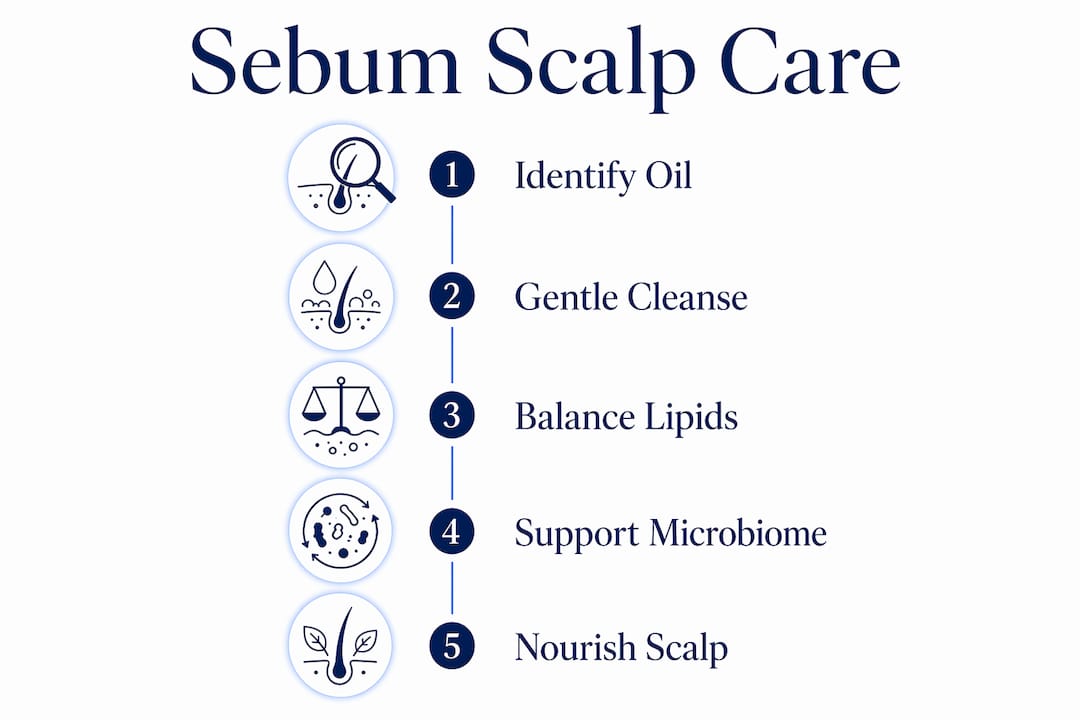
Balancing sebum is less about washing more and more about washing smarter. The goal is removing excess oil without stripping the antimicrobial fatty acids your scalp depends on.
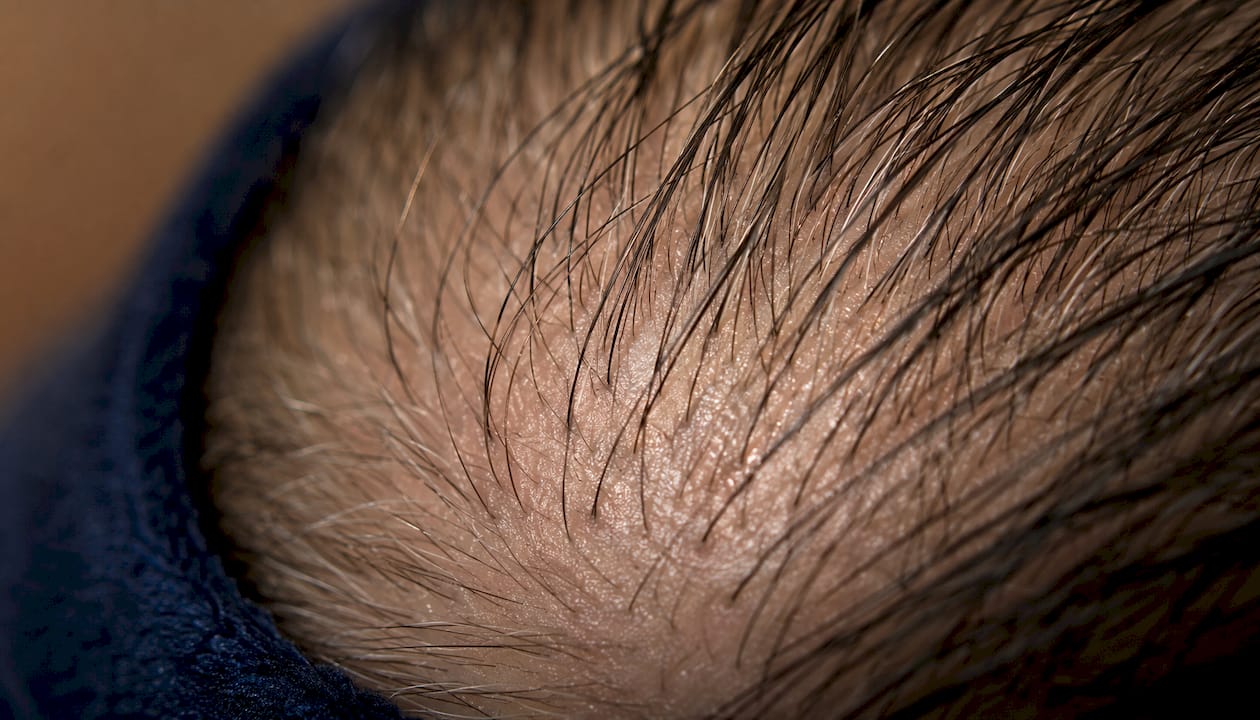
Pro Tip: Before adjusting your routine, identify your scalp type. Press a tissue against your scalp 24 hours after washing. Heavy oil transfer points to overproduction; flaking with no oil suggests deficiency. Tailor your approach from there.
Practical steps that actually work:
- Cleanse gently and consistently: Use a mild, sulfate-free shampoo suited to your scalp type. Washing every few days works for most people, though oilier scalps may need more frequent cleansing with a gentle formula.
- Avoid harsh stripping: Removing all sebum through aggressive cleansing provokes compensatory overproduction and irritates the scalp barrier.
- Use targeted scalp treatments: Products formulated for scalp care, such as a deep-cleansing scalp scrub, can clear follicle-blocking buildup without the harshness of daily clarifying shampoos. Look for rosemary or mint-based formulas that support circulation without disrupting the microbiome.
- Apply oils to lengths, not the scalp: Applying oils directly to the scalp is not advised for those prone to seborrheic dermatitis, as exogenous lipids can clog follicles and feed harmful microflora. Mid-lengths and ends benefit most from oiling.
- Manage diet and stress: Reducing high-glycemic foods and building a consistent stress management practice both reduce androgen-driven sebum spikes.
- Protect from pollution: Antioxidant-rich scalp serums and physical protection (hats, protective styles) reduce oxidative damage to sebum lipids.
For a deeper look at plant-based scalp ingredients that support this balance, Crisanbeauty’s journal covers the science behind botanical actives and how they interact with the scalp environment.
What sebum is actually made of, and why composition matters more than quantity

Most scalp conversations focus on how much sebum is present. Dermatological research increasingly points to what is in the sebum as the more clinically meaningful question.
Sebum is a complex lipid mixture with these primary components:
- Triglycerides and free fatty acids: Together these account for over 50% of total sebum content. Bacterial lipase activity in the sebaceous duct converts triglycerides into free fatty acids, which are both antimicrobial and, when imbalanced, pro-inflammatory.
- Wax esters: Roughly 25% of sebum. These are unique to sebaceous glands and not found in any other tissue in the body.
- Squalene: Approximately 12% of sebum. Squalene is a potent antioxidant at the skin surface, but when oxidized by UV radiation or pollution, it becomes comedogenic and inflammatory.
- Cholesterol esters: Around 2% of sebum, contributing to barrier function.
- Sapienic acid: The most abundant monounsaturated fatty acid in human sebum, produced by the enzyme delta-6-desaturase-2. Elevated sapienic acid levels are associated with scalp inflammation and acne-like follicular conditions.
- Linoleic acid: A deficiency here is a hallmark of inflamed sebum. Low linoleic acid disrupts acyl-ceramide composition in the scalp barrier, increasing water loss and allowing inflammatory mediators to penetrate more easily.
Key finding: Seborrheic dermatitis develops through a specific sequence: altered sebum lipid concentration creates a rich environment for Malassezia yeast, which secretes lipases that hydrolyze sebum triglycerides into irritating free fatty acids and lipid peroxides, triggering an immune cascade that results in the scaling and redness most people recognize as dandruff.
What looks like a dandruff problem is largely a sebum composition problem. Malassezia fungi thrive on the triglycerides in sebum, metabolizing them into unsaturated fatty acids that irritate the scalp and drive inflammation. This explains why over-cleansing often worsens dandruff rather than resolving it: removing sebum does not fix the underlying lipid imbalance that feeds the fungi in the first place.
Sebaceous glands also express receptors including CRH receptors, melanocortin receptors (MC1-5R), and peroxisome proliferator-activated receptors (PPARs), making them dynamic endocrine organs that respond to hormonal, neurological, and immune signals simultaneously. Sebum production changes measurably across life stages: it rises sharply at puberty, shifts with hormonal cycles, and declines with age, contributing to the dry, itchy scalp many people experience after their 40s.
Clinicians can assess sebum levels using sebumeter devices that measure lipid content on the scalp surface, or through trichoscopy, which reveals follicle plugging and surface lipid patterns. These tools confirm what the research shows: scalp health maintenance depends on sebum quality, not just quantity.
Key Takeaways
Sebum quality, not just quantity, determines scalp health, and managing its lipid composition through gentle cleansing, nutrition, and stress control is the most effective approach.
| Point | Details |
|---|---|
| Gland density is high on the scalp | Sebaceous glands concentrate at 400–900 per cm², making the scalp one of the most sebum-active areas of the body. |
| Composition drives scalp conditions | Linoleic acid deficiency and elevated squalene oxidation trigger dandruff and seborrheic dermatitis more than excess oil volume alone. |
| Malassezia feeds on sebum triglycerides | The fungi convert triglycerides into irritating fatty acids, so over-cleansing does not resolve dandruff if sebum composition stays imbalanced. |
| Harsh cleansing backfires | Stripping all sebum removes antimicrobial fatty acids and often causes compensatory overproduction, worsening oiliness. |
| Oils belong on lengths, not the scalp | Applying oils to mid-lengths protects the hair shaft; applying them directly to the scalp can clog follicles and feed harmful microflora. |
Support your scalp with Crisanbeauty
Crisanbeauty was built around one belief: your scalp deserves the same thoughtful care as the rest of your skin. Every formula is plant-based, manufactured in the USA, and grounded in Ayurvedic tradition refined for modern scalp science. If you are ready to support your scalp from the root up, explore Crisanbeauty’s Ayurvedic hair growth oil designed to complement your scalp’s natural balance, or browse the full range of scalp treatments that work with your sebum, not against it.


