


Nutritional hair support is defined as the targeted supply of essential vitamins, minerals, and macronutrients that nourish hair follicles, sustain the growth cycle, and maintain hair strength and density. The industry term for this practice is “trichological nutrition,” and it sits at the intersection of dietetics and scalp health. Hair follicles are among the most metabolically active structures in the body, which means they demand a steady stream of protein, iron, zinc, and vitamin D to stay in the anagen (active growth) phase. When those nutrients run short, the follicle slows production or sheds prematurely. Approximately 57%–60% of the general population does not reach target vitamin D levels. That single gap is enough to push follicles out of the growth phase and into early rest.
What is nutritional hair support, and which nutrients matter most?
Hair is made almost entirely of keratin, a protein your body assembles from amino acids. Protein deprivation links directly to hair bulb reduction, pigmentation loss, thinning, and shedding. Without a steady amino acid supply, the rapid cell division inside each follicle stalls. That is why protein sits at the top of every evidence-based list of nutrients for healthy hair.
Beyond protein, four nutrients carry the most clinical weight:
- Vitamin D triggers the creation of new follicle cells. Low levels push follicles into the telogen (resting) phase earlier than normal.
- Iron carries oxygen to the follicle through the bloodstream. Low ferritin, the stored form of iron, is one of the most common nutritional causes of hair shedding in women.
- Zinc supports the enzymes that build and repair hair tissue. Both deficiency and excess zinc disrupt the follicle’s metabolic balance.
- B vitamins, especially biotin and B12, support the energy metabolism that keeps follicle cells dividing at a healthy rate.
Nutrients also work together. Vitamin C improves iron absorption, and amino acids, copper, and beta-carotene each play supporting roles in follicle function. Eating a varied diet delivers these combinations naturally. Isolated supplements rarely replicate the synergy of whole foods.
Pro Tip: Pair iron-rich foods like lean red meat or lentils with a vitamin C source such as bell peppers or citrus at the same meal. This combination significantly increases the iron your body actually absorbs.

One cup of white beans, for example, delivers 17.4g of protein, 6.62mg of iron, and 2.47mg of zinc in a single serving. That is a practical illustration of how food-first nutrition can cover multiple follicle needs at once.
How do nutritional deficiencies affect hair loss and thinning?
A deficiency does not damage hair overnight. The hair growth cycle has three phases: anagen (growth, lasting 2–7 years), catagen (transition), and telogen (rest and shedding). When a nutrient drops below the threshold the follicle needs, it exits anagen early and enters telogen. The result is diffuse shedding that appears weeks or months after the deficiency began.
“Correcting nutritional deficiencies such as low iron, ferritin, zinc, or protein typically requires 3–6 months to see visible improvements in hair density. The hair growth cycle is the reason quick fixes do not exist.”
The table below summarizes the most common deficiency-related hair conditions and their primary signs:
| Nutrient | Deficiency sign | Typical recovery timeline |
|---|---|---|
| Iron / Ferritin | Diffuse shedding, fatigue | 3–6 months after correction |
| Vitamin D | Slow regrowth, early telogen | 3–6 months after correction |
| Zinc | Brittle strands, scalp flaking | 2–4 months after correction |
| Protein | Thinning, dull color, breakage | 3–5 months after correction |
One caution: excess intake creates its own problems. High vitamin A intake can actually cause hair loss rather than prevent it. Selenium megadosing carries a similar risk. The body excretes or stores surplus nutrients without improving follicle performance, so more is not better once you reach an adequate level.
Nutrition is only one driver of hair loss. Hormones, thyroid function, chronic inflammation, stress, and medications all influence the follicle independently. Correcting a zinc deficiency will not reverse hair loss caused by a thyroid disorder. That distinction matters before you spend money on supplements.
What are the common myths about hair nutrition and supplements?
The biggest myth in hair supplementation is that more nutrients produce faster growth. Hair follicles have a fixed genetic ceiling. Nutrition helps you reach that ceiling. It cannot push you past it. Megadosing vitamins does not accelerate the anagen phase or increase follicle density beyond your genetic baseline.
Here are the four most persistent misconceptions, corrected:
- “Biotin grows hair in everyone.” Biotin deficiency is rare. In people who are not deficient, biotin supplements show no measurable effect on hair growth. The clinical evidence for biotin only applies to people with confirmed deficiency.
- “Any supplement labeled ‘hair growth’ will help.” Supplements benefit only those with verified deficiencies. Without a confirmed gap, you are paying for nutrients your body will excrete.
- “You can feel whether you are deficient.” Many deficiencies, including low ferritin and low vitamin D, produce no obvious symptoms until they are severe. Hair shedding is often the first visible sign.
- “Natural supplements are always safe at any dose.” Fat-soluble vitamins like A, D, E, and K accumulate in tissue. Excess intake causes toxicity, and in the case of vitamin A, that toxicity directly triggers hair loss.
Pro Tip: Before buying any hair supplement, get a blood panel that includes ferritin, vitamin D (25-OH), zinc, and a complete blood count. Blood testing for ferritin, vitamin D, and zinc is the only reliable way to know whether supplementation will actually help you.
The supplement market is large and largely unregulated. A product that worked for someone else may be irrelevant to your specific deficiency profile. Test first, then target.
How to support hair health through nutrition every day
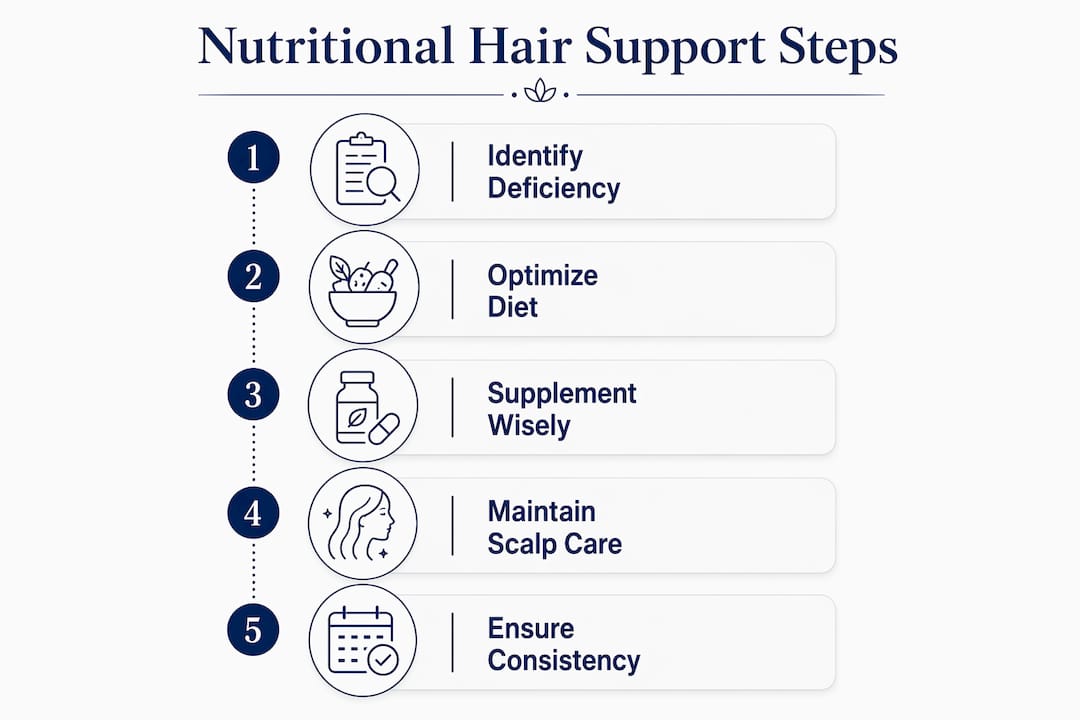
The most effective daily strategy for hair vitality starts with food, not supplements. A diet built around lean proteins, leafy greens, legumes, and colorful vegetables covers most of the nutrient bases your follicles need. Supplements fill confirmed gaps. They do not replace the nutritional complexity of whole foods.
Practical steps to build a diet for hair vitality:
- Eat protein at every meal. Aim for sources like eggs, chicken, fish, lentils, and Greek yogurt. Follicles need a continuous amino acid supply, not a single large dose.
- Include iron-rich foods daily. Lean red meat, white beans, spinach, and fortified cereals all contribute. Pair plant-based iron with vitamin C to maximize absorption.
- Add zinc through nuts and seeds. Pumpkin seeds, hemp seeds, and cashews are practical, portable sources.
- Get vitamin D from sunlight and food. Fatty fish, egg yolks, and fortified dairy provide dietary vitamin D. Sun exposure helps, but many people still need a supplement to reach adequate levels, especially in northern climates.
- Manage stress actively. Chronic stress elevates cortisol, which disrupts the hair growth cycle independently of nutrition. Sleep, movement, and stress reduction are non-negotiable parts of the picture.
Scalp care also matters. A clean, well-circulated scalp delivers nutrients from the bloodstream more effectively to each follicle. Products that support scalp health, like Ayurvedic hair growth oils, work alongside nutrition rather than replacing it. The two approaches address different parts of the same system.
Consistency is the variable most people underestimate. Visible improvements take a minimum of 3–6 months because the hair growth cycle moves slowly. People who quit after six weeks rarely see results, not because the approach failed, but because the timeline was not realistic.
When you do add a supplement, choose one that targets your confirmed deficiency. Supplements are tools to bridge diet gaps, not the foundation of a hair health plan. Work with a physician or registered dietitian to interpret your blood work and select the right dose. The beauty industry’s integration of iron, zinc, and vitamin D into professional hair care services reflects a growing recognition that internal nutrition and external care belong together.
Key Takeaways
Nutritional hair support works by correcting specific deficiencies in protein, iron, zinc, and vitamin D, and visible results require consistent effort over a minimum of 3–6 months.
| Point | Details |
|---|---|
| Test before supplementing | Blood panels for ferritin, vitamin D, and zinc identify real deficiencies before you spend money on supplements. |
| Food comes first | Whole foods deliver synergistic nutrients that isolated supplements cannot fully replicate. |
| Results take time | The hair growth cycle means visible density improvements require at least 3–6 months of consistent nutritional support. |
| Genetics set the ceiling | Nutrition helps you reach your follicle’s natural potential, but it cannot exceed your genetic baseline. |
| Nutrition is one factor | Hormones, stress, thyroid function, and inflammation all affect hair loss independently of diet. |
What I have learned about nutrition and hair after years of real experience
I started Crisanbeauty after dealing with postpartum hair loss, and the experience taught me something the supplement aisle never will: the body is not a simple input-output machine. I tried every popular supplement during that period. Some helped. Most did not, because I was not targeting confirmed deficiencies. I was guessing.
What actually moved the needle was getting blood work done, correcting a low ferritin level through diet and a targeted iron supplement, and being patient enough to wait four months before judging the results. The hair that came back was not magical. It was just my hair, growing at the rate it was always capable of growing, once it had what it needed.
The part conventional advice gets wrong is the timeline. People expect results in weeks. The biology does not work that way. The anagen phase is slow, and the follicle does not care about your urgency. What it cares about is a consistent supply of the right nutrients, day after day, for months.
My honest recommendation: prioritize your diet, get tested, and be skeptical of any product that promises fast results. Nutrition is real and it works. But it works on the body’s schedule, not yours. Pair it with good scalp care, manage your stress, and give it time. That combination is less exciting than a miracle supplement, but it is the one that actually delivers.
— CRISAN
Crisanbeauty products that work alongside your nutrition plan
Nutrition builds the foundation for healthy hair from the inside. Crisanbeauty’s plant-based formulas support that foundation from the outside, using Ayurvedic botanical ingredients manufactured in the USA.
The Complete Hair Follicle Support supplement is formulated with sea moss and targeted nutrients to complement the dietary work you are already doing. For people focused on length and density, the hair length essentials supplement combines sea moss with adaptogens to support the growth cycle. And for scalp health, Crisanbeauty’s Ayurvedic hair growth oil works directly at the follicle level, supporting circulation and scalp wellness alongside your nutritional routine. Healthier hair starts with what you eat. Crisanbeauty helps you take care of the rest.
FAQ
What is nutritional hair support in simple terms?
Nutritional hair support is the practice of supplying your hair follicles with the specific vitamins, minerals, and proteins they need to grow and stay strong. It works by correcting dietary gaps that slow or disrupt the hair growth cycle.
How long does it take to see results from hair nutrition changes?
Visible improvements in hair density typically take 3–6 months after correcting a nutritional deficiency. The hair growth cycle moves slowly, and patience is required for any dietary or supplement change to show results.
Do hair growth supplements work for everyone?
Supplements only produce measurable results in people with confirmed deficiencies. Without a blood test showing a specific gap, most hair supplements offer no benefit and may distort lab results or cause toxicity at high doses.
Which nutrients are most important for hair growth?
Protein, iron, zinc, and vitamin D are the four nutrients most directly linked to follicle health and hair growth. Vitamin C enhances iron absorption, making it a valuable supporting nutrient in a diet for hair vitality.
Should I see a doctor before taking hair supplements?
Yes. Blood testing for ferritin, vitamin D, and zinc is the only reliable way to identify true deficiencies. A physician or registered dietitian can interpret your results and recommend the right supplement type and dose for your specific needs.
Recommended
- Complete Hair Follicle Support Vitamin or Powder – CRISAN Beauty
- Complete Hair Length Essentials - Sea Moss & Adaptogen Supplement - fo – CRISAN Beauty
- Why Is My Hair Thinning? 10 Common Causes of Hair Loss in Women – CRISAN Beauty
- Complete Hair Shine Essentials - Sea Moss & Collagen Supplement - for – CRISAN Beauty


