


Ayurveda can meaningfully support many kinds of hair thinning, especially the diffuse, stress-related, or seasonal shedding that responds to lifestyle change. Start with a warm bhringraj or sesame oil scalp massage two to three times a week, add a weekly herbal mask, and build in five to ten minutes of daily breathing practice. Give it several weeks of consistent effort before judging results.
TL;DR:
- Using calming oils like coconut or aloe is most effective for Pitta scalp imbalances characterized by redness, itching, and heat.
- Heavy sesame oil suits dry, brittle Vata hair, while lighter oils help balance greasy, congested Kapha scalps prone to buildup.
- Consistent scalp massage with lukewarm oil for 5 to 10 minutes, done three to four times weekly during active shedding, enhances hair health.
- Pairing herbal infusions such as bhringraj, amla, and brahmi with a nutrient-rich diet and stress reduction techniques accelerates visible hair improvements within 8 to 12 weeks.
- Severe, patchy, or sudden hair loss warrants medical evaluation, as Ayurveda addresses only stress-related and diffuse thinning patterns.
Table of Contents
- Understanding Ayurvedic Hair Loss Remedies Through Dosha Patterns
- Best Ayurvedic Herbs and Oils for Hair Growth
- How to Use Ayurvedic Hair Remedies at Home
- Diet, Stress, and Lifestyle Support for Hair Regrowth
- Professional Ayurvedic Therapies and When to See a Doctor
- What the Research Actually Shows
- Why Crisanbeauty Treats Hair Oil as a Ritual, Not a Quick Fix
- Building Your Ayurvedic Hair Routine With Crisanbeauty
- Sources
- FAQ
Understanding Ayurvedic Hair Loss Remedies Through Dosha Patterns
Ayurveda treats hair loss as a symptom, not a standalone problem, and traces most cases back to an imbalance in one of three doshas. Figuring out which pattern matches your scalp is the actual starting point for choosing ayurvedic remedies for hair fall that work instead of guessing at random oils.
Pitta imbalance shows up as a scalp that runs hot, sometimes with redness, itching, or premature graying alongside the shedding. Excess heat, spicy food, alcohol, and chronic anger or frustration all aggravate Pitta. The fix leans cooling: coconut oil, aloe, and calmer routines instead of more stimulation.
Vata imbalance looks like dry, brittle, frizzy hair that breaks before it even has a chance to fall out naturally. Irregular sleep, skipped meals, excessive travel, and anxiety all feed Vata. Heavier, warming oils like sesame and consistent daily rhythms work better here than light treatments.
Kapha imbalance tends toward an oily scalp, clogged follicles, and hair that feels weighed down and slow to grow. Overeating, dairy-heavy diets, and sedentary habits aggravate Kapha. Lighter oils and more frequent, gentle cleansing help clear the congestion.
A quick self-check helps narrow things down:
- Scalp feels warm or irritated, hair thinning at the crown: likely Pitta
- Hair is dry, flyaway, and snapping mid-shaft: likely Vata
- Scalp feels greasy within a day of washing, hair loss is gradual: likely Kapha
- Symptoms overlap: many people carry a two-dosha pattern, especially Vata-Pitta from chronic stress
Modern triggers rarely map to just one dosha. Hormonal shifts (postpartum, perimenopause, thyroid changes), poor sleep, high-stress jobs, and heat styling can push any constitution out of balance, which is why matching the remedy to the current symptom picture matters more than sticking to one dosha type for life.
Best Ayurvedic Herbs and Oils for Hair Growth
Ayurvedic treatment for hair loss draws on a fairly small set of herbs that show up across almost every traditional formula, each with a distinct job. Here is how they rank in practical usefulness, starting with the most versatile.
Bhringraj is the herb Ayurvedic practitioners reach for first. Known as the “king of hair” in traditional texts, it is typically infused into oil and massaged into the scalp to nourish hair follicles and reduce breakage. It shows up in more clinical research than any other Ayurvedic hair herb, including a randomized trial pairing bhringraj oil massage with nasal oil therapy discussed further below.
Amla (Indian gooseberry) is prized for its antioxidant content and its role in strengthening the hair root. You can use it two ways: topically as an oil or paste, and internally as a juice or powder, since Ayurveda treats gut health and hair health as connected. Scalp-nourishing herbs like amla work slowly but tend to have a compounding effect over months rather than weeks.
Brahmi earns its place for calming the nervous system as much as for the scalp itself, which matters because stress-driven hair thinning does not resolve with topical treatment alone. Used as an oil or applied as a powder paste, brahmi supports both mental calm and hair strength at the same time, making it a strong fit for Vata-Pitta patterns tied to anxiety or overwork.
Three more herbs round out a practical Ayurvedic toolkit:
- Fenugreek (methi): rich in mucilage that softens hair and helps with breakage; commonly ground into a paste
- Neem: antimicrobial and anti-inflammatory, useful for dandruff or an irritated, Kapha-leaning scalp
- Hibiscus: conditions and adds shine, and the flowers are traditionally infused into oil for a gentler, cosmetic-forward result
Carrier oil choice matters as much as which herb you infuse into it. Coconut oil is cooling, so it fits Pitta scalps that run hot or irritated. Sesame oil is warming and deeply nourishing, better suited to dry, brittle Vata hair. Lighter oils, or a smaller quantity of any oil left on for a shorter time, work best for Kapha scalps prone to buildup. Getting this pairing backward, heavy sesame oil on an already oily Kapha scalp, for example, can make congestion worse instead of better.
How to Use Ayurvedic Hair Remedies at Home
Technique matters here more than most people assume. The scalp massage itself, not just the oil sitting on top of it, appears to be the active ingredient behind improved hair metrics in several small studies, which means rushing through application wastes half the benefit.
The warm oil massage method:
- Warm your chosen oil until it is lukewarm, testing it on your wrist before applying it to your scalp.
- Section your hair and apply oil directly to the scalp, not just the strands.
- Massage using your fingertips (never nails) in gentle circular motions for 5 to 10 minutes, working from the hairline back toward the crown.
- Leave the oil on for at least one hour, or overnight if your scalp runs dry or normal.
- Wash out with a mild, sulfate-free shampoo, since harsh cleansers strip the very nourishment you just worked in.
Three mask recipes worth keeping in rotation:
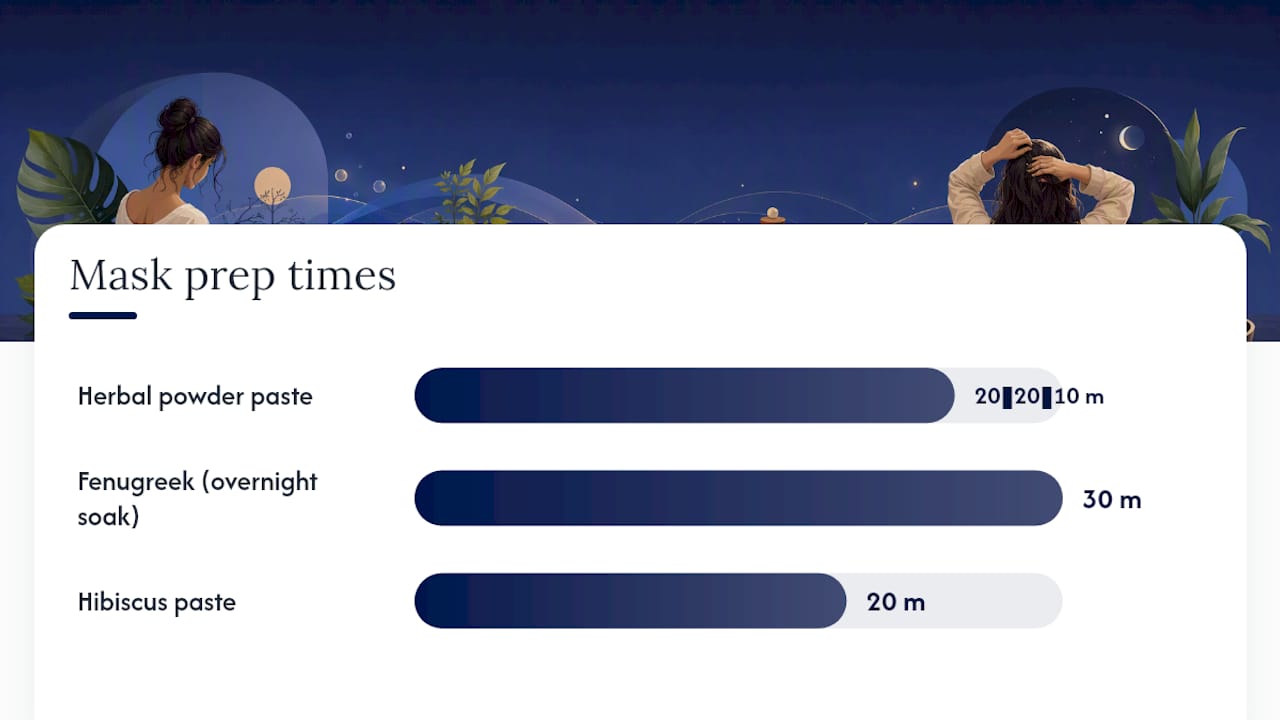
Mix bhringraj, amla, and brahmi powders with water or plain yogurt into a smooth paste, apply for 20 to 30 minutes, then rinse. For breakage-prone hair, soak two tablespoons of fenugreek seeds overnight, blend into a paste, and leave on for 30 minutes before washing. For shine and mild conditioning, blend fresh or dried hibiscus flowers and leaves into a paste and apply for 20 minutes.
Nasya, the practice of applying medicated oil into the nostrils, is a traditional Ayurvedic therapy tied to hair health through its effect on the head and sinus region. At home, this typically means a few drops of a prescribed oil like yastimadhuka (licorice) taila, but it carries real caveats: the oil needs to be appropriate for the condition, the dose matters, and anyone with sinus infections, recent nasal surgery, or uncertain oil sourcing should work with a trained Ayurvedic practitioner rather than experiment solo.
Pro Tip: If you’re dealing with active, noticeable shedding, massage three to four times a week. Once things stabilize, twice weekly is enough to maintain results without over-oiling the scalp and clogging follicles.
Frequency should shift with your symptoms. Active hair fall calls for more consistent oiling; once shedding slows, cut back to avoid buildup, particularly if you lean Kapha.
Diet, Stress, and Lifestyle Support for Hair Regrowth
Topical treatment only gets you halfway. Ayurveda has always treated hair as a byproduct of digestion and blood quality, which is why hair loss diet tips sit right alongside oils and masks in traditional practice, not as an afterthought.
Favor warm, cooked meals over cold or raw food, since Ayurveda considers a strong digestive fire essential to nutrient absorption. Prioritize iron and protein: lentils, leafy greens, eggs, and nuts. Small daily amounts of ghee and sesame seeds are traditional additions believed to nourish hair from within.
Stress reduction is not optional in this framework. Nadi Shodhana, or alternate nostril breathing, is a specific practice Ayurvedic sources recommend for balancing Vata and Pitta and lowering the kind of chronic stress that keeps hair follicles in a resting phase longer than they should be. Sleep timing matters just as much: disrupted sleep correlates with worse hair loss outcomes in research on stress and scalp health, and going to bed before 11 p.m. is a standard Ayurvedic recommendation for restoring Pitta balance overnight.
A few supplements show up repeatedly in Ayurvedic practice:
- Ashwagandha: an adaptogen used to buffer cortisol and support stress resilience, typically taken for 8 to 12 weeks before evaluating effect
- Amla: taken internally as juice or powder for antioxidant support
- Always check with a doctor before adding any adaptogen if you are pregnant, nursing, or on thyroid medication
Combining internal support with topical oiling and massage is what integrative reviews consistently point to as the most effective overall approach, and it is also what shortens the realistic timeline to visible improvement, generally landing in that same 8 to 12 week window rather than dragging on indefinitely.
Professional Ayurvedic Therapies and When to See a Doctor
Some cases need more than a home routine, and Ayurveda has dedicated clinical therapies for exactly that. Shirodhara involves a steady stream of warm oil poured over the forehead and scalp, used for chronic stress-related thinning and Vata-Pitta imbalance. Shiro Abhyanga is a more intensive practitioner-administered scalp massage, often using the same bhringraj oils used at home but applied with specific pressure points and sequencing. Nasya, done in a clinical setting, allows for stronger or more targeted oil formulations than what is safe to self-administer. Virechana, a therapeutic purgation, is reserved for more severe Pitta imbalance and should only happen under a qualified practitioner’s supervision.
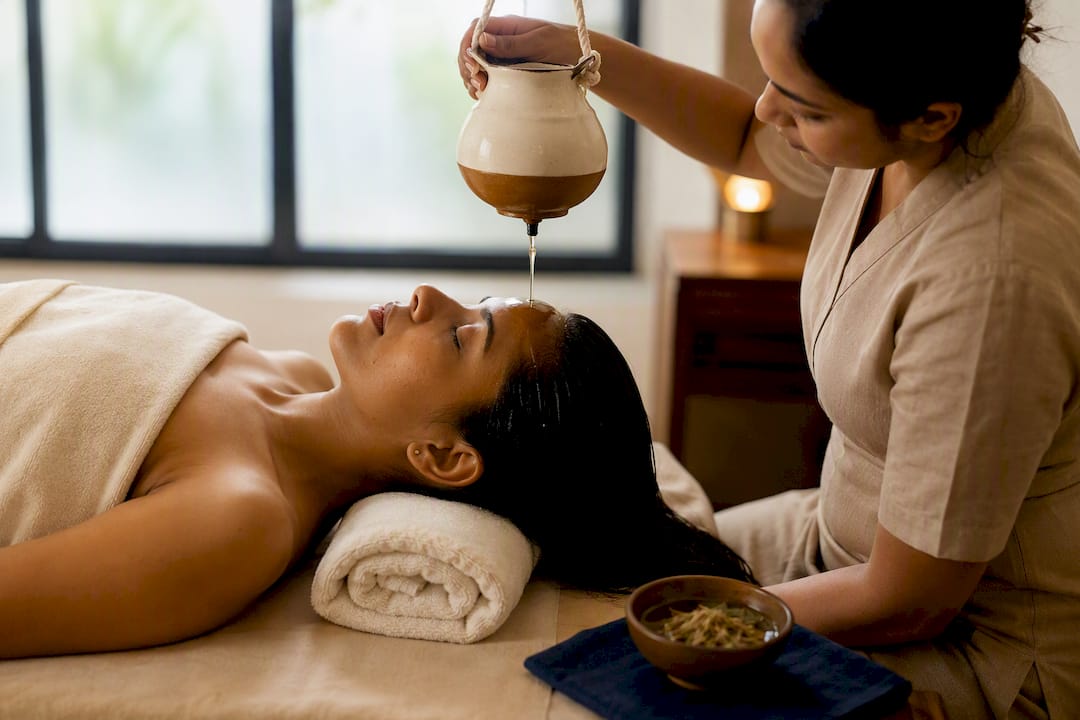
These therapies suit people with chronic, refractory thinning that has not responded to home care, or cases with a clear Pitta or stress-driven pattern confirmed by a practitioner.
Some symptoms are not Ayurveda’s job to solve. See a dermatologist if you notice:
- Sudden, heavy shedding (handfuls of hair, not a gradual increase)
- Patchy bald spots rather than diffuse thinning
- Scalp redness, pain, or signs of infection
- Hair loss alongside fatigue, weight change, or other systemic symptoms
When vetting an Ayurvedic practitioner, check for formal training credentials, ask about the sourcing and dosage of any herbal oils used, and expect clear consent conversations about what is being applied and why.
What the Research Actually Shows
A 2025 randomized controlled trial of 104 female patients found a statistically significant improvement in hair density and reduced shedding after a 21-day regimen combining Bhringaraj oil scalp massage with Yastimadhuka oil nasal therapy, compared to nasal therapy alone (p < 0.05).
Broader reviews back the mechanism, if not always the specifics: herbal extracts and biological studies of ingredients like amla and neem show antioxidant and anti-inflammatory activity that plausibly supports scalp health, though sample sizes across this research tend to be small and study designs vary widely. Nothing here amounts to a guaranteed cure. The honest takeaway is that combined ritual and topical approaches carry a real, measurable signal, strong enough to justify trying them, while atypical or severe hair loss still deserves a medical workup alongside any Ayurvedic routine.
Why Crisanbeauty Treats Hair Oil as a Ritual, Not a Quick Fix
The company was founded following its leader’s own postpartum hair loss experience, focusing on formulating products rooted in Ayurvedic botanical tradition, manufacturing domestically, and setting realistic expectations without overpromising. Every product is built to support a dosha-aware ritual, not replace it. The oil does its job when the massage, the diet, and the patience behind it are doing theirs too.
— CRISAN
Building Your Ayurvedic Hair Routine With Crisanbeauty
Crisanbeauty’s product lines map directly onto the routine described above, so you are not left guessing which collection fits which step. CRISAN Oils are formulated for the warm oil scalp massage itself, blended from a tradition of 55 botanical ingredients rather than a single herb, and suited to layering into the fingertip massage technique covered earlier. For the internal side of the routine, the Vitamins & Supplements line supports the diet and nutrient piece that Ayurveda treats as inseparable from topical care. Once your mask or oil treatment is done, the Shampoos and Conditioners collection offers a gentler rinse than most sulfate-heavy drugstore options, which matters since a harsh wash undoes a lot of what the massage just accomplished.
The brand encourages consistent use over an 8 to 12 week period, aligning with Ayurvedic practice, with products formulated domestically rather than relying on imported oils. If you are ready to put a real routine behind the theory, start by browsing the Ayurvedic hair growth oil collection and picking the oil that matches your dosha pattern from the massage steps above.
Sources
- Randomized Control Clinical Trial to assess the combine effect of Bhringaraja Taila Shiroabhyanga and Yastimadhu Taila Nasya in Khalitya of Females
- Relevant review on herbal interventions and scalp therapies (NCBI PMC)
- 7 Ayurvedic Remedies to control hair loss and re-growth
- PubMed study relevant to herbal actions for skin/hair
FAQ
Can Ayurveda help with hair loss?
Yes, for many common patterns of thinning, particularly stress-related and diffuse shedding, Ayurvedic practices like scalp massage, herbal oils, and dosha-matched diet changes show a real supportive effect. A 2025 randomized trial found statistically significant improvement in hair density using combined oil massage and nasal therapy. Severe or patchy hair loss still needs a medical evaluation alongside any Ayurvedic routine.
What are some natural remedies for hair growth and thickness?
Bhringraj and amla oil massages, brahmi for stress-related thinning, and fenugreek paste for breakage are the most widely used herbal treatments for hair loss in Ayurvedic practice. Consistent scalp massage technique, warming the oil first and using circular fingertip motions for 5 to 10 minutes, matters as much as which herb you choose.
What are some home remedies for hair fall?
A weekly bhringraj, amla, and brahmi paste mask, combined with a warm oil scalp massage two to three times a week, is the core home routine for active shedding. Pairing this with an iron and protein rich diet and daily alternate nostril breathing addresses both the topical and internal sides Ayurveda considers connected.
How to fix hair thinning?
Start by identifying whether your pattern looks more Pitta (hot, irritated scalp), Vata (dry, brittle hair), or Kapha (oily, congested scalp), since the right oil and herb combination depends on that. Products like CRISAN Oils can support the massage step of that routine, but expect to commit to it for 8 to 12 weeks before judging results, and see a dermatologist if thinning is sudden or patchy rather than gradual.


