


What your hair actually needs from your diet
The most direct way to support hair health through nutrition is to maintain a balanced intake of protein, iron, vitamin D, and vitamin C. These four nutrients are foundational to follicle development and healthy hair growth. When any one of them runs low, you may start noticing thinning, shedding, or dull, brittle strands.
No single nutrient works alone. Hair vitality depends on your overall nutritional picture, not one magic pill or superfood.
Here is a quick look at the core nutrients and what they do:
- Protein: Hair follicles are mostly made of protein. Without enough, the growth cycle stalls and shedding increases.
- Iron: Carries oxygen to follicles via red blood cells. Low iron is one of the most common nutritional triggers for hair loss.
- Vitamin D: Linked to follicle cycling; confirmed deficiency is associated with alopecia types and reduced regrowth.
- Vitamin C: Supports collagen production and improves iron absorption from plant-based foods.
- Zinc: Aids the hair growth and repair cycle; deficiency can trigger telogen effluvium.
- B vitamins (especially biotin and B2): Help convert food into energy and support keratin production.
Table of Contents
- How specific nutrients shape your hair’s strength and growth
- Practical ways to nourish your hair with what you eat
- Why you should talk to a doctor before taking hair supplements
- How plant-based nutrition fits into a whole-hair wellness approach
- Key Takeaways
How specific nutrients shape your hair’s strength and growth
Hair is not just protein. It is a complex structure built from keratin, collagen, ceramides, elastin, and melanin, and each of these bioactive macromolecules plays a distinct role in density, strength, and resilience. Clinical trials show that collagen supplementation, for example, can improve hair tensile strength and reduce breakage by supporting dermal papilla cell activity.
Vitamin A regulates sebum production, which keeps the scalp moisturized and hair flexible. Too little leads to dryness and breakage. Too much, however, causes hair loss, so food sources like sweet potatoes and spinach are a safer route than high-dose supplements.

B-complex vitamins (B1, B2, B7) support cellular metabolism and keratin synthesis. Biotin specifically drives keratin production, which is why it appears in so many hair products. However, biotin deficiency is quite uncommon in adults with varied diets.
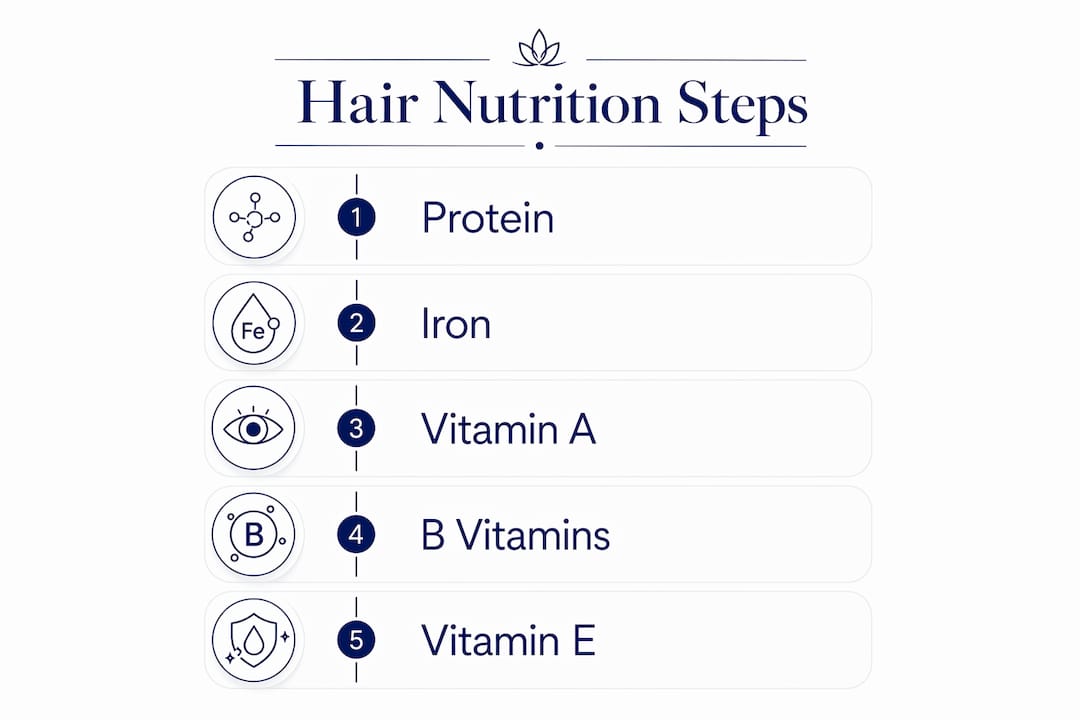
Vitamin E acts as an antioxidant, protecting follicles from oxidative stress. A 2010 clinical study found that tocotrienol supplements improved hair health in people with alopecia. Food sources include almonds, spinach, and wheat germ.
Omega-3 fatty acids from fatty fish like salmon and mackerel may indirectly improve scalp circulation and follicle nutrition. Direct evidence for hair growth is limited, but the overall cell health benefits are well established.
Key nutrients and their best food sources at a glance:
- Keratin/Protein: Eggs, lean meat, beans, lentils, Greek yogurt
- Iron: Spinach, lentils, fortified cereals, red meat, pumpkin seeds
- Vitamin D: Salmon, swordfish, egg yolks, fortified milk, mushrooms
- Vitamin C: Red bell peppers, citrus fruits, strawberries, broccoli
- Zinc: Oysters, black beans, pumpkin seeds, nuts
- Biotin (B7): Eggs, sweet potatoes, almonds, sunflower seeds
- Collagen precursors: Bone broth, citrus (for vitamin C to synthesize collagen), leafy greens
Plant-based eaters can meet most of these needs with intention. Iron from plant sources (non-heme iron) absorbs less efficiently than iron from meat, which makes pairing strategy important.
Practical ways to nourish your hair with what you eat
Building a diet that supports hair vitality does not require a complete overhaul. A few consistent habits make a real difference.
Start with protein at every meal. Hair follicles are primarily protein, so falling short, even temporarily, can push more hairs into the shedding phase. Aim for a protein source at breakfast, lunch, and dinner: eggs in the morning, lentils or grilled chicken at lunch, salmon or tofu at dinner.
Pair iron-rich foods with vitamin C. This is the most underused strategy for plant-based eaters. Non-heme iron from spinach, lentils, or fortified cereals absorbs significantly better when eaten alongside a vitamin C source. A squeeze of lemon over your lentil soup or red bell pepper in your spinach salad makes a measurable difference.
Pro Tip: Add sliced strawberries or a small glass of orange juice to any iron-rich plant meal. Vitamin C improves iron absorption from plant sources, which is critical for delivering oxygen to hair follicles.
Foods to prioritize for hair vitality:
- Eggs (protein, biotin, selenium, zinc)
- Spinach (iron, folate, vitamins A and C)
- Fatty fish like salmon (omega-3s, vitamin D, protein)
- Sweet potatoes (beta-carotene, which converts to vitamin A)
- Berries (vitamin C, antioxidants)
- Nuts and seeds (vitamin E, zinc, B vitamins, essential fatty acids)
- Beans and lentils (plant protein, iron, zinc, biotin, folate)
Watch your upper limits. Excess vitamin A and selenium can actually cause or worsen hair loss. Getting these nutrients from whole foods rather than high-dose supplements keeps you in a safe range naturally.
Lifestyle factors matter too. Smoking impairs nutrient absorption and reduces blood flow to follicles. Certain gastrointestinal conditions, like Crohn’s disease or celiac disease, can limit how well you absorb iron, zinc, and B vitamins even when your diet looks solid. If you suspect an absorption issue, a conversation with your doctor is the right next step. Good scalp care strategies alongside nutrition also help maintain the follicle environment where growth actually happens.
Why you should talk to a doctor before taking hair supplements
Supplement marketing is persuasive. But hair loss is multifactorial, driven by genetics, thyroid health, hormonal shifts, stress, and autoimmune conditions, not just nutrient gaps. Taking supplements without knowing your actual levels often means spending money on something that will not address the real cause.
Blood testing by a dermatologist or registered dietitian is the right starting point. A basic panel can reveal iron, ferritin, vitamin D, zinc, and thyroid function, giving you a clear picture before you buy anything.
Biotin deserves special attention. Most adults get enough from diet alone. More importantly, excess biotin can interfere with thyroid and hormone lab tests, producing false results that lead to misdiagnosis. If you are taking a biotin supplement and need bloodwork done, tell your doctor.
Steps to take before starting any hair-focused supplement:
- Get a full blood panel including ferritin, serum iron, vitamin D, zinc, and thyroid markers (TSH, T3, T4)
- Consult a dermatologist or registered dietitian to interpret results in the context of your hair concerns
- Rule out underlying conditions like thyroid disorders, polycystic ovary syndrome, or autoimmune alopecia
- Only supplement nutrients confirmed as deficient, and at doses your provider recommends
- Reassess after 3–6 months with follow-up testing
Supplements correct deficiencies. They do not accelerate hair growth in people who are already nutritionally replete. That distinction matters when you are evaluating what a product can realistically do for you.
How plant-based nutrition fits into a whole-hair wellness approach
Plant-based diets are naturally rich in many of the nutrients hair depends on: antioxidants, folate, vitamin C, vitamin E, zinc, and plant proteins. When planned well, they support hair density and shine without relying on animal sources. The key is intentionality, especially around iron, vitamin B12, and complete protein.
Benefits plant-based eaters often see for hair health:
- High antioxidant intake from fruits and vegetables protects follicles from oxidative damage
- Diverse plant proteins (legumes, quinoa, hemp seeds, tofu) supply the amino acids needed for keratin synthesis
- Vitamin C abundance from whole plant foods supports both collagen production and iron absorption
- Phytonutrients from herbs and botanicals, central to Ayurvedic tradition, support scalp circulation and follicle health
Crisanbeauty was built on exactly this philosophy. Rooted in Ayurvedic tradition and founded after a personal experience with postpartum hair loss, Crisanbeauty formulates every product around botanical ingredients that complement what you eat, not replace it. Their vegan daily hair vitamins are designed to fill the gaps that even a well-planned plant-based diet can leave, particularly around biotin, vitamin D, and key minerals.
Diet, stress management, and scalp care work together. Chronic stress depletes B vitamins and disrupts the hair growth cycle. Regular scalp stimulation improves microcirculation, helping nutrients from your food actually reach the follicle. Preparing your hair and scalp well before any styling appointment also reduces mechanical stress on already-vulnerable strands.
An integrative approach, combining a nutrient-dense diet, targeted supplementation when indicated, and consistent scalp care, gives your hair the best environment to grow and stay strong.
Crisanbeauty’s plant-based formulations are made in the USA and grounded in Ayurvedic tradition. Whether you are managing postpartum shedding, hormonal shifts, or just want stronger, longer hair, their hair growth vitamin collection and Ayurvedic hair growth oil are designed to work alongside your diet, not instead of it.
Key Takeaways
Balanced intake of protein, iron, vitamin D, and vitamin C is the nutritional foundation for healthy hair growth, and no supplement replaces a confirmed deficiency identified through blood testing.
| Point | Details |
|---|---|
| Protein is non-negotiable | Hair follicles are mostly protein; insufficient intake pushes more hairs into the shedding phase. |
| Pair iron with vitamin C | Vitamin C improves iron absorption from plant sources, directly supporting oxygen delivery to follicles. |
| Test before you supplement | Blood testing for ferritin, vitamin D, zinc, and thyroid markers should precede any hair supplement regimen. |
| Excess can cause loss | Too much vitamin A or selenium can worsen hair loss; whole foods keep intake in a safe range. |
| Plant-based diets can work | With intentional planning around B12, iron, and complete protein, plant-based eating fully supports hair vitality. |


