


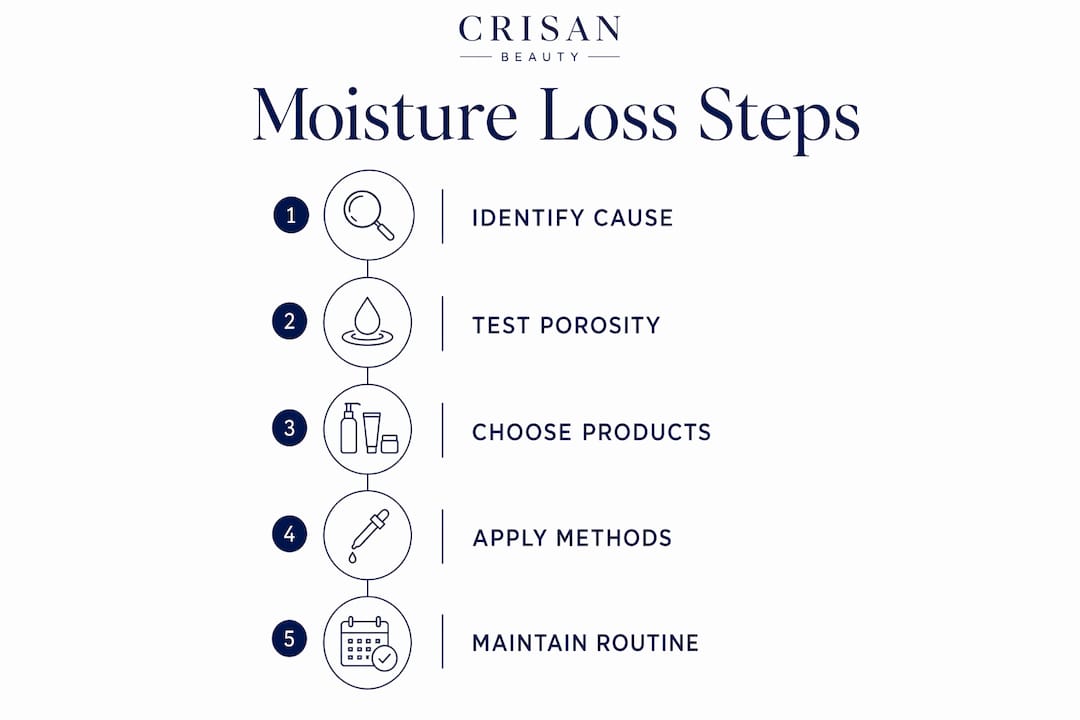
Hair loses moisture primarily because of a damaged or raised cuticle and depleted surface lipids, not simply a lack of water. Consumer perception research from BASF confirms that the “dry” feeling comes from cuticle roughness and lipid loss, not from measurable water deficit. The fastest path to hair that holds moisture is restoring those lipids and smoothing the cuticle back down. Here are five things you can do right now:
- Switch your leave-in to damp hair. Apply it shortly after towel-blotting while hair is still damp, rather than on completely dry strands.
- Sleep on a satin or silk pillowcase. Friction against cotton bedding wears the cuticle down night after night.
- Drop your heat tool temperature. Anything above 365°F accelerates lipid loss and cuticle lifting.
- Run a quick porosity test. Drop a clean, product-free strand into a glass of room-temperature water and watch it for two minutes (details in the porosity section below).
- Check your shampoo. If sodium lauryl sulfate (SLS) appears early in the ingredient list, it could be stripping more than just dirt.
Table of Contents
- Why does hair lose moisture? A quick self-diagnosis
- How does porosity control moisture retention in your hair?
- Which ingredients block moisture and which ones actually help?
- How do heat and chemical services damage the cuticle?
- How do environment and water quality dry out your hair?
- Can scalp health, hormones, or nutrition cause dry hair?
- Dehydrated vs. dry vs. damaged hair: which one do you have?
- A step-by-step routine to restore and retain moisture
- When should you see a professional about dry hair?
- Key Takeaways
- What Crisanbeauty has learned about moisture and why lipids come first
- Plant-based sealing options from Crisanbeauty for your moisture routine
Why does hair lose moisture? A quick self-diagnosis
Most causes of dry hair fall into five clusters. Scan the prompts below to find yours.
Raised cuticle or high porosity: Does your hair feel rough even right after conditioning? Does it absorb water fast but dry out just as fast? You likely have high-porosity hair. Jump to the porosity section.
Product buildup: Does your hair feel coated, heavy, or dull despite regular conditioning? Non-water-soluble silicones and heavy butters can block conditioning agents from reaching the strand. Read the ingredient guide next.
Heat and chemical damage: Do you color, relax, or use a flat iron or curling wand more than once a week? Chemical services and heat both lift and roughen the cuticle, speeding moisture evaporation. The styling section covers this.
Hard water or environment: Does your hair feel worse after washing than before? Do you live in a dry climate or a city with hard tap water? Mineral buildup reduces conditioning effectiveness. See the environment section.
Scalp or health issue: Did dryness appear suddenly alongside hair thinning, fatigue, or scalp flaking that won’t clear up? That pattern points to a medical cause. The health section and the “when to seek help” section are for you.
How does porosity control moisture retention in your hair?
Porosity describes how easily water and products move in and out of the hair shaft. The cuticle, a layer of overlapping scales on the outside of each strand, controls that movement. When those scales lie flat and tight, water enters slowly and leaves slowly. When they are raised or damaged, water rushes in and rushes back out, leaving hair that feels dry within hours of washing.
Lipid research published in PMC shows that ceramides and polar lipids, though a small fraction of hair’s total composition, are the primary regulators of water diffusion. Disorder in that lipid layer impairs moisture retention even when humidity is adequate. Two strands with identical water content can feel completely different depending on their lipid structure.
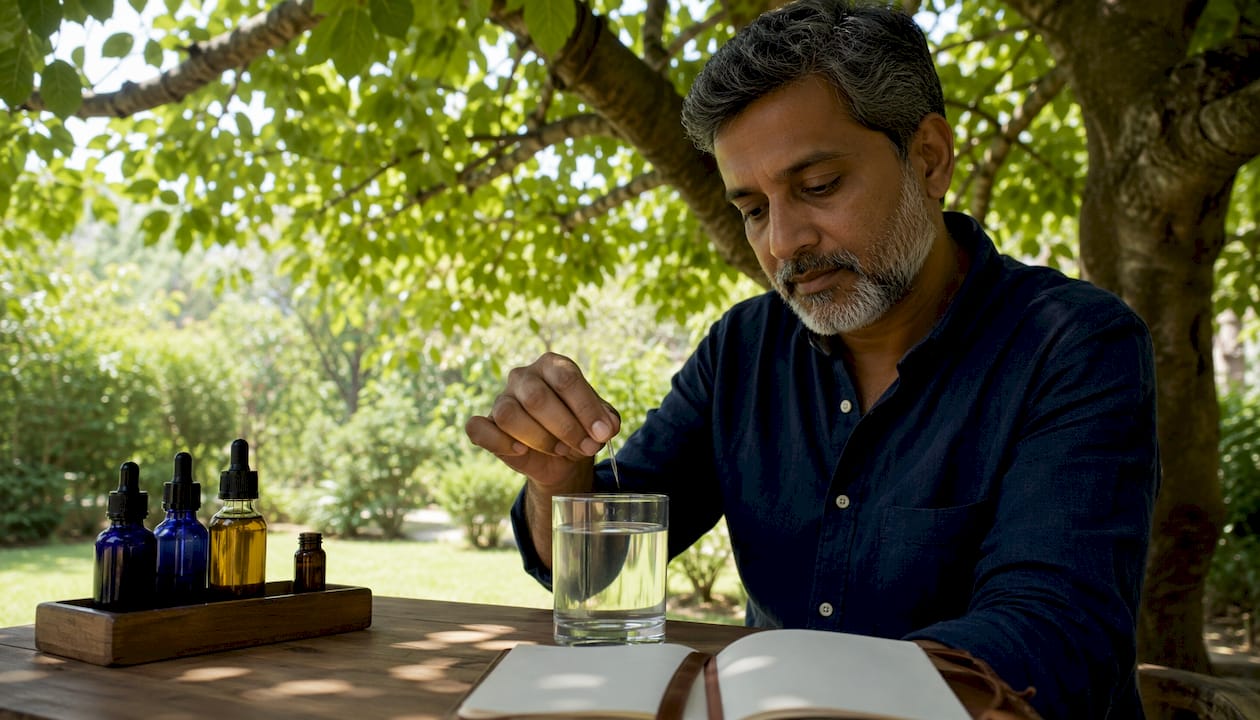
How to test your porosity at home
Float test: Drop one clean, product-free strand into a glass of room-temperature water. Watch for two minutes.
- Floats on top: low porosity (tight cuticle, water-resistant)
- Sinks slowly to the middle: normal porosity
- Sinks quickly to the bottom: high porosity (raised or damaged cuticle)
Feel test: Slide two fingers up a dry strand from tip to root.
- Smooth with no snags: low porosity
- Slight texture, no roughness: normal porosity
- Rough, catches your fingers, or feels uneven: high porosity
| Porosity | Typical causes | Best product types | Routine approach |
|---|---|---|---|
| Low | Genetics, minimal processing | Lightweight humectants, liquid leave-ins, heat-activated conditioners | LCO (liquid, cream, oil); use gentle heat to open cuticle during deep conditioning |
| Normal | Healthy, minimal damage | Balanced humectants and emollients | Standard LOC or LCO; weekly deep conditioning |
| High | Chemical services, heat damage, mechanical friction | Protein-humectant blend, heavier occlusives, ceramide-rich products | LOC (liquid, oil, cream); seal with a plant oil every wash day |
Pro Tip: Low-porosity hair needs heat to absorb conditioning treatments. Sit under a hooded dryer or use a warm towel wrap for 15–20 minutes during your weekly deep conditioning session.
Which ingredients block moisture and which ones actually help?
Understanding what is in your products matters as much as how you use them. Some ingredients create buildup that prevents conditioning agents from reaching the strand at all.
Ingredients that can block moisture over time:
- Non-water-soluble silicones (dimethicone, cyclopentasiloxane) coat the strand and resist water-based conditioners unless removed with a clarifying wash.
- Heavy butters (shea, mango, cocoa) used in large amounts on low-porosity hair can sit on top of the cuticle rather than penetrating it.
- High concentrations of petrolatum without prior hydration seal in dryness rather than moisture.
Ingredients that restore and retain moisture:
- Humectants (glycerin, propanediol, panthenol) attract water to the hair surface. Their effectiveness depends on ambient humidity: in very dry air, glycerin can pull moisture out of the strand rather than from the environment, so pair them with an occlusive in dry climates.
- Occlusives and emollients (plant oils like argan, jojoba, and baobab; fatty alcohols like cetyl alcohol) seal the cuticle and slow water loss.
- Cationic conditioning agents (behentrimonium methosulfate, cetrimonium chloride) bond to the negatively charged hair surface and smooth the cuticle, improving slip and perceived softness. Conditioning agents visibly improve slip even when the hair’s actual water content is unchanged.
Clarifying frequency: If you use silicone-heavy products, a chelating or clarifying shampoo once or twice a month removes buildup and lets your conditioner work properly. For everyone else, once a month is usually enough.
Application rule: Apply leave-in to damp (not dripping) hair. The sequence for LOC is liquid leave-in first, then oil, then cream. For LCO, swap the last two steps. Applying oil to soaking-wet hair dilutes it and reduces its sealing effect.
How do heat and chemical services damage the cuticle?
Heat tools and chemical services are two of the most direct causes of dry hair because both physically alter the cuticle. Flat irons and curling wands break the temporary hydrogen bonds in the hair fiber, and when those bonds reform after cooling, the cuticle scales often settle in a slightly raised position. Chemical services, including coloring, bleaching, relaxing, and perming, go further: they break permanent disulfide bonds, permanently changing the hair’s internal structure and making the cuticle more porous.
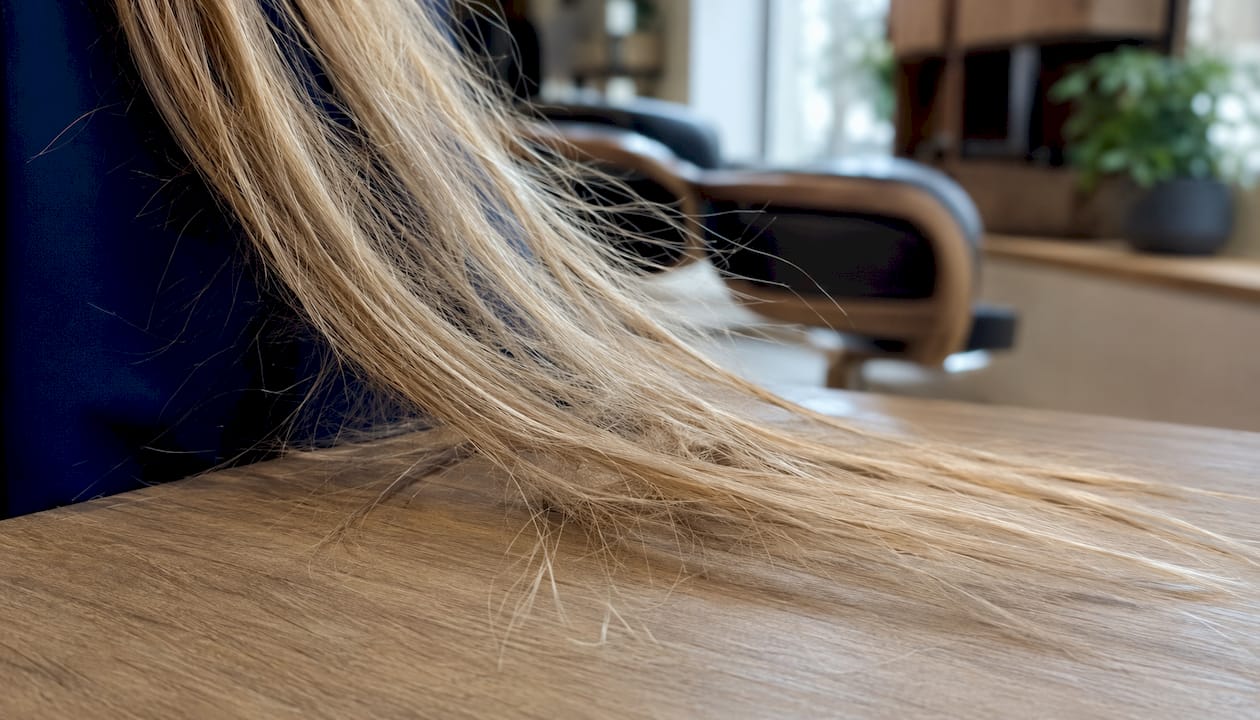
The practical result is faster moisture evaporation and more friction between strands. A structured routine that includes reducing heat frequency and protecting the cuticle is more effective than simply adding more product.
Practical temperature guidance: Keep heat tool temperatures moderate and suitable for your hair type to avoid excessive damage. Always apply a heat protectant to damp or dry hair before any tool touches it.
On protein: If your hair stretches excessively before snapping or feels limp and gummy after wetting, a protein treatment can help rebuild structure. But if your hair already feels stiff, snaps with minimal stretch, or has recently had a heavy protein treatment, adding more protein will worsen brittleness. Signs you need protein: excessive elasticity, mushy feel when wet, limp curls. Signs you need to skip it: stiff, snapping, or crunchy texture.
Pro Tip: Repeated wet-to-dry cycles weaken hair over time. Hygral fatigue from excessive soaking and drying can cause the limp, gummy feeling people often mistake for “too much moisture.” Limit full soaks to wash days and avoid re-wetting hair daily.
How do environment and water quality dry out your hair?
The air around you constantly pulls moisture from your hair or pushes it in, depending on relative humidity. In very dry conditions (below 30% relative humidity), hair loses water to the air faster than it can be replenished. In very humid conditions, the cuticle swells with excess water, which paradoxically makes hair feel rougher and frizzier.
Climate-specific steps:
- Dry climates or heated indoor air: Layer a humectant under an occlusive sealant. Using a bedroom humidifier to maintain moderate indoor humidity helps reduce overnight moisture loss.
- Humid climates: Use film-forming products (flaxseed gel, polyquaternium-based anti-frizz serums) to prevent the cuticle from swelling with excess atmospheric water.
- Sun and wind: UV radiation degrades the lipid layer and oxidizes the proteins in the cuticle. Wear a hat or use a UV-protective hair product on days with prolonged sun exposure.
Hard water: Calcium and magnesium minerals in tap water deposit on the hair shaft and reduce how well conditioners bond to the strand. Hard water mineral buildup reduces conditioning effectiveness and leaves hair feeling dry. Mitigation options include a shower filter, a weekly chelating shampoo (look for EDTA or phytic acid in the ingredients), or a final rinse with filtered or distilled water.
Can scalp health, hormones, or nutrition cause dry hair?
Sometimes the cause of dry hair is not what you put on it but what is happening inside your body. The scalp produces sebum, a natural oil that coats the hair shaft and acts as its first moisture barrier. When sebum production drops, hair loses that protective layer.
Medical authorities link dry hair to hypothyroidism, nutritional deficiencies, and other hormonal imbalances. MedlinePlus lists hypoparathyroidism, malnutrition, and anorexia alongside environmental and habit-based causes. Scalp inflammation and dermatitis also disrupt the lipid barrier at the skin level, which affects the hair emerging from those follicles. Understanding sebum and scalp health is a useful starting point if you suspect an internal cause.
Nutrition checklist to discuss with your clinician:
- Iron deficiency reduces oxygen delivery to follicles and is one of the most common nutritional drivers of dry, brittle hair.
- Vitamin D plays a role in follicle cycling; low levels are associated with hair thinning and reduced sebum output.
- Essential fatty acids (omega-3 and omega-6) are direct building blocks of the sebum lipid layer.
- Adequate dietary protein is required for keratin synthesis; very low protein intake shows up as dull, fragile hair within weeks.
Red flags that warrant a clinician visit: sudden widespread dryness paired with hair thinning, scalp redness or lesions that do not respond to gentle cleansing, persistent flaking after four weeks of consistent care, or dryness accompanied by fatigue, cold intolerance, or unexplained weight changes. These patterns may indicate underlying causes of hair thinning that go beyond a product fix.
Dehydrated vs. dry vs. damaged hair: which one do you have?
These three terms describe different problems, and treating one as the other makes things worse. Experts are clear on the distinction: dehydrated hair is a temporary state of low water content influenced by humidity and washing habits; dry hair reflects a lipid or sebum deficiency; damaged hair has structural harm to the cuticle or cortex. As hairstylist Adam Reed explains in Glamour, “Dry hair needs hydration, while damaged hair often needs strengthening alongside moisture. Treating one as the other can actually leave the hair feeling worse.”
| Condition | Core problem | Primary goal | First step |
|---|---|---|---|
| Dehydrated | Temporary low water content | Restore water, seal it in | Humectant leave-in on damp hair, sealed with a light oil |
| Dry | Lipid/sebum deficiency | Replenish surface lipids | Weekly deep conditioning with emollient-rich mask; reduce wash frequency |
| Damaged | Cuticle or cortex structural harm | Rebuild structure, then seal | Protein treatment followed by a moisturizing conditioner; reduce heat |
Timeline: With consistent changes, you can expect less frizz and improved softness within two weeks. Noticeably better slip and manageability usually appear by week four. Improved elasticity and fewer split ends take closer to eight weeks of sustained routine changes.
A step-by-step routine to restore and retain moisture
A structured routine consistently outperforms any single product. Here is a realistic program organized by frequency.
- Daily: Apply a small amount of plant oil or a sealing cream to dry ends before styling. Sleep on a satin pillowcase or in a satin bonnet.
- Every wash day (every 2–3 days for most hair types): Wash with a sulfate-free shampoo to cleanse without stripping. Apply a leave-in conditioner to damp hair immediately after towel-blotting, then seal with oil or cream using your LOC or LCO sequence.
- Weekly: Deep condition for 20–30 minutes under a hooded dryer or warm towel wrap. This is the single highest-impact step for high-porosity hair.
- Monthly: Use a chelating or clarifying shampoo to remove mineral and product buildup. Follow immediately with a deep conditioning treatment.
- Protective night routine: Pineapple, braid, or loosely twist hair before bed. Secure with a satin scrunchie, never a rubber band.
Timeline expectations:
- Week 2: Less frizz, slightly softer feel after washing.
- Week 4: Noticeably improved slip during detangling, less breakage on the brush.
- Week 8: Better elasticity (hair stretches before snapping), fewer split ends, more consistent curl definition if applicable.
Pro Tip: High-porosity hair benefits most from the LOC method (liquid, oil, cream) because the heavier cream layer seals the oil in. Low-porosity hair does better with LCO (liquid, cream, oil) because a lighter cream absorbs more easily before the oil layer is applied.
When should you see a professional about dry hair?
Home care resolves most moisture issues within eight weeks. If yours does not, a professional evaluation is worth scheduling.
Red flags for a clinician visit:
- Rapid or patchy hair thinning alongside dryness
- Scalp lesions, persistent pain, or inflammation
- Hair that snaps with minimal force and no history of chemical services
- Dryness that appeared suddenly with no change in routine
Red flags for a salon consultation:
- Hair that feels gummy, mushy, or stretches excessively when wet (possible hygral fatigue or protein deficiency)
- No improvement after eight weeks of consistent routine changes
- Uncertainty about whether damage is chemical, mechanical, or structural
What to bring to your appointment: a list of every product you use and how often; your wash frequency and heat tool settings; photos of your hair when wet and dry; results of your home porosity test; a timeline of any recent chemical services (color, bleach, relaxer, keratin treatment). The more specific you are, the faster a professional can identify the real cause.
Key Takeaways
Hair that feels dry is almost always a cuticle and lipid problem first, and a water problem second; restoring surface lipids and smoothing the cuticle delivers faster, more lasting results than simply adding water.
| Point | Details |
|---|---|
| Test porosity first | Use the float or feel test to identify your porosity before choosing products or a routine. |
| Reduce damage at the source | Lower heat tool temperatures, reduce wash frequency, and sleep on satin to protect the cuticle daily. |
| Condition and seal in order | Apply humectant leave-in to damp hair, then seal with oil or cream using LOC or LCO based on your porosity. |
| Expect change in 2–8 weeks | Frizz improves by week two; elasticity and split-end reduction take closer to eight weeks of consistent care. |
| Crisanbeauty plant-based oils | Crisanbeauty’s plant-based hair oils are formulated to seal the cuticle and support the lipid layer as part of a consistent routine. |
What Crisanbeauty has learned about moisture and why lipids come first
The conventional advice around dry hair has always leaned toward “add more water.” Drink more water, use more hydrating products, wet your hair more often. The research tells a different story, and it is one that shaped how Crisanbeauty approaches every formulation.
Hair is not a living fiber. It cannot repair itself from the inside. The practical goal is always to protect what is there: the cuticle, the surface lipid layer, and the bonds that give hair its structure. Products that focus on delivering water without sealing it in are solving half the problem. The other half, the lipid half, is what actually determines whether hair holds that moisture for hours or loses it before you leave the house.
Crisanbeauty was founded after a personal experience with postpartum hair loss, and that experience made one thing clear: hair health is not about a single product. It is about understanding what your hair actually needs, building a routine around that, and using plant-based ingredients that support the cuticle and scalp without overloading them. The brand’s community of over 1.3 million followers reflects how many people are looking for exactly that: honest, practical guidance backed by real formulation philosophy, not marketing promises.
The diagnosis-first approach in this article, test porosity, identify the cause, match the treatment, is the same logic behind every Crisanbeauty product decision. Start with what the hair needs. Build from there.
Plant-based sealing options from Crisanbeauty for your moisture routine
Getting the routine right is the real work. Once you have your porosity result and your cause identified, a well-formulated plant-based oil can make the sealing step significantly easier and more consistent.
Crisanbeauty’s Ayurvedic hair growth oil is built around botanical ingredients drawn from generations of Ayurvedic tradition, formulated to seal the cuticle and nourish the scalp without heavy silicone buildup. It works as the “O” step in your LOC or LCO routine, applied to damp hair after your leave-in. Every product is made in the USA from plant-based ingredients, with no unrealistic promises attached.
Products are a support layer, not a substitute for the routine. If you are dealing with a medical cause, please consult a clinician before relying on topical products alone. For everyone else, visit the Crisanbeauty hair oil collection to find the right sealing option for your hair type and start the routine today.
Recommended
- Why Is My Hair Thinning? 10 Common Causes of Hair Loss in Women – CRISAN Beauty
- What Is Hair Density? Your Complete Guide to Fuller Hair – CRISAN Beauty
- How to Grow Thicker Hair Naturally: 2026 Guide – CRISAN Beauty
- Why Stress Causes Hair Loss: What You Need to Know – CRISAN Beauty
A simple sealing step for dry-feeling ends
After applying a water-based leave-in to damp hair, use a small amount of CRISAN 16 oz Hair Oil to help seal in softness, add shine and reduce the rough feel caused by friction.
- Apply sparingly from mid-lengths to ends.
- Adjust the amount for your texture and porosity.
- Patch test first and stop use if irritation occurs.
See the complete CRISAN hair-oiling guide for dosage, timing and wash-day guidance.
Cosmetic hair-care product. No subscription is started.


