


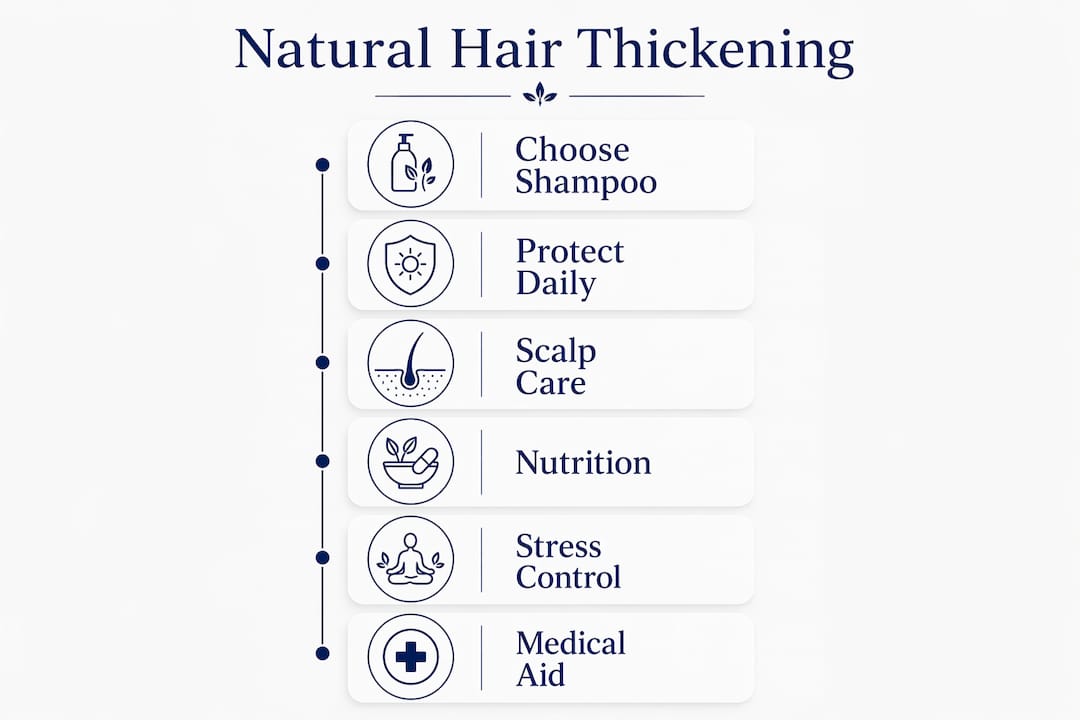
The most effective way to grow thicker hair naturally combines four things: daily scalp massage, targeted nutrition, gentle hair care, and consistent topical treatments like rosemary oil. Results typically take several months, and these methods work best for thinning caused by stress, nutritional gaps, or poor scalp health. Advanced genetic hair loss responds differently and may need medical support alongside natural care.
Here is a quick summary of what works:
- Scalp massage: 4 minutes daily produces measurable density changes over several months
- Rosemary oil: Performed comparably to minoxidil for mild thinning in a clinical trial
- Protein intake: Aim for 1.2–1.6 g per kg of body weight daily to supply keratin building blocks
- Biotin, iron, and zinc: Support follicle health, but only supplement after a blood test confirms deficiency
- Sulfate-free shampoo: Protects scalp moisture and follicle function
- Stress management: Chronic stress triggers telogen effluvium, a temporary but real form of hair thinning
- Combined approach: Multiple lifestyle strategies consistently outperform any single remedy
No single product or habit does this alone. The readers who see the best results are the ones who stack these methods together and stay consistent.
Table of Contents
- 1. How to choose the right shampoo and conditioner for thicker hair
- 2. Daily hair care habits that protect thickness and reduce damage
- 3. Scalp care essentials for natural hair thickening
- 4. What to eat and supplement for thicker, denser hair
- 5. How stress affects your hair and what to do about it
- 6. When natural methods are not enough: medical options to consider
- 7. How Crisanbeauty approaches natural hair thickening
- 8. Why hydration matters for hair thickness
- 9. Understanding the hair growth cycle
- 10. How hormonal balance affects hair thickness
- Crisanbeauty’s plant-based hair growth products are worth trying
- Key Takeaways
1. How to choose the right shampoo and conditioner for thicker hair
The shampoo you use every day either supports your scalp or quietly works against it. Sulfate-heavy formulas strip the scalp’s natural oils, disrupt its moisture balance, and can weaken follicle function over time. Switching to a sulfate-free, pH-balanced shampoo is one of the simplest upgrades you can make for fine or thinning hair.
When it comes to conditioner, the goal is hydration without weight. Heavy silicone-based conditioners coat the hair shaft and can flatten fine strands, making hair look thinner rather than fuller. Look for lightweight, water-based formulas that add moisture without leaving residue.
Features to look for when choosing products:
- Sulfate-free formula: Preserves scalp oils and reduces irritation
- pH-balanced (4.5–5.5): Keeps the hair cuticle smooth and reduces frizz
- Volumizing ingredients: Hydrolyzed keratin, panthenol, or biotin add body without buildup
- Fragrance-free or lightly scented: Reduces the risk of scalp sensitivity
- Conditioner application: Apply mid-shaft to ends only, not directly on the scalp, to avoid weighing roots down
Avoid products with sodium lauryl sulfate (SLS), sodium laureth sulfate (SLES), or heavy mineral oils near the top of the ingredient list. These are the most common culprits behind dry, brittle hair and a compromised scalp environment.
2. Daily hair care habits that protect thickness and reduce damage
How you handle your hair every day has a direct effect on how thick it looks and how much of it you keep. Washing too often strips the scalp of its natural sebum, which acts as a built-in conditioner for the hair shaft. Washing 2–3 times per week is the sweet spot for most people with fine or thinning hair.
The tools you use matter just as much as the products. Boar-bristle brushes distribute natural scalp oils evenly from root to tip, which conditions the hair naturally and reduces breakage. Plastic brushes, by contrast, generate static and friction that weaken the cuticle over time.
Practical habits to protect your hair:
- Detangle gently: Use a wide-tooth comb on damp hair, starting from the ends and working upward
- Limit heat styling: Flat irons and blow dryers above 350°F cause cumulative protein damage; air-dry when possible
- Skip tight styles: Ponytails, buns, and braids pulled too tight cause traction alopecia, a preventable form of hair loss
- Trim regularly: Every 8–12 weeks removes split ends before they travel up the shaft and cause breakage
- Protect from the sun: UV exposure degrades the hair’s outer cuticle layer; a UV-protective spray or hat helps on long outdoor days
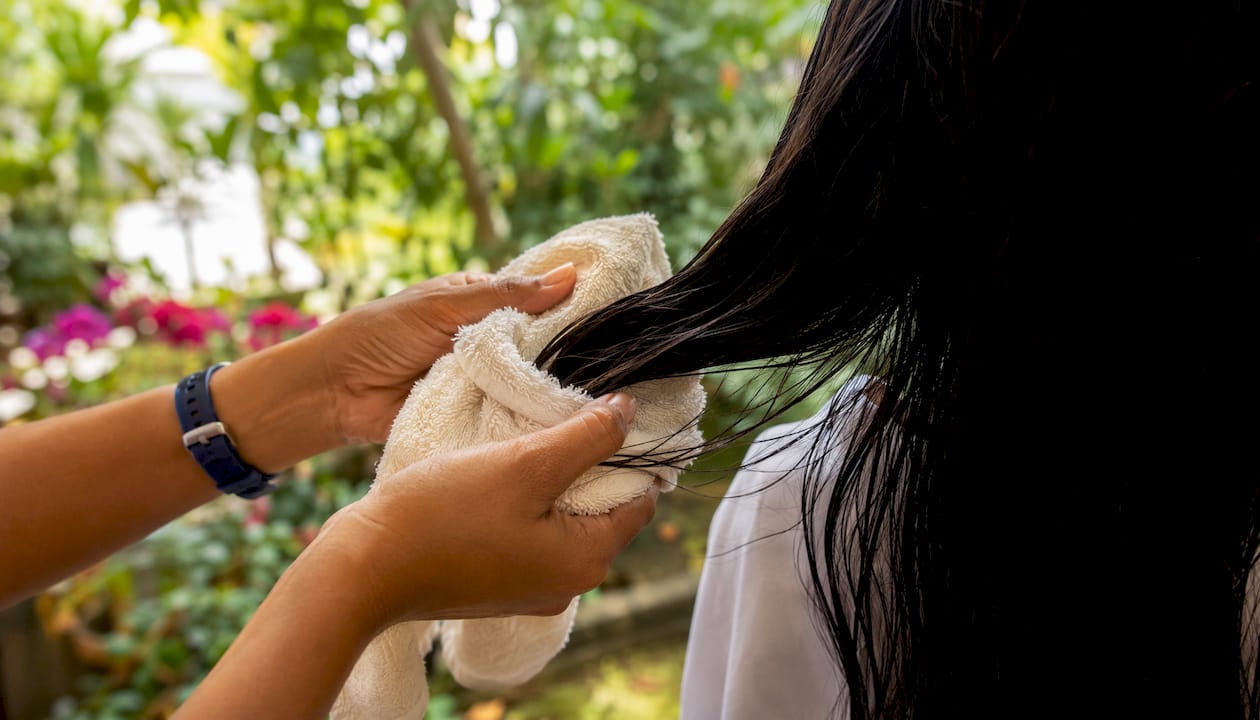
Pro Tip: When towel-drying, blot rather than rub. Friction from vigorous towel rubbing roughens the cuticle and increases breakage, especially when hair is wet and at its most fragile.
3. Scalp care essentials for natural hair thickening
Your scalp is where hair growth actually begins, so its health determines everything downstream. A clean, well-circulated scalp with a balanced microbiome gives follicles the best possible environment to produce thicker, stronger strands.
Daily scalp massage is the most well-supported natural technique for increasing hair density. A 2016 clinical study found that four minutes of standardized scalp massage per day produced measurable increases in hair thickness over several months. The mechanism is increased blood flow to the dermal papilla cells, which are the cells that control hair follicle activity. Technique matters here: use your fingertips, not your nails, and move the scalp tissue in small circular motions rather than dragging across the surface. Fingertip-only massage prevents micro-tearing and follicle inflammation that can actually slow growth.
Rosemary oil is the most clinically supported essential oil for hair thickness. One trial found it performed comparably to minoxidil for mild thinning, making it a genuinely useful natural topical treatment. Peppermint oil also shows promise for stimulating follicle activity, though the evidence base is smaller. Both should be diluted in a carrier oil like jojoba or coconut before applying to the scalp.
Key scalp care practices:
- Massage daily: 4 minutes, fingertips only, circular motions
- Apply rosemary or peppermint oil: Dilute 2–3 drops per teaspoon of carrier oil; massage in and leave for at least 30 minutes before washing
- Avoid overwashing: More than once daily strips the scalp’s protective acid mantle
- Exfoliate monthly: A gentle scalp scrub removes product buildup that can clog follicles
- Check for dandruff or dermatitis: Chronic scalp inflammation is a direct barrier to healthy follicle function
For those who wear braids or protective styles, scalp care routines need to adapt to keep follicles healthy under tension.
4. What to eat and supplement for thicker, denser hair
Hair is made almost entirely of keratin, a protein, so your diet is the foundation of everything. Protein intake in the range of 1.2–1.6 g per kilogram of body weight per day gives follicles the raw material they need. For a 140-pound person, that is roughly 76–102 g of protein daily. Eggs, salmon, Greek yogurt, lentils, and lean chicken are all strong sources.

Beyond protein, specific micronutrients play a direct role in follicle health. Biotin, iron, and zinc are the three most commonly deficient in people experiencing thinning hair, according to Cleveland Clinic dermatologists. Vitamin D and omega-3 fatty acids also support the hair growth cycle, with omega-3s found in fatty fish, flaxseed, and walnuts.
The critical caveat: supplementing without knowing your levels can backfire. Excess iron or zinc without a confirmed deficiency can actually increase shedding. A simple blood panel from your doctor tells you exactly where you stand before you spend money on supplements.
Foods and nutrients that support hair thickness:
- Protein: Eggs, salmon, lentils, Greek yogurt, chicken
- Biotin (B7): Eggs, almonds, sweet potato, sunflower seeds
- Iron: Spinach, red meat, lentils, fortified cereals (pair with vitamin C to improve absorption)
- Zinc: Pumpkin seeds, oysters, beef, chickpeas
- Vitamin D: Fatty fish, fortified dairy, sunlight exposure
- Omega-3 fatty acids: Salmon, sardines, flaxseed, walnuts
For nutritional hair support, dietary changes take 3–6 months to show up visibly in hair health, since follicles respond slowly to internal changes. Patience and consistency are the actual strategy here.
5. How stress affects your hair and what to do about it
Chronic stress is one of the most underestimated causes of hair thinning. When the body is under sustained stress, it can push a large number of hair follicles into the telogen (resting/shedding) phase simultaneously. This condition, called telogen effluvium, typically causes noticeable shedding 2–3 months after the stressful event. The good news is that it is usually temporary.
Understanding why stress causes hair loss is the first step toward reversing it. Once the stressor is addressed, most people see regrowth within 3–6 months, though full recovery can take up to a year depending on the severity.
Lifestyle adjustments that support hair recovery:
- Sleep: Aim for 7–9 hours per night; growth hormone, which supports follicle activity, is primarily released during deep sleep
- Exercise: Regular moderate exercise improves circulation to the scalp and reduces cortisol levels
- Meditation or breathwork: Even 10 minutes daily lowers cortisol, the hormone most directly linked to telogen effluvium
- Avoid tight hairstyles: Tension on the scalp compounds stress-related shedding
- Protect hair from environmental damage: Pollution and UV exposure add oxidative stress to follicles already under pressure
Hair recovery after a stressful period is not instant. Committing to these habits for several months before evaluating results gives your follicles the time they need to cycle back into the growth phase.
6. When natural methods are not enough: medical options to consider
Natural approaches work well for hair thinning caused by stress, nutritional deficiencies, or scalp issues. They have limited effect on advanced androgenetic alopecia (genetic hair loss), where follicles have miniaturized significantly. Knowing the difference saves time and prevents frustration.
If you have been consistent with natural methods for 6 months and see no improvement, a dermatologist visit is the right next step. A scalp biopsy or trichoscopy can identify the exact cause of thinning and guide treatment. The scope of natural hair regrowth is real but bounded by the underlying cause.
Medical options worth knowing about:
- Minoxidil: An FDA-approved topical treatment available over the counter; works by extending the anagen (growth) phase and is effective for both men and women
- Finasteride / Dutasteride: Prescription oral medications that block DHT, the hormone that drives androgenetic alopecia; primarily used in men
- PRP (platelet-rich plasma) therapy: Involves injecting concentrated growth factors from your own blood into the scalp; evidence is growing but still emerging
- Low-level laser therapy (LLLT): FDA-cleared devices like laser caps stimulate follicle activity; best used as a complement to other treatments
- Hair transplant: A surgical option for advanced loss; results are permanent but require sufficient donor hair
Combining natural methods with an approved treatment like minoxidil often produces better outcomes than either approach alone, particularly for early-stage androgenetic alopecia. The goal is not to choose between natural and medical but to use what the evidence supports for your specific situation.
7. How Crisanbeauty approaches natural hair thickening
Crisanbeauty was founded after a personal experience with postpartum hair loss, which gives the brand a specific, practical perspective on what people with thinning hair actually need. The approach is grounded in Ayurvedic botanical tradition combined with modern formulation standards, and every product is manufactured in the USA.
The brand’s hair growth oil draws on Ayurvedic ingredients with documented effects on scalp circulation and follicle nourishment. The formulas are plant-based, free from harsh synthetics, and designed for consistent daily use rather than quick fixes. Crisanbeauty also publishes education across a community of more than 1.3 million followers, covering topics from scalp health to nutrition to stress management.
Pro Tip: If you are new to Ayurvedic hair care, start with a single botanical oil applied during your scalp massage routine. Consistency over 8–12 weeks gives you a clear read on whether the ingredient is working for your hair type before adding anything else.
The brand’s product line includes a vegan daily hair vitamin, a botanical hair growth oil, and bundled options for people who want to address thinning from both inside and out. The philosophy is straightforward: support the follicle environment with the right inputs, stay consistent, and give the hair growth cycle time to respond.
8. Why hydration matters for hair thickness
Dehydrated hair breaks more easily, looks thinner, and loses elasticity. Water is the most basic building block of a healthy hair shaft, and both internal hydration (drinking enough water) and external moisture retention (using the right products) affect how thick and resilient your hair feels.
Internally, chronic mild dehydration can reduce nutrient delivery to the scalp, since blood carries both water and the micronutrients follicles depend on. Externally, dry hair has a rougher cuticle, which causes strands to tangle, snap, and shed more than they should.
Practical ways to keep hair well-hydrated:
- Drink at least 8 cups of water daily, more if you exercise regularly
- Use a leave-in conditioner or hair oil on damp hair to seal in moisture before it evaporates
- Apply a deep conditioning mask once a week, especially if you use heat or color
- Avoid alcohol-heavy styling products, which dry out the hair shaft over time
- In dry climates or during winter, a humidifier at home helps maintain ambient moisture that benefits both skin and hair
The connection between internal hydration and hair health is often overlooked. Hair that feels perpetually dry despite good product use is sometimes a signal to look at water intake first.
9. Understanding the hair growth cycle
Hair does not grow continuously. It moves through three distinct phases, and understanding them explains why results from any hair thickening method take months rather than weeks.
Anagen (growth phase): This is the active phase, lasting 2–7 years for scalp hair. The longer your anagen phase, the longer your hair can grow. Scalp massage, rosemary oil, and adequate nutrition all work partly by extending or supporting this phase.
Catagen (transition phase): A brief 2–3 week period where the follicle shrinks and detaches from its blood supply. No active growth occurs here.
Telogen (resting/shedding phase): Lasts roughly 3 months. The old hair sheds and the follicle rests before restarting the cycle. Stress, nutritional deficiency, and hormonal shifts can push too many follicles into telogen at once, causing the diffuse shedding known as telogen effluvium.
At any given time, roughly 85–90% of scalp hairs are in the anagen phase. When that percentage drops due to stress or deficiency, the overall density of your hair visibly decreases. This is why addressing the root cause matters more than any topical product alone.
10. How hormonal balance affects hair thickness
Hormones are one of the most powerful regulators of the hair growth cycle, and imbalances are a leading cause of thinning in both women and men. Dihydrotestosterone (DHT), a byproduct of testosterone, binds to receptors in hair follicles and gradually miniaturizes them in people with a genetic sensitivity. This is the mechanism behind androgenetic alopecia.
For women, the picture is more complex. Estrogen generally supports the anagen phase, which is why many women notice thicker, fuller hair during pregnancy when estrogen levels are high. After childbirth, estrogen drops sharply, pushing many follicles into telogen simultaneously. This is postpartum hair loss, and it typically resolves within 6–12 months as hormones stabilize.
Thyroid hormones also play a direct role. Both hypothyroidism and hyperthyroidism can cause diffuse hair thinning, and this type of loss often does not respond to topical treatments until the thyroid condition is managed. If your hair thinning is accompanied by fatigue, weight changes, or temperature sensitivity, a thyroid panel is worth requesting from your doctor.
Other hormonal factors that affect hair thickness:
- Polycystic ovary syndrome (PCOS): Elevated androgens in women with PCOS can cause scalp thinning and excess facial or body hair
- Perimenopause and menopause: Declining estrogen reduces the anagen phase duration, leading to finer, shorter strands over time
- Cortisol: Chronically elevated cortisol from stress suppresses hair growth signals at the follicle level
Addressing hormonal causes of thinning usually requires medical guidance, but the natural lifestyle strategies covered throughout this guide, particularly stress reduction, adequate sleep, and balanced nutrition, all support healthier hormonal regulation as a foundation.
Crisanbeauty’s plant-based hair growth products are worth trying
If you have worked through the natural methods in this guide and want a formulated product built around the same principles, Crisanbeauty is a practical next step. The brand was founded specifically after postpartum hair loss, so the product line is designed for real thinning, not just general hair wellness.
The Ayurvedic hair growth oil is formulated with botanical ingredients that support scalp circulation and follicle nourishment, designed to be used during your daily scalp massage routine. The vegan daily hair vitamin covers the micronutrient gaps most commonly linked to thinning, including biotin, iron, and zinc, in a plant-based formula made in the USA. For the best results, the hair growth bundle pairs the oil and vitamins together, addressing both the scalp environment and internal nutrition at the same time. Visit Crisanbeauty to find the right starting point for your hair type and goals.
Key Takeaways
Combining daily scalp massage, targeted nutrition, gentle hair care, and consistent topical treatments like rosemary oil is the most effective natural approach to growing thicker hair, with visible results typically appearing after 4–6 months.
| Point | Details |
|---|---|
| Scalp massage works | Four minutes daily produces measurable hair density changes over 4–6 months. |
| Supplement after testing | Biotin, iron, and zinc support follicle health only when a blood test confirms deficiency. |
| Stress triggers shedding | Chronic stress causes telogen effluvium; managing it supports hair cycle recovery within 3–6 months. |
| Combined methods win | Multiple lifestyle strategies consistently outperform any single remedy for natural hair thickening. |
| Crisanbeauty’s approach | Ayurvedic hair growth oil and vegan daily vitamins address both scalp health and internal nutrition together. |


