


Jojoba oil supports hair health by moisturizing the scalp, sealing in hydration, and reducing breakage. It helps growth indirectly by creating a healthier scalp environment, but it is not a medical treatment for hair loss. For fine hair, start with a small number of drops. Coarse or curly hair can use a larger amount. A 30-minute pre-shampoo mask works well for most people; overnight application is safe for deeper conditioning.
Here is where jojoba fits into your routine:
- Moisture sealant: Apply to damp hair after washing to lock in hydration
- Scalp moisturizer: Massage directly into the scalp to ease dryness and flaking
- Pre-shampoo mask: Coat strands before washing to protect against shampoo stripping
- Frizz tamer: Use 1–2 drops on dry ends to smooth the cuticle
- Overnight treatment: Apply to scalp and lengths, cover with a silk cap, and wash out in the morning
Key Takeaways
Jojoba oil supports hair health as a moisture sealant and scalp conditioner, with indirect benefits for growth through reduced breakage and a calmer scalp environment, not as a direct hair-growth treatment.
| Point | Details |
|---|---|
| Jojoba works as a sealant | Apply to damp hair to lock in moisture; it does not penetrate the shaft like coconut or argan oil. |
| Dose by hair type | Fine hair needs 3–5 drops; coarse or curly hair can use 8 or more drops per session, as needed. |
| Best routines | A 30-minute pre-shampoo mask or overnight treatment delivers the deepest conditioning results. |
| Not a medical treatment | Jojoba does not treat clinical hair loss; see a dermatologist for sudden shedding or patchy loss. |
| Crisanbeauty’s approach | CRISAN’s Ayurvedic Hair Growth Oil pairs jojoba with supporting botanicals in a USA-made formulation designed for consistent, long-term scalp and strand health. |
Table of Contents
- How does jojoba oil actually work on your hair?
- What does the research say about jojoba oil benefits for hair?
- How to use jojoba oil on your hair, step by step
- Who should be cautious, and what are the downsides?
- Why CRISAN’s Ayurvedic approach makes jojoba work harder
- Realistic results: what to expect and when
- CRISAN Ayurvedic Hair Growth Oil fits right into these routines
- Sources and further reading
How does jojoba oil actually work on your hair?
Jojoba is technically a liquid wax, not an oil. Its structure is made up of wax esters, which closely mimic the sebum your scalp produces naturally. According to Byrdie, this biomimetic quality is what makes jojoba so effective at moisture retention and sebum regulation. Because it resembles what your scalp already makes, it absorbs without leaving a heavy residue.
Jojoba’s wax esters form a breathable, moisture-locking film on the hair cuticle. This microporous barrier resists water loss while still allowing vapor to pass through, protecting strands from friction-driven breakage without suffocating the scalp.
That distinction matters for how you apply it. Unlike coconut or argan oil, jojoba does not penetrate the hair shaft for internal conditioning. It works on the outside, sealing the cuticle and protecting the strand’s surface. This is why applying it to damp hair, rather than dry, gives you better results. The oil locks in the water already present in the strand rather than acting as the primary hydrator.
On the scalp, jojoba does more than moisturize. It carries vitamin E, B-complex vitamins, zinc, and copper, all of which support the scalp’s natural barrier. Its anti-inflammatory and mild antimicrobial properties can help calm irritation, support a balanced scalp microbiome, and reduce flaking linked to dryness or mild eczema. The Cleveland Clinic notes these anti-inflammatory benefits alongside its vitamin and mineral content as key reasons it soothes sensitive scalps.
One thing jojoba does not do is directly stimulate follicles. It is not a pharmacologic hair-growth agent. What it does is reduce the conditions that slow growth, including breakage, scalp inflammation, and moisture loss.
What does the research say about jojoba oil benefits for hair?
The evidence for jojoba falls into three tiers, and being clear about each one helps you set the right expectations.
Scalp moisture and barrier support: This is where the evidence is strongest. Jojoba’s wax-ester structure is well-documented for its ability to seal moisture and reduce transepidermal water loss on skin and scalp. Dermatologists and cosmetic chemists consistently recommend it for dry scalp conditions.
Dandruff and scalp-soothing: Moderate evidence supports jojoba as a complementary tool for mild dandruff and scalp irritation. Its anti-inflammatory properties can reduce the redness and flaking associated with dryness. However, board-certified dermatologists are clear that jojoba should not be your first move for stubborn dandruff. Women’s Health reports that dermatologists recommend starting with medicated shampoos containing salicylic acid or zinc pyrithione for persistent flaking before adding natural oils. For readers dealing with scalp psoriasis specifically, natural remedies for scalp psoriasis can complement medical care, but jojoba alone is not a treatment.
Direct hair regrowth: The evidence here is weak. Elle’s expert roundup is direct on this point: jojoba does not act as a hair-growth drug. It supports healthy growth indirectly by protecting strands from breakage, soothing scalp inflammation, and helping manage conditions that impede follicles. The nutrients it carries, including zinc and copper, are linked to hair strength, but topical delivery of these minerals is not the same as clinical treatment.
“Jojoba oil is a great addition to a hair care routine for moisture and scalp health, but it is not a replacement for treatments like minoxidil when there is actual hair loss happening.” — Board-certified dermatologist guidance via Women’s Health
If you are experiencing sudden shedding, patchy loss, or signs of scalp infection, see a dermatologist. Jojoba is a wellness tool, not a medical one.
How to use jojoba oil on your hair, step by step
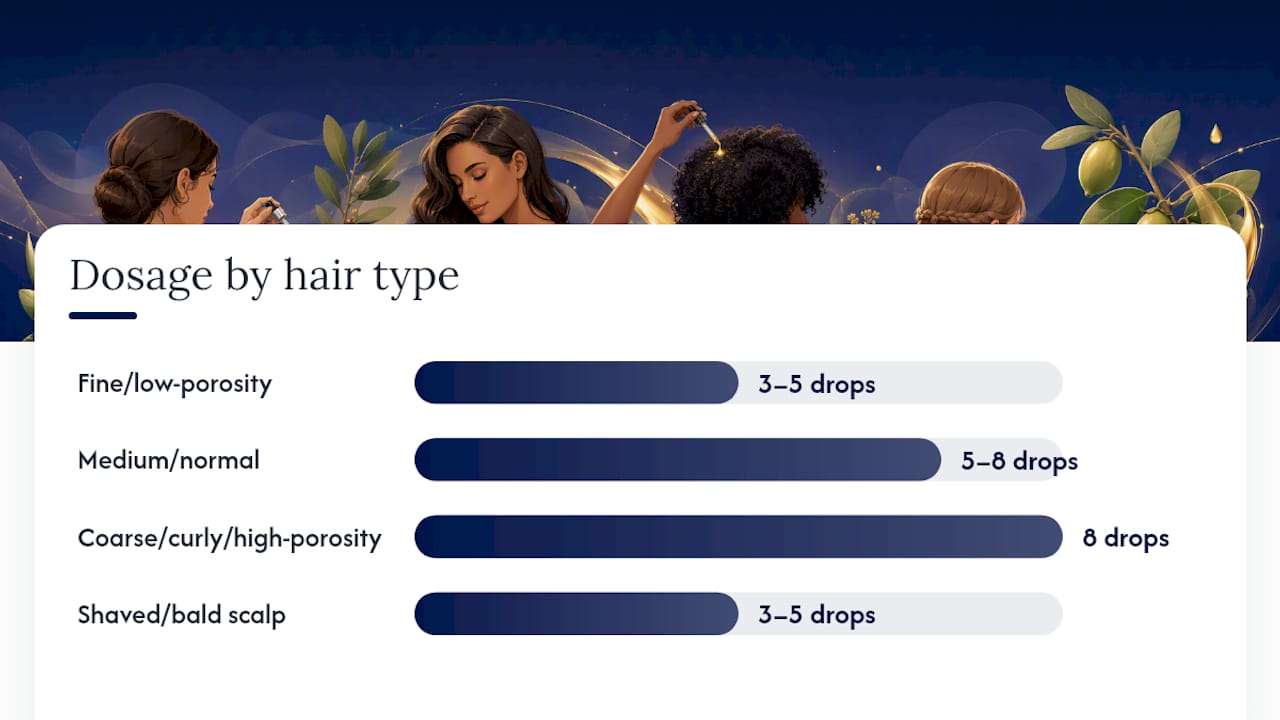
Dosage by hair type
| Hair Type | Amount | Frequency | Rinse? |
|---|---|---|---|
| Fine / low-porosity | 3–5 drops | 1–2x per week | Yes (pre-shampoo) or leave-in on ends only |
| Medium / normal | 5–8 drops | 2–3x per week | Optional |
| Coarse / curly / high-porosity | 8 drops | 3–4x per week | Optional; rinse for mask use |
| Shaved / bald scalp | 3–5 drops | Daily or as needed | No |
Four routines you can start today
A. Daily sealant (all hair types)
- Wash and condition hair as usual.
- Gently squeeze out excess water. Hair should be damp, not dripping.
- Warm 3–8 drops (depending on your hair type) between your palms.
- Smooth over mid-lengths and ends, avoiding the roots if your scalp is oily.
- Style as normal. No rinsing needed.
B. 30-minute pre-shampoo scalp mask
- Section dry or slightly damp hair into four parts.
- Apply 5–10 drops directly to the scalp in each section, working in small amounts.
- Massage for 5–7 minutes using fingertip pressure in circular motions.
- Distribute remaining oil through the lengths with your fingers or a wide-tooth comb.
- Leave on for 30 minutes, then shampoo twice to remove fully.
C. Overnight deep treatment
- Apply jojoba generously to the scalp and full lengths before bed.
- Use a wide-tooth comb to distribute evenly from root to tip.
- Cover with a silk or satin cap to protect your pillowcase and keep heat in.
- Wash out in the morning with a gentle clarifying shampoo.
- Follow with conditioner. Repeat once a week at most.
D. Mixing into conditioner or leave-in
- Add 3–5 drops of jojoba to your regular conditioner or leave-in product.
- Mix in your palm before applying to hair.
- This works especially well for fine hair that cannot handle straight oil application without looking greasy.
Pro Tip: When applying jojoba to the scalp, use a wide-tooth comb after massaging to distribute the oil evenly from root to tip. Concentrating oil in one spot can trap bacteria even though jojoba is generally non-comedogenic. Even distribution is what makes the difference between a healthy treatment and a buildup problem.
For a complete hair oiling routine for growth, pairing jojoba with a consistent schedule and gentle handling gives you the best long-term results.
Who should be cautious, and what are the downsides?
Jojoba is well-tolerated by most people, but there are real situations where you need to slow down or stop.
Common downsides to know:
- Buildup: Over-application without regular clarifying leads to product buildup, which can weigh hair down and clog follicles over time. Use a clarifying shampoo every 1–2 weeks if you oil frequently.
- Greasy appearance: Too much oil, especially on fine hair, leaves strands looking flat and oily. Start with the minimum amount and add more only if needed.
- Acne and folliculitis: Although jojoba is generally non-comedogenic, concentrated or unevenly applied oil can trap bacteria on the scalp, leading to local inflammation. Distribute carefully and avoid pooling.
- Not a medical treatment: Jojoba does not treat androgenetic alopecia, alopecia areata, or any other clinical hair-loss condition. Using it in place of prescribed treatments delays real care.
- Allergy risk: Rare but possible. Jojoba belongs to the Simmondsiaceae family; people with nut or seed sensitivities should patch test first.
How to patch test:
Apply a small amount of jojoba oil behind your ear or on your inner forearm. Leave it for 24 hours without washing. Then monitor the area for 5–7 days for redness, itching, or swelling. If any reaction appears, discontinue use.
When to see a dermatologist:
- Sudden or accelerating hair shedding
- Patchy hair loss or bald spots
- Scalp pain, pustules, or signs of infection
- Dandruff that does not respond to OTC medicated shampoos after 4–6 weeks
For persistent dandruff, antifungal scalp remedies and medicated shampoos are the appropriate first-line approach, not natural oils alone.
Why CRISAN’s Ayurvedic approach makes jojoba work harder
Crisanbeauty was founded after the brand’s founder experienced postpartum hair loss firsthand. That experience shaped the company’s approach: honest guidance, plant-based formulations, and no miracle promises. Every product is manufactured in the USA, and the formulations draw on generations of Ayurvedic tradition.
Here is what that means in practice for a jojoba-based routine:
- Supporting botanicals: Ayurvedic blends typically include herbs and plant actives that work alongside jojoba to address scalp circulation, inflammation, and strand strength. You can read more about scalp-nourishing herbs that appear in these formulations.
Realistic results: what to expect and when
Most people notice softer texture and reduced frizz soon after starting use. That is the sealant effect working immediately. Measurable improvements in length retention and less breakage take longer, typically several months of consistent use, because you are protecting strands over time rather than accelerating follicle activity.
What you should not expect: rapid regrowth or reversal of clinical hair loss. The research is clear that jojoba creates a better environment for the hair you already have to thrive. Clinical regrowth requires medical intervention, and no plant oil changes that.
At Crisanbeauty, the position is straightforward. Jojoba is a genuinely useful ingredient when used correctly and consistently. The people who see the best results are the ones who treat it as part of a sustainable routine, not a shortcut. Pair it with good nutrition, gentle handling, and realistic expectations, and it earns its place in your regimen.
CRISAN Ayurvedic Hair Growth Oil fits right into these routines
Healthy hair starts with a consistent, well-chosen routine. CRISAN’s Ayurvedic Hair Growth Oil is built around jojoba as a core ingredient, combined with Ayurvedic botanicals selected to support scalp health, reduce breakage, and encourage the conditions for stronger, longer hair. It is plant-based, manufactured in the USA, and formulated without the filler ingredients that undercut a clean routine.
Use it as a pre-shampoo scalp mask (5–10 drops, 30 minutes before washing), as an overnight treatment once a week, or as a daily sealant on damp ends. For fine hair, use 3–5 drops; for coarse or curly hair, use 8 or more drops per session. The dosage guidance in this article applies directly. If you want to go further, the Hair Growth Bundle pairs the oil with CRISAN’s hair vitamins for a complete topical and nutritional approach. Visit the product page to find the right option for your hair type and goals.
Sources and further reading
- 6 Skin and Hair Benefits of Jojoba Oil
- Jojoba Oil for Hair: Benefits and How to Use According to Experts
- How to Use Jojoba Oil for the Maximum Hair Benefits
- How To Use Jojoba Oil For Healthier Hair, Per Dermatologists
- Jojoba Oil for Scalp Moisture: Benefits, Uses & Safe Tips
Quick comparison
Jojoba oil vs. argan oil for hair
| Oil | Best known for | How to use it |
|---|---|---|
| Jojoba | A lightweight, wax-like emollient often used for scalp and strand conditioning. | Use sparingly on the scalp or as part of a pre-shampoo blend. |
| Argan | Softness, shine and smoothing dry-looking ends. | Use a few drops on lengths or ends. |
| CRISAN 55-oil blend | A single, ready-to-use ritual containing jojoba, argan and other plant oils. | Use as a pre-shampoo scalp-and-strand treatment or a tiny amount on dry ends. |
You do not necessarily have to choose one oil. A balanced blend can make the routine simpler while still letting you control the amount.
Use the complete CRISAN hair-oiling guide to choose timing, dosage and frequency.


