


Antifungal scalp remedies are defined as treatments that directly suppress or eliminate fungal organisms on the scalp, most commonly Malassezia yeast, which drives dandruff, seborrheic dermatitis, and persistent itching. The best examples of antifungal scalp remedies range from clinically tested natural ingredients like 5% tea tree oil to fermentation-derived botanical formulations such as FERMENZA®, which outperforms ketoconazole in laboratory tests. What separates effective treatment from temporary relief is consistent use and the right formulation for your specific scalp condition. This guide covers the top natural, medicated, and emerging options so you can make an informed choice.
1. Examples of antifungal scalp remedies that are natural and clinically supported
Natural scalp antifungals work best when they are backed by real clinical evidence, not just tradition. The options below have the strongest research support in 2026.
Tea tree oil shampoo
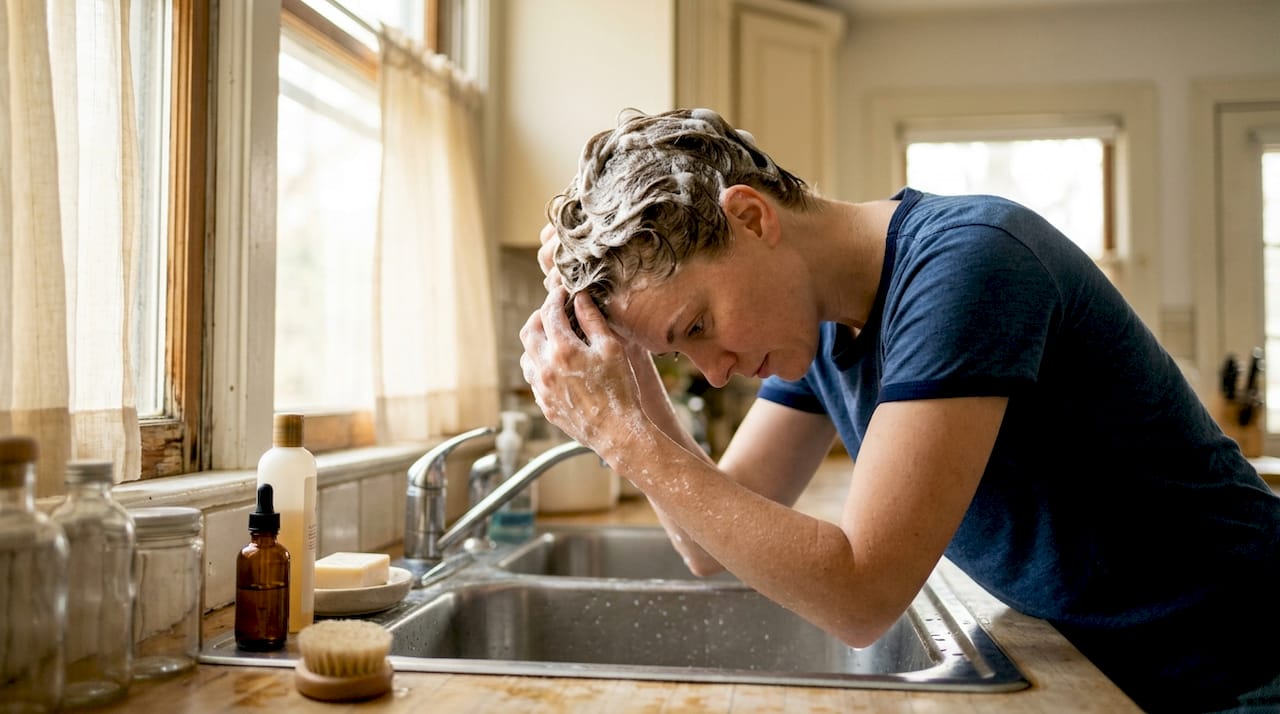
A 5% tea tree oil shampoo reduces scalp itching, scaling, and greasiness associated with seborrheic dermatitis within four weeks of consistent use. Tea tree oil disrupts fungal cell membranes and reduces inflammation at the same time. That dual action makes it one of the most practical natural options for daily or every-other-day use.
FERMENZA® fermented botanical extract
FERMENZA® is a fermentation-derived formulation made from pomegranate and beetroot extracts. It demonstrated 93% inhibition of Malassezia furfur in controlled tests, outperforming both ketoconazole and zinc pyrithione. Participants saw dandruff reduction, itch and scaling relief, and moderate hair fall improvement within 10 days. Botanical fermentation increases production of gallic acid, a compound that disrupts fungal cell structure without the side effects of synthetic drugs. This makes FERMENZA® one of the most promising new entries in plant-based scalp health.
Aloe vera
Aloe vera soothes scalp inflammation and reduces redness caused by fungal irritation. It does not kill Malassezia directly, but it creates a calmer environment that supports healing. Aloe vera works well as a complementary agent alongside stronger antifungal treatments.
Apple cider vinegar
Apple cider vinegar restores scalp pH to a more acidic level, which makes the environment less hospitable to fungal growth. It also helps exfoliate dead skin cells that accumulate with dandruff. Dilute it with equal parts water before applying, and rinse thoroughly to avoid irritation.
Oregano and thyme essential oils
Oregano and thyme oils offer potent antifungal effects by disrupting fungal membranes. They must be diluted to 0.5%–2% in a carrier oil or shampoo before any scalp application. Undiluted use frequently causes contact dermatitis, which can look and feel worse than the original fungal issue.
Pro Tip: Mix one to two drops of oregano or thyme oil into a tablespoon of a lightweight carrier oil like jojoba before applying to the scalp. Never apply these oils straight from the bottle.
Coconut oil (with caution)
Coconut oil contains lauric acid, which has documented antifungal properties. However, coconut oil may feed Malassezia by providing a lipid-rich environment the yeast thrives in. Fractionated coconut oil is a safer option, and a patch test before full application is strongly recommended for anyone with a Malassezia-related condition.
2. Medicated and over-the-counter antifungal scalp treatments
Pharmaceutical scalp treatments for fungus are the standard of care for moderate to severe infections. They work faster than most natural options and are backed by decades of clinical use.
Antifungal shampoos
Shampoos containing ketoconazole, selenium sulfide, or zinc pyrithione are the most widely used medicated options for Malassezia-related scalp conditions. Each active ingredient works differently:
- Ketoconazole blocks ergosterol synthesis in fungal cells, effectively starving the organism.
- Selenium sulfide reduces the rate of skin cell turnover and directly suppresses yeast growth.
- Zinc pyrithione disrupts fungal metabolism and is available in many over-the-counter formulas.
- Ciclopirox is a broad-spectrum antifungal that also has anti-inflammatory properties.
These shampoos are typically used two to three times per week during active treatment, then reduced to once weekly for maintenance.
Oral antifungals for severe infections
Oral antifungals like terbinafine, itraconazole, fluconazole, and griseofulvin are prescribed for severe scalp fungal infections, including tinea capitis (ringworm of the scalp). These require a dermatologist’s prescription and are taken for several weeks. They are not appropriate for mild dandruff but are the standard treatment when topical options fail or the infection is deep in the hair follicle.
Corticosteroid shampoos
Corticosteroid shampoos containing clobetasol reduce severe scalp inflammation caused by fungal infections. They do not kill the fungus directly. They are used as an adjunct to antifungal treatment to relieve pain, redness, and swelling while the antifungal does its work. Use only under medical supervision, as prolonged corticosteroid use on the scalp carries its own risks.
When to see a doctor
See a dermatologist if your scalp condition does not improve after four weeks of consistent treatment, if you notice hair loss in patches, or if you develop painful sores or crusting. These signs suggest a deeper or more resistant infection that requires prescription care. You can also explore nourishing scalp treatments that support recovery alongside medical care.
3. How to safely use and combine antifungal scalp remedies
Getting the remedy right matters as much as choosing the right one. Safe application and a consistent regimen are what separate people who see results from those who cycle through treatments without improvement.
-
Commit to the full treatment duration. Premature discontinuation is the leading cause of treatment failure for antifungal scalp treatments. Symptoms often improve before the yeast is fully suppressed. Stopping early allows the fungal population to rebound.
-
Dilute all essential oils before use. A dilution of 0.5%–2% in a carrier oil or shampoo is the standard for safe scalp application. This means roughly one to two drops of essential oil per tablespoon of carrier. Skipping this step causes irritation that mimics and worsens the original condition.
-
Patch test before full application. Apply a small amount of any new treatment to the inside of your wrist or behind your ear. Wait 24 hours. If no redness, itching, or swelling appears, the product is likely safe for scalp use.
-
Avoid heavy lipid-rich oils if you have Malassezia overgrowth. Oils like coconut, olive, and avocado are rich in the fatty acids Malassezia feeds on. Many people mistakenly use heavy natural oils believing they soothe fungal scalp issues, but these can worsen yeast overgrowth in sensitive individuals.
-
Layer treatments strategically. Use your antifungal shampoo first to reduce fungal load. Follow with a soothing agent like aloe vera gel if needed. Reserve essential oil blends for targeted spot treatment rather than full-scalp application.
-
Support scalp health through lifestyle. Reduce sugar intake, since yeast feeds on simple sugars. Wash hair regularly to prevent sebum buildup. Change pillowcases frequently to reduce recontamination. A scalp massage a few times per week also improves circulation and helps treatments penetrate more effectively.
Pro Tip: Keep a simple log of your symptoms week by week. If you are not seeing improvement after three weeks, that is your signal to reassess the treatment or consult a dermatologist, not to add more products.
4. Comparing antifungal scalp remedies by effectiveness and safety
Not every scalp treatment for fungus fits every situation. The table below compares natural and synthetic options across the factors that matter most.
| Feature | Natural antifungal remedies | Synthetic/medicated treatments |
|---|---|---|
| Antifungal strength | Moderate (tea tree, FERMENZA® higher) | High (ketoconazole, ciclopirox) |
| Speed of results | 2–4 weeks typical | 1–2 weeks typical |
| Side effect risk | Low to moderate (essential oils higher) | Low to moderate (varies by ingredient) |
| Application frequency | Daily to every other day | 2–3 times per week |
| Cost | Low to moderate | Low (OTC) to higher (prescription) |
| Availability | Widely available | OTC or prescription depending on strength |
A few points worth noting beyond the table:
- Mild dandruff responds well to natural scalp antifungals like tea tree oil or apple cider vinegar rinses used consistently.
- Moderate seborrheic dermatitis typically needs a medicated shampoo with ketoconazole or zinc pyrithione for reliable control.
- Severe infections, including ringworm, require oral antifungals and medical supervision.
- FERMENZA® and similar fermented botanical extracts represent a growing middle ground: natural origin with clinical-grade efficacy.
Emerging research on mixed-substrate fermentation shows that combining multiple bioactives synergistically inhibits Malassezia species more effectively than single-compound treatments. This area of scalp care is developing quickly and is worth watching in 2026 and beyond.
Key takeaways
The most effective antifungal scalp remedies combine consistent application with the right active ingredient for your specific fungal condition, whether natural or medicated.
| Point | Details |
|---|---|
| FERMENZA® leads natural options | This fermented botanical showed 93% Malassezia inhibition, outperforming ketoconazole in lab tests. |
| Tea tree oil is clinically proven | A 5% concentration reduces dandruff scores within four weeks of regular use. |
| Consistency prevents relapse | Stopping treatment early is the top reason scalp fungal conditions return. |
| Essential oils require dilution | Use 0.5%–2% concentration in a carrier to avoid contact dermatitis. |
| Heavy oils can worsen Malassezia | Coconut and olive oil feed the yeast; patch test and use fractionated versions if needed. |
What I have learned from years of working with scalp health
The most common mistake people make with scalp fungal care is treating it like a one-time fix. They use an antifungal shampoo for a week, see improvement, and stop. Three weeks later, the itch and flaking are back. Consistency is not optional. It is the treatment.
The second mistake is assuming that natural automatically means gentle. Oregano oil applied directly to the scalp can cause a chemical-like burn. I have seen people come to us after making their scalp condition significantly worse with undiluted essential oils. The dilution rule exists for a real reason.
What actually works long-term is a layered approach. An antifungal shampoo handles the active fungal load. A soothing botanical agent like aloe vera calms the inflammation. Lifestyle factors, including diet, stress management, and scalp hygiene, address the conditions that allowed overgrowth in the first place. No single product solves all three.
I am genuinely excited about fermentation-derived botanicals like FERMENZA®. The science behind them is solid, and the clinical results are impressive. Natural does not have to mean weaker. It just has to be formulated correctly. If you have been cycling through treatments without lasting results, that is your signal to look more carefully at what you are using and how consistently you are using it.
— CRISAN
Crisanbeauty’s approach to scalp and hair health
Antifungal scalp care works best when it is part of a broader routine that supports the scalp’s natural balance. Crisanbeauty formulates plant-based hair and scalp products rooted in Ayurvedic tradition, using botanical ingredients that complement the natural remedies covered here.
The Ayurvedic hair growth oil is formulated with botanical extracts that nourish the scalp and support a healthy environment for hair growth. For internal support, the hair growth vitamins provide daily nutrients that strengthen hair from the inside out. Every Crisanbeauty product is made in the USA with carefully selected ingredients and no unrealistic promises. Healthier hair starts with a healthier scalp, and Crisanbeauty is built to support both.
FAQ
What is the most effective natural antifungal for the scalp?
FERMENZA®, a fermented botanical formulation from pomegranate and beetroot, demonstrated 93% inhibition of Malassezia furfur in clinical tests. Tea tree oil at 5% concentration is the most widely available and clinically validated natural option.
How long does it take for antifungal scalp treatments to work?
Most antifungal shampoos show measurable improvement within one to two weeks. Natural remedies like tea tree oil typically take two to four weeks of consistent use to produce clear results.
Can I use natural and medicated antifungal treatments together?
Yes, combining a medicated antifungal shampoo with a soothing natural agent like aloe vera is a common and effective approach. Avoid layering multiple potent actives at the same time, as this increases irritation risk.
Why does my scalp fungus keep coming back?
Stopping treatment too early is the most common cause of recurrence. Symptoms improve before the fungal population is fully suppressed, so continuing treatment for the full recommended duration is critical to breaking the cycle.
Is coconut oil safe to use on a fungal scalp condition?
Coconut oil contains antifungal lauric acid, but it can also feed Malassezia yeast due to its high lipid content. If you want to use it, choose fractionated coconut oil and do a patch test first. Many people with Malassezia-related conditions do better avoiding it entirely.


