


Yes, you should still oil your scalp in summer. The key is switching to lightweight, non-comedogenic carrier oils and using them in short, targeted sessions instead of heavy overnight soaks. Heat and sweat change what your scalp needs, not whether it needs oil at all.
Here’s the one-line routine to start with today: weekly gentle exfoliation; a short pre-wash micro-oil treatment 1 to 3 times a week; a gentle pH-balanced wash after heavy sweating; a targeted post-wash treatment on dry ends; and an after-swim rinse plus sun protection at the part. That sequence covers detox, cleansing, nourishment, and protection in an order your scalp can actually tolerate in July heat.
A few timing notes before you dive into the full routine:
- Apply oil before washing, not after, and keep contact time short rather than leaving it on overnight.
- Oil 1 to 3 times weekly if you’re oily or acne-prone on the scalp; sensitive or dry scalps can sometimes tolerate more frequent, lighter applications.
- Skip oiling entirely if you’re actively sweating, have open irritation, or plan to sit in direct sun for hours right after application.
Pro Tip: Warm your oil slightly between your palms before applying. It spreads thinner, absorbs faster, and you’ll use less product overall, which matters when you’re trying to avoid a greasy, sweat-slicked scalp by noon.
Key Takeaways
Summer scalp care works best when you switch to lightweight, non-comedogenic oils used in short pre-wash sessions and back them up with weekly exfoliation and gentle, sweat-responsive washing.
| Point | Details |
|---|---|
| Choose light carrier oils | Jojoba, grapeseed, and fractionated coconut absorb fast and resist the heavy, occlusive feel of thicker oils. |
| Shorten oil contact time | Use 20 to 45 minute pre-wash sessions instead of overnight applications during hot, humid weeks. |
| Exfoliate weekly | Gentle physical or low-strength chemical exfoliation once weekly clears buildup that blocks absorption. |
| Watch for red flags | Persistent itching, pus-filled bumps, or no improvement after 2 to 4 weeks means it’s time for a dermatologist. |
| Try a summer-ready oil | CRISAN’s Ayurvedic Hair Growth Oil works as a lightweight pre-wash treatment suited to this seasonal routine. |
Patch test any new oil before your first full application, and avoid leaving heavy oils on overnight once temperatures climb.
Table of Contents
- Why Summer Is Hard on Your Scalp
- Common Summer Scalp Problems (and How to Tell What You’re Dealing With)
- How to Build a Summer Scalp Routine
- Which Oils Work in Summer, and Which Ones to Skip
- When and How to Apply Scalp Oil in Summer
- Why Scalp Exfoliation Matters More in Summer
- When to See a Dermatologist
- How to Choose Summer Scalp Products Without Guessing
- Your One-Page Summer Scalp Checklist
- Adjusting an Oiling Routine for the Heat
- A Summer-Friendly Oil Worth Adding to Your Routine
- Sources
Why Summer Is Hard on Your Scalp
Your scalp turns into a small greenhouse the moment temperatures climb. Heat and humidity trap sweat, oil, and residue against the skin, creating what dermatologists describe as a micro-inflammatory environment where oiliness, irritation, and buildup all accelerate at once.
That environment doesn’t come from one cause. It’s layered.
Trapped heat and sebum. Warmer skin temperature increases sebum output, and that oil has nowhere to evaporate under a hat, ponytail, or humid air. The result is a scalp that feels greasy within hours of washing.
External stress. UV exposure, chlorine, ocean salt, and general pollution all disrupt the skin barrier while adding their own residue on top. Chlorine in particular reacts with existing oils and product buildup, which is why post-swim irritation is such a common summer complaint.
Behavior shifts. Summer changes what you do to your hair, and not always for the better:
- More frequent workouts mean more sweat sitting against the scalp for longer stretches.
- Hats and tight braids or ponytails trap heat and moisture against the skin.
- Some people overwash in response to feeling greasy, which strips the barrier and can trigger a rebound in oil production.
Here’s the part that surprises most people: an oily-looking scalp can still be dehydrated underneath. Heat, chlorine, and air conditioning strip barrier function even while surface oil production stays high. Treating shine as the only signal to react to often makes the underlying dryness worse.
Common Summer Scalp Problems (and How to Tell What You’re Dealing With)
Most summer scalp complaints fall into a handful of recognizable patterns. Knowing which one you have changes what you should do next.
- Oily roots by midday. Hair looks flat and shiny at the crown within hours of washing. This is straightforward sebum overproduction responding to heat, and it usually resolves with lighter, more frequent (not heavier) care.
- Itchy or scaly patches. Localized flaking with tightness or a burning sensation often points to barrier disruption from sun, chlorine, or a product that’s too harsh for summer use.
- Visible flakes without much itching. This is more likely simple dryness or product buildup than dandruff, especially if it clears up after a clarifying wash.
- Post-swim irritation. Redness, tingling, or tightness right after pool or ocean time signals chlorine or salt reacting with your skin barrier and any oils already on your scalp.
- Small bumps or pustules along the hairline. These can indicate folliculitis, often from sweat, tight hats, or heavy product trapped against hair follicles.
The general rule for telling buildup apart from something that needs medical attention: buildup and simple oiliness respond to washing and exfoliation within a week or two. Scalp dermatitis, fungal flares, and psoriasis tend to persist, spread, or come with pain, bleeding, or a burning sensation that doesn’t ease up with gentler care. Scalp buildup itself comes from a mix of sebum, sweat, dead skin, and styling residue, and it can physically block treatments from reaching the skin, which is one reason a stubborn issue might just be blocked pores rather than a deeper condition.
How to Build a Summer Scalp Routine
A working summer routine has four stages, and the order matters. Skipping the first two and jumping straight to oil is the most common mistake people make.
- Reset and detox. Start with a light clarifying wash or a gentle scalp scrub once weekly to remove sunscreen, sweat salts, and old product. This step alone often eliminates half of what people mistake for “bad skin.”
- Wash gently. Use a pH-balanced cleanser that controls oil without stripping the barrier. Lukewarm water, not hot, preserves the lipid layer that hot showers tend to dissolve.
- Apply targeted care. A short pre-wash micro-oil treatment nourishes the scalp without sitting under a full head of product all day. For sensitivity, a lightweight soothing serum can substitute for oil on the scalp itself, reserving oil for the ends.
- Protect and maintain. Rinse immediately after swimming, apply a leave-in with UV filters or simply part your hair differently to reduce direct scalp sun exposure, and space out treatments if your scalp runs oily.
Here’s a simple weekly template to work from:
| Day | Action |
|---|---|
| Day 1 | Pre-wash micro-oil treatment (20 to 45 minutes), then gentle shampoo |
| Day 3 | Light scalp scrub or clarifying rinse if sweating heavily between washes |
| Day 5 | Second micro-oil session if scalp runs dry or sensitive; skip if still oily |
| Weekly | One exfoliation session, timed on a non-oiling day |
Adjust the frequency based on how your scalp actually behaves, not on a fixed schedule you saw somewhere else. If you’re consistently swimming or sweating, add an extra gentle rinse rather than an extra oiling session. For deeper treatment ideas that fit into this framework, these plant-based scalp treatments walk through options suited to different scalp types.
Which Oils Work in Summer, and Which Ones to Skip
Not all oils behave the same way once temperatures rise. Some sink in and disappear; others sit on the surface and mix with sweat into a film that clogs follicles and worsens shine. Carrier oil choice becomes a much bigger deal in July than it is in January, since lighter oils resist that occlusive, heavy feel that thicker options tend to produce in heat.
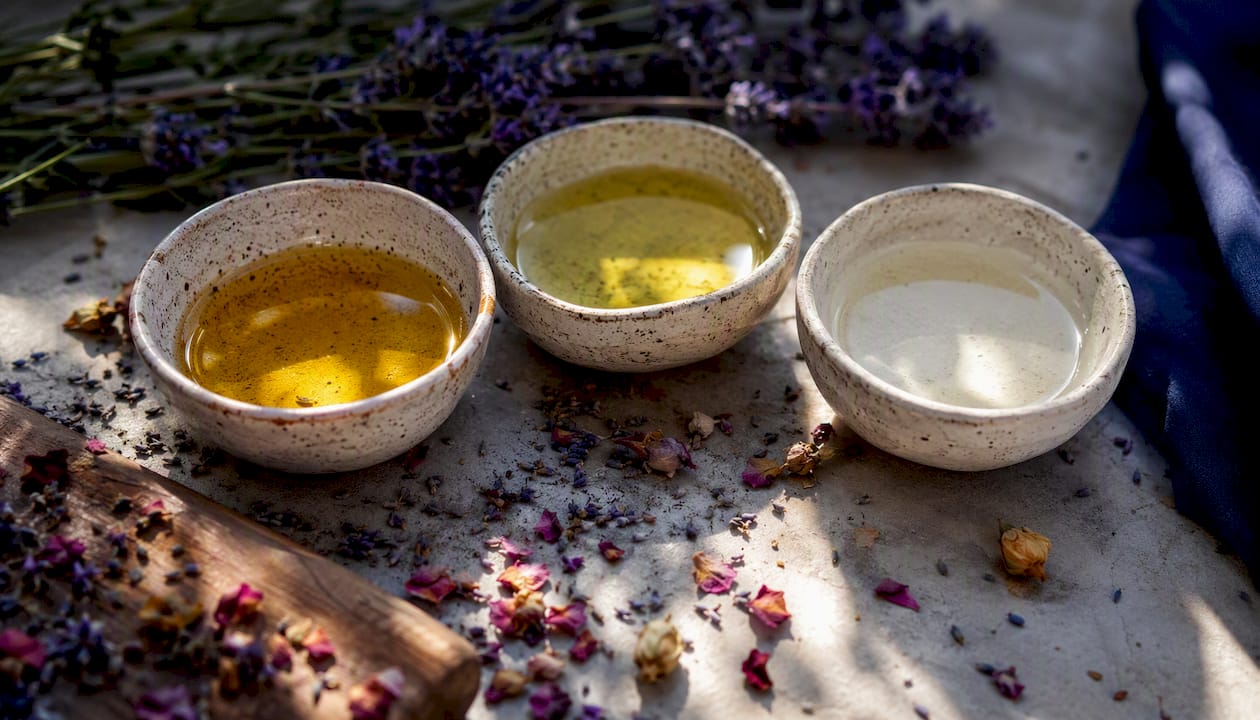
| Oil type | Weight | Summer suitability |
|---|---|---|
| Jojoba oil | Light | Closely mimics natural sebum, absorbs fast |
| Grapeseed oil | Light | Thin texture, good for oily or acne-prone scalps |
| Fractionated coconut oil | Light | Liquid at room temperature, non-greasy finish |
| Sunflower or moringa oil | Light to medium | Rich in fatty acids without heaviness |
| Raw castor oil | Heavy | Thick and occlusive, better suited to cooler months |
| Cocoa or shea butter | Heavy | Solid at room temperature, traps heat and sweat |
Essential oils can add real benefit when used carefully. Tea tree and peppermint have properties that support scalp health in warm weather, but both need proper dilution in a carrier oil, since undiluted application on already heat-stressed skin is a fast route to irritation.
A few practical guardrails worth keeping in mind:
- Patch test any new oil or essential oil blend on your inner arm 24 hours before scalp use.
- Avoid applying oils right before hours of direct sun exposure, since some can increase photosensitivity.
- Never leave heavy oils on overnight in hot, humid weather. That’s exactly the combination that traps sweat against the follicle.
Pro Tip: If your scalp runs oily, look for carrier oils described as “dry” or “fast-absorbing” on the label. Grapeseed and jojoba both fall into that category and rarely leave a visible sheen once absorbed.
When and How to Apply Scalp Oil in Summer
Timing changes more than most people expect once the weather turns. A short pre-wash treatment of 20 to 45 minutes gives your scalp enough contact time to absorb nutrients without the extended exposure that leads to sweat-oil buildup overnight. Dry or flaking scalps can sometimes tolerate longer sessions, but oily and acne-prone scalps generally do better with the shorter window.
Dosing matters more than people think. Two to four drops per section, applied directly to the scalp rather than saturating the strands, is usually enough. Warm the oil in your palms first so it spreads thin and even.
For application technique, low-pressure fingertip massage works best:
- Section hair into four to six parts to reach the scalp directly rather than coating hair shafts.
- Use gentle, circular fingertip pressure for two to three minutes per section to support circulation without aggravating sensitive skin.
- Concentrate oil at the scalp and roots; save any extra for the ends only, where dryness tends to concentrate anyway.
Skip oiling altogether if you’re mid-workout, dealing with open sores or active irritation, or heading straight into chlorinated water. And after any swim or heavy sun session, rinse with fresh water as soon as possible. Chlorine and salt residue reacting with leftover oil is one of the more common causes of unexplained post-beach itching.
Why Scalp Exfoliation Matters More in Summer
Buildup doesn’t just sit on the surface looking unpleasant. It physically blocks absorption. Dead skin cells, dried sweat, sunscreen residue, and old product form a layer that keeps oils and treatments from reaching the skin they’re meant to nourish, which is one of the main reasons a good oil can seem to “do nothing” for someone with an unaddressed buildup problem.
Regular exfoliation clears that path. Here’s how to approach it safely:
- Choose a gentle physical scrub with fine, rounded particles, or a low-strength chemical exfoliant like a diluted salicylic or lactic acid scalp treatment.
- Exfoliate once weekly as a baseline; possibly more often only if your scalp tolerates it without redness or tightness.
- Apply with light pressure in small circular motions, avoiding any area with active irritation, sores, or recent sun damage.
- Follow immediately with a soothing, barrier-supportive product, not a heavy oil, to calm freshly exfoliated skin.
- Reduce frequency during heat waves or after extended sun exposure, when skin is already more reactive than usual.
Hairstylists and dermatologists point out that the scalp is often the most neglected part of a summer skincare routine, even though routine exfoliation once or twice a week is what lets nourishing treatments actually reach the skin instead of sitting on a layer of debris.
Pro Tip: Exfoliate on a non-oiling day. Doing both in the same session, back to back, can overwhelm a sensitive scalp and cause more irritation than either step would cause alone.
When to See a Dermatologist
Most summer scalp issues respond to a consistent routine within two to four weeks. When they don’t, or when specific warning signs show up, self-care stops being enough.
- Severe or persistent itching that disrupts sleep or daily activity
- Painful bumps, especially ones that feel hot or grow larger over a few days
- Pus-filled lesions or anything that looks infected rather than irritated
- Bleeding from scratching or from lesions that won’t scab and heal
- Rapid or noticeable hair shedding beyond your normal pattern
- A rash that spreads beyond the scalp onto the forehead, neck, or ears
- No improvement at all after 2 to 4 weeks of a correctly followed gentle routine
If any of these apply, book an appointment rather than waiting through another summer month of trial and error. Bring photos of the affected area taken over time, a list of every product you’ve used recently, a rough timeline of when symptoms started, and any recent sun or swim exposures that might be relevant. For persistent scaling conditions specifically, these natural remedies for scalp psoriasis offer useful background reading while you wait for an appointment.
How to Choose Summer Scalp Products Without Guessing
A quick checklist saves you from buying something that looks right on the shelf but works against your scalp in the heat.
What to look for:
- A “non-comedogenic” claim on the label, particularly for oils and leave-in serums
- Lightweight, fast-absorbing texture rather than a thick, balm-like consistency
- A pH-balanced shampoo formula, since overly alkaline cleansers strip the barrier faster
- Soothing actives like aloe or niacinamide if your scalp runs sensitive or reactive
Where to check on the label:
- The specific carrier oil name should be listed clearly, not buried under a vague “botanical oil blend”
- Any essential oil should carry dilution guidance or already sit at a safe percentage
- Ingredient names like castor, palm, or hydrogenated oils near the top of the list usually mean a heavier formula
Red flags to skip in hot weather:
- High fragrance concentration, a common trigger for scalp sensitivity
- Isopropyl myristate, which can feel light initially but often clogs follicles over time
- Heavy mineral oil as a primary ingredient
- Marketing language pushing “overnight intensive” or “deep occlusive” treatments during summer months
Pro Tip: If a product feels tacky or leaves a film after it’s supposed to have absorbed, that’s your scalp telling you the formula is too heavy for the season, regardless of what the label promises.
Your One-Page Summer Scalp Checklist
Keep this list somewhere visible if you tend to fall off routines once life gets busy:
- Exfoliate once weekly, twice only if your scalp tolerates it well
- Pre-wash micro-oil 1 to 3 times weekly, adjusted to how oily or dry your scalp runs
- Shampoo gently after any heavy sweating, not just on your normal wash day
- Rinse with fresh water immediately after swimming, before the chlorine or salt has time to sit
- Protect your part and scalp from direct sun with a hat, scarf, or leave-in with UV filters
Oily scalps should lean toward the lower end of the oiling frequency and the higher end of exfoliation. Dry or sensitive scalps can flip that ratio. If your scalp is highly reactive, a single line covers it: oil less often, in smaller amounts, and always patch test first.
Adjusting an Oiling Routine for the Heat
Seasonal adjustment isn’t a compromise. It’s what makes an oiling habit sustainable year-round instead of something you abandon every June when it starts to feel like too much.
The instinct to skip oil entirely once it gets hot is understandable, and it’s also the wrong move. What actually needs to change is the amount, the timing, and the weight of what you’re using, not the practice itself. A lightweight, plant-based oil used for 30 minutes before a wash gives your scalp the same nourishment as a heavier overnight treatment, without the sweat-trapping downside that makes summer scalps feel worse instead of better.
Crisanbeauty’s approach to formulation draws on Ayurvedic tradition, where seasonal adaptation has always been part of how oils get used, not an afterthought. That tradition treats hot weather as a reason to adjust technique, not a reason to abandon oil altogether. Every product is made in the USA from plant-based botanical ingredients chosen with exactly this kind of seasonal flexibility in mind.
The best test of any seasonal routine is simple: try it for two weeks, track how your scalp responds, and adjust frequency from there. Extremes rarely work as well as a routine you can actually stick with through August.
A Summer-Friendly Oil Worth Adding to Your Routine
If you’re looking for a lightweight option that fits the short pre-wash method described throughout this routine, the CRISAN Ayurvedic Hair Growth Oil is built around plant-based carrier oils rather than heavy, occlusive bases, which makes it compatible with the 20 to 45 minute pre-wash window that oily and sensitive scalps tolerate best in warm weather.
Use it the same way this article recommends: apply a small amount to the scalp before washing, massage in gently, and rinse it out rather than leaving it on overnight during the hottest months. Skip it entirely on days you’re actively sweating or dealing with any open irritation, and always patch test a new blend before your first full application. For a deeper walk-through of oiling frequency and technique, this hair oiling routine guide breaks down how to build the habit beyond just the summer months.
If you’re ready to try it, the product page has full usage directions and ingredient details, and it’s a straightforward next step if you want a formula designed to work with a lighter summer routine instead of against it.
Sources
- Your scalp is the first thing to give up in the heat—here’s why - Harpers bazaar
- How to moisturize your scalp (scalp care tips) - Glamour
- Carrier Oils for Summer Hair Care - Eden Botanicals
- Scalp buildup: Causes, symptoms, and treatment - Healthline
This article is general information, not a substitute for advice from a qualified doctor. Consult a qualified healthcare professional about your own circumstances before acting on anything here.


