


Microcirculation is defined as the network of tiny blood vessels, including capillaries and arterioles, that directly surround and supply each hair follicle in your scalp. The role of microcirculation in hair is to deliver oxygen, glucose, vitamins, and minerals to follicles while removing metabolic waste. Without this local vascular exchange, follicles cannot sustain the energy demands of active hair production. Healthy scalp microcirculation measures about 30–50 mL/min per 100g of tissue. That baseline is the difference between hair that grows and hair that sheds.
How does microcirculation affect the hair growth cycle?
The hair growth cycle runs through three phases: anagen (active growth), catagen (transition), and telogen (rest and shedding). Microcirculation directly controls how long a follicle stays in anagen. When blood flow is adequate, follicles receive the growth factors and oxygen they need to sustain long, productive anagen phases.
Poor microcirculation cuts that phase short. Insufficient blood flow compresses the anagen ratio below 70% and can reduce phase duration from years to months, causing daily shedding above 100 hairs. That number matters because the clinical threshold for normal shedding is roughly 50–100 hairs per day. Anything above that signals a disrupted cycle.
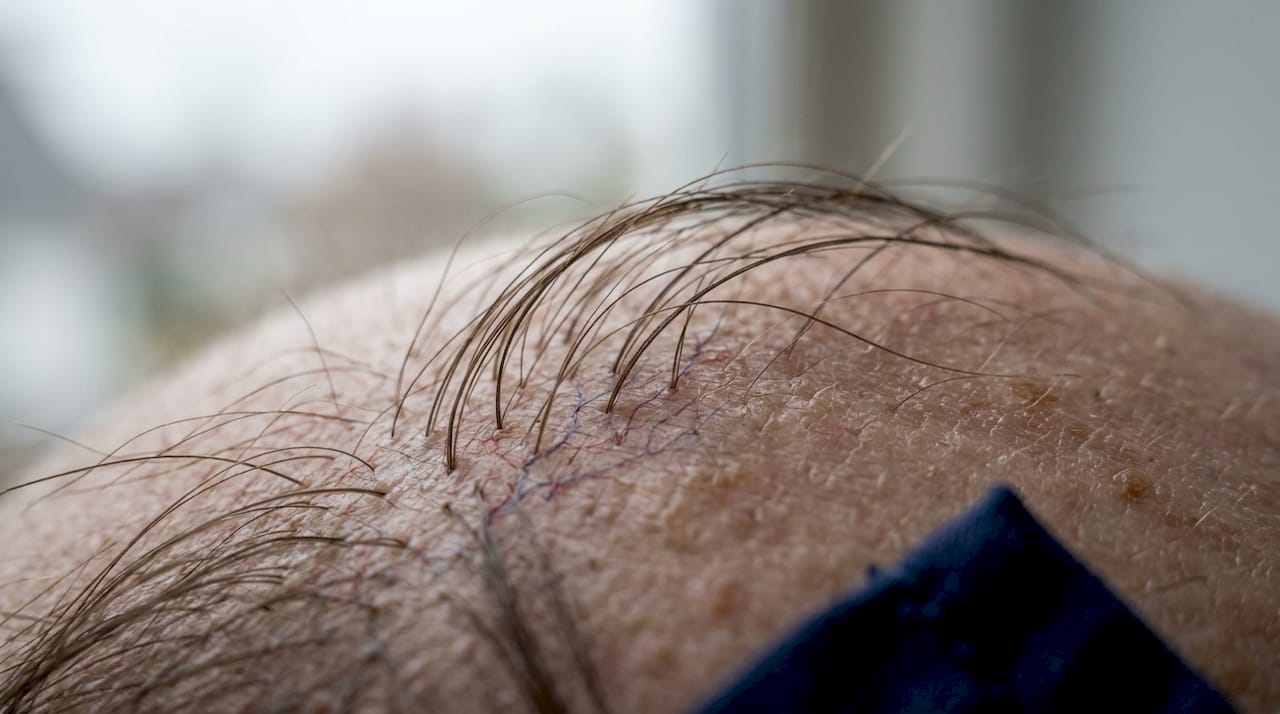
Hypoxia at the follicle level is the core problem. When capillaries constrict or thin out, follicle cells switch from growth mode to survival mode. Waste products accumulate, signaling molecules fail to reach their targets, and the follicle miniaturizes over time. This is the biological chain that connects poor scalp circulation to visible thinning.
| Hair cycle phase | Microcirculation role | Effect of poor flow |
|---|---|---|
| Anagen (growth) | Delivers oxygen and nutrients for cell division | Shortened phase, reduced hair length |
| Catagen (transition) | Supports controlled follicle regression | Premature entry into catagen |
| Telogen (rest/shedding) | Clears waste before next cycle | Extended telogen, increased daily shedding |
Pro Tip: If you notice more than 100 hairs on your brush daily for several weeks, poor scalp circulation may be shortening your anagen phase. Address blood flow before adding topical treatments.
What factors influence scalp microcirculation and how can you improve it?
Scalp microcirculation responds directly to lifestyle choices, physical habits, and how you handle your hair. The good news is that most of the factors you can control are free to change.
-
Practice daily scalp massage. A 5-minute circular scalp massage using your fingertips, without sliding or dragging, increases local blood flow and stimulates the capillary network around follicles. Technique matters as much as duration. Sliding the fingers creates mechanical traction that can physically constrict vessels and damage roots, making the habit counterproductive. Use gentle, stationary circles and move section by section across the scalp. Crisanbeauty’s scalp massage guide breaks down exactly how to do this without causing follicle stress.
-
Exercise regularly. Moderate aerobic exercise totaling 150 minutes per week improves systemic circulation, which includes scalp microvascular flow. Walking, cycling, and swimming all qualify. The scalp benefits because increased cardiac output raises capillary perfusion across the body, including the crown where androgenetic alopecia most commonly reduces flow.
-
Avoid tight hairstyles. Mechanical traction from tight ponytails or braids physically compresses the small vessels feeding follicles. This is a subtle but common cause of follicle distress that many people overlook. Switching to looser styles, especially during sleep, removes that constant vascular pressure.
-
Manage chronic stress. Chronic stress triggers sympathetic nervous system activation, which constricts scalp vessels and reduces microcirculation. Practices like breathwork, sleep prioritization, and reduced caffeine intake all lower sympathetic tone and allow vessels to dilate naturally.
-
Apply topical treatments correctly. Massaging oils or serums into the scalp rather than just the hair shaft delivers active ingredients directly to the follicle zone and mechanically stimulates blood flow at the same time. This dual effect makes application technique a meaningful variable in treatment outcomes. For broader scalp care habits, the 2026 scalp care guide covers practical routines that support vascular health.
Pro Tip: Do your scalp massage before washing your hair. Apply a lightweight oil first to reduce friction, then use circular fingertip pressure for 5 minutes. You get the circulation benefit and the oil penetrates more effectively.
How does microcirculation differ from overall scalp blood supply?
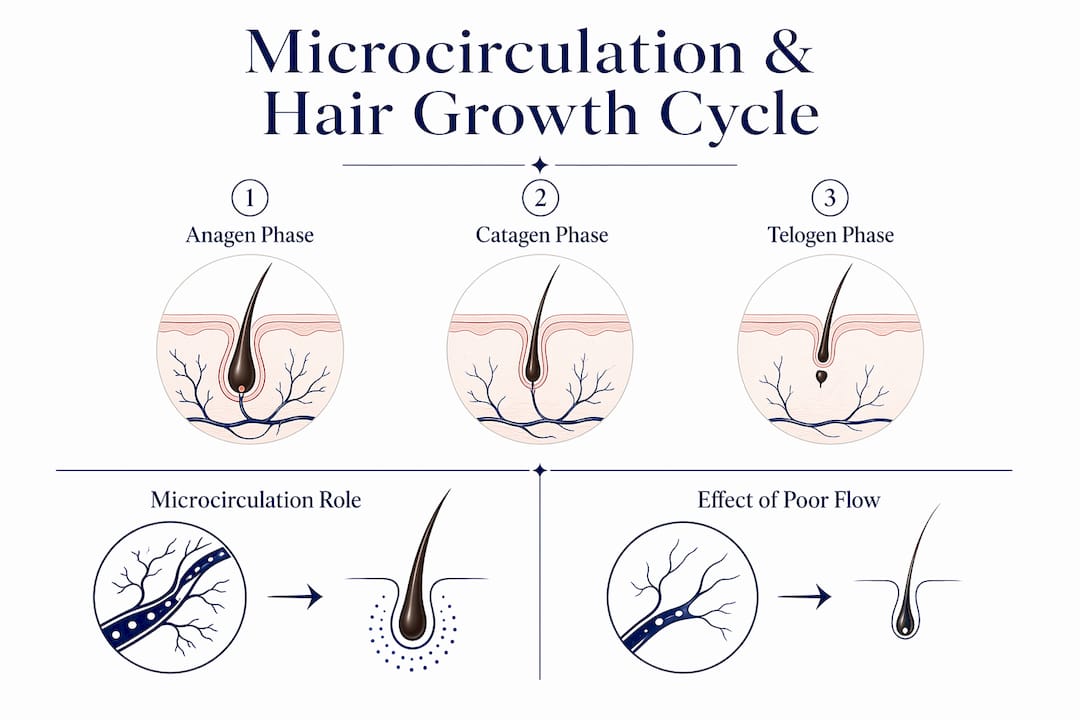
General scalp blood supply refers to the large arteries and veins that route blood to and from the scalp as a whole. Microcirculation is a different system entirely. It operates at the follicle level, where capillaries and arterioles form a dense network around each individual follicle bulb.
The distinction matters because you can have adequate large-vessel blood flow and still have impaired microcirculation at the follicle. Think of it this way: a city can have functioning highways while individual neighborhoods have blocked side streets. The highways do not solve the local problem.
Microcirculation defines the local exchange of oxygen, nutrients, and signaling molecules at the follicle. This is where growth factors like VEGF (vascular endothelial growth factor) reach their targets, where glucose enters follicle cells, and where inflammatory byproducts are cleared. General blood supply cannot substitute for this local function.
“A calm, balanced scalp environment reduces inflammation and oxidative stress, facilitating improved microcirculation and healthier hair follicles. Reducing irritation allows freer blood flow and better nutrient access at the follicle level.”
Emerging hair science research increasingly integrates vascular biology and cellular signaling to understand the scalp microenvironment, with microcirculation at its core. This shift in research focus explains why scalp care, not just hair care, has become the foundation of modern hair health protocols.
- Microcirculation operates at the capillary level, not the arterial level
- Each follicle has its own dedicated microvascular network
- Follicle miniaturization in androgenetic alopecia correlates with microvascular regression
- A healthy scalp microenvironment supports microvascular integrity by reducing inflammation and oxidative stress
- General scalp blood flow cannot compensate for localized microvascular impairment
What scientific evidence supports improving microcirculation for hair growth?
The clinical data on microcirculation and hair loss is specific and measurable. People with androgenetic alopecia show a 30–50% reduction in blood flow at the crown compared to healthy scalp tissue. That reduction directly maps to the pattern of thinning most commonly seen in both men and women with this condition.
Minoxidil, one of the most studied hair loss treatments, works partly through vascular mechanisms. Minoxidil dilates scalp vessels and enhances microcirculation, which is why it performs better on scalps with some residual follicle activity than on fully miniaturized follicles. The drug does not create new follicles. It restores the vascular environment that allows existing follicles to function.
Scalp massage has measurable effects on microvascular flow. Clinical observations show that consistent massage practice improves local circulation and supports the scalp microenvironment by reducing inflammatory cytokine accumulation. The balanced scalp environment that results from reduced inflammation allows capillaries to dilate more freely and deliver nutrients without obstruction.
| Intervention | Microcirculation effect | Hair outcome |
|---|---|---|
| Daily 5-minute scalp massage | Increases local capillary flow | Supports anagen phase duration |
| 150 min/week aerobic exercise | Raises systemic and scalp perfusion | Reduces shedding, improves density |
| Minoxidil application | Vasodilation of scalp vessels | Prolongs anagen, reduces miniaturization |
| Stress reduction | Lowers sympathetic vasoconstriction | Restores baseline microvascular tone |
| Tight hairstyle avoidance | Removes mechanical vessel compression | Reduces follicle distress |
Oxidative stress compounds the problem. When microcirculation is poor, reactive oxygen species accumulate in the follicle environment because the clearance mechanism, blood flow, is impaired. This creates a feedback loop where poor circulation worsens inflammation, and inflammation further impairs circulation. Breaking that loop requires addressing both vascular flow and the scalp’s chemical environment simultaneously.
Key Takeaways
Microcirculation is the primary delivery system for follicle health, and no topical treatment or supplement fully compensates for impaired blood flow at the follicle level.
| Point | Details |
|---|---|
| Healthy baseline matters | Scalp microcirculation of 30–50 mL/min per 100g tissue supports normal anagen phase duration. |
| Poor flow shortens growth | An anagen ratio below 70% and shedding above 100 hairs per day signal microvascular impairment. |
| Massage technique is critical | Circular, non-sliding fingertip massage for 5 minutes daily improves local capillary flow without damaging follicles. |
| Exercise supports scalp flow | 150 minutes of moderate aerobic exercise weekly raises systemic perfusion, including at the scalp. |
| Inflammation blocks circulation | Reducing scalp inflammation and oxidative stress allows capillaries to dilate and deliver nutrients freely. |
Why most hair treatments fail without addressing circulation first
After working with thousands of people navigating hair loss, I’ve noticed a consistent pattern. People invest in serums, supplements, and treatments, and then wonder why results are inconsistent. The answer, almost every time, comes back to the follicle habitat.
Most treatment failures happen because poor microcirculation and chronic inflammation blunt the effectiveness of whatever is applied on top. A topical treatment cannot reach a follicle that is starved of blood flow. The active ingredients sit at the surface while the follicle below remains in a compromised state.
What I’ve found actually works is treating the scalp as a living environment before treating the hair. That means massage before product application, exercise as a non-negotiable part of the routine, and reducing anything that constricts vessels, whether that’s stress, tight styles, or scalp buildup. The Ayurvedic tradition that inspired Crisanbeauty understood this intuitively. Oiling and massaging the scalp was never just about the oil. It was about activating the vascular network underneath.
The future of hair science is moving in this direction. Vascular biology is now central to how researchers understand follicle longevity. That validation matters, but the practical takeaway is simple. Healthy hair starts with a healthy scalp, and a healthy scalp starts with blood flow.
— CRISAN
Crisanbeauty products that support scalp circulation and follicle health
Crisanbeauty was built on the understanding that the scalp environment determines hair outcomes. Every product in the line is formulated to work with the biology described above, not around it.
The Ayurvedic Hair Growth Oil is designed to be massaged into the scalp, combining the mechanical benefit of increased blood flow with plant-based botanicals that nourish follicles directly. Pair it with the Scalp Detox Hair Mask to reduce the inflammation and buildup that block capillary flow. Both products are manufactured in the USA using carefully selected botanical ingredients, and both are rooted in the same Ayurvedic principles that have supported scalp health for generations. For healthier hair routines that pair well with these products, the hair routine guide offers practical next steps.
FAQ
What is the role of microcirculation in hair growth?
Microcirculation delivers oxygen, nutrients, and growth signals directly to hair follicles through a network of capillaries in the scalp. Without adequate local blood flow, follicles cannot sustain the anagen growth phase and begin to miniaturize.
How does poor scalp circulation cause hair loss?
Poor microcirculation shortens the anagen phase, reduces the anagen ratio below 70%, and causes daily shedding above 100 hairs. Follicles deprived of oxygen and nutrients shift into a survival state and eventually stop producing visible hair.
Does scalp massage actually improve microcirculation?
Yes. A daily 5-minute circular scalp massage using fingertip pressure, without sliding, increases local capillary blood flow and supports the follicle microenvironment. Technique matters: dragging or pulling creates mechanical traction that can restrict vessels rather than open them.
How does androgenetic alopecia affect scalp microcirculation?
People with androgenetic alopecia show a 30–50% reduction in blood flow at the crown compared to healthy scalp tissue. This microvascular reduction correlates directly with the pattern of thinning and follicle miniaturization characteristic of the condition.
Can exercise improve hair follicle blood flow?
Regular moderate aerobic exercise totaling 150 minutes per week raises systemic circulation, which increases capillary perfusion across the scalp. This supports follicle health by improving the delivery of oxygen and nutrients to the follicle level.
Keep expectations clear.
What scalp oiling can—and cannot—do
Massage and cosmetic oiling can be part of a relaxing scalp-care routine and help condition hair, but CRISAN is not a treatment for circulation problems or medical hair loss and does not guarantee growth. Seek medical guidance for sudden, patchy or unexplained shedding.


