


For most health- and beauty-conscious adults, the best scalp serum is the one that matches your scalp type and hair concern first, then your evidence preference. Our top plant-forward pick is the CRISAN Ayurvedic Hair Growth Oil, a made-in-USA botanical formula built on Ayurvedic tradition. For clinically proven pattern hair loss, Rogaine (minoxidil) is the OTC drug standard. For budget peptide support, The Ordinary Multi-Peptide Serum delivers real actives at an accessible price. Think of a good scalp serum as skincare for your scalp: it targets the follicle environment directly, not just the hair shaft.
Quick picks at a glance:
- Best plant-forward / publisher pick: CRISAN Ayurvedic Hair Growth Oil. Ayurvedic botanicals, made in the USA, designed for sustained scalp nourishment and barrier repair.
- Best clinically active (pattern hair loss): Rogaine Minoxidil Topical Solution. FDA-recognized OTC drug active with the strongest evidence base for androgenetic alopecia.
- Best for women with early thinning: Rogaine Women’s 2% Minoxidil Topical Solution. Lower-strength minoxidil formulated for women.
- Best budget peptide serum: The Ordinary Multi-Peptide Serum for Hair Density. Peptide complex at a fraction of premium pricing.
- Best for oily or congested scalps: The Inkey List Salicylic Acid Oily Scalp Treatment. Sebum-regulating salicylic acid that clears buildup without stripping.
- Best botanical shedding support: Vegamour GRO Hair Serum. Plant exosome and phytoactive blend for a non-drug shedding approach.
- Best for edges and hairlines: Cécred Restoring Hair & Edge Drops. Targeted peptide drops designed specifically for hairline repair.
Table of Contents
- How the top scalp serums compare
- Mini-reviews: what each serum actually does
- How to choose the right scalp serum for your hair and scalp
- How to use a scalp serum: step-by-step application
- Key active ingredients and what the evidence says
- What to realistically expect: timelines and real-world evidence
- Key Takeaways
- Why a plant-forward, transparent approach matters
- Crisanbeauty’s plant-forward option for scalp nourishment
- Sources and further reading
How the top scalp serums compare
The table below covers the shortlisted serums across the dimensions that matter most when you’re choosing. Price bands use a simple scale: $ (under $30), $$ ($30–$60), $$$ ($60–$100), $$$$ (over $100).
| Product | Best for | Key active(s) | Price band | Texture / application | Time to results | Evidence level | Best scalp type |
|---|---|---|---|---|---|---|---|
| CRISAN Ayurvedic Hair Growth Oil | Plant-forward barrier repair + sustained nourishment | Ayurvedic botanical blend | $$ | Oil / dropper | 8–12 weeks | Botanical / traditional | Dry, normal |
| Rogaine Minoxidil Topical Solution | Clinically diagnosable pattern hair loss | Minoxidil 5% | $$ | Liquid / dropper | 3–6 months | OTC drug (FDA-recognized) | All |
| Rogaine Women’s 2% Minoxidil | Women’s early-stage thinning | Minoxidil 2% | $$ | Liquid / dropper | 3–6 months | OTC drug (FDA-recognized) | All |
| The Ordinary Multi-Peptide Serum | Budget peptide density support | Peptide complex | $ | Water-based serum | 8–12 weeks | Cosmetic / limited clinical | All |
| Vegamour GRO Hair Serum | Plant-based shedding reduction | Plant exosomes, phytoactives | $$$ | Lightweight serum | 90 days | Botanical / brand clinical | All |
| Kérastase Genesis Serum Fortifiant | Stress-related shedding | Aminexil, fortifying actives | $$$ | Serum / leave-in | 6–8 weeks | Professional brand clinical | Normal, weakened |
| Aveda Invati Ultra Advanced | Botanical scalp circulation | Ayurvedic botanicals, actives | $$$ | Serum / leave-in | 8–12 weeks | Botanical / professional | Normal, dry |
| Medicube Rosemary PDRN Scalp Serum | Oily / congested scalp renewal | PDRN, EGF peptides, salicylic acid | $$ | Lightweight serum | 8–12 weeks | K-beauty clinical | Oily |
| The Inkey List Salicylic Acid Treatment | Oily, flaky scalp clarifying | Salicylic acid | $ | Lightweight leave-on | 4–6 weeks | Cosmetic / well-studied active | Oily, flaky |
| Briogeo Scalp Revival Charcoal + Tea Tree | Itchy, flaky scalp detox | Charcoal, tea tree extract | $$ | Thick serum / massage | 4–6 weeks | Botanical / cosmetic | Oily, sensitive |
| Cécred Restoring Hair & Edge Drops | Hairline and edges repair | Peptides, hair-fiber actives | $$ | Drops / targeted | 8–12 weeks | Cosmetic / peptide | All |
| The Ordinary Multi-Peptide Serum | Density appearance | Peptide complex | $ | Water-based | 8–12 weeks | Cosmetic | All |
| Nutrafol Women’s Hair Serum | Complement to systemic program | Botanical actives | $$$$ | Serum | 3–6 months | Brand clinical | All |
| Obagi Medical Nu-Cil BioStim | Clinical cosmeceutical support | BioStim Complex | $$$ | Serum / dropper | 8–12 weeks | Clinical brand | All |
| Living Proof Scalp Care Density Serum | Thinning and graying hair | Brand density formula | $$ | Lightweight serum | 8–12 weeks | Brand clinical | Thinning, graying |
Three quick callouts:
- Minoxidil products (Rogaine 5% and 2%) are the only OTC drugs on this list. They carry the strongest regulatory evidence for androgenetic hair loss and come with specific usage instructions you should follow.
- Dermatologist-recommended picks in editorial roundups consistently include minoxidil-based options for pattern loss and peptide-based serums (The Ordinary, Vegamour) for cosmetic density support.
- Plant-forward options (CRISAN, Aveda Invati, Vegamour) suit readers who prefer botanical actives and want to avoid pharmaceutical actives or synthetic fragrance.
Mini-reviews: what each serum actually does
Our publisher pick: CRISAN Ayurvedic Hair Growth Oil
Crisanbeauty’s Ayurvedic Hair Growth Oil is the plant-forward option we recommend first. It combines a multi-botanical Ayurvedic blend, manufactured in the USA, with a clear ingredient philosophy rooted in barrier repair and root nourishment. Unlike water-based leave-on serums, it functions as a pre-wash and leave-on oil treatment that addresses the scalp’s lipid barrier while delivering botanical actives to the follicle environment. That dual role makes it particularly well-suited to dry scalps, postpartum shedding, and anyone who wants a transparent, plant-based routine without pharmaceutical actives.
Best for: Dry scalps, postpartum or stress-related shedding, plant-forward buyers. Evidence badge: Ayurvedic botanical tradition + USA manufacturing transparency.
- Pros: Botanical ingredient transparency, made in the USA, suits dry and normal scalps
- Cons: Oil format is not ideal for oily or congested scalps; results require consistent use over weeks
Rogaine (Minoxidil Topical Solution) and Rogaine Women’s 2%
Rogaine is the benchmark for clinically diagnosable androgenetic alopecia. Minoxidil is an FDA-recognized OTC active, and it remains the most evidence-backed topical option for pattern hair loss in both men and women. The 5% formula targets men and women with more advanced thinning; the 2% women’s formula suits early-stage thinning with a gentler concentration. Both require consistent daily use, and results typically take 3–6 months to become visible.
Best for: Pattern hair loss with a confirmed diagnosis or strong suspicion. Evidence badge: Contains minoxidil, an FDA-recognized OTC drug active.
- Pros: Strongest clinical evidence, widely available, affordable
- Cons: Requires long-term commitment; some users report scalp dryness or initial shedding
The Ordinary Multi-Peptide Serum for Hair Density
At its price point, The Ordinary’s peptide serum is hard to beat for cosmetic density support. The formula delivers a peptide complex targeting the appearance of hair density, and it’s water-based, which means it absorbs quickly without residue. Trade reporting has referenced peptide actives with density gains in short trials, making this a credible budget entry for anyone not ready for pharmaceutical actives.
Best for: Budget-conscious buyers wanting peptide-based cosmetic support. Evidence badge: Peptide complex; cosmetic-level evidence.
- Pros: Accessible price, clean water-based texture, peptide transparency
- Cons: Cosmetic-level evidence only; no drug-level claims
Vegamour GRO Hair Serum
Vegamour’s GRO serum uses plant exosomes and phytoactives to support scalp health and reduce shedding without pharmaceutical actives. It’s a strong choice for readers who want a non-drug approach backed by brand clinical data. The lightweight texture suits most scalp types, and the 90-day use window aligns with realistic expectations for botanical formulas.
Best for: Plant-based shedding reduction, non-drug approach.
- Pros: Plant exosome technology, lightweight, no minoxidil
- Cons: Premium price; brand clinical data rather than independent trials
Kérastase Genesis Serum Fortifiant
Kérastase’s Genesis line targets shedding caused by weakened hair and scalp stress. The key active, aminexil, is a professional-brand ingredient with a track record in salon-grade anti-shedding formulas. If your shedding is stress-related rather than hormonal or genetic, this is worth considering.
Best for: Stress-related or mechanical shedding.
- Pros: Aminexil active, professional brand credibility, pleasant texture
- Cons: Higher price; not formulated for pattern hair loss
Aveda Invati Ultra Advanced Revitalizing Scalp Serum
Aveda’s Invati serum blends Ayurvedic botanicals with modern actives to support scalp circulation. It sits in the same botanical-professional space as CRISAN’s oil but in a leave-on serum format, making it a good option for buyers who want Ayurvedic-inspired formulation from a professional salon brand.
Best for: Botanical formulations with professional brand credibility.
- Pros: Ayurvedic botanicals, professional brand, pleasant scent
- Cons: Fragrance may irritate sensitive scalps; premium price
Medicube Rosemary PDRN Scalp Serum
This K-beauty entry pairs PDRN (polynucleotide) and EGF peptides with salicylic acid for a regenerative-plus-clarifying approach. PDRN is a regenerative active gaining traction in cosmeceutical circles. The salicylic acid component helps keep oily scalps clear, making this one of the more technically interesting options for congested scalps.
Best for: Oily or congested scalps wanting regenerative-style actives.
- Pros: PDRN + salicylic acid combination, clarifying and renewing
- Cons: Newer active with limited long-term data; not widely available in all US retailers
The Inkey List Salicylic Acid Oily Scalp Treatment
For oily or flaky scalps, salicylic acid and tea tree extract help reduce buildup and improve absorption of leave-on actives. The Inkey List’s formula does exactly that at a budget price. It’s a leave-on treatment, not a rinse-off, so actives stay in contact with the scalp long enough to work.
Best for: Oily, congested scalps needing sebum regulation.
- Pros: Budget price, well-studied salicylic acid active, lightweight
- Cons: Not suited to dry or sensitive scalps; fragrance-free but not for everyone
Briogeo Scalp Revival Charcoal + Tea Tree Scalp Treatment
Charcoal draws out buildup; tea tree calms irritation. Briogeo’s Scalp Revival formula combines both in a thicker serum meant for massage application. It’s a good weekly detox treatment rather than a daily serum, and it suits readers with itchy, flaky scalps who want a gentle botanical approach.
Best for: Flaky, irritated scalps needing detox and calming.
- Pros: Charcoal + tea tree combination, soothing, widely available
- Cons: Thicker texture not suited for daily use; not a growth-focused formula
Cécred Restoring Hair & Edge Drops
Cécred’s edge drops are one of the few products on this list designed specifically for hairlines and edges. Peptides and hair-fiber actives target the delicate follicles along the hairline, where tension, styling, and hormonal changes often cause the most visible thinning.
Best for: Targeted hairline and baby-hair support.
- Pros: Edge-focused formulation, peptide actives, targeted dropper
- Cons: Narrow use case; not a full-scalp treatment
Additional serums worth knowing
Several other products appear consistently in top scalp serum roundups and deserve a mention:
- Ceremonia Aceite de Moska Hair Oil Heritage Scalp Remedy Serum — Afro-Latinx heritage formula combining oil and serum benefits for textured hair.
Pro Tip: If you’re dealing with both oily roots and dry ends, use a clarifying serum (salicylic acid or tea tree) on the scalp only, and apply a nourishing oil like CRISAN’s Ayurvedic formula to the mid-lengths and ends as a pre-wash treatment.
How to choose the right scalp serum for your hair and scalp
Choosing well comes down to five questions. Answer them before you buy.
1. What is your primary concern?
- Clinically diagnosable pattern hair loss: go straight to minoxidil (Rogaine).
- Shedding from stress, postpartum changes, or diet: botanical and peptide serums (CRISAN, Vegamour, Kérastase Genesis) are appropriate starting points.
- Scalp buildup, oiliness, or flaking: prioritize salicylic acid or tea tree formulas (The Inkey List, Briogeo, Medicube).
- Cosmetic density and fullness: peptide serums (The Ordinary, rhute, Plated) address appearance without drug-level claims.
- Hairline and edges: Cécred’s edge drops are the most targeted option.
2. What is your scalp type?
Oily scalps need lightweight, pH-controlled serums rather than oils, because oils can worsen buildup and microbial imbalance. Dry scalps benefit from barrier-supporting botanicals and occasional pre-wash oiling. Sensitive scalps should prioritize fragrance-free formulas (Seen Restore, The Inkey List).
3. What evidence level do you need?
Minoxidil is an OTC drug with regulatory backing. Peptide complexes have cosmetic-level clinical data. Botanical formulas draw on traditional use and brand-sponsored studies. Be honest about what you’re treating: a cosmetic serum cannot treat a medical condition.
4. Does the texture work with your styling routine?
Water-based serums absorb quickly and layer under styling products. Oils are best applied before washing or at night. Heavy serums applied before heat styling can cause buildup. Check whether the product is leave-in or rinse-off before committing.
5. Are there ethical or sourcing filters that matter to you?
Look for cruelty-free and vegan certifications from recognized bodies (Leaping Bunny, PETA Beauty Without Bunnies). For plant-based sourcing transparency, check whether the brand publishes its ingredient sourcing. Crisanbeauty publishes ingredient sourcing details and manufactures in the USA.
Red flags to avoid:
- Heavy oils marketed for oily scalps
- Undisclosed “proprietary blend” actives with no INCI list
- Aggressive synthetic fragrance in products targeting sensitive scalps
- Minoxidil products sold without clear OTC drug labeling and usage instructions
How to use a scalp serum: step-by-step application
Getting the application right matters as much as choosing the right formula. Stylists and practitioners consistently emphasize that serum must reach the scalp skin, not just the roots of the hair.
- Start with a clean scalp. Shampoo first, or apply to a dry scalp between washes if the product is leave-in. Buildup blocks active delivery.
- Part your hair into sections. Work in 1-inch sections across the scalp so the dropper or nozzle reaches the skin directly.
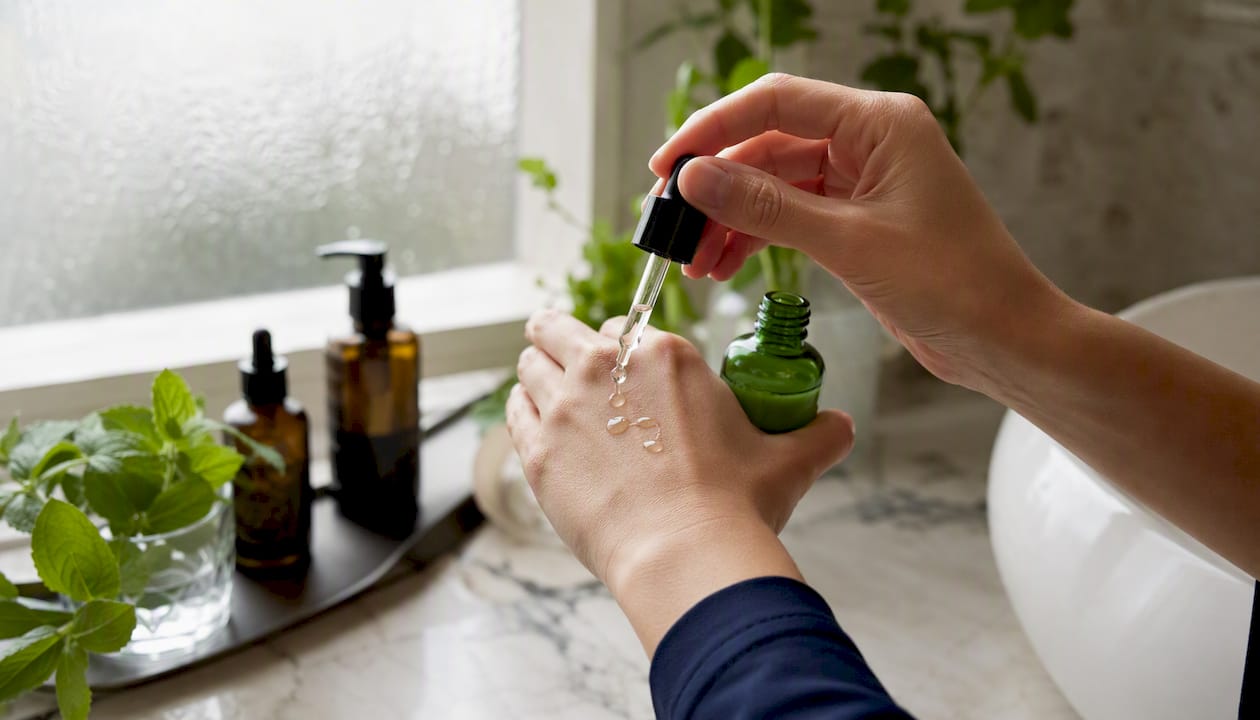
- Apply drops to the scalp, not the hair. Use a dropper and apply directly to the scalp, slightly damp or dry. Avoid saturating the hair shaft with a serum meant for the scalp.
- Massage gently for 1–2 minutes. Use fingertip pads, not nails. This supports circulation without causing mechanical breakage.
- Leave in and style as normal. Most scalp serums are leave-in. Do not rinse unless the label specifies.
Frequency by scalp type:
- Oily scalp: Every other day or as directed. Less product, more targeted application.
- Dry scalp: Daily or as directed. Pair with a weekly pre-wash oil treatment.
- Sensitive scalp: Start every other day. Patch test on the inner arm for 24 hours before first use.
Pro Tip: Apply your scalp serum to a slightly damp scalp right after towel-drying. Water-based actives absorb faster when the scalp is hydrated, and the moisture helps distribute the formula evenly.
Key active ingredients and what the evidence says
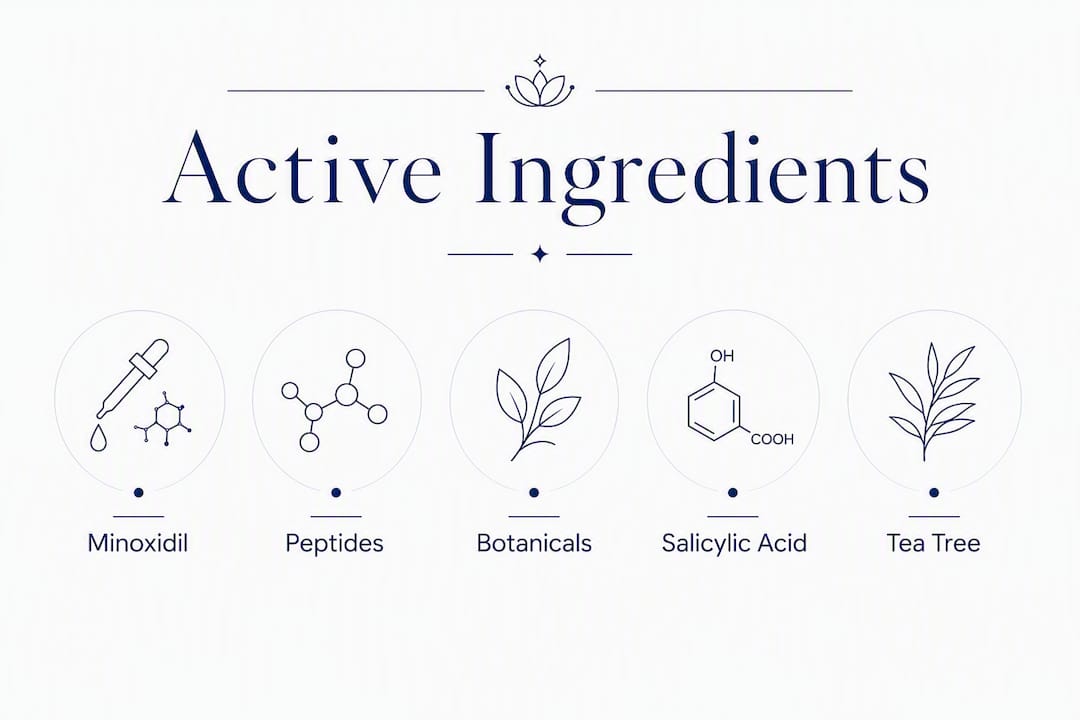
Understanding what’s in your serum helps you evaluate claims honestly. Here’s a quick reference for the actives that appear most often across the top scalp serums.
| Active | What it does | Evidence level | Watch for |
|---|---|---|---|
| Minoxidil | Extends anagen (growth) phase; increases follicle size | OTC drug (FDA-recognized) | Follow label; not for use during pregnancy |
| Peptide complexes (e.g., Redensyl-like) | Support appearance of density; some trials show notable density gains | Cosmetic / limited clinical | Evaluate ingredient transparency before paying premium |
| Caffeine | May support follicle metabolism and reduce DHT sensitivity | Cosmetic / in vitro evidence | Low risk; mild active |
| Niacinamide | Improves scalp barrier, reduces inflammation | Cosmetic / well-studied | Generally well-tolerated |
| Salicylic acid | Exfoliates scalp, reduces sebum buildup, improves active absorption | Cosmetic / well-studied | Avoid on dry or broken scalp |
| PDRN (polynucleotide) | Regenerative active supporting tissue repair | Cosmetic / emerging clinical | Newer; limited long-term data |
| Aminexil | Anti-shedding active used in professional formulas | Professional brand clinical | Well-tolerated; not a drug |
| Rosemary extract | Botanical with circulation-supporting properties | Botanical / limited clinical | Low irritation risk |
| Tea tree extract | Antimicrobial, calming for flaky or irritated scalps | Cosmetic / well-studied | Dilute; can irritate at high concentrations |
| Ayurvedic botanicals | Barrier repair, nourishment, traditional anti-shedding use | Traditional / botanical | Check for allergens in multi-herb blends |
Serums are water-based, fast-absorbing carriers optimized for daily active delivery. Oils are lipid-based and better used as pre-wash treatments for barrier nourishment. The two formats address different needs, and pairing them often produces better results than choosing one exclusively. For a deeper look at plant-based scalp ingredients, Crisanbeauty’s ingredient guide covers sourcing and function in detail.
Safety notes:
- Minoxidil is an OTC drug. Read the label, follow the usage instructions, and consult a dermatologist if you are pregnant, nursing, or on other topical medications.
- Patch test any new serum on the inner arm for 24 hours before applying to the scalp.
- Fragrance is the most common irritant in scalp serums. If you have a sensitive scalp, choose fragrance-free formulas.
- Avoid combining aggressive exfoliating actives (salicylic acid, retinoids) on the same scalp application without professional guidance.
Ethical sourcing: Look for Leaping Bunny or PETA certification for cruelty-free verification. Vegan formulas exclude animal-derived actives like keratin or collagen. For sustainable sourcing, brands that publish their ingredient origins (like Crisanbeauty’s USA manufacturing) offer more transparency than those that don’t.
What to realistically expect: timelines and real-world evidence
Setting honest expectations is the part most product marketing skips. Here’s what the evidence actually supports.
Most leave-on scalp treatments require a minimum of 8–12 weeks before measurable changes appear, and many editors and practitioners recommend allowing a full 3 months before judging effectiveness. Minoxidil trials typically show measurable results at the 3–6 month mark. Botanical and peptide formulas generally show cosmetic improvements (reduced shedding appearance, improved texture) earlier, but density changes take longer.
Some published trial data for peptide actives report a 17% density increase in an 84-day study for a Redensyl-like peptide, which gives peptide serums a credible cosmetic-evidence foundation even without drug-level regulatory backing.
What dermatologists consistently say: Scalp health is the foundation for hair health. A serum that reduces inflammation, regulates sebum, and delivers actives to the follicle environment creates better conditions for growth, even when it doesn’t trigger new follicles directly. For pattern hair loss, that foundation needs to be paired with a clinically active ingredient like minoxidil.
Users in a density-focused scalp serum trial reported thicker, stronger hair after extended use, consistent with the 8–12 week minimum most clinical pages and independent clinical product pages reference. The key variable is consistency: skipping applications or switching products before the trial period ends is the most common reason people conclude a serum “didn’t work.”
Evidence tiers, simplified:
- OTC drug level: Minoxidil only. Regulatory backing, usage rules, and clinical trial data.
- Professional brand clinical: Aminexil (Kérastase), BioStim Complex (Obagi). Brand-sponsored studies, not independent trials.
- Cosmetic / limited clinical: Peptide complexes, PDRN, caffeine. Short trials, often brand-funded.
- Botanical / traditional: Ayurvedic blends, rosemary, tea tree. Traditional use plus some modern studies.
Key Takeaways
The most effective scalp serum strategy pairs the right active to your specific concern: minoxidil for pattern hair loss, peptides for cosmetic density, and botanical oils for barrier nourishment and sustained scalp health.
| Point | Details |
|---|---|
| Match active to concern | Minoxidil for pattern loss; peptides for cosmetic density; botanicals for barrier and nourishment. |
| Allow 8–12 weeks minimum | Most serums need at least 8–12 weeks of consistent use before results are visible; 3–6 months for minoxidil. |
| Scalp type shapes your choice | Oily scalps need lightweight, sebum-regulating serums; dry scalps benefit from botanical oils paired with serums. |
| Pair oil and serum for best results | A pre-wash oil addresses barrier repair; a leave-on serum delivers daily actives to the follicle environment. |
| Crisanbeauty’s plant-forward pick | The CRISAN Ayurvedic Hair Growth Oil is the publisher’s recommended option for dry scalps and plant-forward buyers seeking botanical barrier repair. |
Why a plant-forward, transparent approach matters
Most scalp serum marketing leads with dramatic before-and-after claims and buries the ingredient list. That’s the opposite of how you should shop. The most useful question isn’t “does this serum promise growth?” It’s “what is actually in it, and does that active have evidence for my specific concern?”
Pharmaceutical actives like minoxidil have the strongest evidence, but they also come with usage rules, potential side effects, and a long-term commitment. Botanical formulas don’t carry those constraints, but they also don’t carry the same regulatory backing. The honest answer for most readers is that the right choice depends on what you’re treating.
Crisanbeauty’s position is straightforward: for readers who want a plant-forward, transparent option without pharmaceutical actives, a well-formulated Ayurvedic botanical oil addresses barrier repair and scalp nourishment in a way that water-based serums don’t. That doesn’t make it a replacement for minoxidil in cases of pattern hair loss. It makes it the right tool for a different job: sustained, daily scalp nourishment rooted in botanical tradition and manufactured with ingredient transparency.
The brands that earn long-term trust are the ones that tell you what’s in the bottle, where it comes from, and what it can and can’t do. That’s the standard worth holding every product on this list to.
Crisanbeauty’s plant-forward option for scalp nourishment
If you’ve read through the clinical options and want something that works with your scalp’s natural biology rather than overriding it, the CRISAN Ayurvedic Hair Growth Oil is built for that. It’s a multi-botanical formula inspired by Ayurvedic tradition, manufactured in the USA, with a clear ingredient philosophy: nourish the scalp barrier, support the follicle environment, and let consistent use do the work.
Unlike leave-on water-based serums, Crisanbeauty’s oil works best as a pre-wash treatment or overnight application, addressing the lipid barrier that serums can’t reach. For dry scalps, postpartum shedding, or anyone building a nourishing scalp routine from the ground up, it’s the plant-forward starting point we recommend. You can also pair it with a daily water-based serum for both barrier repair and active delivery.
Visit the product page to see the full ingredient list and order directly from the brand.
Sources and further reading
These are the primary sources used in this article. Each covers a specific angle worth exploring further.
- Vogue: I Didn’t Think I Needed a Scalp Serum Until I Tried These. Editor testing and expert commentary framing scalp serums as targeted scalp skincare. Useful for understanding the serum-as-skincare approach.
- Cosmopolitan: Scalp Serums vs. Oils. Dermatologist and stylist guidance on when to use serums versus oils, with specific advice for oily and dry scalp types.
- BlushPicks: Scalp Serums vs. Scalp Oils. Covers application timelines, peptide trial data, and practical use-case comparisons between serums and oils.
- Gentle Hair Journal: Nighttime Scalp Oils vs. Leave-On Serums. Explains the biological difference between oil and serum formats and recommends ingredient matches for scalp type.
- Hale and Belle: Scalp Oil vs. Serum. Covers the complementary role of oils and serums in a complete scalp routine, including Ayurvedic-inspired options.
- NewBeauty: Oil vs. Serum for Hair Growth. Expert perspectives on choosing between oil and serum formats for hair growth, including edge and hairline concerns.
- Obagi Nu-Cil BioStim Scalp Serum product page. Clinical positioning and ingredient detail for the BioStim Complex.
- Crisanbeauty: Plant-Based Ingredients for Scalp Health. Ingredient-level guide to botanical actives used in scalp care, with sourcing context.
- Crisanbeauty: Natural Scalp Treatments for Adults. Background on plant-based scalp treatment options and safety considerations for adults.
- Crisanbeauty: Sebum and Scalp Health. Explains the role of sebum in scalp health and why sebum-regulating serums matter for oily scalp types.


