


Dry scalp and dandruff are not the same condition, and treating one with the other’s remedy can make things worse. Dry scalp happens when your scalp lacks moisture and natural oil, producing small, white, powdery flakes. Dandruff, clinically known as seborrheic dermatitis, is an inflammatory response driven by a yeast called Malassezia feeding on excess sebum, producing larger, often yellowish flakes that look oily. Research published in PMC estimates that roughly 50% of people experience dandruff at some point, making it one of the most common scalp concerns worldwide.
Two quick checks help you figure out which one you’re dealing with:
- Flake size and texture: Small, dry, white flakes that fall off easily suggest dry scalp. Larger, yellowish flakes that cling to hair or look greasy point toward dandruff.
- Oiliness at the scalp: Dry scalp feels tight and parched. Dandruff-prone scalps often feel oily at the roots even between washes.
- Washing frequency effect: Overwashing usually worsens dry scalp; under-washing tends to worsen dandruff by letting sebum and yeast accumulate.
- Co-occurrence: You can have both conditions at once, which is why a one-size-fits-all product rarely solves the problem completely.
Table of Contents
- What causes dry scalp?
- What causes dandruff and why it’s different
- How can you tell if it’s dandruff or dry scalp?
- How to treat dry scalp: a step-by-step routine
- How to treat dandruff: medicated options and how to use them
- Effective home remedies and what to avoid
- How long does treatment take, and what does it cost?
- When should you see a dermatologist?
- Common mistakes dermatologists see that make scalp flaking worse
- Quick prevention habits to keep flakes away
- Key Takeaways
- A scalp-first perspective from CRISAN
- Crisanbeauty’s plant-based scalp oil for dry scalp support
- Useful sources and further reading
What causes dry scalp?
Dry scalp is a moisture problem. When your scalp’s skin barrier loses water faster than it can retain it, or when sebum production drops too low to keep the surface protected, the outer skin cells dry out and shed as fine flakes. It’s the same mechanism behind dry skin on your hands or legs, just on your head.
Common triggers include:
- Cold, dry weather and low indoor humidity (especially in winter)
- Harsh shampoos containing sulfates or strong detergents that strip natural oils
- Washing too frequently, which removes the sebum your scalp needs
- Dehydration and low water intake
- Eczema or atopic dermatitis, which compromises the skin barrier systemwide
- Sunburn on an exposed scalp
- Certain medications that reduce oil production or cause systemic dryness
One reliable clue: if your skin is also dry on your arms, legs, or face, the scalp dryness is likely part of a broader pattern rather than an isolated scalp condition. That distinction matters when choosing a treatment path.
Pro Tip: Switch to a sulfate-free, fragrance-free shampoo and cut washing to every 2–3 days. Most people with true dry scalp see noticeable improvement within one to two weeks from this change alone, before adding any other product.
What causes dandruff and why it’s different
Dandruff is not a hygiene problem. It’s an inflammatory skin condition. The biological mechanism involves Malassezia, a yeast that lives naturally on most scalps, overproducing when sebum levels are high. As it breaks down sebum, it releases fatty acids that irritate the scalp, triggering accelerated skin-cell turnover. Those excess cells clump together and shed as the greasy, visible flakes most people recognize as dandruff.
Several factors can push this process into overdrive:
- Excess oil production: More sebum means more fuel for Malassezia.
- Stress: Elevated cortisol can increase sebum output and suppress immune regulation.
- Hormonal shifts: Puberty, pregnancy, and hormonal changes alter oil production.
- Immune sensitivity: People with conditions like HIV or Parkinson’s disease have higher rates of seborrheic dermatitis.
- Seasonal variation: Dandruff often worsens in winter, when indoor heating and reduced UV exposure change scalp conditions.
- Skin sensitivity: Some people’s immune systems react more strongly to Malassezia byproducts than others.
Unlike dry scalp, dandruff tends to come with redness, visible scaling at the hairline or eyebrows, and a persistent oily feeling. It’s a chronic condition for many people, meaning management is ongoing rather than a one-time fix.
How can you tell if it’s dandruff or dry scalp?
The most reliable way to tell the difference is to look at the flakes, feel the scalp, and notice where the flaking occurs. According to the Cleveland Clinic, dandruff is associated with oily, red, scaly skin while dry scalp is tied to a lack of moisture and often appears alongside dry skin elsewhere on the body.
Visual and tactile clues
Dry scalp produces smaller, white, dry flakes that tend to fall off the hair easily. Dandruff flakes are larger, sometimes yellowish, and often cling to the hair shaft with a greasy look. Run your fingers through your hair over a dark surface. Fine white powder that drifts off freely is a dry-scalp signal. Chunky, sticky flakes are a dandruff signal.
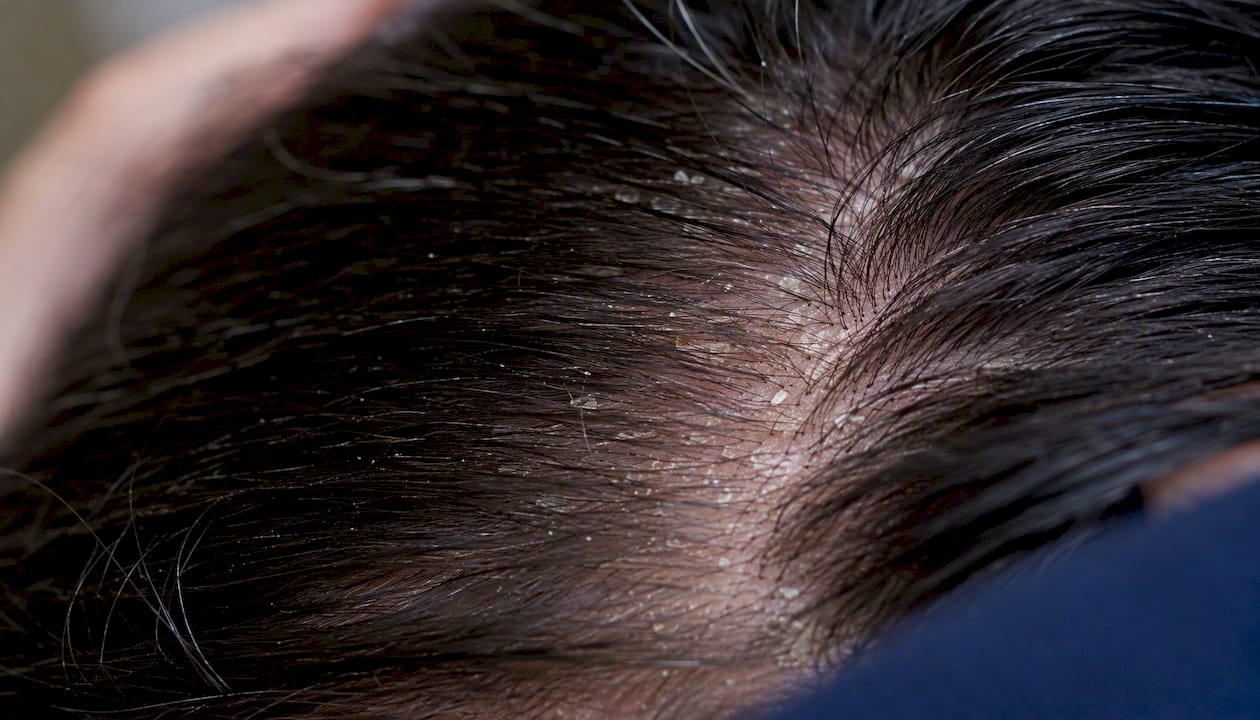
Feel the scalp itself. Dry scalp feels tight, sometimes itchy, and generally parched. A dandruff-prone scalp often feels oily at the roots even a day after washing, and may show visible redness or scaling along the hairline.
Location clues
Dandruff can spread beyond the scalp. It frequently appears on the eyebrows, nasolabial folds, beard area, and behind the ears. Dry scalp tends to stay on the head and doesn’t typically affect facial skin.
The overnight moisture test
Apply a light, noncomedogenic oil (jojoba or squalane work well) to your scalp before bed. By morning, true dry scalp flakes will have softened or largely disappeared. If the flakes persist and still look oily, the cause is more likely yeast-driven, not a simple moisture deficit.
Pro Tip: Do the overnight test on a freshly washed scalp for the clearest result. Residual product buildup can muddy the reading.
How to treat dry scalp: a step-by-step routine
Dry scalp responds well to a consistent hydration-first routine. The goal is to restore moisture, protect the skin barrier, and stop stripping the scalp of what little oil it has.
- Reduce washing frequency. Aim for every 2–3 days, or even less if your scalp tolerates it. Daily washing removes the sebum your scalp needs to stay protected.
- Switch to a gentle, sulfate-free shampoo. Look for formulas with hydrating agents like glycerin, panthenol, or aloe vera. Avoid shampoos with alcohol high on the ingredient list.
- Apply conditioner to the scalp’s edges. Most people skip the scalp entirely, but if dryness is severe, a lightweight conditioner applied to the hairline and nape can help.
- Use a pre-wash oil treatment once or twice a week. Warm a small amount of a lightweight oil (jojoba, argan, or a plant-based scalp oil) and massage it into the scalp 30–60 minutes before shampooing. This softens dry flakes and feeds the barrier without leaving residue.
- Add a leave-on scalp serum when needed. Ingredients to look for: glycerin, ceramides, hyaluronic acid, aloe vera, and panthenol. These attract and lock in moisture without clogging follicles.
- Avoid alcohol-heavy styling products. Hairsprays and gels with denatured alcohol as a top ingredient will dry the scalp further.
For textured or coily hair, the pre-wash oil step is especially useful because natural curl patterns make it harder for sebum to travel down the hair shaft, leaving the scalp more prone to dryness. If you have color-treated or chemically processed hair, stick to fragrance-free, pH-balanced formulas and keep the oil treatment time under an hour to avoid lifting color.
Most people with true dry scalp see clear improvement within 2–4 weeks of consistent hydration. If flaking continues past that point without improvement, revisit the diagnosis.
Pro Tip: Run a humidifier in your bedroom during winter months. Indoor heating drops relative humidity significantly, and even a modest increase in ambient moisture helps your scalp retain water overnight.
How to treat dandruff: medicated options and how to use them
Dandruff requires a different approach entirely. Because the root cause is yeast-driven inflammation, not dryness, the treatment targets Malassezia directly. Medicated shampoos are the first line of defense, and they work best when left on the scalp for several minutes rather than rinsed off immediately.
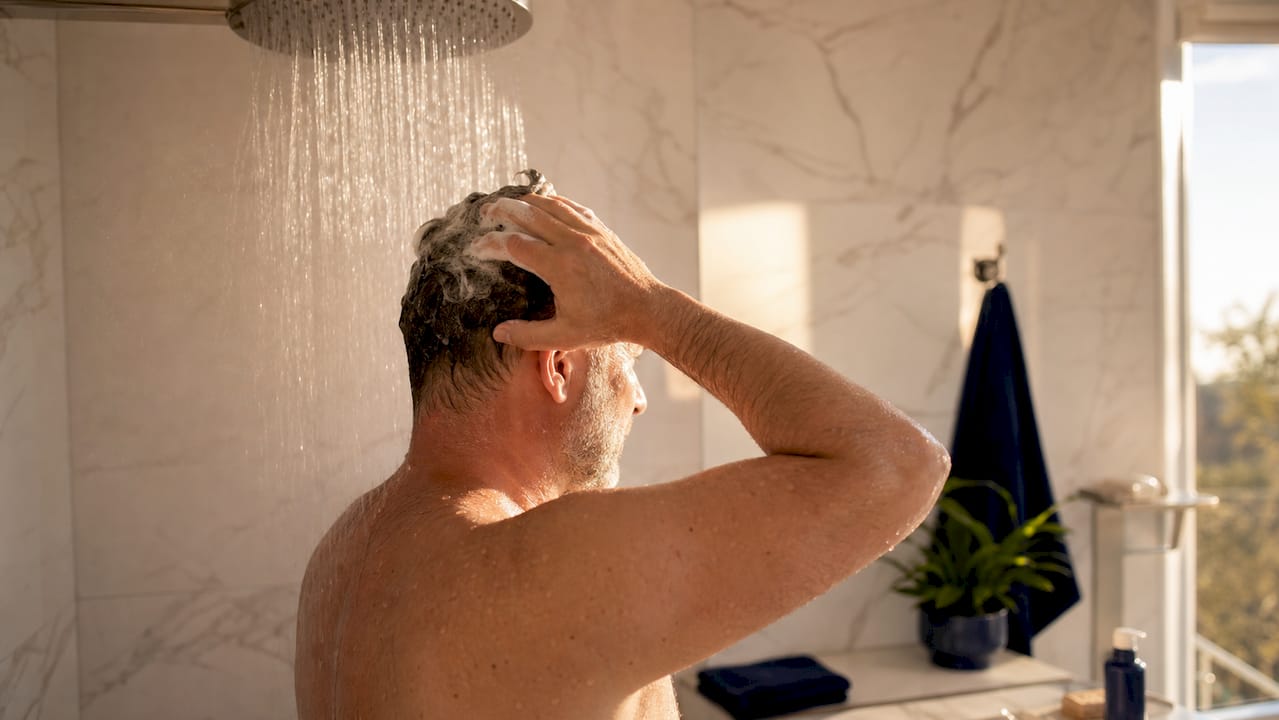
The five active ingredients most commonly recommended by dermatologists are mapped below:
| Active Ingredient | How It Works | Best Used When | Application Tips |
|---|---|---|---|
| Ketoconazole | Antifungal; directly inhibits Malassezia growth | Moderate to severe dandruff; OTC 1% or Rx 2% | Leave on 3–5 minutes; use 2x/week until controlled, then 1x/week |
| Zinc pyrithione | Antifungal and antibacterial; reduces yeast population | Mild to moderate dandruff; everyday maintenance | Can be used daily; gentle enough for most hair types |
| Selenium sulfide | Slows skin-cell turnover; antifungal | Stubborn or oily dandruff | Leave on 2–3 minutes; avoid on color-treated hair (can discolor) |
| Salicylic acid | Keratolytic; loosens and removes scale buildup | Thick, crusty flaking | Use 1–2x/week; follow with a moisturizing conditioner |
| Coal tar | Slows cell turnover; anti-inflammatory | Chronic, difficult-to-control dandruff | Strong odor; can discolor light or color-treated hair; use 2–3x/week |
These five ingredients are the backbone of OTC dandruff care. Rotating between two of them every few weeks can prevent Malassezia from adapting to a single treatment.
A practical rotation: use a ketoconazole or zinc pyrithione shampoo as your primary wash two to three times per week, and follow with a gentle, moisturizing conditioner on the lengths to prevent the hair itself from drying out. If you have color-treated hair, avoid selenium sulfide and coal tar, both of which can alter color.
For antifungal scalp care options that go beyond basic OTC shampoos, a dermatologist can prescribe 2% ketoconazole or topical corticosteroids for cases that don’t respond to store-bought products.
Effective home remedies and what to avoid
Some home approaches genuinely help. Others are myths that can make either condition worse.
What actually works
- Gentle oiling for dry scalp: A warm jojoba or argan oil pre-wash treatment softens flakes and restores barrier lipids. Keep it to 30–60 minutes and shampoo it out thoroughly.
- Humidifier use: Adding moisture to dry indoor air reduces transepidermal water loss from the scalp, especially in heated spaces during winter.
- Scalp massage during shampooing: Gentle fingertip massage improves circulation and helps loosen flakes without scratching. Scalp massage also supports product distribution across the scalp.
- Limiting heat styling: Blow dryers and flat irons on high heat accelerate moisture loss. Use a low heat setting or air-dry when possible.
What to avoid
- Using anti-dandruff shampoos on a dry scalp. Harsh antifungal formulas strip the barrier further and increase irritation on an already moisture-depleted scalp.
- Consistent under-washing for oily scalps. Skipping washes lets sebum and yeast accumulate, feeding the cycle that causes dandruff.
- Aggressive scalp exfoliation. Physical scrubs used too frequently can break the skin barrier and invite secondary infection.
- Alcohol-based styling products used daily. These dry the scalp and can trigger or worsen both conditions.
Myth vs. fact
“Oiling always helps” is false for dandruff. Oils can feed scalp yeast and worsen seborrheic dermatitis in people who are prone to it. Oil is a dry-scalp tool, not a universal scalp remedy.
“Dandruff means poor hygiene” is also false. Dandruff is a biological response to yeast and sebum, not a reflection of how often someone washes their hair.
How long does treatment take, and what does it cost?
Dry scalp typically responds within days to 2–4 weeks once you switch to a gentle routine and add consistent hydration. The timeline depends on how depleted the barrier is. Severe dryness from prolonged harsh-product use may take closer to a month to fully resolve.
Dandruff takes longer. Most people need 4–8 weeks of consistent medicated shampoo use before flaking stabilizes. Because dandruff is a chronic condition for many, ongoing maintenance (using a medicated shampoo once or twice a week even after symptoms clear) is often necessary to prevent recurrence.
On cost: OTC medicated shampoos typically run $8–$20 per bottle, and most last several weeks at the recommended frequency. Hydrating leave-on serums and plant-based scalp oils range from around $15 for basic options to $40 or more for premium botanical formulas. Prescription-strength treatments (2% ketoconazole, topical steroids) require a dermatologist visit; health insurance may cover the prescription itself but generally not OTC products.
One practical note: scratching the scalp to relieve itch prolongs recovery for both conditions. It breaks the skin barrier, introduces bacteria, and can cause temporary hair shedding. Resist the urge and let the treatment do the work.
When should you see a dermatologist?
Most cases of dandruff and dry scalp respond to OTC care within 6–8 weeks. When they don’t, or when certain symptoms appear, a dermatologist visit is the right call.
Red flags that need prompt attention
- Thick, silvery plaques on the scalp that don’t lift with shampoo
- Intense burning or pain, not just itch
- Oozing sores or crusted areas that look infected
- Rapid or patchy hair loss alongside scalp symptoms
- No improvement after 6–8 weeks of appropriate OTC treatment
- Symptoms spreading to the face, ears, or chest
How other conditions can look like dandruff
| Condition | Key Distinguishing Signs | Why OTC Dandruff Care Isn’t Enough |
|---|---|---|
| Scalp psoriasis | Thick, silvery-white plaques; well-defined edges; may affect elbows/knees | Requires prescription topical steroids or biologics |
| Contact dermatitis | Sudden onset after a new product; burning more than itch; localized redness | Needs allergen identification and avoidance |
| Fungal infection (tinea capitis) | Patchy hair loss; broken hair stubs; common in children | Requires oral antifungal medication |
| Secondary bacterial infection | Oozing, crusting, tenderness; may have odor | Needs topical or oral antibiotics |
Psoriasis affects a small percentage of the U.S. population, and scalp psoriasis in particular is frequently mistaken for severe dandruff. The plaques are thicker and more defined than dandruff flakes, and they don’t respond to antifungal shampoos. A dermatologist may perform a scalp biopsy to confirm the diagnosis before prescribing systemic or biologic therapy.
The American Academy of Dermatology notes that a dry, itchy scalp can mask several overlapping conditions, and that attempting to treat without a clear diagnosis often makes symptoms worse.
Common mistakes dermatologists see that make scalp flaking worse
The single most common clinical mistake is using a harsh anti-dandruff shampoo on a scalp that is simply dry. Board-certified dermatologists report that this weakens the skin barrier and increases irritation, creating a cycle where the scalp looks worse after treatment, not better.
Three patterns come up repeatedly:
- Treating without diagnosing. Grabbing the most aggressive product on the shelf before confirming whether the issue is dryness or yeast-driven inflammation leads to the wrong treatment and a worsening scalp.
- Over-washing. Stripping the scalp daily removes its natural protective oils, which can trigger rebound oil production and complicate the picture further.
- Assuming any flaky scalp is simple dandruff. Psoriasis, eczema, and contact dermatitis all produce flaking, and none of them respond to zinc pyrithione or ketoconazole.
Dandruff management is a long-term commitment. Dry scalp, by contrast, is often fully resolved with barrier repair. Knowing which you have before reaching for a product is the most useful thing you can do.
Pro Tip: If you’re unsure after trying the overnight moisture test, start with the gentlest possible option: a fragrance-free, sulfate-free shampoo for two weeks. If flaking improves, it was likely dry scalp. If it stays the same or worsens, move to a medicated formula.
Quick prevention habits to keep flakes away
Preventing recurrence is simpler than treating an active flare. A few consistent daily habits cover most of the risk.
- Match wash frequency to your scalp type. Oily scalps need more frequent washing to prevent yeast buildup; dry scalps need less to preserve barrier oils. Every 2–3 days is a reasonable starting point for most people.
- Use gentle, pH-balanced products. Harsh detergents and fragrances are the most common preventable triggers for both conditions. Check ingredient lists for plant-based ingredients that support the scalp barrier without disrupting it.
- Avoid heavy oils on dandruff-prone scalps. Light, noncomedogenic options are fine for occasional use, but thick oils like coconut oil applied directly to the scalp can feed Malassezia in susceptible people.
- Add a humidifier in dry climates or during winter. This is one of the most underused and effective tools for dry-scalp prevention.
- Protect an exposed scalp from sun. UV damage disrupts the skin barrier and can trigger inflammatory responses. A hat or SPF scalp spray works well.
- Manage stress actively. Stress is a documented trigger for seborrheic dermatitis flares. Regular sleep, exercise, and stress management reduce the frequency and severity of outbreaks.
For textured or chemically treated hair, balance is the key word. You need enough moisture to prevent dryness without creating the oily, yeast-friendly environment that triggers dandruff. A lightweight leave-in conditioner applied to the lengths (not the scalp) and a gentle scalp serum applied directly to the skin gives you both without overlap.
Pro Tip: After a dandruff flare clears, don’t stop the medicated shampoo entirely. Dropping to once a week as a maintenance wash is usually enough to keep Malassezia in check without over-drying the scalp.
Key Takeaways
Dandruff and dry scalp require opposite treatments, so getting the diagnosis right is the most important first step.
| Point | Details |
|---|---|
| Core difference | Dry scalp lacks moisture; dandruff is yeast-driven inflammation requiring antifungal care. |
| Fastest self-test | The overnight oil test distinguishes true dryness from yeast-driven flaking by morning. |
| Treatment timelines | Dry scalp improves in days to 2–4 weeks; dandruff stabilizes in 4–8 weeks with ongoing maintenance. |
| When to see a doctor | Seek care if symptoms include thick silvery plaques, burning, oozing, or no improvement after 6–8 weeks of OTC treatment. |
| Crisanbeauty’s role | Crisanbeauty’s plant-based scalp oils support dry-scalp barrier repair as a nourishing adjunct, not an antifungal treatment. |
A scalp-first perspective from CRISAN
Most scalp care advice skips the most important step: figuring out what you’re actually dealing with before reaching for a product. The instinct to grab the strongest anti-dandruff shampoo at the first sign of flaking is understandable, but it’s the wrong move for a dry scalp, and it’s a mistake that dermatologists see constantly.
What’s often overlooked is that the scalp is skin. It responds to the same principles of barrier health, moisture balance, and gentle care that apply to the rest of your body. Harsh, reactive treatments that strip the scalp in the name of “cleansing” tend to create the very problems they’re supposed to solve.
The plant-forward, Ayurvedic-inspired approach that Crisanbeauty is built on starts from a different premise: support the scalp’s natural function rather than override it. That means using botanicals that nourish the barrier, not disrupt it. It means adjusting routines based on what the scalp actually needs, not what the marketing says. And it means being honest that medicated treatments are the right call for confirmed dandruff, while barrier-repair care is the right call for dryness.
The two conditions are not interchangeable. Neither are their solutions.
Crisanbeauty’s plant-based scalp oil for dry scalp support
If the overnight test and your symptoms point toward true dry scalp, a plant-based scalp oil can be a meaningful part of your routine.
Crisanbeauty’s Ayurvedic hair and scalp oil is formulated with botanical ingredients drawn from Ayurvedic tradition, designed to nourish the scalp barrier and support healthier hair from the root. It works best as a pre-wash treatment for dry scalps: apply it 30–60 minutes before shampooing, massage it in gently, then wash out with a sulfate-free shampoo.
One important note: this is a nourishing, barrier-supportive product, not an antifungal treatment. If your diagnosis points toward dandruff or seborrheic dermatitis, a medicated shampoo with ketoconazole or zinc pyrithione is still the right primary tool. The scalp oil can complement that routine on non-wash days or as a pre-wash step, but it does not replace antifungal care.
Every Crisanbeauty product is manufactured in the USA using carefully selected botanical ingredients. If you’re ready to build a scalp-first routine, explore the full range and find the right fit for your hair type and scalp needs.
This article is for general informational purposes only and is not a substitute for professional medical advice. Consult a board-certified dermatologist for diagnosis and treatment of persistent or severe scalp conditions.
Useful sources and further reading
The clinical and research sources below informed this article. For unclear or severe cases, a board-certified dermatologist remains the most reliable resource.
- A review on dandruff and seborrheic dermatitis (PMC)
- Malassezia and seborrheic dermatitis mechanism (PubMed)
- Dry scalp: causes, signs, and treatment (Cleveland Clinic)
- Dandruff: symptoms and causes (Mayo Clinic)
- Is your dry scalp something more serious? (American Academy of Dermatology)
- Psoriasis statistics (National Psoriasis Foundation)
- Dandruff vs. dry scalp (Healthline)
- What could be causing your itchy scalp? (Harvard Health)
- Dandruff vs. dry scalp (Prevention)
- Dry scalp vs. dandruff (NBC Select)


