


Gray hair care naturally comes down to one shift: treat it as dry, porous hair that needs moisture first, occasional toning, and daily UV protection. A gentle sulfate-free cleanse, a weekly hydrating mask, targeted oil or leave-in, and occasional use of purple shampoo paired with periodic clarifying rinses can help reduce brassiness and improve shine. Wash regularly each week, adjusting frequency based on texture and scalp oil production.
TL;DR:
- Gray hair requires regular hydration with sulfate-free shampoos and weekly masks to combat porosity and dryness caused by melanin loss.
- Using a purple shampoo once weekly effectively neutralizes brassy tones, but overuse can leave a faint violet tint, especially on lighter strands.
- Lightweight oils like argan or jojoba are best for sealing ends, while heavier oils may cause dullness if used daily, and deep treatments support softness and shine.
- Protecting against sun damage with UV filters and minimizing heat styling helps prevent yellowing and maintains hair health over time.
- Nutritional support should be based on testing deficiencies, and topical botanicals support follicle health without systemic herbal risks.
Table of Contents
- How to Care for Gray Hair Naturally: The Quick Routine
- Shampoos and Rinses: What Clarifying, Chelating, and Toning Actually Do
- Moisture, Masks, and Oils for Softer, Shinier Gray Hair
- Scalp Health and Nutrition Linked to Hair Pigment
- Natural Tinting and Home Remedies: What Actually Happens
- Protecting Gray Hair From Sun, Heat, and Daily Wear
- How Often Should You Wash, Mask, and Tone Gray Hair?
- What the Research Actually Supports for Gray Hair Care
- Why Moisture, Not Miracle Fixes, Should Drive Your Routine
- Where Crisanbeauty Fits Into a Natural Gray Hair Routine
- Sources
- FAQ
How to Care for Gray Hair Naturally: The Quick Routine
Gray strands behave differently than pigmented hair, and the routine has to account for that before anything else. Melanin does more than color hair. It also affects the cuticle’s smoothness, so once it’s gone, hair tends to run drier, more porous, and more sensitive to UV exposure, which is exactly why gray hair yellows and dulls faster than pigmented strands.
The order matters. Cleanse, tone only when brassiness shows up, deep-condition, apply a leave-in, then seal with a light oil. Skipping steps or reversing the order (oil before leave-in, for instance) usually leaves hair looking greasy rather than glossy.
A simple weekly rhythm:
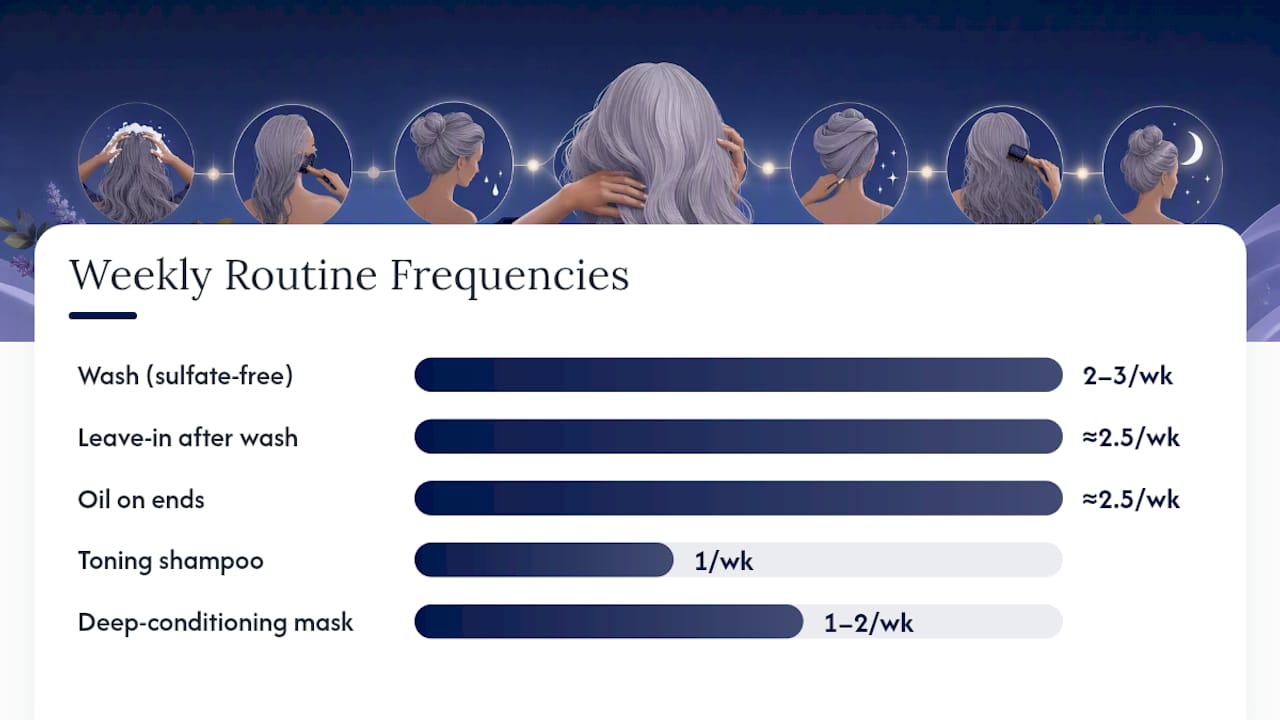
- Wash with a sulfate-free, hydrating shampoo 2 to 3 times a week.
- Use a purple or blue toning shampoo as needed, typically about once weekly if brass or yellowing shows up.
- Apply a deep-conditioning mask regularly to maintain hair hydration, focusing on mid-lengths and ends.
- Follow every wash with a leave-in conditioner or lightweight serum while hair is still damp.
- Finish with a few drops of oil on the ends only, never the scalp, unless you’re doing a pre-wash treatment.
When shopping for products, prioritize humectants like glycerin or hyaluronic acid, which pull moisture into the hair shaft, along with antioxidant botanicals (green tea, rosemary extract) that help offset oxidative stress on unpigmented strands. UV filters in leave-in sprays are worth seeking out too, since gray hair has less natural defense against sun-driven color changes.
Texture changes the details. Fine gray hair usually needs lightweight, water-based leave-ins and just a drop of oil, or it goes flat fast. Medium hair tolerates a slightly richer mask and a nickel-sized amount of oil on the ends. Coarse or curly gray hair, which tends to run driest and most porous, usually needs a heavier cream-based leave-in, a weekly (sometimes twice-weekly) mask, and oil applied to damp hair rather than dry.
Shampoos and Rinses: What Clarifying, Chelating, and Toning Actually Do
Clarifying shampoos strip general buildup, oil, and styling residue. Chelating shampoos target mineral deposits from hard water and pool chlorine, which can be more visible on gray hair due to lack of melanin, so occasional chelating washes can be helpful depending on water hardness.
Purple and blue shampoos work differently. They deposit violet or blue pigment that neutralizes the yellow and orange tones gray hair develops through oxidation and UV exposure. Using purple shampoo about once a week is generally recommended as a safe starting point, according to stylist guidance, since overdoing it can leave a visible purple or gray-lavender cast, especially on lighter, finer strands.
Gentler options exist for the weeks between chelating treatments:
- A diluted apple cider vinegar rinse (1 tablespoon ACV to 1 cup water) poured through hair after shampooing, left for a minute, then rinsed.
- A cooled sage or rosemary tea rinse, steeped for 10 minutes and used as a final rinse.
- Both can help cut mild buildup and add shine without the intensity of a full clarifying rinse used weekly.
Pro Tip: If your purple shampoo starts leaving a faint violet tint on white or silver strands, cut back to once every two weeks and alternate with a plain hydrating shampoo in between.
Moisture, Masks, and Oils for Softer, Shinier Gray Hair
Gray hair loses moisture faster than pigmented hair for a physical reason, not just a cosmetic one. Sebum production naturally declines with age, and the same melanin loss that removes color also tends to leave the cuticle rougher and more porous, which lets moisture escape and lets in more oxidative damage from sun and pollution. That combination is why a routine built around hydration, not just cleansing, makes the biggest visible difference.
Oil choice matters more than people think. Lightweight oils like argan, jojoba, and squalane mimic the hair’s natural lipids closely enough to absorb rather than sit on top of the strand. Heavier oils, coconut oil in particular, can oxidize on exposed gray hair and contribute to a dull, sometimes yellow-tinted film over time if used too often or left on too long. Reserve heavier oils for occasional pre-wash treatments rather than daily leave-in use.
A weekly deep-treatment routine that layers correctly:
- Apply a hydrating mask (look for shea butter, glycerin, or panthenol) to damp, freshly washed hair and leave it for 10 to 15 minutes.
- Rinse thoroughly, then apply a leave-in conditioner while hair is still damp, working from mid-length to ends.
- Once the leave-in has absorbed slightly, seal with 2 to 4 drops of a lightweight oil like jojoba or argan on the ends only.
- Style as usual once hair is mostly dry to avoid trapping excess moisture against the scalp.
Pro Tip: Warm your oil between your palms for a few seconds before applying. It spreads more evenly and you’ll use less product overall.
Scalp Health and Nutrition Linked to Hair Pigment
What you eat and how you treat your scalp both show up in hair quality, even if they can’t reverse gray that has already come in. Several nutrients get cited repeatedly in connection with pigment and follicle health: vitamin B12, copper, iron measured as ferritin, and vitamin D. The evidence here is meaningful but not absolute, and researchers are careful to note that supplementing without a documented deficiency isn’t well-supported. Testing before supplementing is the recommended approach rather than adding pills speculatively.
Topically, the story is more direct. Botanical derivatives applied to the scalp are considered a safer route than systemic herbal treatments for supporting the melanocyte activity tied to hair color, largely because topical use limits the toxicity risk that can come with oral herbal dosing at high volumes.
- Massage the scalp for 3 to 5 minutes, 2 to 3 times a week, to support circulation to the follicle.
- Apply a botanical scalp serum (rosemary, amla, or brahmi based) before bed on massage nights.
- Keep scalp treatments light. Overloading with oil can clog follicles rather than support them.
If you notice sudden, patchy graying, thinning alongside the color change, or fatigue and other symptoms, a blood panel checking B12, ferritin, and vitamin D through your doctor is worth doing before you spend money on supplements. A daily hair-support vitamin can be a reasonable next step once a deficiency is confirmed or ruled out.
Natural Tinting and Home Remedies: What Actually Happens
Home remedies for gray hair fall into three distinct categories, and knowing which one you’re using sets the right expectations. Tea and coffee rinses stain the hair surface temporarily, giving a subtle warmth that fades within a wash or two. Herbal rinses like sage and rosemary work gradually, building slight depth of tone over weeks of repeated use rather than a single application. Plant dyes, henna combined with indigo, actually deposit color into the hair shaft and can visibly darken gray hair, though results vary widely by hair porosity and how much gray you’re covering.
None of these reverse the biological graying process. Consistent use over roughly 8 to 12 weeks is typically what’s needed to see a visible shift in tone or texture, and results are subtle rather than dramatic.
- Coffee or black tea rinse: Brew strong, cool completely, pour through clean hair, leave 15 to 20 minutes, then rinse. Repeat weekly for gradual warmth.
- Sage and rosemary rinse: Steep a strong batch, cool, and use as a final rinse 2 to 3 times weekly for subtle gradual toning.
- Henna and indigo paste: Mix per package instructions, apply for 1 to 3 hours depending on desired depth, then rinse without shampoo for 24 hours.
Always patch-test any dye or rinse on a small section first, especially if hair has been previously bleached, permed, or chemically treated, since henna in particular can react unpredictably with existing chemical processing.
Protecting Gray Hair From Sun, Heat, and Daily Wear
Gray hair’s lack of melanin removes a natural buffer against UV damage, which means sun exposure oxidizes it faster and drives yellowing that no amount of purple shampoo fully fixes on its own. A leave-in spray with UV filters, or simply a hat during long outdoor stretches, does more preventive work than most people realize.
For heat styling, look for tools with adjustable, lower-heat settings and always use a heat protectant beforehand. Directing airflow down the hair shaft while blow-drying, and finishing with a cool shot, smooths the cuticle and cuts frizz.
- Rinse with cool water at the end of every wash to help seal the cuticle.
- Dry hair with a microfiber towel instead of terry cloth to reduce friction breakage.
- Sleep on a satin or silk pillowcase to cut down on overnight tangling.
- Detangle gently with a wide-tooth comb starting at the ends, working upward.
Pro Tip: Keep a small UV-protectant spray in your bag for summer. Gray hair yellows faster in direct sun than most people expect, and prevention is easier than correction.
How Often Should You Wash, Mask, and Tone Gray Hair?
A simple weekly cadence works for most people: wash 2 to 3 times, mask once, tone with purple shampoo once, and clarify every 2 to 3 weeks. Oil goes on the ends after every wash, lightly.
If brass keeps creeping back within days of toning, buildup from hard water or styling products is the usual culprit, and a chelating wash is the fix, not more purple shampoo. Brittle ends point to moisture loss, not protein overload, since gray hair rarely needs more protein and often needs less heat and more hydration. Increased frizz usually traces back to under-conditioning or skipping the leave-in step. Scalp irritation or persistent flaking is worth flagging to a dermatologist rather than treating with stronger cleansers.
- Yellowing that won’t budge: try a chelating wash first, then reassess toning frequency.
- Persistent dryness: add a second weekly mask and cut back on heat styling.
- Ongoing scalp discomfort: see a dermatologist rather than adding more products.
A professional gloss or color correction makes sense when gray and previously colored hair are blending unevenly, or when a lifetime of chemical processing has left texture too damaged for home treatments to fix on their own.
What the Research Actually Supports for Gray Hair Care
This approach to hair care draws on practices rooted in Ayurvedic tradition, inspired by personal experience with postpartum hair loss. That experience shaped a belief in topical, plant-based support over harsh chemical shortcuts, which lines up with where current research points.
Peer-reviewed work backs topical botanicals over systemic herbal regimens for supporting follicular melanocyte health, since bioavailability and potential toxicity limit how well oral herbal treatments actually perform. That’s the same reasoning behind a hydration-first, scalp-focused routine: work with what topical application can realistically do, and always patch-test new botanicals or dyes before full application.
Why Moisture, Not Miracle Fixes, Should Drive Your Routine
The natural hair care world sells a lot of promises about “reversing” gray hair through diet or a single miracle oil. The research doesn’t back that up, and conventional advice often skips the more useful point: gray hair’s real problem is structural dryness and UV sensitivity, not a fixable pigment deficiency.
Most people over-invest in toning products and under-invest in moisture. Purple shampoo gets the attention because the color-correcting effect is visible immediately, but a dry, porous strand will look brassy again within days no matter how much violet pigment you deposit on it. Fix the moisture barrier first, and toning becomes a maintenance step rather than a constant chase.
If there’s one priority worth acting on before any other: build the hydration routine before adding tints, tonics, or supplements. Everything else works better once that foundation is in place.
— CRISAN
Where Crisanbeauty Fits Into a Natural Gray Hair Routine
Building a hydration-first, scalp-supportive routine gets easier with the right botanical tools on hand, and this is where Crisanbeauty’s plant-based, Ayurvedic-inspired formulations fit naturally into what this article recommends. Our multi-oil hair strengthening treatment works well as a weekly pre-wash treatment, applied to dry or damp hair 20 to 30 minutes before shampooing to support scalp circulation and add softness to porous, gray strands.
For anyone considering nutritional support after confirming a deficiency, our daily hair vitamin is formulated with that testing-first approach in mind rather than as a blanket fix. Always patch-test any new topical product on a small section of skin or scalp first, especially if you’re combining it with henna or other plant dyes.
Ready to try a plant-based pre-wash treatment as part of your routine? Start with our Ayurvedic hair growth oil and build from there.
Sources
- PMC article on topical botanical derivatives (2026)
- An Expert’s Guide to Caring for and Styling Gray Hair — Vogue
- Review on natural products and hair greying (Springer, 2026)
- Home Remedies for Gray Hair: 20+ Natural Methods — Healthline
FAQ
What Is the Best Way to Care for Natural Gray Hair?
A gentle sulfate-free cleanse, weekly hydrating mask, lightweight oil on the ends, and purple shampoo used about once a week to control brass is the most reliable natural approach, since gray hair is drier and more UV-sensitive than pigmented hair.
What Does Vinegar Do to Gray Hair Overnight?
A diluted apple cider vinegar rinse helps cut mild buildup and adds shine, but it works as a rinse-out treatment used briefly after shampooing, not an overnight soak, since leaving vinegar on hair for hours can dry it out further.
What Is the 50/50/50 Rule for Gray Hair?
There’s no single verified definition of a “50/50/50 rule” backed by dermatological or trichological sources, so treat any version you see online with caution and rely on documented frequency guidance (weekly toning, biweekly to triweekly clarifying) instead.
What Is the Best Natural Solution for Gray Hair?
The most supported natural solution combines moisture-first cleansing and masking with topical botanical oils and scalp serums, since research favors topical botanical application over oral herbal supplements for supporting hair pigment and quality.
How Often Should I Use Purple Shampoo on Gray Hair?
Once a week is the safe starting frequency for most gray hair, and using it more often risks a visible purple or lavender cast on lighter strands.


