


The hair growth cycle is a repeated four-stage biological process — anagen, catagen, telogen, and exogen — that governs when each individual hair grows, pauses, and sheds. According to StatPearls on NCBI Bookshelf, scalp hair spends most of its life in the active growth phase, and a large majority of your scalp hairs are growing right now.
Here is what that means for you in practical terms:
- Anagen (growth phase) lasts approximately 2–6 years for scalp hair, which is why some people can grow hair past their waist while others plateau at shoulder length.
- About 85%–95% of scalp hairs are in anagen at any given moment; the rest are resting or shedding.
- Normal daily shedding runs between 50 and 150 hairs per day. Seeing hair in the shower or on your brush is not a sign something is wrong.
- Red flag: Sudden, diffuse shedding that persists beyond 6 months, or patchy bald spots with scalp tenderness, warrants a clinician visit rather than a wait-and-see approach.
The sections below walk through the biology of each phase, what disrupts the cycle, and what you can realistically do to support it.
Key Takeaways
The hair growth cycle runs on a predictable biological schedule, and most disruptions are reversible once the underlying cause is identified and addressed.
| Point | Details |
|---|---|
| Four phases govern every hair | Anagen (growth), catagen (regression), telogen (rest), and exogen (shedding) repeat throughout your life. |
| 85%–95% of hairs are growing now | A healthy scalp keeps the vast majority of follicles in anagen at any given time. |
| Shedding lags the trigger by months | Telogen effluvium typically produces visible shedding 2–4 months after the stressor, not immediately. |
| Regrowth takes 3–6 months minimum | After correcting a cause, allow at least 3–6 months before expecting visible improvement. |
| Shaft protection matters as much as growth | Preventing breakage often yields faster visible length gains than any biological intervention alone. |
Table of Contents
- How the hair growth cycle works, stage by stage
- How long a full cycle takes and what to expect
- What controls the hair cycle at the cellular level
- What factors disrupt or change your hair cycle
- Common clinical conditions that reflect cycle disruption
- Evidence-aligned steps to support a healthy hair growth cycle
- A simple at-home scalp routine to support your cycle
- What we have learned from watching thousands of hair journeys
- Sources
How the hair growth cycle works, stage by stage
Understanding each phase helps you connect what you see in the mirror to what is happening at the follicle level. A Healthline overview of hair growth stages describes all four phases clearly; the table below adds clinical context.
| Phase | Approximate Duration (Scalp) | Duration (Eyebrows/Lashes) | What Happens Biologically | Clinical Note |
|---|---|---|---|---|
| Anagen | 2–6 years | 4–6 months | Dermal papilla signals bulge stem cells to divide; the hair shaft grows roughly 1 cm per month | Longer anagen = longer potential hair length |
| Catagen | 2–3 weeks | 2–3 weeks | Follicle shrinks; dermal papilla detaches; hair becomes a “club hair” with a hard white root | Affects ~1%–3% of scalp hairs at any time |
| Telogen | 2–4 months | 2–4 months | Follicle rests; club hair is anchored but no longer growing | A minority of scalp hairs are in telogen at any time. |
| Exogen | Days to weeks | Days to weeks | The anchored club hair is actively shed; new anagen hair pushes it out | Normal shedding of 50–150 hairs/day occurs here |
A few additional benchmarks worth knowing:
- Scalp hair grows approximately 1 cm (about 0.4 inches) per month, or roughly 6 inches per year.
- A healthy scalp maintains an anagen-to-telogen ratio of roughly 12–14:1, per a mechanistic PMC review of the hair growth cycle.
- Eyebrow and eyelash anagen lasts several months, leading to their shorter length compared to scalp hair.
Exogen deserves its own mention. Many sources fold it into telogen, but it is a distinct event. During exogen, proteases actively loosen the club hair’s attachment so the new anagen hair can emerge cleanly. When exogen is disrupted, old hairs can linger and temporarily reduce the appearance of new growth.
Pro Tip: Check shed hairs for a small, white, hard bulb at the root. That is a club hair, meaning the follicle completed a normal catagen-telogen cycle. No bulb, or a dark, tapered root, usually means the hair broke rather than shed, which points to shaft damage rather than a cycle problem.
How long a full cycle takes and what to expect
Getting a clear timeline answer is one of the most common reasons people search this topic. Here are the core numbers:
- Full cycle length: Roughly 2–7 years for a single scalp follicle, dominated by the anagen phase.
- Catagen: 2–3 weeks.
- Telogen: 2–4 months.
- Exogen: A few days to a few weeks, overlapping with early anagen.
- Daily shedding: 50–150 hairs is the normal range; StatPearls places the average around 100 hairs per day.
How long until you see regrowth after fixing a cause? If you correct a reversible trigger (iron deficiency, a stopped medication, resolved illness), expect 3–6 months before visible improvement. The follicle needs time to complete telogen, enter exogen, and then produce enough new anagen shaft to be visible above the scalp surface. The Cleveland Clinic’s hair follicle overview notes that follicles may take months to years to fully recover depending on the severity of prior injury.
Body-site variation matters here. Eyebrow and eyelash hairs cycle through anagen in just 4–6 months, so over-plucking or trauma to those follicles shows visible consequences faster. Leg and arm hairs have similarly short anagen phases, which is why they stay short without trimming.
What controls the hair cycle at the cellular level
The follicle is not a passive tube. It is a miniature organ with its own signaling network, and understanding that network explains why so many different triggers can disrupt growth.
Key cell players:
- Dermal papilla cells: The command center. They send molecular signals (including Wnt/beta-catenin and Sonic Hedgehog pathways) that tell bulge stem cells to start dividing and launch anagen.
- Bulge stem cells: Located in the outer root sheath, these cells receive dermal papilla signals and differentiate into the matrix cells that produce the hair shaft.
- Matrix cells: Rapidly dividing cells at the follicle base that build the hair shaft and inner root sheath through keratinization.
- Keratinocytes: The primary building-block cells of the shaft itself; their differentiation and hardening create the visible hair fiber.
Growth factors and blood supply are equally critical. Research on hair growth and follicle microanatomy shows that vascular endothelial growth factor (VEGF), fibroblast growth factor (FGF), and insulin-like growth factor (IGF) all support sustained anagen by promoting angiogenesis around the follicle. More blood flow means more oxygen and nutrients delivered to the rapidly dividing matrix cells. When that vascular support drops, anagen shortens.
This is also why scalp microcirculation plays a direct role in hair growth and why interventions that increase local blood flow (scalp massage, certain topical treatments) have a plausible biological basis rather than being purely cosmetic.
For readers who want primary literature depth, the PMC mechanistic review and the StatPearls anatomy entry are the two most thorough clinical sources available without a paywall.
What factors disrupt or change your hair cycle
Most hair loss is not random. Specific internal and external factors push follicles out of anagen and into telogen earlier than they should go.
Internal factors:
- Hormones and DHT: Dihydrotestosterone (DHT) binds to androgen receptors in genetically susceptible follicles and progressively shortens anagen, producing finer, shorter hairs over successive cycles. This is the mechanism behind androgenetic alopecia.
- Genetics: Inherited follicle sensitivity to androgens determines pattern and severity of age-related thinning.
- Age: Anagen duration shortens naturally with age; follicle stem cell activity declines.
- Illness and surgery: Major physiologic stressors (high fever, surgery, severe infection, COVID-19) can synchronize many follicles into telogen simultaneously. Shedding typically appears 2–4 months after the stressor, not during it.
- Medications: Chemotherapy agents, anticoagulants, retinoids, and some antihypertensives are known to disrupt the cycle.
- Nutritional deficiencies: Low iron, low ferritin, inadequate protein, and vitamin D deficiency are among the most common correctable causes of diffuse shedding. Nutrition’s role in hair health is well-documented.
- Pregnancy and postpartum: Elevated estrogen during pregnancy prolongs anagen; the hormonal drop after delivery triggers a synchronized telogen shift, producing the classic postpartum shed at 2–4 months.
- Thyroid dysfunction: Both hypo- and hyperthyroidism disrupt the cycle.
External factors:
- UV exposure: Prolonged UV radiation damages the follicle’s outer root sheath and can shorten anagen.
- Air pollution: Particulate matter and polycyclic aromatic hydrocarbons have been shown in research to reduce anagen-phase gene expression in follicle cells.
- Chemical and heat damage: Bleaching, relaxers, and excessive heat do not directly shorten anagen, but they weaken the shaft so badly that hair breaks before it can reach length.
- Tight hairstyles: Chronic traction on follicles (tight braids, ponytails, extensions) can cause traction alopecia, which starts as a reversible cycle disruption and can progress to scarring.
Circadian and seasonal effects: The hair cycle is not immune to the body’s internal clock. Research suggests follicle stem cell activity follows circadian rhythms, with cell division peaking at specific times of day. Seasonally, some studies report a mild increase in telogen-phase hairs in late summer, producing slightly higher shedding in autumn. The effect is modest in most people but can amplify the perception of shedding when it coincides with another stressor.
Pro Tip: Stress-triggered hair loss follows a delayed pattern. If you are shedding heavily right now, think back 2–4 months for the likely trigger, not last week. This timing is one of the most misunderstood aspects of telogen effluvium. For a deeper look at how stress affects men’s hair specifically, this guide on stress and hair loss covers the clinical picture well.
Common clinical conditions that reflect cycle disruption
Recognizing which pattern fits your situation helps you decide whether to wait, change habits, or see a clinician.
Common disorders tied to the hair growth cycle:
- Androgenetic alopecia (AGA): DHT progressively miniaturizes follicles over many cycles. Anagen shortens with each cycle until the follicle produces only vellus (fine, colorless) hairs. Affects both men and women; pattern differs by sex.
- Telogen effluvium (TE): A reactive, usually self-limited condition where a systemic stressor pushes many follicles from anagen into telogen simultaneously. StatPearls describes telogen effluvium as typically producing visible diffuse shedding 2–4 months after the trigger, with recovery once the cause is corrected. Acute TE usually resolves within 6 months; chronic TE (lasting more than 6 months) needs further workup.
- Alopecia areata (AA): An autoimmune attack on anagen follicles, producing patchy, non-scarring hair loss. Follicles are not destroyed; they are suppressed, which is why regrowth is possible.
- Anagen effluvium: Rapid, diffuse shedding during anagen itself, most commonly caused by chemotherapy. The hair shaft breaks at the follicle because matrix cell division is abruptly halted.
- Scarring alopecias (e.g., lichen planopilaris, central centrifugal cicatricial alopecia): Inflammation destroys the follicle permanently. Early recognition and treatment are critical because lost follicles do not regenerate.
When to see a clinician — red flags:
- Sudden, heavy shedding that does not slow after 6 months.
- Patchy, well-defined bald spots (possible alopecia areata).
- Scalp pain, burning, itching, or visible scaling at the hairline.
- Any sign of scarring (shiny, smooth scalp skin with no follicle openings).
- Shedding accompanied by other systemic symptoms (fatigue, weight change, temperature sensitivity).
- Hair loss in a child or teenager.
How clinicians evaluate cycle-related loss: A thorough history (timing, medications, recent illness, diet, family history) is the most important diagnostic tool. The pull test (gently tugging 40–60 hairs) gives a quick sense of how many are in telogen. Trichoscopy (dermoscopy of the scalp) can identify miniaturization, perifollicular inflammation, or scarring patterns. Blood work typically covers ferritin, thyroid-stimulating hormone, complete blood count, and sometimes zinc and vitamin D.
Evidence-aligned steps to support a healthy hair growth cycle
Once you understand the biology, the practical steps follow logically. The goal is to protect the anagen phase, correct anything shortening it, and preserve the shaft you already have.
Checklist for supporting your cycle:
- Address reversible medical causes first. Check ferritin (not just hemoglobin), thyroid function, and vitamin D. Low ferritin is one of the most common and most correctable contributors to diffuse shedding.
- Prioritize protein. Hair is roughly 95% keratin. Inadequate dietary protein directly limits the raw material for shaft production. Aim for adequate daily protein from whole-food sources.
- Reduce physiologic stressors. Sleep, stress management, and avoiding crash diets all protect anagen duration. Rapid caloric restriction is a well-documented telogen effluvium trigger.
- Stop damaging styling practices. Heat, bleach, and tight styles do not shorten anagen directly, but they destroy the shaft before it reaches length. Protecting existing hair is often faster than trying to grow new hair.
- Consider clinically supported topical therapies. Topical minoxidil (2% or 5%) is FDA-approved for androgenetic alopecia and works by prolonging anagen and increasing follicle size. A PMC review of therapeutic approaches to hair loss notes that low-level light therapy (LLLT) and platelet-rich plasma (PRP) have peer-reviewed data supporting telogen-to-anagen transition in some settings, though FDA approvals remain limited to minoxidil and finasteride for AGA. Clinic-based options like Regenera Activa represent a newer category of follicle-regeneration procedures worth discussing with a dermatologist.
- Support scalp health with botanical ingredients. Scalp-nourishing herbs with evidence for scalp health include ingredients like amla, bhringraj, and rosemary, all of which appear in Ayurvedic formulations with a long history of use.
Finasteride is FDA-indicated for men only. Women who are or may become pregnant must not handle crushed or broken finasteride tablets, due to the risk of harm to a male fetus. It can also cause sexual side effects (reduced libido, erectile dysfunction) in a minority of men, which usually resolve after stopping treatment. Discuss these risks with a physician before starting.
Timeline reality check: After correcting a cause, expect 3–6 months before you see visible improvement. New anagen hairs need time to grow above the scalp surface. Treatments like topical minoxidil typically require 4–6 months of consistent use before results are measurable. Patience is not optional here.
Pro Tip: Protecting the shaft from breakage often produces faster visible length gains than any biological intervention. A hair that grows 1 cm per month but breaks every 3 months will never appear to grow. Reducing manipulation, using a wide-tooth comb on wet hair, and applying a protective oil before heat styling can make a measurable difference within weeks.

A simple at-home scalp routine to support your cycle
You do not need a complicated protocol. Consistency with a few well-chosen steps does more than an elaborate routine done sporadically.
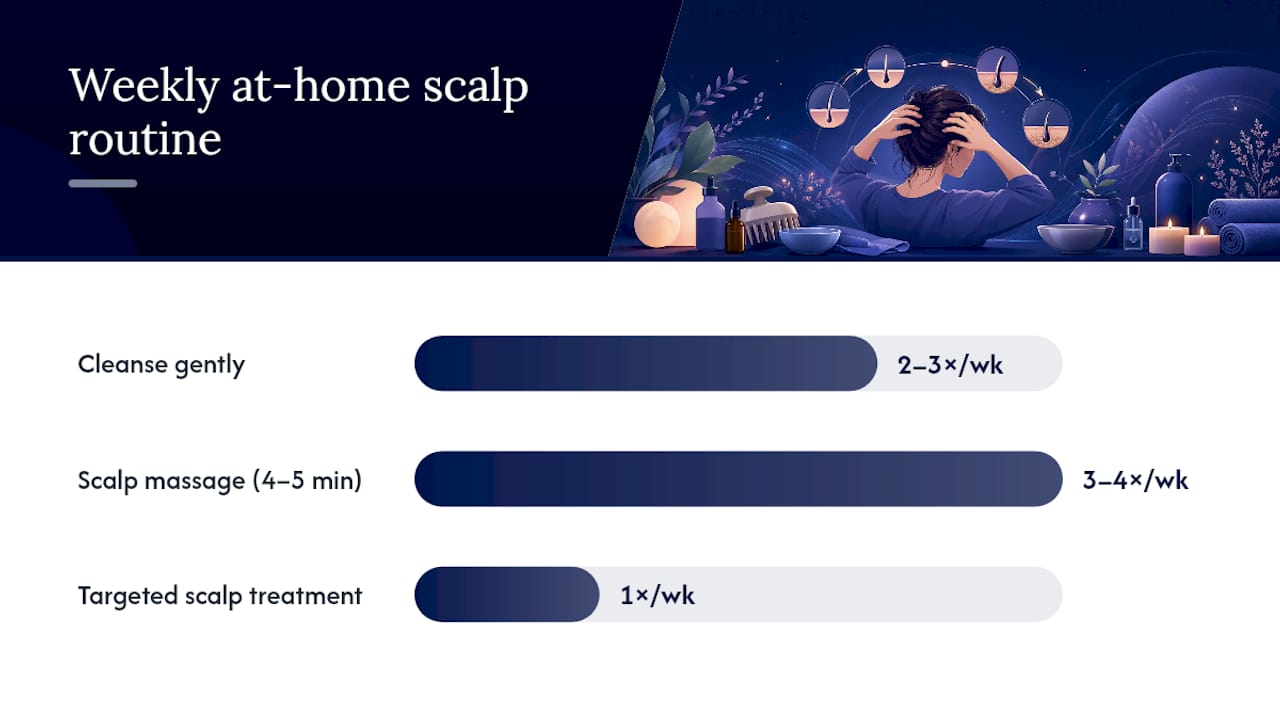
Weekly routine checklist:
- Cleanse gently, 2–3 times per week. Buildup of sebum, product residue, and environmental pollutants can clog follicle openings and create a low-grade inflammatory environment. Use a sulfate-free shampoo suited to your scalp type.
- Scalp massage for 4–5 minutes, 3–4 times per week. Gentle fingertip pressure increases local blood flow and may support follicle metabolic activity. Scalp massage for hair growth has practical technique guidance worth reviewing. For additional technique tips, this scalp massage benefits guide from a professional haircare perspective is also useful.
- Apply a targeted scalp oil or treatment weekly. Plant-based oils that penetrate the scalp (such as those in Crisanbeauty’s Ayurvedic hair growth oil) can deliver botanical actives directly to the follicle environment. See nourishing scalp treatments for a broader look at options.
- Protect your scalp from UV. The scalp is skin. UV damage affects the follicle’s outer root sheath. Wear a hat or use a UV-protective hair product on exposed partings.
- Patch test new products. Apply a small amount to the inner forearm for 24 hours before applying to the scalp. Stop any product that causes persistent itching, redness, or flaking.
- Consider supplements if diet is inadequate. If whole-food sources are not covering your nutritional needs, targeted hair vitamins can fill gaps. Crisanbeauty’s complete hair follicle support supplement is formulated with follicle support in mind.
Pro Tip: If a new product causes irritation, stop it immediately and wait for the scalp to fully calm before introducing anything else. Layering products on an irritated scalp makes it impossible to identify the cause and can worsen inflammation, which is itself a cycle disruptor.
Note: This routine supports general scalp health. If you are experiencing sudden or severe shedding, patchy loss, or scalp pain, please consult a board-certified dermatologist before starting any new regimen.
What we have learned from watching thousands of hair journeys
Shedding is distressing. We know that firsthand at Crisanbeauty. The postpartum hair loss that led to this brand’s founding was not just a cosmetic concern; it felt like losing something tied to identity and confidence. What we have seen, again and again, in our community of over 1.3 million people is that the hardest part of hair recovery is not the biology. It is the waiting.
The biology is actually reassuring once you understand it. Most shedding is self-limited. Most follicles are not destroyed; they are just resting. The cycle will restart if you remove the trigger, nourish the scalp, and protect the shaft. What derails people is expecting results in weeks when the cycle operates in months.
Our honest advice: give any intervention at least 90 days before judging it. Focus first on what you can correct (nutrition, stress, styling habits) before spending money on advanced treatments. And if the red flags listed above apply to you, see a clinician before anything else. Education and honest guidance are at the core of what Crisanbeauty stands for, and that means telling you the truth even when the truth is “this takes time.”
Sources
The clinical sources below were used throughout this article. They are freely accessible and provide primary-literature depth for readers who want more detail. For personalized diagnosis or treatment, consult a board-certified dermatologist.
- Anatomy, Hair Follicle - StatPearls - NCBI Bookshelf
- Integrative and Mechanistic Approach to the Hair Growth Cycle and Hair Loss - PMC
- Stages of Hair Growth Plus How to Maintain Hair Health in Every Stage - Healthline
- Hair Follicle: Function, Structure & Associated Conditions - Cleveland Clinic
- Therapeutic approaches to hair loss - PMC
This article is general information, not a substitute for advice from a qualified doctor. Consult a qualified healthcare professional about your own circumstances before acting on anything here.
Important: hair oil cannot change the biological growth cycle or treat a medical cause of hair loss.
Where a consistent oiling ritual can fit
A cosmetic oil can support softness, lubrication and reduced friction—helpful when your goal is protecting fragile lengths while hair moves through its natural cycle. For sudden, patchy or unexplained shedding, speak with a qualified medical professional.
Use the complete CRISAN hair-oiling guide to choose timing, dosage and frequency.


