


Yes, body oil can help with eczema. The key is choosing a fragrance-free, linoleic-acid-rich formula and applying it to damp skin within three minutes of your shower. That single habit does more for your skin barrier than any expensive product with a long ingredient list.
Quick checklist before you buy:
- Look for “fragrance-free” on the label (not just “unscented”)
- Choose oils high in linoleic acid: sunflower, safflower, or rosehip
- Check for the National Eczema Association Seal of Acceptance or “dermatologist-tested” labeling
- Patch-test any new oil for 24–48 hours before full-body use
- See a dermatologist if your eczema is severe, infected, or not responding to moisturizers
Table of Contents
- Is body oil actually good for eczema?
- How to choose an eczema-friendly body oil
- Which ingredients should you avoid in body oils?
- When should you see a dermatologist?
- Why trust signals like the NEA Seal actually matter
- Key Takeaways
- A plant-based perspective on oils for sensitive skin
- Crisanbeauty’s plant-forward option for sensitive skin
- Authoritative sources and further reading
Is body oil actually good for eczema?
Body oil works as an emollient. It softens skin, reduces water loss through the surface, and supports the lipid barrier that eczema-prone skin struggles to maintain on its own. Used correctly, it is a supportive tool, not a cure.
The clinical picture is encouraging but measured. A Cochrane review of emollients and moisturizers for eczema found that moisturizers generally reduce flare frequency and the need for topical steroids. The same review is clear, though: no single moisturizer or oil class consistently outperforms the others. That means the best eczema body oil for you is the one your skin tolerates, not the one with the most impressive marketing.
Peer-reviewed research on barrier dysfunction in atopic dermatitis confirms that the skin barrier in eczema is structurally compromised, with reduced ceramide levels and increased transepidermal water loss. Topical lipid replacement strategies, including plant-based oils, can help address this deficit when the right lipid profile is used.
What the evidence actually supports: Oils and emollients reduce flares and steroid use. No single formula is proven best. Fragrance-free, linoleic-rich oils are the safest starting point.
Where oils fall short is in active, infected, or severe flares. Those require medical treatment. Think of an eczema-safe body oil as daily maintenance, not a replacement for your dermatologist’s prescription.
How to choose an eczema-friendly body oil
Shopping for a moisturizing oil for eczema is mostly about knowing what to look for on the label before you ever open the bottle.
Label signals that matter:
- Fragrance-free (not “unscented,” which can still contain masking fragrances)
- Dye-free and hypoallergenic
- Dermatologist-tested or dermatologist-recommended
- Full INCI ingredient list (International Nomenclature of Cosmetic Ingredients) on the packaging or brand website
- National Eczema Association Seal of Acceptance, which signals independent review for eczema-safety criteria
Ingredients worth prioritizing:
- Helianthus annuus (sunflower seed oil): high in linoleic acid, shown in some studies to reduce transepidermal water loss and support barrier repair
- Simmondsia chinensis (jojoba): structurally similar to skin’s own sebum, low sensitization risk
- Rosa canina (rosehip): another linoleic-rich carrier with antioxidant properties
- Carthamus tinctorius (safflower): among the highest linoleic-acid concentrations of any plant oil
- Colloidal oatmeal, ceramides, or glycerol when present in blended formulas add extra barrier and humectant support
Form factor: A pump or flip-top dispenser reduces contamination risk compared to a jar you dip fingers into. Pure culinary oils (like grocery-store sunflower oil) can work in a pinch, but blended emollient oils formulated for skin use typically include stabilizers and antioxidants that extend shelf life and improve absorption.
Price and availability: Eczema-friendly body oils are widely available over the counter at drugstores, natural beauty retailers, and direct-to-consumer brand sites. Prices generally range from affordable for a basic pure oil to higher for a formulated emollient blend with added ceramides or botanical actives.
Pro Tip: When reading an INCI list, look at the first five ingredients. If you see “parfum” or “fragrance” anywhere, put it back. Then check whether the carrier oils listed are linoleic-dominant (sunflower, safflower, rosehip) or oleic-dominant (olive, avocado). Linoleic-rich oils support ceramide synthesis; oleic-dominant ones may not.
Which ingredients should you avoid in body oils?
Some of the most popular “natural” ingredients in body oils are exactly what eczema-prone skin does not need.
Common irritants to avoid:
- Fragrance / parfum: The FDA notes that “fragrance” on a cosmetic label can represent an undisclosed blend of dozens of compounds, some of them known allergens. Aromatherapy products are regulated as cosmetics, not drugs, so there is no therapeutic claim backing them.
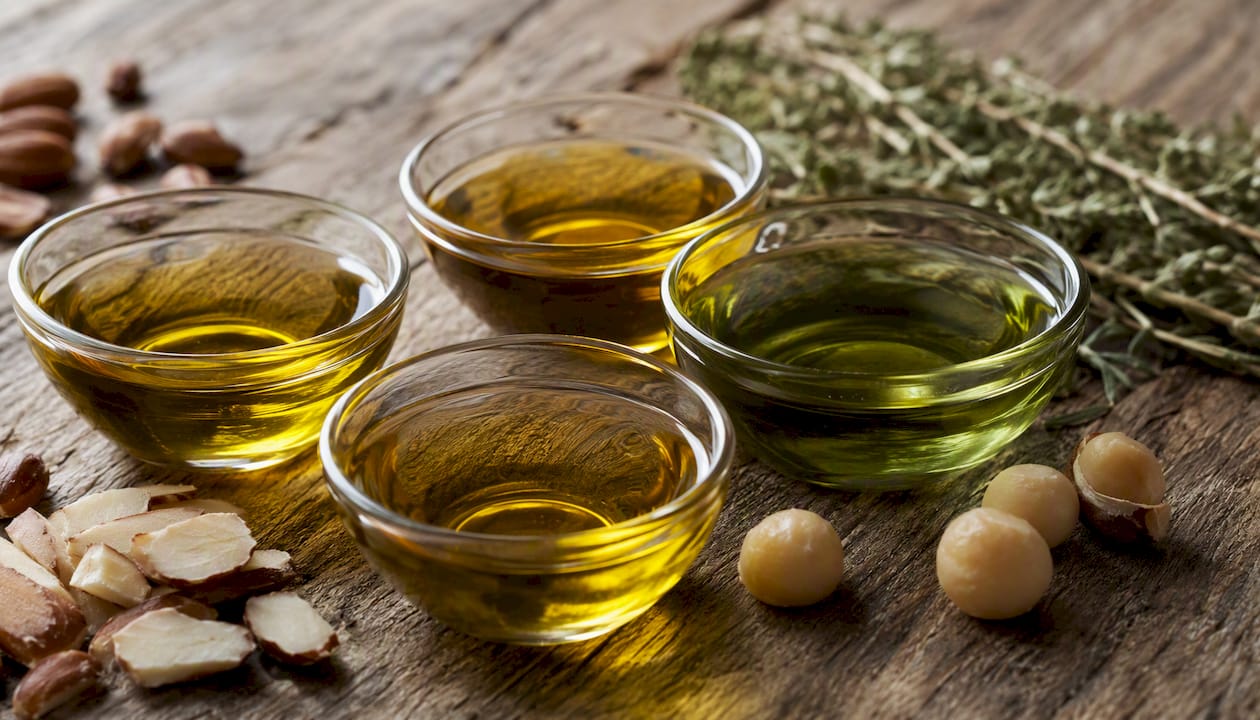
The oleic-acid issue deserves a closer look. Olive oil is widely recommended in home-remedy circles for eczema, but lipid research shows the opposite may be true. Keratinocytes preferentially incorporate linoleic acid into acylceramides. When oleic acid substitutes for linoleic acid, the resulting ceramides are structurally weaker. Olive oil is high in oleic acid, which may actually impair barrier recovery in eczema-prone skin.
“Natural” does not mean safe for eczema. Essential oils, botanical extracts, and oleic-dominant carrier oils can all worsen barrier function or trigger contact dermatitis in sensitized skin. The label “natural” carries no regulatory definition in U.S. cosmetics law.
Unregulated “natural” claims are common in the body oil category. A product can call itself natural while containing fragrance blends, undisclosed botanical extracts, and preservatives with sensitization potential. Always read the full INCI list, not just the front-of-pack claims.
When should you see a dermatologist?
Body oil is a maintenance tool. There are clear signs it is time to stop self-managing and get professional help.
Stop using topical oils and contact a dermatologist or doctor if you notice:
- Spreading redness that moves beyond the original rash area
- Oozing, crusting, or yellow/green discharge (signs of possible infection)
- New, severe pain or burning at the rash site
- Fever alongside a worsening rash
- A rash that is not improving after two to four weeks of consistent moisturizing
Broken skin is an open entry point for bacteria. Applying oil over an infected area can trap bacteria and worsen the infection. If you suspect a skin infection, stop topical oils on that area and seek care promptly.
For children: Pediatric eczema has its own management considerations. Always consult a pediatric dermatologist before starting any new topical regimen on a child, especially on the face or in skin folds.
On oral oil supplements: The American Academy of Dermatology advises caution with oral oil supplements like evening primrose or borage oil. Clinical trial results are inconsistent, and these supplements carry real risks including anticoagulant interactions and GI side effects. Talk to your doctor before adding any oral oil supplement to your routine.
Before your dermatology visit, note: which products you have used, how long you have used them, any patch-test results, and photos of the rash at its worst. That information helps your dermatologist make faster, more accurate recommendations.
Why trust signals like the NEA Seal actually matter
Not all label claims carry the same weight. Here is how to tell the difference.
The National Eczema Association Seal of Acceptance is awarded to products that meet the NEA’s criteria for eczema-safe formulation, including fragrance-free and low-irritant standards. It is not a clinical cure claim, but it does mean an independent organization has reviewed the formula. The NEA’s moisturizing guidance is a practical starting point for anyone building an eczema care routine.
Dermatologist-tested vs. dermatologist-recommended: “Tested” means a dermatologist reviewed or assessed the product. “Recommended” is a stronger claim and usually means a professional is willing to endorse it by name. Both are more meaningful than “natural” or “gentle,” which have no regulatory definition.
INCI transparency: A brand that publishes its full INCI list, either on the packaging or its website, is giving you the information you need to make an informed decision. Brands that hide behind vague ingredient summaries are harder to trust for sensitive skin use.
What the clinical reviews say: The Cochrane review and AAD summaries both confirm that moisturizers help reduce flares and steroid use, but no single product class is proven superior. That finding is actually useful: it means you do not need the most expensive option. You need the one with the right label signals and a formula your skin can tolerate.
Reliable resources to bookmark:
- American Academy of Dermatology (AAD): clinical guidance and treatment summaries
- National Eczema Association (NEA): product guidance, Seal of Acceptance database, and community resources
- Cochrane Reviews: independent systematic reviews of clinical evidence
- PMC / PubMed: peer-reviewed research on emollient strategies and barrier science
Key Takeaways
Fragrance-free, linoleic-acid-rich body oils applied to damp skin are the most evidence-supported choice for eczema-prone skin, reducing flares when used consistently alongside medical care.
| Point | Details |
|---|---|
| Choose linoleic-rich oils | Sunflower, safflower, and rosehip support ceramide synthesis; oleic-dominant oils like olive may impair barrier recovery. |
| Read the label carefully | Look for fragrance-free, dye-free, full INCI list, and the NEA Seal of Acceptance or dermatologist-tested labeling. |
| Apply to damp skin | Use within 3 minutes of showering to trap moisture and maximize barrier support. |
| Patch-test every new product | Apply to the inner forearm for 24–48 hours before full-body use to check for reactions. |
| Crisanbeauty plant-based oils | Crisanbeauty formulates with botanical, linoleic-rich carriers and publishes full ingredient lists, fitting the eczema-safe checklist above. |
A plant-based perspective on oils for sensitive skin
The conversation around eczema and body oils tends to split into two camps: people who swear by a single ingredient and people who dismiss oils entirely in favor of thick creams. Both miss the point.
What the evidence actually shows is that consistency and formulation quality matter far more than the specific product. A fragrance-free sunflower oil applied every day after a lukewarm shower will outperform a beautifully packaged botanical blend used twice a week. The ritual is as important as the formula.
What concerns us at Crisanbeauty is the number of products marketed as “natural” or “soothing” that contain fragrance blends, essential oil concentrates, and oleic-dominant carriers. These are not safe choices for eczema-prone skin, regardless of how the front label reads. Ingredient transparency is not a nice extra. For sensitive skin, it is the baseline.
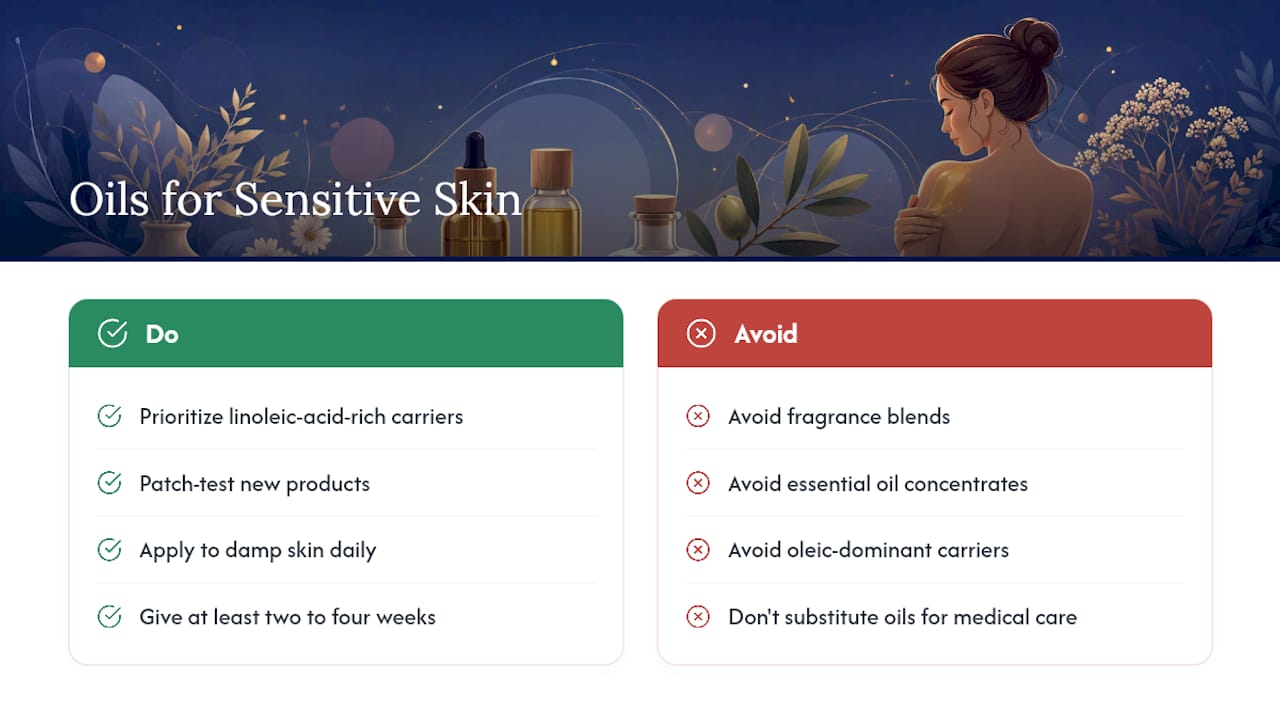
Our approach has always been to prioritize linoleic-acid-rich botanical carriers, publish full ingredient lists, and manufacture in the USA where we can control quality at every step. We also believe oils are supportive tools, not cures. If your eczema is severe or infected, please see a dermatologist. No body oil replaces that.
The readers who do best with plant-based oils are the ones who treat them as part of a consistent, simple routine, not a shortcut. Pick a formula with the right label signals, patch-test it, apply it to damp skin every day, and give it at least two to four weeks before judging the results.
*— CRISAN
Crisanbeauty’s plant-forward option for sensitive skin
If you want a plant-based oil that fits the eczema-safe checklist in this article, Crisanbeauty’s truAge Moisturizing Facial Oil is a strong starting point. It is formulated with botanical carrier oils, comes with a full INCI list, and is made in the USA without synthetic fragrance.
For a full-body routine, the Body Scrub & Facial Oil Set pairs gentle exfoliation with emollient oil application, which can help with product absorption on rough or thickened skin patches. Both options reflect Crisanbeauty’s commitment to ingredient transparency and plant-based formulation.
Before you buy, patch-test on your inner forearm for 24–48 hours. And if your eczema is severe, infected, or not responding to consistent moisturizing, consult a board-certified dermatologist. A body oil is a supportive step in your routine, and the right one, chosen carefully, can make a real difference in day-to-day comfort.
Authoritative sources and further reading
This article is for general information only and is not a substitute for professional medical advice. For personal eczema management, consult a board-certified dermatologist or your primary care provider.
| Source | What it covers |
|---|---|
| American Academy of Dermatology | Clinical guidance on oils, supplements, and eczema treatment; cautions on oral oil supplements and medication interactions |
| National Eczema Association | Moisturizing routines, product guidance, and the NEA Seal of Acceptance database |
| Cochrane Review: Emollients for Eczema | Systematic review of moisturizer evidence; shows benefit for flare reduction but no single product class is superior |
| Medical News Today: Sunflower Oil for Eczema | Summary of studies on sunflower oil’s linoleic acid content and barrier repair potential |
| HarlanMD: Lipids and Eczema | Explains linoleic vs. oleic acid biochemistry and why oil selection matters for ceramide synthesis |
| PMC: Barrier Dysfunction in Atopic Dermatitis | Peer-reviewed research on skin barrier defects and topical lipid replacement strategies |
| PMC: Emollient Strategies for Eczema | Clinical perspectives on topical lipid therapy and emollient approaches for atopic dermatitis |
| FDA: Aromatherapy and Cosmetic Regulation | Explains how aromatherapy products are regulated as cosmetics and the risks of undisclosed fragrance blends |


