


The fastest fix for a smelly scalp is a clarifying shampoo followed by an apple cider vinegar or tea tree oil rinse, and switching to a medicated antifungal shampoo if you notice flakes or itching. Most people see real improvement within one to two weeks, according to guidance from the Cleveland Clinic. If odor lingers past that window or shows up with pain, redness, or sores, it’s time for a professional opinion. Crisanbeauty builds its scalp routines around that same principle: treat the cause, then maintain the balance.
TL;DR:
- Clarifying shampoos and apple cider vinegar rinses effectively reduce scalp odor caused by microbial buildup, with noticeable improvement typically in one to two weeks.
- Fungal or bacterial infections, psoriasis, or dermatitis require targeted medicated treatments, such as ketoconazole or zinc pyrithione shampoos, if odor persists beyond initial home care.
- Using scalp-specific remedies safely involves diluting acidic or essential oil treatments, patch testing, limiting clarifying shampoo to once or twice weekly, and stopping treatment if adverse reactions occur.
- Red flags like pus, pain, or spreading redness indicate the need for immediate medical consultation, especially if odor and symptoms do not improve within two weeks of home efforts.
- Long-term maintenance includes adjusting washing frequency for your scalp type, cleaning accessories regularly, and avoiding heavy products on the scalp to prevent odor recurrence.
Table of Contents
- What Causes Smelly Scalp Odor in the First Place
- Smelly Scalp Remedies to Try First, Second, and Third
- How to Use Scalp Odor Remedies Safely
- Medicated Ingredients for Smelly Scalp Treatment
- Medical Causes and Red Flags That Need a Doctor
- Preventing Scalp Odor From Coming Back
- Where Plant-Based Scalp Care Fits Into the Picture
- A Maintenance Routine Worth Adding to Your Cabinet
- Where This Guide’s Medical Guidance Comes From
- Sources
What Causes Smelly Scalp Odor in the First Place
Sebum, sweat, and dead skin cells build up on the scalp and feed the bacteria and fungi that live there naturally. Those microbes break sebum down into fatty acids, and that breakdown is what actually produces the smell, not sweat itself. This is the Cleveland Clinic’s core explanation for why scalp odor shows up, and it’s the reason masking the smell with fragrance never solves it. You have to remove the substrate feeding the microbes, not cover it up.

Dandruff and seborrheic dermatitis push this process into overdrive. Both conditions increase oil production and skin cell turnover, giving bacteria and the yeast Malassezia more material to break down. If you notice flaking along with the odor, you’re likely dealing with one of these conditions rather than simple buildup, and that distinction shapes which remedy you should try first.
Smelly Scalp Remedies to Try First, Second, and Third
Not every remedy deserves equal priority. Start with the gentlest option that addresses buildup directly, and only escalate if it doesn’t work.
- Clarifying shampoo. This is the first move for most people. A sulfate-free clarifying formula strips excess oil and product residue without stripping the scalp barrier, which matters if your scalp is already sensitive or prone to flaking.
- Apple cider vinegar rinse. Mix one part ACV to three parts water and pour it over the scalp after shampooing, letting it sit for a few minutes before rinsing. The acidity helps rebalance scalp pH and cuts down on residue and microbial load, though anyone with open scratches or active dermatitis should skip it since it can sting broken skin.
- Tea tree oil. Add a few drops per ounce of shampoo or carrier oil. Tea tree oil carries documented antimicrobial properties, and small studies also point to lemongrass oil tonics reducing dandruff, though that evidence comes from limited samples and should be treated as promising rather than definitive. Always patch-test on your inner arm first.
- Scalp exfoliation. A silicone scalp brush or a salicylic-acid scrub physically lifts trapped sebum and dead skin that shampoo alone can miss. Once or twice a week is usually enough.
- Thorough drying and smart dry-shampoo use. Damp hair left to air-dry slowly, especially under a hat or hood, gives bacteria a warm, moist environment to thrive in. If you use dry shampoo, brush it out completely rather than layering it day after day, since buildup from dry shampoo itself can worsen odor.
- Switch to a medicated anti-dandruff shampoo the moment you notice flaking or persistent itching alongside the smell. That’s your signal the issue has moved past simple buildup.
Pro Tip: Keep a simple log of what you tried and when. If the odor hasn’t improved after consistent care for a reasonable period, that log is exactly what a dermatologist will want to see.
How to Use Scalp Odor Remedies Safely
Enthusiasm for a new remedy can backfire fast if you skip the safety basics. Dermatologists warn that improper DIY mixtures and overly aggressive routines are common reasons home treatment fails or makes things worse, per EverydayHealth.
- Dilute apple cider vinegar at 1:3 with water. Never apply it undiluted directly to the scalp.
- Use essential oils at a few drops per ounce of carrier oil or shampoo. More is not better here.
- Patch-test any new oil or acid on your inner forearm and wait 24 to 48 hours for redness, itching, or bumps before applying it to your scalp.
- Limit clarifying shampoo to once or twice weekly. Daily use of harsh surfactants can damage the scalp barrier and trigger rebound oil production, which ironically makes odor worse.
- Stop immediately if you notice burning, worsening redness, or a stronger odor after treatment, and rinse thoroughly with plain water.
Medicated Ingredients for Smelly Scalp Treatment
When home remedies stall, medicated actives target the underlying microbial or inflammatory cause more directly. The American Academy of Dermatology recommends several ingredients for dandruff-related scalp issues, and each works differently.
- Ketoconazole: an antifungal that targets Malassezia, the yeast most often responsible for seborrheic dermatitis and related odor.
- Zinc pyrithione and selenium sulfide: broad antifungal and antibacterial actives found in many over-the-counter medicated shampoos.
- Salicylic acid: a scalp exfoliant that breaks down scale and product buildup rather than targeting microbes directly.
- Coal tar and sulfur: older, stronger options generally reserved for cases that don’t respond to gentler actives, and typically avoided by anyone with sensitive skin or during pregnancy without medical guidance.
Give any new medicated shampoo several weeks of consistent use, typically a few times per week, before deciding it isn’t working. Practitioner guidance suggests tracking symptoms and odor changes over that window rather than judging results after a single wash. If one active shows no improvement after that trial, rotating to a different one is the next reasonable step, according to NCBI research.
Medical Causes and Red Flags That Need a Doctor
Sometimes a smelly scalp isn’t a hygiene issue at all. It’s a sign of a medical condition that needs targeted treatment.
- Seborrheic dermatitis: the most common medical cause, marked by greasy scales and persistent itch.
- Psoriasis: thick, silvery scale patches that can also trap odor-causing debris.
- Folliculitis: infected hair follicles, often tender or filled with small pus-topped bumps.
- Bacterial or fungal infection: can develop when broken skin or chronic dandruff goes untreated.
- Hyperhidrosis: excessive sweating that keeps the scalp environment persistently damp.
Watch for red flags that call for prompt medical attention: pus, severe pain, fever, swollen lymph nodes, patchy hair loss, open sores, or redness that’s spreading quickly. Try targeted home care for up to two weeks first. If red flags appear before that window closes, don’t wait. Clinicians typically evaluate for underlying conditions once proper OTC care has failed for about two weeks, per NCBI.
Preventing Scalp Odor From Coming Back
Fixing the smell once is only half the job. Keeping it gone means adjusting a few daily habits rather than repeating a rescue routine every few weeks.
Match your wash frequency to your actual scalp, not a generic rule. Someone with an oily scalp or a heavy sweat routine might need to wash every day or every other day, while a drier scalp can usually stretch to two or three times a week. Keep heavy leave-in products and oils away from the roots, and always rinse conditioner fully so it doesn’t sit against the scalp feeding bacteria overnight.
- Wash brushes, combs, hats, and pillowcases weekly. They collect the same oil and residue your scalp does.
- Dry your hair fully after workouts instead of letting it air-dry under a hat.
- Watch your diet if odor persists despite good topical care. Sulfur-rich foods can shift sweat composition, and Cleveland Clinic notes diet and systemic factors sometimes play a role worth checking with a doctor.
Pro Tip: If you’re cycling through shampoos every week hoping something sticks, stop. Pick one clarifying routine, give it two weeks, and only then decide whether to escalate.
Where Plant-Based Scalp Care Fits Into the Picture
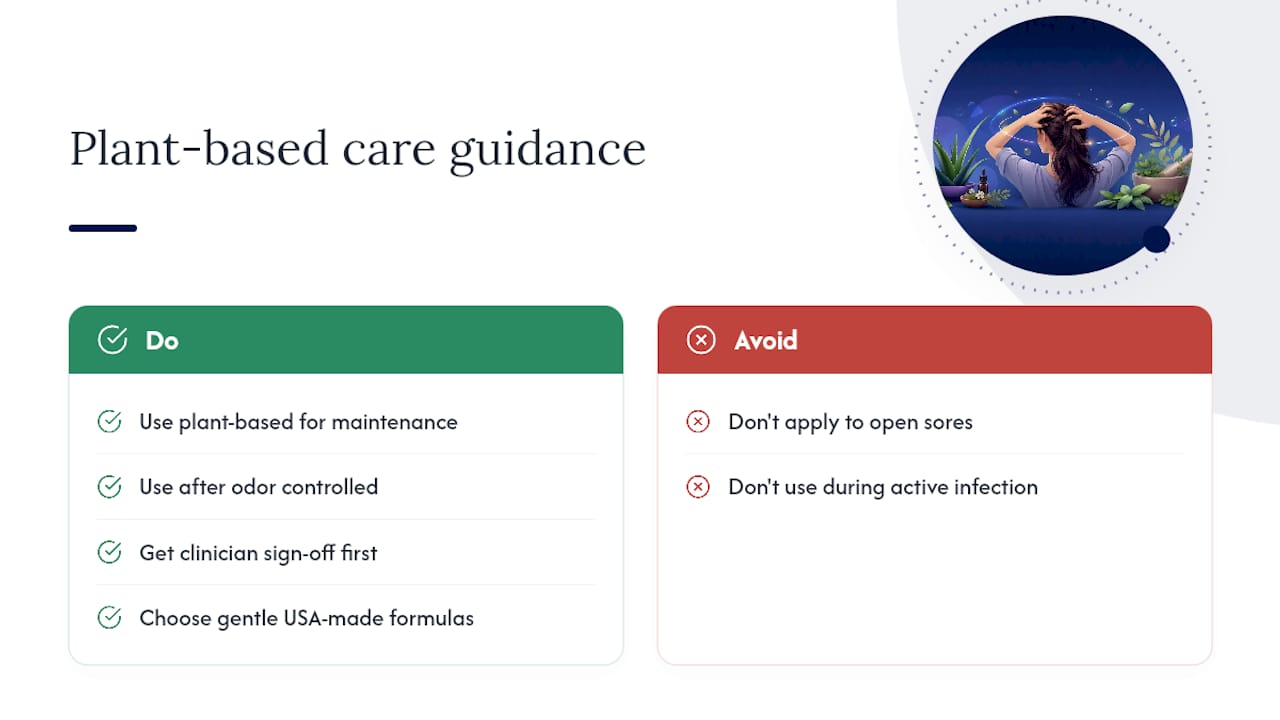
Once odor is under control, the goal shifts to maintenance, not more treatment. That’s where Crisanbeauty’s plant-based approach earns its place: gentle, USA-made formulas built for ongoing scalp balance rather than active infection. Botanical oils and serums work best after the underlying cause is resolved. Anyone with open sores or an unconfirmed infection should get a clinician’s sign-off first. For a deeper look at ingredient-level routines, our guide to natural scalp treatments breaks down what belongs in a maintenance rotation.
A Maintenance Routine Worth Adding to Your Cabinet
Once your scalp odor is under control, the job becomes keeping it that way, and that’s a maintenance job, not a treatment job. Crisanbeauty’s Ayurvedic Hair Growth Oil is formulated with plant-based botanicals designed to support scalp balance without the harsh surfactants that can trigger rebound oiliness.
This isn’t a treatment for active infection or open sores. Anyone dealing with those should get medical clearance before adding any new oil to the scalp. But for the maintenance phase, once flaking and odor have calmed down, a lightweight, USA-made botanical oil is a gentler long-term choice than cycling through harsh medicated shampoos indefinitely. If your two-week reset worked and you’re ready to lock in the results, explore the Ayurvedic Hair Growth Oil and build it into your weekly routine starting this week.
Where This Guide’s Medical Guidance Comes From
This guide draws on scalp odor and treatment guidance from the Cleveland Clinic, natural remedy research via Healthline, clinical reviews on NCBI, and treatment ingredient guidance from the American Academy of Dermatology.
This article is general information, not a substitute for advice from a qualified doctor. Consult a qualified healthcare professional about your own circumstances before acting on anything here.
Sources
- Smelly Scalp: Causes, Shampoos & At-Home Treatments — Cleveland Clinic
- Smelly scalp: Causes, natural remedies, medical treatment — Healthline
- NCBI review (PMC4852869)
- American Academy of Dermatology resources (scalp conditions and treatments) — AAD


