


Telogen effluvium is usually temporary. Identify the trigger, confirm it with a few targeted labs, and correct it. Your priorities are checking iron and ferritin, thyroid function, and vitamin D and B12, then discussing topical or oral minoxidil as a supportive option with your clinician while your body resets. Expect months, not weeks, and know that shedding almost always slows once the root cause is addressed.
Low-dose oral minoxidil requires medical supervision: it can cause fluid retention, a faster heart rate, and lowered blood pressure, so clinicians typically monitor blood pressure and ask about heart conditions before prescribing. It is not recommended during pregnancy or breastfeeding. Discuss these risks with a physician before starting.
TL;DR:
- Correcting iron deficiency, thyroid issues, and nutritional shortfalls is crucial, as these often directly trigger telogen effluvium and improve recovery time.
- Blood tests for ferritin, TSH, vitamin D, B12, and zinc guide targeted treatment, with most patients seeing hair regrowth within three to six months once causes are addressed.
- Supportive hair care should involve gentle grooming and scalp massage to avoid aggravating shedding, with signs of recovery including new fine hairs and decreasing shed counts.
- Clinical treatments like minoxidil are optional and should only be considered after primary triggers are managed, as telogen effluvium is primarily a self-limited, reversible condition.
- Lifestyle changes such as adequate sleep, stress reduction, and balanced nutrition significantly reduce the risk of future triggers and support overall hair health.
Table of Contents
- What Telogen Effluvium Remedies Actually Target
- Common Triggers Behind Telogen Effluvium and How to Spot Yours
- How Doctors Diagnose Telogen Effluvium
- Telogen Effluvium Remedies: A Step-by-Step Treatment Plan
- How Long Telogen Effluvium Recovery Actually Takes
- When to See a Doctor About Hair Shedding
- Where Plant-Based Scalp Care Fits Into Recovery
- Lifestyle Changes That Reduce Future Shedding Triggers
- Should You Take Biotin or Omega-3 Supplements for Telogen Effluvium?
- Our Take: What the Research Actually Supports
- Supporting Your Recovery With Crisanbeauty
- Sources
What Telogen Effluvium Remedies Actually Target
Effective telogen effluvium remedies work by addressing what pushed your hair follicles into an early resting phase, not by forcing hair to grow faster than biology allows. Hair normally cycles through three phases: growth (anagen), a brief transition (catagen), and rest (telogen), before shedding and starting over.
That is diffuse, non-scarring hair loss. It thins your whole scalp rather than creating bald patches, and the follicle itself stays intact.
There are two recognized patterns worth knowing:
- Acute telogen effluvium resolves within about six months once the trigger clears, following the self-limited course described by clinical researchers.
- Chronic telogen effluvium persists beyond six months, often with a milder, more drawn-out shedding pattern and sometimes no single obvious cause.
The reversibility built into this biology is exactly why remedies focus on the trigger rather than the scalp itself. You aren’t treating damaged follicles. You’re removing whatever knocked them into premature rest, and letting the cycle restart on its own schedule.
Common Triggers Behind Telogen Effluvium and How to Spot Yours
Telogen effluvium causes almost always trace back to a specific event two to four months before the shedding started, which is the single most useful fact for narrowing down your own case. Think back roughly 100 days: a fever, a surgery, a delivery, a crash diet, a new medication, or a stretch of unusually heavy stress often sits right at that mark.
The most frequent triggers include:
- Illness or fever — even a bad flu or COVID infection can trip the switch.
- Postpartum hormonal shifts — a near-universal experience after childbirth, tied to the sharp estrogen drop.
- Major surgery or hospitalization — physical trauma reads as a systemic shock to the body.
- Rapid weight loss or crash dieting — especially diets under 1,000 calories a day or those cutting protein sharply.
- Severe emotional stress — job loss, divorce, bereavement, or prolonged anxiety.
- New medications — retinoids, anticoagulants, beta blockers, some antidepressants, and anticonvulsants are frequent culprits.
- Endocrine shifts — new-onset hypothyroidism or hyperthyroidism is a classic and often-missed cause.
Nutritional shortfalls deserve their own mention, since they can be both a trigger and a barrier to recovery. Low iron and ferritin, inadequate protein intake, and rapid or sustained weight loss all show up repeatedly as contributing factors. If you started a restrictive diet, went vegan without planning protein sources, or lost weight quickly for any reason, that belongs high on your suspect list.
The lag matters more than people realize. Most patients report shedding beginning two to four months after the actual trigger, which means the stressful month you remember clearly is rarely the month the shedding started. If you’re mapping your timeline, count backward from your first noticeable hair loss, not forward from the stressful event. For a deeper look at how hormonal shifts specifically drive this pattern, hormonal hair loss triggers are worth reviewing alongside your own history.
How Doctors Diagnose Telogen Effluvium
Diagnosis starts with two simple, low-cost exams your dermatologist or primary care doctor can do in the office in minutes.
- The hair-pull test. A clinician grasps roughly 40 to 60 hairs near the scalp and pulls gently. Extracting more than 10% (four to six hairs) suggests active shedding consistent with telogen effluvium.
- The wash test. You collect and count hairs shed during a single shampoo session, sometimes across several washes. Refined protocols used in clinical algorithms put the threshold around a mean of 125 shed hairs over a defined collection period as a marker worth investigating further.
- Blood work. This is where the real diagnostic value lives. A standard panel includes a CBC, iron studies including ferritin (not just serum iron), TSH and free T4, vitamin D, B12, folate, and often zinc. Harvard Health lists these as the core markers worth checking before assuming the cause is “just stress.”
- Scalp biopsy, when needed. Dermatologists reserve this for cases where the pattern looks atypical, patchy, or where scarring alopecia or androgenetic hair loss can’t be ruled out clinically. It’s not routine for straightforward telogen effluvium.
The results genuinely change what happens next. Low ferritin points toward iron repletion. An abnormal TSH sends you to an endocrinologist. Normal labs across the board often mean you’re looking at a resolved acute trigger, which shifts the conversation from “what’s wrong” to “how long until this grows back.”
Telogen Effluvium Remedies: A Step-by-Step Treatment Plan
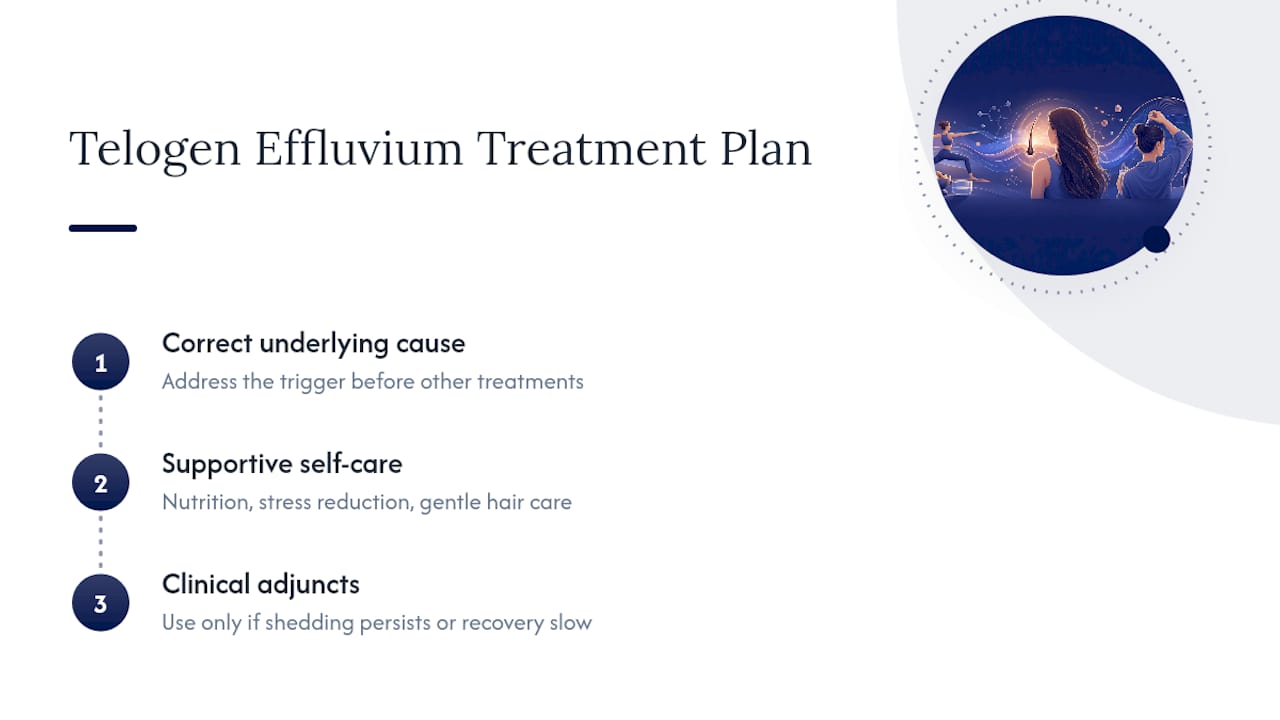
The most effective telogen effluvium treatment plan follows a specific order: fix the underlying cause first, add supportive self-care second, and consider clinical adjuncts third if shedding persists or recovery feels slow. Skipping straight to step three without addressing step one rarely works, because you’re treating a symptom while the actual trigger keeps running.
Step 1: Correct the underlying cause
If ferritin comes back low (generally under 30 ng/mL, though some dermatologists push for higher thresholds specifically for hair growth), iron repletion through diet or supplementation is the priority, ideally guided by your doctor since excess iron carries its own risks. Thyroid abnormalities need direct management, often bringing noticeable improvement in shedding within a few months of normalized levels. If a restrictive diet triggered the episode, reintroducing adequate calories and protein is not optional. Adults recovering from telogen effluvium generally need close to 1 gram of protein per kilogram of body weight daily, and a Mediterranean-style dietary pattern rich in fresh produce, whole grains, and lean protein is the pattern most consistently recommended for supporting regrowth.
Step 2: Supportive self-care
Gentle handling matters here, though not in the way most people assume. Avoiding brushing or washing does not stop shedding. Hairs already disconnected from the follicle will fall out whether you touch them or not, and skipping hygiene just leaves more shed hairs tangled in place, making the problem look worse than it is. Dermatology guidance consistently recommends normal, gentle grooming, avoiding harsh chemical treatments and heat styling during an active shed, and regular scalp massage, which may support circulation to the follicle even if it won’t reverse the underlying trigger on its own.
Pro Tip: Keep a simple shed count for two or three weeks using the wash-test method. A decreasing trend, even a modest one, is often the earliest sign that your treatment plan is working, well before visible density returns.
Step 3: Clinical adjuncts worth discussing with your doctor
Topical minoxidil has a theoretical rationale for telogen effluvium since it shortens telogen and prolongs anagen, though its efficacy specifically for TE is not universally proven the way it is for androgenetic alopecia. Oral minoxidil has more recent trial data supporting it as an option, particularly for people who can’t tolerate topical formulations or find them cosmetically inconvenient. Neither is appropriate during pregnancy or breastfeeding without direct medical clearance.
Emerging procedural options include platelet-rich plasma (PRP) injections, multivitamin mesotherapy, and even botulinum toxin A, all of which show promise in smaller clinical studies though they remain adjuncts rather than first-line treatment. Because telogen effluvium is usually self-correcting, it makes sense to exhaust the lower-risk, lower-cost steps first and reserve procedures for cases that stall despite a corrected trigger.
On supplements: biotin and general multivitamins only make a measurable difference when you have an actual deficiency. Taking mega-doses without a documented shortfall is mostly an expensive placebo, and high-dose biotin can even interfere with certain thyroid and cardiac lab results, which complicates your own diagnostic workup.
How Long Telogen Effluvium Recovery Actually Takes
Regrowth typically begins around three months after the trigger resolves, with most people seeing meaningful recovery within three to six months. That timeline assumes the underlying cause is actually addressed. Shedding that continues because an iron deficiency was never corrected simply won’t follow that curve.
Signs that recovery is genuinely underway include:
- Fine, short vellus hairs appearing along the hairline or part, often visible in good light.
- A decreasing shed count on the wash test week over week.
- A temporary increase in shedding partway through recovery, which feels alarming but often reflects new growth pushing out old telogen hairs still in the follicle.
If six months pass with no improvement despite a corrected trigger and normal labs, that’s the point to loop back to your dermatologist rather than waiting indefinitely. Chronic telogen effluvium or an overlapping condition like early androgenetic alopecia becomes more likely the longer shedding persists without change.
When to See a Doctor About Hair Shedding
Most telogen effluvium resolves without ever needing specialist care, but certain signs warrant a prompt visit rather than a wait-and-see approach.
- Patchy or localized loss instead of diffuse thinning, which points away from telogen effluvium toward alopecia areata or another diagnosis.
- Scalp symptoms like itching, burning, redness, or visible scaling, which suggest an inflammatory or scarring process.
- Systemic signs such as unexplained fatigue, weight change, or heart rate changes alongside the shedding.
- Shedding beyond six months with no clear improvement, especially if initial labs were incomplete.
Start with your primary care doctor for baseline labs; ask for a dermatology referral if results are abnormal or if the pattern doesn’t fit classic telogen effluvium. Bring a written timeline, phone photos of your part and hairline over time, your full medication and supplement list, and copies of any prior lab work. That preparation alone often cuts a diagnostic visit down from three appointments to one.
Where Plant-Based Scalp Care Fits Into Recovery
Crisanbeauty was built around a real telogen effluvium experience, not a hypothetical one. Postpartum shedding led to years of formulating Ayurvedic-inspired, plant-based hair products manufactured in the USA, with an explicit focus on education over overpromising results. That distinction matters in a category full of miracle claims.
Nothing here replaces the diagnostic workup or medical guidance covered above. What plant-based scalp care can reasonably do is support the environment your follicles are recovering in, once the actual trigger is being addressed. Natural scalp treatments built on botanical oils can support scalp circulation and reduce friction-related breakage during a period when hair is already fragile, complementing the gentle grooming habits dermatologists recommend during active shedding.
For readers managing hormonal contributors to their shedding, whether postpartum or otherwise, natural approaches to hormonal hair loss walk through complementary options that sit alongside, not instead of, whatever your doctor recommends. The goal is a supportive routine you can layer onto a medically directed plan, not a substitute for one.
Lifestyle Changes That Reduce Future Shedding Triggers
Since severe stress sits near the top of every telogen effluvium trigger list, stress management deserves more than a passing mention. This isn’t about eliminating stress entirely, which isn’t realistic for most adults juggling work, family, and everything else. It’s about reducing the frequency and intensity of the spikes that push your body into a systemic stress response.

Sleep is the most underrated lever here. Chronic sleep restriction, even five or six hours a night over weeks, keeps cortisol elevated in a way that mirrors the same hormonal disruption seen after acute stressors. Prioritizing seven to eight hours consistently does more for your hair cycle than most supplements ever will.
Structured stress-reduction practices, whether that’s daily walking, breathwork, therapy, or simply blocking off time away from screens, show up repeatedly in research on stress-related hair loss as meaningful, if gradual, interventions. Regular moderate exercise also helps regulate cortisol, though intense overtraining without adequate recovery can paradoxically become its own trigger, particularly when paired with restrictive eating.
If you’re recovering from a specific stressful event, like surgery or a major life change, building in deliberate recovery time rather than immediately returning to full intensity gives your body one less reason to stay in a heightened stress state. Small, consistent changes tend to outperform dramatic short-term fixes for preventing repeat episodes.
Should You Take Biotin or Omega-3 Supplements for Telogen Effluvium?
Supplementation for telogen effluvium recovery only helps when it’s correcting an actual measured deficiency, not as a blanket “more vitamins equals more hair” strategy. This is one of the most misunderstood parts of hair loss recovery.
Biotin is the most heavily marketed hair supplement on the market, yet true biotin deficiency is uncommon in people eating a varied diet. If your labs show low biotin, or you’re on medications known to deplete it, supplementing makes sense. Otherwise, the evidence for biotin improving hair growth in someone who isn’t deficient is thin, and high doses can distort thyroid and cardiac lab panels, which is a real problem when you’re simultaneously trying to diagnose a thyroid-related trigger.
Omega-3 fatty acids support scalp health through anti-inflammatory pathways rather than any direct effect on the hair cycle. They’re a reasonable addition to a Mediterranean-style diet, particularly if your current intake of fatty fish or flaxseed is low, but they shouldn’t be framed as a fix for telogen effluvium specifically.
Timing matters more than most people expect. Since regrowth doesn’t visibly begin until roughly three months post-trigger, starting supplementation and expecting results within a few weeks sets up disappointment regardless of what you’re taking. Any supplement, targeted or general, needs at least a full hair cycle before you can honestly assess whether it did anything. And a reminder worth repeating from the medication discussion: unrelated supplements can carry hair-loss side effects of their own, which is why it’s worth reviewing claims like whether creatine affects hair loss if you’ve recently added anything new to your regimen.
Our Take: What the Research Actually Supports
The conventional advice on telogen effluvium spends too much energy on dramatic interventions and not enough on the boring, unglamorous first step: get your labs checked before you buy anything. Ferritin, thyroid, vitamin D, and B12 explain a large share of cases, and correcting a real deficiency will outperform any topical or supplement stacked on top of an unaddressed cause.
Where the standard advice genuinely falls short is patient reassurance. Telling someone “it’ll grow back” without explaining the three-to-six-month timeline, the temporary shedding spike that signals recovery, or the wash-test method to track progress leaves people anxious and prone to chasing expensive, unproven fixes out of panic.
What we’d prioritize, in order: labs first, trigger correction second, gentle hair care and stress management running in parallel, and clinically discussed adjuncts like minoxidil only if progress stalls. Plant-based supportive care has a real, if modest, role once that foundation is in place. It’s not a substitute for a ferritin test, and no honest brand should suggest otherwise.
— CRISAN
Supporting Your Recovery With Crisanbeauty
Once your doctor has ruled out deficiencies and addressed the trigger behind your shedding, the question becomes what to do for your scalp and strands while your body does the slow work of regrowing hair. Crisanbeauty exists for exactly that phase, plant-based, Ayurvedic-inspired formulations made in the USA, designed to support a healthy scalp environment and reduce breakage in fragile, shedding hair without pretending to replace medical treatment.
For readers who’ve confirmed nutritional gaps through lab work, the Complete Hair Essentials daily vitamin offers a targeted way to support hair from the inside, formulated to complement, not replace, whatever your doctor prescribed. If you’re focused on scalp care during active shedding, the Ayurvedic hair growth oil is built for gentle daily use on thinning, fragile hair. Explore the full product line at Crisanbeauty and start with whichever option matches where you are in your recovery timeline.
Sources
- Telogen effluvium A to Z — Harvard Health
- Telogen Effluvium — StatPearls (NCBI Bookshelf)
- Canadian algorithm on the management of telogen effluvium — DOI
- Telogen Effluvium: Symptoms, Causes, Treatment & Regrowth — Cleveland Clinic


