Hair oil for long, thick hair.
Coverage matters when your routine includes a full scalp, dense lengths and dry ends.

Why long and thick hair needs a different approach
Length and density are separate characteristics. Long hair has more surface area from roots to ends. Thick or dense hair has more individual strands to divide and coat. When both are present, quickly smoothing oil over the outside layer may leave the underneath sections untouched.
The answer is not to pour on as much oil as possible. It is to section the hair, apply deliberately and use enough for light, even coverage.
Who benefits most from a 16 oz bottle?
Regular hair oilers
People who perform full pre-shampoo treatments one to three times per week.
Long-haired users
Those who apply oil through the scalp, mid-lengths and ends rather than the scalp alone.
Dense or coarse hair
Hair that requires careful sectioning to distribute product beneath the top layer.
Shared family routines
Households in which more than one person regularly uses the same hair oil.

Apply by section—not by guesswork.
Work from the underneath layers upward. Dispense small amounts into your palms and add more only when a section needs it. This provides more control and helps prevent one oily area while other sections remain dry.
How to oil long, thick hair
- Detangle gently and divide the hair into four to eight sections, depending on density.
- Warm a small amount of oil between your palms rather than pouring it directly onto the head.
- Massage the scalp one section at a time using your fingertips—not your nails.
- Glide oil down each section, concentrating on the mid-lengths and oldest, driest ends.
- Add only enough to create light, even coverage; hair does not need to drip.
- Leave on for 2–4 hours or overnight, then shampoo and rinse thoroughly.
For a detailed wash-out method, see the CRISAN guide to a hot-oil treatment and the natural wash-day routine.
Adjust the amount by purpose
| Purpose | Where to apply | How to judge the amount |
|---|---|---|
| Full pre-shampoo treatment | Scalp, lengths and ends | Light, even coverage section by section |
| Dry-end touch-up | Last few inches | Begin with 2–3 drops total |
| Frizz smoothing | Surface and ends | Use only what remains after rubbing palms |
| Scalp massage | Part lines across the scalp | Small amounts distributed deliberately |
Learn how to apply hair oil without a greasy finish and determine how often to oil your hair.
Why ends deserve special attention
The ends of long hair are the oldest part of each strand. They have experienced more washing, weather, brushing, friction and styling than the newer hair near the roots. This is why long hair can feel soft near the scalp yet rough, tangled or thin at the ends.
Oil cannot fuse a split end permanently, but it can help improve lubrication, softness and the appearance of dry ends. Pair gentle handling with regular trims when needed. Read more in CRISAN’s guide to hair oil for split ends.
Why choose CRISAN for a full-length ritual?
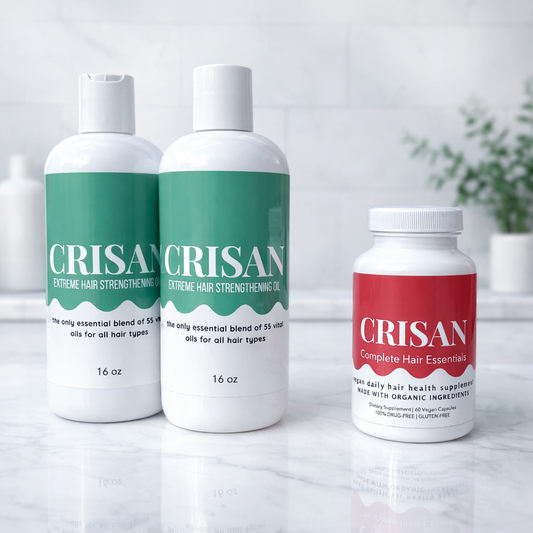
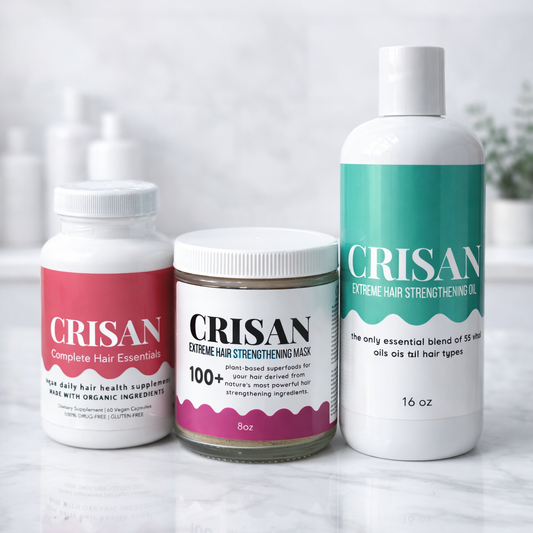
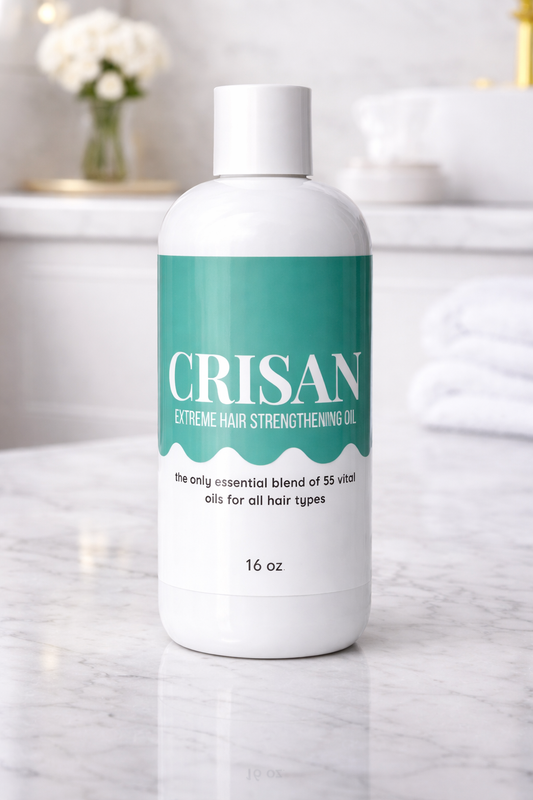
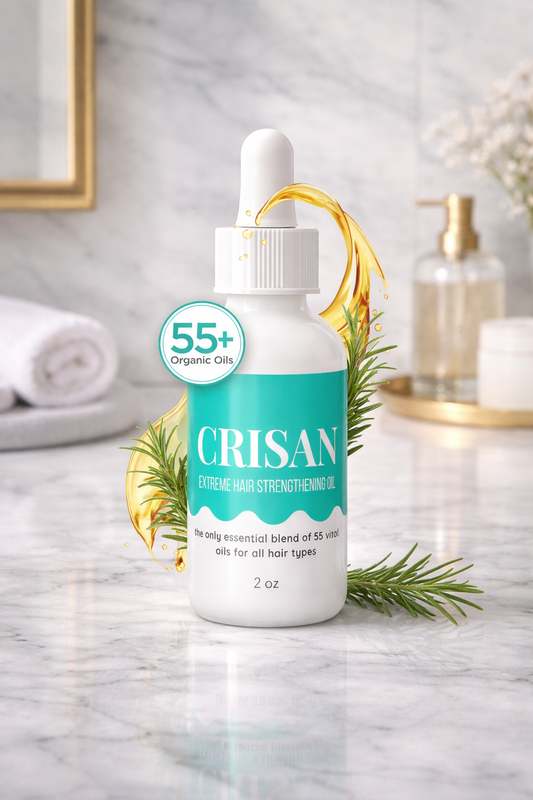
CRISAN Extreme Hair Strengthening Oil contains a proprietary blend of 55 organic, vegan essential and carrier oils, including jojoba, argan, coconut, rosemary, lavender and tea tree. The formula is made without sulfates, parabens, silicones or synthetic fragrance.
It is suitable for straight, wavy, curly, coily, textured and color-treated hair. Use it as a deep scalp-and-strand treatment or apply a few drops to dry ends for softness and shine. Discover what different hair-oil ingredients do.
Continue learning
Frequently asked questions
Is 16 oz a large bottle of hair oil?
How much oil should I use on long hair?
How do I distribute oil through thick hair?
Can I use CRISAN on curly or coily hair?
Will hair oil repair split ends?
How often should long, thick hair be oiled?
A generous ritual for generous hair.
Condition the scalp, work through dense lengths and give dry ends the attention they need.
Shop CRISAN 16 oz Hair Oil · $69.99Cosmetic hair oil supports the appearance and feel of hair; it does not diagnose or treat medical hair-loss conditions. Discontinue use if irritation occurs.