



FORMULA GUIDE
Know what is inside the oil you use
A useful formula should make its ingredients and intended use clear. CRISAN combines botanical oils in an Ayurvedic-inspired blend made for scalp, lengths and ends.
- Botanical multi-oil formula in one ready-to-use product
- Designed for pre-shampoo and overnight routines
- Made in the USA for the CRISAN community
Full-size 16 oz bottle · Ayurvedic-inspired botanical formula · Made in the USA
Questions about this routine
Do I need to blend separate oils myself?
No. A finished hair-oil formula removes the measuring and mixing required when combining individual carrier and essential oils at home.
Should essential oils be applied directly to the scalp?
Concentrated essential oils generally should not be applied undiluted. Follow the directions on a finished product and patch-test before wider use.
Why choose the 16 oz CRISAN bottle?
It is the full-size option for consistent oiling routines, long or thick hair, and households that use more product per treatment.
Build consistency into your hair-oiling routine
The CRISAN 16 oz bottle is made for repeat treatments—not a one-time fix.
See the 16 oz CRISAN OilHair oil ingredients fall into four categories: carrier oils, essential oils, botanical actives, and functional additives. The ones worth prioritizing on any label are coconut oil, argan oil, jojoba oil, olive oil, castor oil, sweet almond oil, grapeseed oil, and rosemary or peppermint essential oil for scalp stimulation.
Here is what to do immediately when you pick up a bottle:
- Scan the first three ingredients. Those represent the highest concentrations. If a carrier oil leads, the product is carrier-forward and will behave like a treatment or sealant.
- Look for one scalp active. Rosemary (Rosmarinus officinalis) or peppermint (Mentha piperita) near the middle of the list signals a scalp-stimulating blend.
- Avoid heavy silicones at the hairline. Dimethicone and cyclopentasiloxane near the top of the list can clog follicles along the forehead.
- Check for “Fragrance” or “Parfum.” These single entries can hide dozens of undisclosed sensitizers.
That quick scan tells you more than any marketing claim on the front of the label.
Key Takeaways
The single most important decision in any hair oil formula is matching the carrier oil to your hair’s porosity, then adding one scalp active at a safe concentration.
| Point | Details |
|---|---|
| Match carrier to porosity | Low porosity needs lightweight oils (grapeseed, jojoba); high porosity benefits from penetrating oils (coconut, avocado). |
| Keep essential oils at ≤2% | For scalp use, 0.5–2% concentration covers the range used in published studies without raising irritation risk. |
| Avoid heavy silicones at the hairline | Dimethicone near the top of an ingredient list can clog follicles along the forehead and temples. |
| Read INCI order as concentration order | The first three ingredients make up the bulk of the formula; an active listed tenth is present in a trace amount. |
| Crisanbeauty’s Ayurvedic Hair Growth Oil | A multi-carrier, Ayurvedic-inspired formula made in the USA, suited for thinning hair and dry scalp. |
Table of Contents
- What goes into a hair oil: the four ingredient categories
- Common carrier oils and what each one actually does
- Active botanicals and essential oils: what the evidence actually says
- Ingredients to avoid or use cautiously
- How to read a hair oil label: INCI names decoded
- How to choose hair oil ingredients by hair type and scalp condition
- DIY blends, dilution math, and safe usage tips
- Recent research highlights worth knowing
- What Crisanbeauty prioritizes when choosing hair oil ingredients
- Crisanbeauty’s Ayurvedic Hair Growth Oil: formulated for thinning hair
- Sources
What goes into a hair oil: the four ingredient categories
Every hair oil, whether a single-ingredient bottle or a complex Ayurvedic blend, is built from the same four building blocks. Knowing what each category does lets you decode any label in under a minute.
Carrier oils are the base. They make up the bulk of any formula and do the heavy lifting: delivering slip, emolliency, and either penetrating the hair shaft or sealing the cuticle surface. A comprehensive review of plant-based cosmetic oils confirms that coconut, olive, argan, and jojoba each carry distinct fatty-acid and antioxidant profiles that explain their different cosmetic behaviors.
Essential oils are concentrated aromatic compounds, typically steam-distilled from plants. Because they are potent, they require dilution in a carrier before any skin contact. Undiluted essential oils can cause contact dermatitis, sensitization, or chemical burns.
Botanical actives include herbal extracts, vitamins, and peptides added for targeted benefits. Common examples are amla extract, bhringraj, hibiscus, vitamin E (tocopherol), and panthenol. Their job is antioxidant protection, anti-inflammatory support, or improved scalp circulation. Formulation studies show that combining base oils with medicinal herbs like amla, bhringraj, and fenugreek can produce stable, skin-safe preparations with promising scalp-health signals.
Functional additives are the support cast:
| Additive type | Common examples | Why brands use them | When to be cautious |
|---|---|---|---|
| Silicones | Dimethicone, cyclopentasiloxane | Smoothing, frizz control, shine | Heavy grades can block follicles at hairline |
| Preservatives | Phenoxyethanol, rosemary extract (natural) | Prevent microbial growth | Some synthetic preservatives sensitize reactive scalps |
| Antioxidants | Tocopherol (vitamin E), rosemary extract | Extend shelf life, prevent rancidity | Generally safe; high doses of vitamin E topically are rarely needed |
| Fragrances | “Fragrance,” “Parfum” | Scent masking, consumer appeal | Single entry can hide 50+ undisclosed chemicals |
| Solvents | Cyclomethicone, isopropyl myristate | Improve spreadability | Isopropyl myristate is comedogenic; avoid at hairline |
Common carrier oils and what each one actually does
Carrier oils are not interchangeable. Their molecular weight, fatty-acid composition, and comedogenic rating determine whether they penetrate the hair shaft, sit on the surface, or clog follicles. Here is a practical profile of the oils you will see most often.
- Coconut oil (Cocos nucifera oil): Rich in lauric acid, a medium-chain saturated fatty acid with a small molecular size that allows it to diffuse into the hair cortex. It reduces protein loss during washing, according to Wikipedia’s summary of hair oil research. Best for pre-shampoo treatments on medium-to-high porosity hair. Comedogenic rating: moderate. Avoid applying heavily to the hairline if you are acne-prone.
- Argan oil (Argania spinosa kernel oil): High in oleic and linoleic acids plus tocopherols. It sits primarily on the cuticle surface as a sealant and adds shine without heaviness. Works well as a finishing oil on all hair types, including color-treated.
- Jojoba oil (Simmondsia chinensis seed oil): Technically a liquid wax, not a triglyceride. It mimics sebum closely, making it one of the lightest and most scalp-compatible options. A DailyMed label entry for a marketed hair oil lists Simmondsia chinensis seed oil as a primary ingredient, reflecting its widespread use in regulated topical preparations.
- Olive oil (Olea europaea fruit oil): Dense and rich in oleic acid. Penetrates moderately well and provides deep conditioning. Better for dry, coarse, or low-porosity hair that needs moisture. Can feel heavy on fine hair.
- Castor oil (Ricinus communis seed oil): Very thick, high in ricinoleic acid. It coats the shaft and scalp surface as a sealant and is often used to add density and shine. Mix it with a lighter oil (1:3 ratio) to make it workable.
- Sweet almond oil (Prunus amygdalus dulcis oil): Lightweight, high in oleic and linoleic acids. Good all-purpose carrier for scalp massage blends. Low comedogenic rating.
- Grapeseed oil (Vitis vinifera seed oil): Very light, high in linoleic acid. One of the least greasy carriers, making it ideal for oily scalps or fine hair. Short shelf life due to high polyunsaturated fat content.
- Avocado oil (Persea gratissima oil): Rich in oleic acid and vitamins A, D, and E. Penetrates well and suits dry, damaged, or coarse hair. Heavier than argan but lighter than castor.
- Macadamia oil (Macadamia ternifolia seed oil): High in palmitoleic acid, which mirrors the fatty acids found in aging hair. Absorbs quickly and suits mature or chemically treated hair.
- Baobab oil (Adansonia digitata seed oil): Balanced ratio of oleic, linoleic, and linolenic acids. Lightweight and absorbs fast. Supports elasticity and suits fine or brittle hair.
Penetrating vs. sealing oils. Saturated and monounsaturated oils (coconut, olive, avocado) tend to diffuse into the hair shaft and reduce hygral stress, the swelling and contraction that weakens hair over time. Polyunsaturated oils (grapeseed, argan at the surface level) and wax esters (jojoba) act primarily as sealants, locking in moisture already present in the strand.
One trade-off worth knowing: repeated use of high-protein oils on curly or coily hair can cause protein overload, leaving strands stiff and brittle. If your hair feels hard after oiling, switch to a protein-free carrier like grapeseed or baobab for a few weeks.
Pro Tip: Use a penetrating oil like coconut as a pre-shampoo treatment 30–60 minutes before washing, then apply a lighter sealing oil like argan or jojoba to damp hair after washing. This two-step approach covers both shaft protection and surface moisture retention.
Active botanicals and essential oils: what the evidence actually says
Scalp-stimulating botanicals are the most marketed and most misunderstood category of hair oil ingredients. The evidence is real but limited, and the gap between “this showed results in a study” and “this will regrow your hair” is significant.
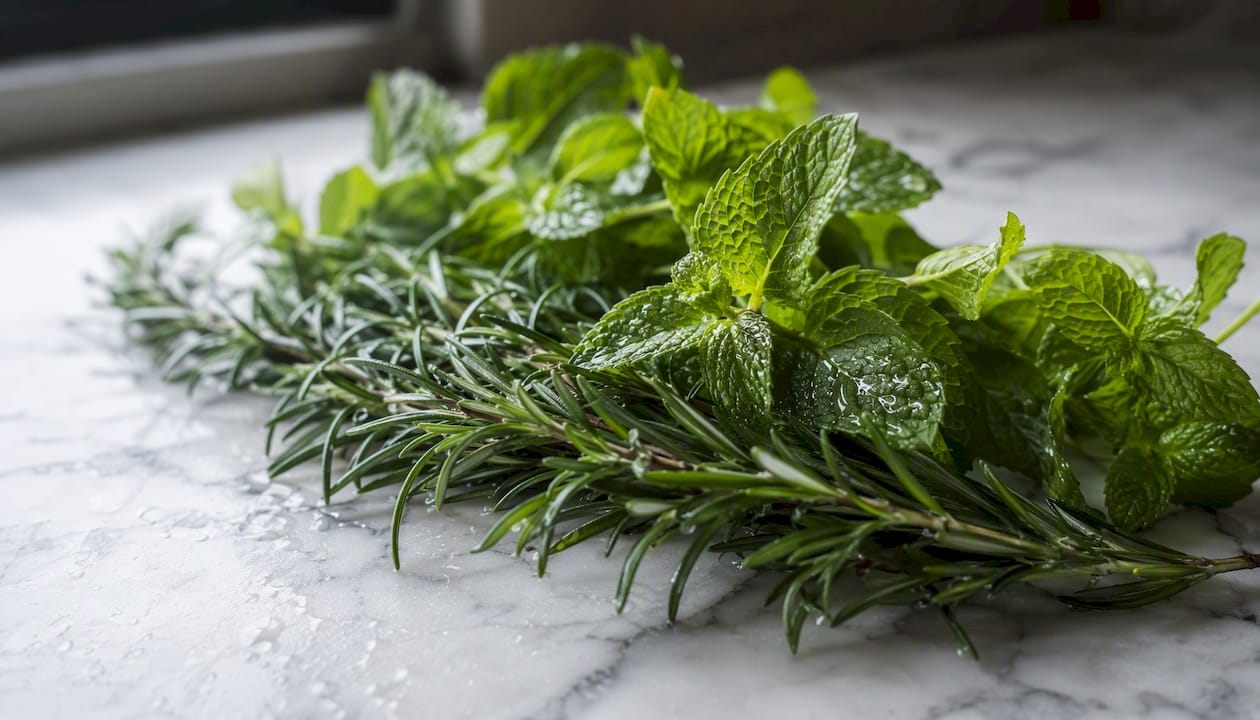
Rosemary (Rosmarinus officinalis): A consumer-health synthesis on essential oils notes that rosemary oil has been compared to minoxidil 2% in a small human study, with both groups showing similar hair count increases at six months. The sample was small, and the study was not replicated at scale. Still, rosemary is the best-supported botanical for scalp stimulation in human data.
Peppermint (Mentha piperita): A mouse-model study showed peppermint oil increased dermal thickness and follicle number. Mouse models do not translate directly to human outcomes, so treat this as a plausible mechanism, not a clinical guarantee. Peppermint oil was used at a concentration suitable for experimental study.
Kukui nut oil (Aleurites moluccana seed oil): A randomized, double-blind left-right comparison published in 2026 found that kukui nut oil activated the Nrf2/ARE-AKR1C family-PGF2α signaling axis and promoted eyelash growth. The signaling pathway identified is relevant to hair follicle biology more broadly, making kukui a botanical worth watching for scalp applications. This is early-stage mechanistic data, not a proven hair-growth treatment.
Amla, bhringraj, hibiscus, and fenugreek: These Ayurvedic herbs appear frequently in herbal oil formulations. For a deeper look at how these herbs support follicle health, Crisanbeauty’s guide on scalp nourishing herbs covers each one in detail.
On realistic expectations: Improved scalp circulation and a healthier follicle environment are achievable goals with botanical oils. Guaranteed regrowth is not. If you are experiencing sudden or significant hair loss, a dermatologist visit is the right first step, not a new oil.
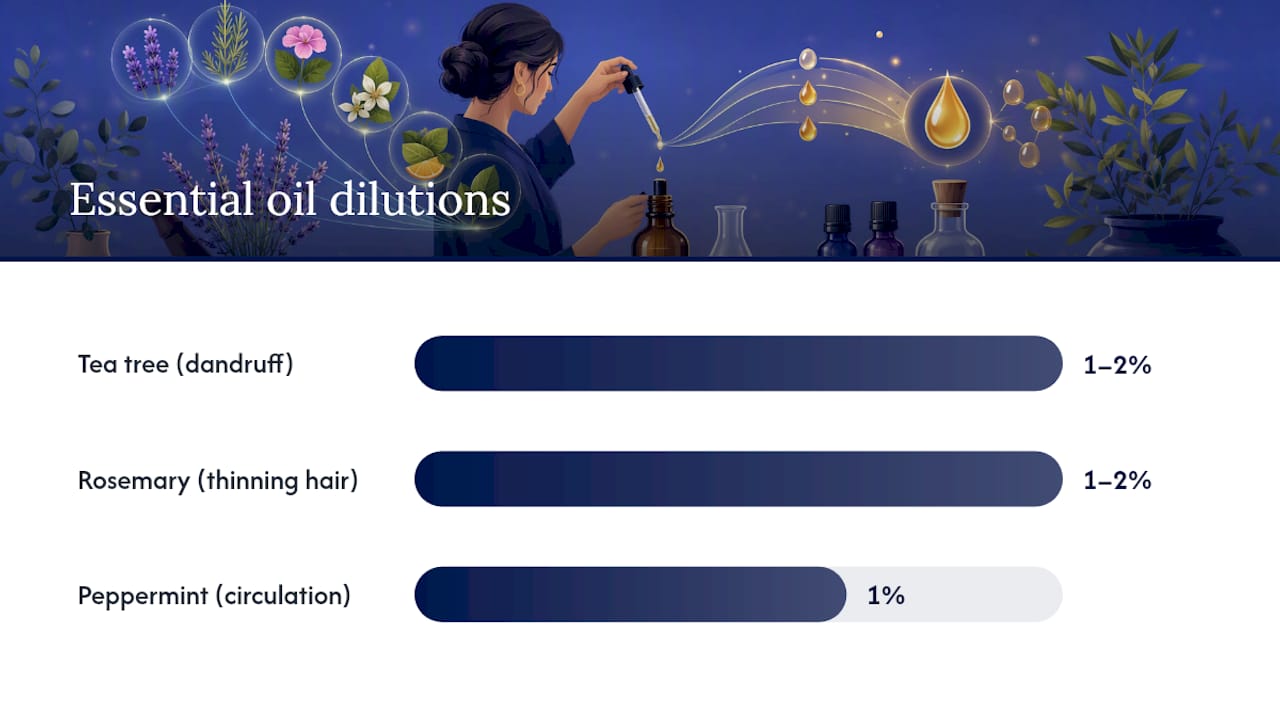
That means 5–20 drops per 100 ml of carrier oil. Always patch test a diluted blend on the inner forearm for 24 hours before applying to the scalp. Sensitization can develop over time even with oils you have used before.
Ingredients to avoid or use cautiously
Not every ingredient on a hair oil label is there for your benefit. Some are cost-cutting measures, some are sensory enhancers, and a few are genuine red flags for sensitive scalps.
Fragrance and Parfum. A single “Fragrance” entry on an INCI list can legally represent a blend of dozens of undisclosed chemicals, including known allergens like linalool, limonene, and eugenol. “Fragrance-free” labeling is also not always reliable: some products labeled fragrance-free still contain masking fragrances. If you have a reactive scalp, look for products that list every aromatic ingredient individually.
Heavy silicones at the hairline. Dimethicone and its relatives create a film on the hair shaft that adds smoothness and shine. Applied repeatedly to the hairline and forehead, they can contribute to follicular occlusion and breakouts. Lighter, volatile silicones like cyclopentasiloxane evaporate and are less problematic, but they offer less conditioning benefit.
Isopropyl myristate and isopropyl palmitate. These solvents improve spreadability and reduce greasiness, but both have moderate-to-high comedogenic ratings. Avoid them in products you apply near the forehead or temples.
Undiluted essential oils. Any product where an essential oil appears in the top five ingredients without a carrier base is formulated at a potentially irritating concentration. This is especially true for cinnamon, clove, and oregano oils, which are aggressive even at low percentages.
Nut oils and allergy risk. Sweet almond, macadamia, and walnut oils carry proteins that can trigger reactions in people with tree-nut allergies. The risk from topical application is lower than ingestion, but patch testing is non-negotiable if you have a known nut allergy.
Interactions with medicated scalp treatments. If you use a topical medication for dandruff (ketoconazole shampoo) or hair loss (minoxidil), applying a heavy oil immediately before or after can dilute or block absorption. Rinse the scalp thoroughly before applying any topical medication, and allow it to dry completely before oiling.
A note on mineral oil: Mineral oil (Paraffin liquidum) is not harmful, but it is a pure sealant with no penetrating ability and no nutritive value for the hair shaft. If you prefer plant-based formulas, it is worth avoiding on principle. If you only care about function, it seals effectively and is non-comedogenic.
How to read a hair oil label: INCI names decoded
INCI stands for International Nomenclature of Cosmetic Ingredients, the standardized naming system used on every cosmetic label sold in the United States. Ingredients are listed in descending order of concentration, from highest to lowest.
Quick INCI-to-plain-name mapping:
| INCI name | Plain name | Notes |
|---|---|---|
| Cocos nucifera oil | Coconut oil | Penetrating; reduces protein loss |
| Simmondsia chinensis seed oil | Jojoba oil | Liquid wax; mimics sebum |
| Argania spinosa kernel oil | Argan oil | Sealing; high tocopherol content |
| Olea europaea fruit oil | Olive oil | Dense; best for dry/coarse hair |
| Ricinus communis seed oil | Castor oil | Very thick sealant; dilute before use |
| Prunus amygdalus dulcis oil | Sweet almond oil | Lightweight; low comedogenic rating |
| Vitis vinifera seed oil | Grapeseed oil | Very light; suits oily scalps |
| Persea gratissima oil | Avocado oil | Rich; penetrates well |
| Rosmarinus officinalis leaf oil | Rosemary essential oil | Scalp stimulant; use at ≤2% |
| Mentha piperita oil | Peppermint essential oil | Cooling; scalp stimulant |
| Tocopherol | Vitamin E | Antioxidant; preserves oil freshness |
| Fragrance / Parfum | Synthetic or natural fragrance blend | Can hide allergens |
How to read the order. If Cocos nucifera oil is listed first and Rosmarinus officinalis leaf oil appears tenth, the product is primarily a coconut oil treatment with a trace of rosemary. The rosemary may still be at a functional concentration, but you cannot confirm that from the label alone without knowing the exact percentage.
A practical heuristic: if a carrier oil leads the list and essential oils appear after the midpoint, the formula is carrier-forward. If “Fragrance” or “Parfum” appears in the top five, fragrance is a primary design goal, not a secondary one.
Pro Tip: The DailyMed database at dailymed.nlm.nih.gov lists ingredient details for many marketed topical oil products, including listed strengths for active ingredients. It is a free, reliable resource for verifying what is actually in a product beyond the front-label claims.
How to choose hair oil ingredients by hair type and scalp condition
The right blend depends on three variables: your hair’s porosity, your scalp condition, and your primary goal. Here is a decision framework you can follow.
Step 1: Identify your porosity. Drop a clean, dry strand into a glass of room-temperature water. If it sinks quickly, you have high porosity (hair absorbs moisture fast but loses it fast). If it floats for a long time, you have low porosity (hair resists moisture entry). Medium porosity sits in between.
Step 2: Match your carrier oil to porosity.
- Low porosity: Use lightweight oils that do not sit on the surface. Grapeseed, sweet almond, and jojoba work well. Apply to damp hair after washing to help the oil enter an open cuticle.
- Medium porosity: Most oils work. Argan and jojoba are reliable all-rounders.
- High porosity: Use heavier, penetrating oils like coconut or olive as pre-shampoo treatments to reduce hygral stress. Seal with argan or castor after washing.
Step 3: Match your scalp condition.
- Oily scalp: Stick to lightweight, non-comedogenic carriers (grapeseed, jojoba). Apply oil to lengths only, not the scalp. Avoid castor and olive at the roots.
- Dry or flaky scalp: A scalp massage with jojoba or sweet almond plus a small amount of rosemary essential oil (1%) addresses both dryness and circulation. For more on natural scalp treatment options, Crisanbeauty’s guide covers plant-based approaches by condition.
- Dandruff or seborrheic dermatitis: Tea tree oil (Melaleuca alternifolia) at 1–2% in a carrier has antifungal properties. Do not replace a medicated treatment with oil alone.
- Color-treated hair: Avoid heavy penetrating oils before coloring (they can block dye uptake). After coloring, argan and grapeseed are safe sealants that protect color without stripping.
Step 4: Add one scalp active if needed.
- Thinning hair: Rosemary essential oil at 1–2% in a carrier, applied to the scalp 2–3 times per week.
- Slow growth or dull scalp: Peppermint at 1% for circulation; pair with a lightweight carrier.
- Damaged or brittle hair: Skip essential oils entirely. Focus on a penetrating carrier (coconut, avocado) plus vitamin E.
Step 5: Avoid per profile.
- Fine hair: castor oil, heavy olive oil, anything with dimethicone in the top five.
- Curly/coily hair: repeated high-protein treatments; rotate carriers to prevent protein overload.
- Sensitive scalp: fragrance, undiluted essential oils, isopropyl myristate.
For a deeper guide on choosing a strengthening oil by hair type and routine cadence, Crisanbeauty’s resource covers the selection process step by step.
DIY blends, dilution math, and safe usage tips
Making your own hair oil blend gives you full control over ingredients and concentration. The math is straightforward once you know the rules.
Dilution basics. Essential oil concentration is calculated as a percentage of the total formula volume.
Safety callout: Pregnant women, people with epilepsy, and those with known fragrance allergies should consult a healthcare provider before using any essential oil blend on the scalp. This is general guidance, not medical advice.
Four practical recipes:
-
Pre-shampoo deep treatment (for dry or high-porosity hair): 60 ml coconut oil + 30 ml avocado oil + 10 ml castor oil. Apply to dry hair from roots to ends, cover with a shower cap, leave 30–60 minutes, then shampoo out.
-
Daily lightweight serum (for fine or oily hair): 70 ml grapeseed oil + 30 ml jojoba oil. Apply 2–3 drops to damp ends only. No essential oils needed; keep it simple.
-
Scalp-stimulating blend (for thinning or slow-growth concerns): 80 ml sweet almond oil + 20 ml jojoba oil + 20 drops rosemary essential oil + 10 drops peppermint essential oil. That gives approximately 1.5% total essential oil concentration in a 100 ml bottle.
-
Hairline-friendly sealant (for edges and fine hairline hairs): 90 ml argan oil + 10 ml jojoba oil. No silicones, no fragrance, no essential oils. Apply sparingly with fingertips.
Storage and shelf life. Store all blends in dark glass bottles away from heat and light. Never add water to an oil blend without a proper preservative system, as water introduces microbial contamination risk. Refrigerate blends containing fresh herbal infusions.
Troubleshooting:
- Greasy finish: You used too much product or too heavy a carrier. Switch to grapeseed or jojoba and apply to damp, not dry, hair.
- Stiff or brittle strands after oiling: Protein overload. Pause high-protein carriers (coconut) for 2–4 weeks and use a moisture-only carrier.
- Scalp irritation after a new blend: Patch test every new blend on the inner forearm for 24 hours before scalp application. If irritation occurs, identify the essential oil as the likely culprit and remove it first.
Recent research highlights worth knowing
The science behind hair oil formulation is moving faster than most product labels reflect. A few findings are worth keeping in mind when you evaluate ingredients.
The kukui nut finding: A 2026 randomized, double-blind study found kukui nut oil activated the Nrf2/ARE-AKR1C family-PGF2α signaling axis and promoted measurable eyelash growth. This is the first mechanism-level evidence linking kukui to a specific follicular growth pathway, which suggests potential relevance for scalp applications. The study was conducted on eyelashes, not scalp hair, so direct extrapolation requires caution.
What this means practically: botanical oils can have specific biological activity beyond simple emolliency. The carrier-oil category is not inert.
- Animal models vs. human data. The peppermint and rosemary mouse studies are frequently cited as proof of efficacy. They are better understood as proof of mechanism: they show a plausible pathway, not a guaranteed human outcome. The rosemary-vs-minoxidil human comparison is the strongest human-level data available for any essential oil, and even that was a small, single study.
- Blends outperform single ingredients. Practitioners consistently favor multi-oil formulas because penetrating and sealing oils address different structural needs simultaneously. A carrier that penetrates reduces hygral stress; a carrier that seals reduces transepidermal water loss. No single oil does both optimally.
- Processing quality matters. Virgin, cold-pressed oils retain more of their native fatty acids, antioxidants, and phytosterols than solvent-extracted or refined versions. For predictable cosmetic results, the extraction method is as important as the oil species. Crisanbeauty’s guide on plant-based ingredients for scalp health addresses sourcing quality in detail.
- Herbal synergy. The efficacy of Ayurvedic oil blends typically comes from the interaction between carrier oils and botanical actives, not from any single ingredient. Carriers modulate delivery and sensory experience; botanicals provide targeted biological activity.
What Crisanbeauty prioritizes when choosing hair oil ingredients
Formulating a hair oil that actually performs requires making trade-offs that most labels do not disclose. Here is how Crisanbeauty approaches those decisions.
The first priority is botanical efficacy backed by a plausible mechanism. An ingredient earns its place in a formula by doing something specific: penetrating the shaft, supporting scalp circulation, or protecting against oxidative stress. Ingredients that are present primarily for marketing appeal do not make the cut.
The second priority is safety. Potency and irritation risk move together. A higher concentration of rosemary essential oil may show stronger scalp stimulation in studies, but it also raises sensitization risk for people with reactive skin. Crisanbeauty resolves this by staying within the concentration ranges used in published studies, not pushing past them for a stronger sensory effect.
Clean sourcing is the third consideration. Virgin, cold-pressed botanical oils retain more of their native compounds than refined alternatives. Every carrier and active in a Crisanbeauty formula is selected with processing method in mind, not just species name.
Finally, sensory experience matters because a product that feels unpleasant will not be used consistently. A formula that performs on paper but leaves hair greasy or heavy fails in practice. Balancing a penetrating carrier with a lighter sealing oil is how Crisanbeauty achieves both function and wearability.
Crisanbeauty’s Ayurvedic Hair Growth Oil: formulated for thinning hair
If you have worked through this guide and want a ready-made option that reflects these formulation principles, Crisanbeauty’s Ayurvedic Hair Growth Oil for thinning hair is built around exactly this framework: a multi-carrier base of penetrating and sealing oils paired with Ayurvedic scalp actives, manufactured in the USA with cold-pressed botanical ingredients.
The formula suits people dealing with thinning hair, dry scalp, or postpartum shedding. Apply it to the scalp 2–3 times per week as a pre-shampoo treatment or leave-in scalp massage. If you have a nut allergy, check the full ingredient list on the product page before purchasing. For readers who want both hair and skin support, the Hair Growth Oil + Facial Oil Duo pairs both formulas at a reduced price.
Sources
- A Comprehensive Review of Plant-Based Cosmetic Oils (Virgin Coconut Oil, Olive Oil, Argan Oil, and Jojoba Oil): Chemical and Biological Properties and Their Cosmeceutical Applications - PMC
- A Comprehensive Review on Formulation and Evaluation of Herbal Hair Oils | IJMPS Journal
- 14 Essential Oils That Can Boost Hair Growth
- GZE HAIR OIL


