


How much hair oil should you use?
Start smaller than you think: 1–2 drops for short or fine hair, 2–4 drops for shoulder-length hair, and ½–1 teaspoon for long or coarse hair. Add more only if your lengths still feel dry.
For a pre-shampoo treatment, apply mainly through the lengths and ends, leave on for 20–60 minutes, then shampoo thoroughly.

Should I use more oil for thick or curly hair?
Use the upper end of the range, then add a few drops at a time. Density, porosity and length matter more than curl pattern alone.
Should hair oil go on wet or dry hair?
Either can work. Damp hair helps a small amount spread evenly; dry hair is convenient for a pre-wash treatment.
How do I know I used too much?
If hair looks stringy, feels coated or needs repeated shampooing, reduce the next application. Measured consistency works better than saturating the hair.
Most people use two to three times more hair oil than they need. For short hair, one to two drops rubbed between your palms is enough. Shoulder length hair needs two to four drops. Mid back length calls for a small measurable amount, roughly a few drops. Hair past mid back, especially if it’s thick or coarse, can use a larger measurable amount.
The frequency rule is simpler than most routines make it sound:
- Very dry or coarse hair: a small daily amount on the ends
- Normal hair: a pre-wash treatment one to three times a week
- Oily scalp: skip routine oiling and spot treat only when needed
Pro Tip: If you’re not sure how much to use, start with half of what you think you need. You can always add more, but oil that’s already on your hair isn’t coming off until wash day.
One caution worth repeating before you touch a bottle: applying oil directly to the scalp on a regular basis can worsen dandruff for some people, according to Cleveland Clinic. If your scalp runs oily or flaky, keep the oil on your lengths and ends.
Key Takeaways
The right amount of hair oil is almost always smaller than people assume, and matching it to your hair’s length, texture, and scalp type prevents both dryness and greasy buildup.
| Point | Details |
|---|---|
| Start small | Use 1 to 2 drops for short or fine hair, up to a full teaspoon for long or coarse hair. |
| Match frequency to scalp type | Oily scalps spot treat weekly; dry or coarse hair can handle a small daily dose. |
| Apply to lengths, not roots | Keep oil on mid-lengths and ends unless you’re specifically treating a dry scalp. |
| Time it deliberately | Start with a 20 to 60 minute pre-wash treatment before trying overnight applications. |
| Try Crisanbeauty’s formulas | Crisanbeauty offers USA-made, plant-based hair growth oil designed for measured, everyday use. |
Table of Contents
- Why the Right Amount of Oil Actually Matters
- How Much Hair Oil to Use by Length and Texture
- How to Apply Hair Oil Step by Step
- How Long Should Hair Oil Stay In?
- How Often to Oil Your Hair
- Choosing the Right Oil Changes How Much You Need
- Signs You’re Using Too Much Hair Oil
- How Crisanbeauty Applies This to a Real Routine
- What the Research Gets Right (and What Most Advice Skips)
- Find Your Right Dose With Crisanbeauty’s Hair Growth Oil
- Frequently Asked Questions
- Sources
Why the Right Amount of Oil Actually Matters
Oil coats the hair shaft and adds weight. A little smooths the cuticle, cuts frizz, and adds shine. Too much and hair goes flat, looks stringy, and start clinging together in clumps by midday.
The scalp complicates things further. Your scalp already produces sebum, its own natural oil. Add hair oil on top of that daily, and some people build up product faster than they can wash it out.
- Light coating: smoother strands, less frizz, no visible residue
- Heavy coating: weighed down roots, greasy appearance, possible clogged follicles
Cleveland Clinic notes that oils can genuinely reduce damage and help hair hold onto moisture, but the benefit shows up at small doses. More oil doesn’t mean more protection. It usually just means more oil sitting on the surface, doing nothing extra.
How Much Hair Oil to Use by Length and Texture
Hair length sets the baseline. Texture adjusts it up or down from there.
By length:
- Very short (pixie, buzz cut): 1 drop, worked through with fingertips
- Short, chin to shoulder: 1 to 2 drops
- Shoulder to mid back: 2 to 4 drops, or about a quarter teaspoon
- Long, past mid back: half teaspoon to a full teaspoon
These are starting points for normal density hair applied to damp or dry lengths. Texture shifts the number from there.
By texture:
- Fine hair: use less than the length chart suggests, closer to 1 to 2 drops even at shoulder length, since fine strands show excess oil faster
- Normal, medium density: the length chart above applies as written
- Thick or coarse hair: add 25 to 50% more than the baseline, since coarse strands absorb more before they look coated
- Curly or coily hair: often tolerates the higher end of the range, sometimes a full tablespoon for very long, dense curls, because the hair’s natural texture hides oil better than straight hair does
Glamour’s hairstylist sourcing backs this up directly: start with a drop or two for fine hair applied only to the ends, while thicker or coarser hair can comfortably handle more without looking weighed down.
A shoulder length, fine haired reader should land at 2 to 4 drops. Someone with long, coily hair might reasonably use a full tablespoon for a weekly treatment. Wet application generally needs slightly less oil than dry application, since damp strands distribute product more evenly and absorb faster.
How to Apply Hair Oil Step by Step
Getting the amount right only works if the application method is right too.
- Detangle first, then divide your hair into two to four sections depending on length and thickness.
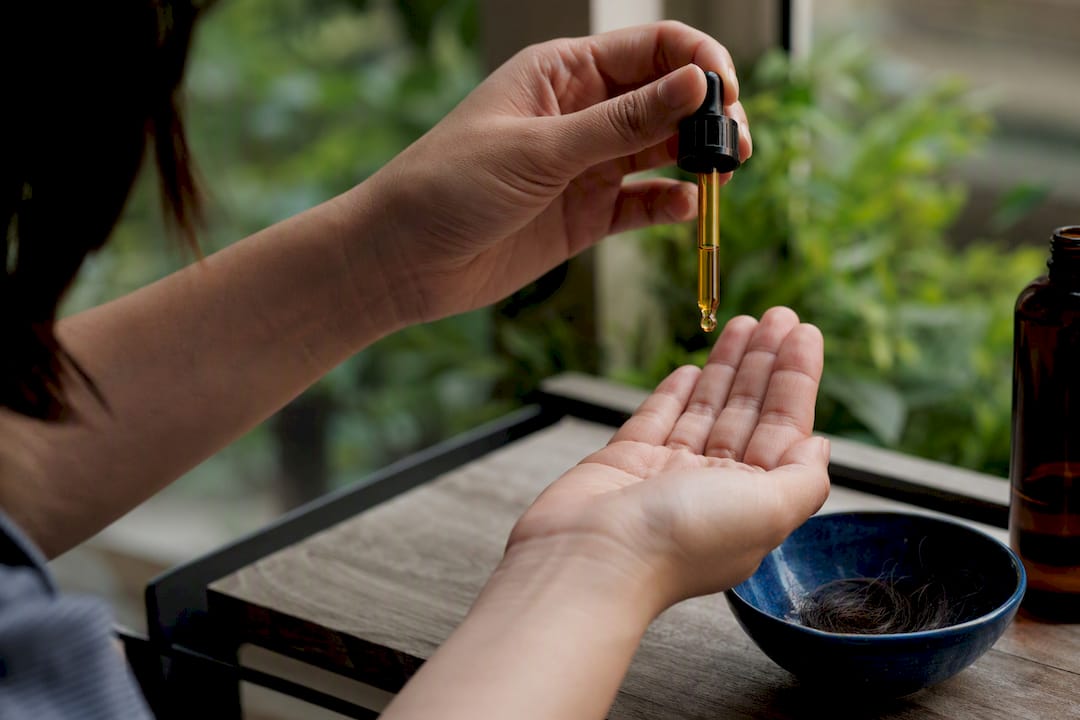
- Warm the oil between your palms for a few seconds, or load it into a dropper for more control.
- Apply to mid-lengths first, then work down to the ends where hair is oldest and driest.
- Only add oil to the scalp if you’re specifically treating scalp dryness, and use a light touch.
- Comb through gently with a wide-tooth comb or your fingers to distribute evenly.
Cleveland Clinic specifically warns against aggressive scalp massage during application, since heavy rubbing can stress fragile strands and contribute to mechanical shedding.
Pro Tip: A dropper gives you far more control than pouring oil straight into your palm. It’s the easiest way to stop overestimating how much you actually need.
A shower cap and a microfiber towel help contain mess if you’re leaving oil in for more than a few minutes.
How Long Should Hair Oil Stay In?
Leave-in time changes what you get out of the treatment, and it changes your risk of buildup.
- 20 to 60 minutes: a solid pre-wash option for most hair types, enough time for oil to penetrate without much buildup risk
- 2 to 4 hours: a deeper treatment for dry or damaged hair that needs more conditioning time
- Overnight: the most intensive option, useful for very dry or textured hair, but it raises the odds of pillowcase staining and scalp buildup
Acibadem’s guide points out that overnight oiling increases buildup and irritation risk for some people, while shorter pre-wash sessions deliver much of the same benefit with less downside. Start with 30 minutes. If your hair still looks and feels dry after washing, extend the time on your next treatment rather than guessing.
How Often to Oil Your Hair
Frequency depends on your scalp type and what you’re trying to fix, not a fixed weekly number.
- Oily scalp: spot treat ends only, once a week at most
- Normal hair and scalp: one to three times a week as a pre-wash treatment
- Dry or coarse hair: a small daily amount on the ends, plus one deeper weekly treatment
Adjust with the seasons. Dry winter air and frequent heat styling both increase how much conditioning your hair needs, so bump frequency up temporarily rather than permanently. If your hair looks limp or feels heavier than usual, that’s your signal to scale back before adding more.
Choosing the Right Oil Changes How Much You Need
Oil weight determines your dose as much as hair length does. Lighter oils like jojoba, grapeseed, and argan absorb quickly and rarely cause buildup, so you can use slightly more without consequence. Heavier oils like coconut, castor, and olive oil coat the strand more densely, which means less goes a long way.
Acibadem’s evidence-based review makes clear there’s no single best oil. Coconut oil tends to suit dry or damaged hair well, while argan and jojoba work better as lighter daily options. Small amounts of either usually cover most people’s needs, and heavier oils raise the buildup risk faster if you overdo it.
- Fine hair: reach for lightweight oils and use the low end of your length range
- Color treated hair: lighter oils protect shine without weighing down color vibrancy
- Curly or coily hair: heavier oils like coconut or castor often work better here since the texture absorbs more before looking greasy
Formulas with added silicones or esters change the feel too, often making a small amount go further since those ingredients coat the strand more efficiently than oil alone. Knowing what’s actually in your oil helps you calibrate the dose instead of guessing.
Signs You’re Using Too Much Hair Oil
Overuse shows up fast, and it’s usually obvious once you know what to look for.
- Hair looks limp or falls flat within hours of application
- Increased flaking or dandruff, especially with scalp application
- Scalp acne, small bumps, or irritation along the hairline
- A greasy film that won’t rinse out with your normal shampoo
If you spot these signs, a clarifying shampoo once every one to two weeks usually resets things. Cut back on scalp application specifically, since that’s where buildup tends to start. Persistent irritation, sudden shedding paired with scalp inflammation, or symptoms that don’t improve after cutting back are worth a conversation with a dermatologist rather than more home troubleshooting.
Pro Tip: Keep a clarifying shampoo on hand specifically for oil buildup. Your regular shampoo often isn’t strong enough to fully strip heavier oils like coconut or castor.
How Crisanbeauty Applies This to a Real Routine
A measured routine looks like this for someone with dry, coarse hair: a small daily amount, roughly a drop or two, worked through the ends each morning, plus one weekly pre-wash treatment using a half teaspoon to a full teaspoon left in for 30 to 60 minutes before washing.
We started making hair products because I lived through my own postpartum hair loss and couldn’t find honest guidance, just products promising results with no explanation of how to actually use them. Measured, consistent use always beats dumping on more oil and hoping for the best.
Crisanbeauty is family owned, women led, and every product is manufactured in the USA using plant based ingredients rooted in Ayurvedic tradition. The brand’s community has grown past 1.3 million followers, largely built on practical education rather than promises.
- Product bundles pair a hair oil with complementary treatments for readers who want a full routine
- The Crisan Journal covers routine building in more depth for readers who want to go further
What the Research Gets Right (and What Most Advice Skips)
Most hair oil advice treats “how much” as an afterthought to “which oil,” when it should be the other way around. The oil matters less than the amount and the placement. A high quality oil applied by the tablespoon to your scalp will disappoint you faster than a drugstore oil applied by the drop to your ends.
The conventional wisdom of “more is more” during dry winter months or after a bad hair day gets this exactly backward. Your hair doesn’t need a bigger dose. It needs a more precise one, matched to your actual texture instead of your frustration level that day.
If there’s one thing to prioritize, it’s the length and texture math laid out in the dosing section above. Get that right first. Adjust frequency second. Worry about which specific oil to use last, since a light oil at the right dose will almost always outperform a heavy oil at the wrong one.
Find Your Right Dose With Crisanbeauty’s Hair Growth Oil
Once you know your ideal amount, the oil you’re using needs to actually deliver at that dose. A lot of drugstore oils are cut with fillers, which means you end up using more just to see any effect. Crisanbeauty formulates its hair growth oil to work at the small, measured amounts this guide recommends, so a few drops on your ends actually does something instead of just sitting there.

Crisanbeauty was built by a family that has lived through real hair loss, not a lab team guessing at what postpartum or thinning hair needs. Every bottle is made in the USA with plant-based, Ayurvedic-inspired ingredients, and formulated so the dosing guidance in this article actually applies without watering down results. If your hair is thinning, dry, or just not responding to the amount you’re currently using, try Crisanbeauty’s hair growth oil for thinning hair and start with the small daily dose outlined above.
Frequently Asked Questions
How much hair oil should I use for shoulder length hair? Two to four drops usually covers shoulder length hair, closer to two drops if your hair is fine and closer to four if it’s thick or coarse.
Is too much hair oil bad for your scalp? Yes, routine scalp application can worsen dandruff and cause buildup for some people, especially those with oily or flake-prone scalps. Keep oil on your lengths and ends instead.
How often should I use hair oil? Most people do well with one to three treatments a week. Dry or coarse hair can handle a small daily amount on the ends, while oily scalps should spot treat only when needed.
Should I apply hair oil to wet or dry hair? Both work, but wet hair generally needs slightly less oil since it distributes more evenly. Dry hair application works well for pre-wash treatments left in for 30 minutes or longer.
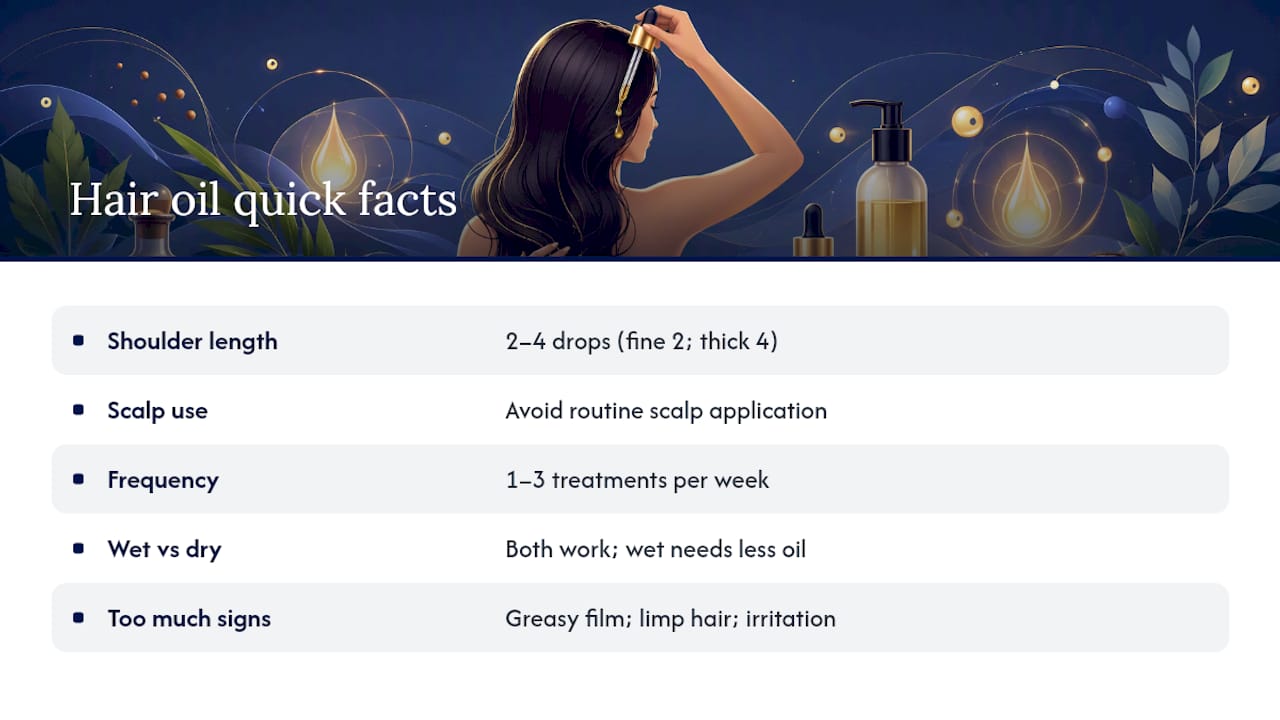
How do I know if I’m using too much hair oil? Limp, flat hair within hours of application, a greasy film that doesn’t rinse out, or new scalp irritation are all signs to cut back and consider a clarifying shampoo.
Sources
- Hair Oiling: 3 Benefits and How To Do It - Cleveland Clinic
- Hair oil: an evidence-based guide for patients - Acibadem International
- How to Use Hair Oil the Right Way, According to Pro Hairstylists | Glamour
Your fastest next step: choose the smallest amount that coats the target area without saturating it.
Ready to build a repeatable routine?
The 16 oz bottle is designed for ongoing scalp-and-strand oiling. Fine or short hair generally needs less per use; long, dense or coily hair may need more. Track your starting amount and adjust one step at a time.
Compare oiling frequency and how long a 16 oz bottle may last.


