


Yes, hard water can damage your hair. The most effective first step is a chelating or clarifying treatment to remove mineral buildup, followed immediately by deep conditioning to restore moisture.
Do these three things today:
- Run a quick soap-lather test: lather a bar of soap between your palms under your shower water. Poor, thin lather signals high mineral content.
- Use a chelating or clarifying shampoo to strip calcium and magnesium deposits from your strands.
- Follow with a deep-conditioning mask and consider a shower filter for hair to reduce chlorine and particulates going forward.
At-home checks to confirm hard water is the culprit:
- White chalky residue on faucets or showerheads
- Hair feels stiff, rough, or coated after washing
- Shampoo lathers poorly even with a generous amount
- Dullness that doesn’t improve with conditioner alone
- Color fading faster than expected after a salon visit
A peer-reviewed study published in PMC found no statistically significant difference in tensile strength or elasticity between hair treated in hard water versus distilled water. That finding matters: hard water’s primary damage is surface-level, not structural. It affects shine, texture, and combability first. That means targeted topical treatment can genuinely reverse most of what you’re seeing.
Table of Contents
- How does hard water actually damage your hair?
- How can you tell if hard water is hurting your hair?
- How to repair hair already damaged by hard water
- What’s the best wash routine for hard water?
- How do you prevent hard water buildup from coming back?
- Crisanbeauty’s scalp-first rebuilding routine
- When will you see results, and when should you see a professional?
- What does the science actually say about treatment and prevention?
- Chelating agents vs. natural alternatives: which ingredients actually work?
- Key Takeaways
- The real problem with how most people approach hard water
- Crisanbeauty products that fit directly into this routine
- Useful sources and further reading
How does hard water actually damage your hair?
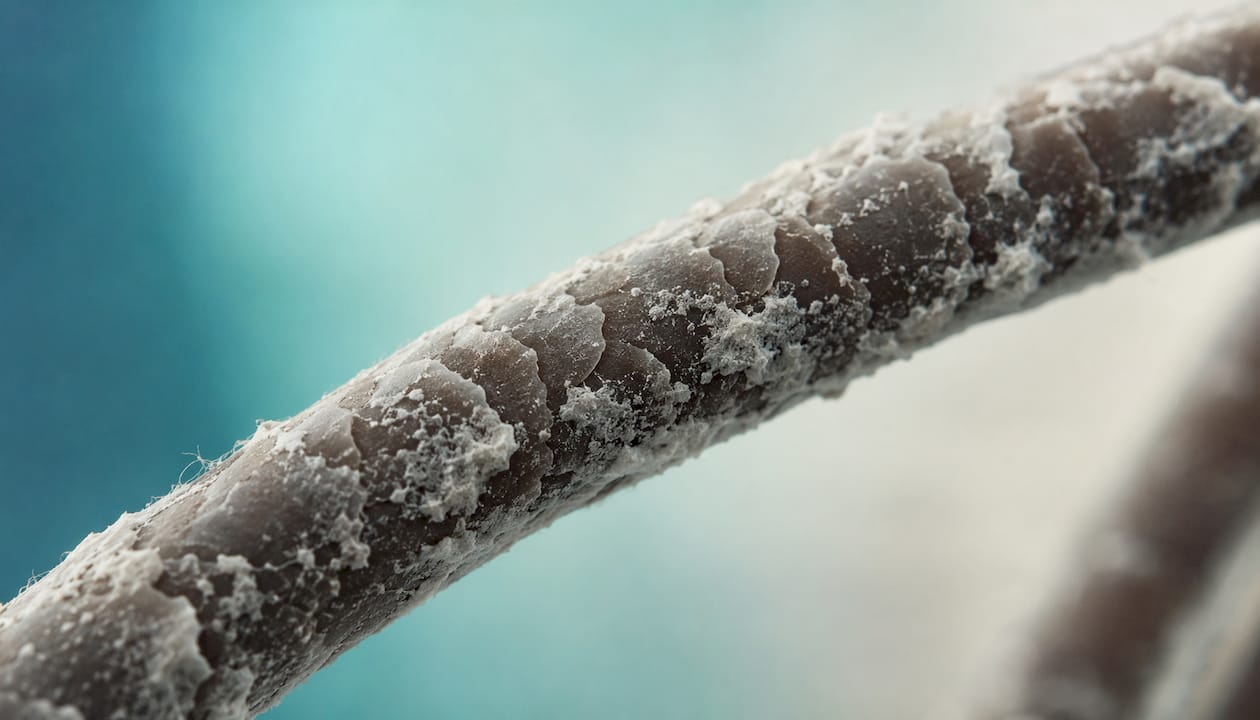
Hard water contains elevated levels of dissolved calcium and magnesium salts. These minerals don’t rinse away cleanly. Instead, mineral uptake concentrates in the cuticle layers, the outermost scales of each strand, where they alter surface properties like shine, combability, and stiffness.
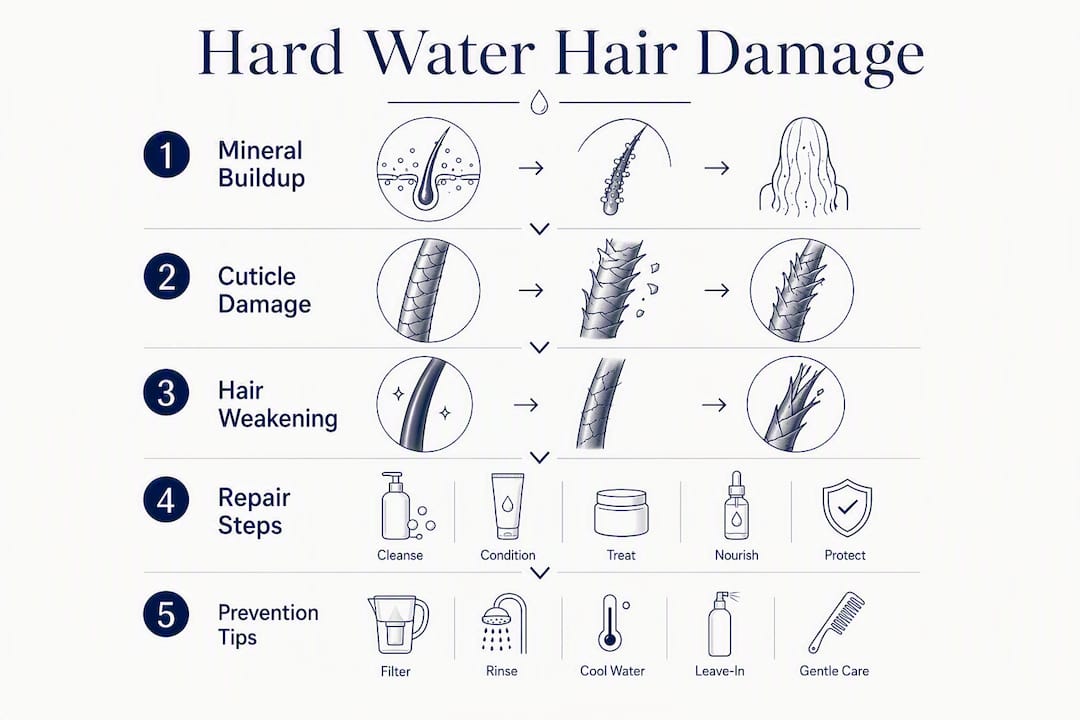
Think of the cuticle as a tightly overlapping set of shingles. When calcium and magnesium ions lodge between those shingles, they prop them open slightly. The result is a rougher surface that catches light unevenly, tangles more easily, and resists moisture absorption.
Bleached or chemically treated hair is more porous, so it absorbs minerals faster and shows symptoms more intensely. Virgin hair is not immune, but the timeline to visible damage is longer. Chlorine, a separate issue from hardness, adds oxidative stress on top of mineral buildup. The two problems often coexist but require different solutions.
Current evidence is clear that hard water affects surface properties. The PMC study noted no significant change in tensile strength under standard exposure conditions, though the researchers acknowledged that higher mineral concentrations or longer exposure periods could alter those findings.
How can you tell if hard water is hurting your hair?
The signs of hard water hair damage overlap with other causes, so a quick self-check before you spend money on treatments is worth doing.
Common signs:
- Dullness that persists even after conditioning
- Stiff, rough texture when hair dries
- Poor shampoo lather despite using enough product
- White or chalky residue visible on strands or faucets
- Color fading faster than your stylist’s timeline
- Increased tangling, breakage, or split ends
- Scalp buildup that feels waxy or heavy
| Hair Type | How Symptoms Typically Appear |
|---|---|
| Fine hair | Limpness, flat appearance, rapid buildup feeling |
| Coarse or thick hair | Stiffness, rough texture, reduced moisture absorption |
| Curly or coily hair | Defined curl loss, dryness, frizz, difficulty detangling |
| Color-treated hair | Faster fade, brassiness, uneven tone |
| Bleached or chemically processed | Fastest mineral uptake, most visible dullness and breakage |
At-home soap-lather test: Wet your hands, rub a bar of soap between your palms under your shower water for 20 seconds. Soft water produces a rich lather quickly. Hard water produces thin, sparse suds. This is the same reason your shampoo never seems to foam enough.
Red flags that need professional attention: Sudden or patchy hair loss, scalp inflammation, tenderness, or visible scaling are not hard water symptoms. These warrant a dermatologist visit. Hard water causes gradual surface damage, not acute shedding events.
How to repair hair already damaged by hard water
Repair follows a clear sequence. Skipping steps or doing them out of order reduces results.
The repair protocol:
- Remove mineral buildup first. Use a chelating shampoo containing EDTA (disodium EDTA or tetrasodium EDTA) or citric acid. These bind to calcium and magnesium ions and lift them off the cuticle. Clarifying shampoos remove product residue but are less effective against dissolved minerals specifically.
- Deep condition immediately after. Chelation strips minerals but also removes some natural moisture. Follow every chelating treatment with a rich conditioning mask, leaving it on for 10–20 minutes.
- Restore the scalp. Mineral buildup doesn’t stop at the strand. Scalp buildup removal is part of the same cycle. A scalp detox treatment helps clear the follicle environment so new growth comes in healthier.
- Trim split or damaged ends. No topical product repairs a split end. Trimming 1–2 inches removes the most compromised sections and prevents splits from traveling up the shaft.
- Maintain with a gentle daily cleanser. After chelation, switch to a sulfate-free shampoo for daily or regular washing to protect moisture without re-stripping.
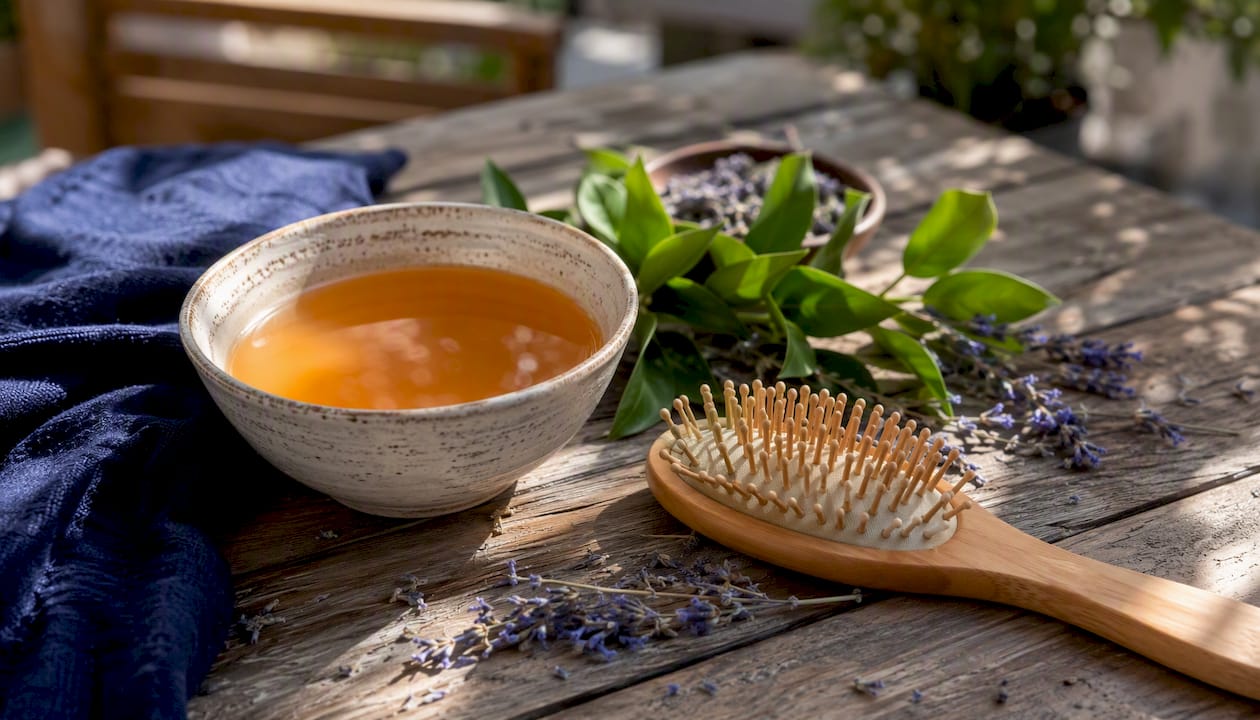
Apple cider vinegar (ACV) as a natural option: ACV can clarify surface buildup and temporarily improve shine, but its pH of approximately 2–3 makes it risky if used undiluted or too frequently. Dilute to roughly 1 part ACV in 4 parts water, apply after shampooing, and rinse thoroughly. ACV does not remove dissolved mineral ions the way EDTA does. It’s a supplementary step, not a replacement for chelation.
Frequency by hair type: Fine or low-porosity hair: chelate once every 3–4 weeks. Coarse, high-porosity, or chemically treated hair: once every 2–3 weeks. Daily clarifying damages the moisture barrier regardless of hair type.
For severe buildup or bond damage, professional salon chelation treatments and bond-repair systems (such as Olaplex-style treatments) deliver more concentrated results than at-home products.
Pro Tip: Avoid applying a heavy protein treatment immediately after an aggressive chelation session unless your hair is very porous. Chelation temporarily opens the cuticle; adding protein on top of already-stressed strands can cause stiffness and increased breakage. Wait one wash cycle, then introduce protein.
What’s the best wash routine for hard water?
A consistent routine does more than any single treatment. Here’s a practical schedule you can follow starting this week.
Daily or regular wash routine:
- Wet hair thoroughly with warm water.
- Apply a gentle, sulfate-free shampoo and massage the scalp for 60–90 seconds.
- Rinse completely.
- Apply a lightweight conditioner or leave-in from mid-length to ends.
- Finish with a cool or cold rinse for 30 seconds. Cool water helps close the cuticle, reducing the surface area where minerals can re-deposit.
Weekly additions:
- Once weekly: apply a deep-conditioning mask after shampooing, leave on 15–20 minutes, then rinse with cool water.
- Every 2–4 weeks (depending on hair type): replace your regular shampoo with a chelating shampoo for that wash only, then follow with your mask.
Do and don’t list:
- Do follow every chelating wash with a moisturizing mask.
- Do use cool water for your final rinse every time.
- Don’t clarify or chelate daily; it strips moisture faster than minerals accumulate.
- Don’t skip conditioner after a chelating wash.
- Don’t use alcohol-heavy styling products on days you chelate; they compound dryness.
For color-treated hair: Use a color-safe chelating shampoo specifically. Standard chelators can accelerate color fade. Limit chelation to once per month and always use a color-depositing or color-protective conditioner immediately after.
How do you prevent hard water buildup from coming back?
Prevention comes down to two tracks: plumbing solutions and product strategy. Most people need both.
| Solution | What It Removes | Effectiveness vs. Minerals | Rough Cost Range | Best For |
|---|---|---|---|---|
| Shower filter (carbon/KDF) | Chlorine, particulates, some heavy metals | Low for dissolved Ca/Mg | Entry-level | Renters, chlorine sensitivity |
| Shower filter (KDF-55 + carbon) | Chlorine, some metals | Low to moderate | Entry to mid-range | Renters wanting softer feel |
| Whole-house ion-exchange softener | Dissolved calcium and magnesium | High | Professional installation | Homeowners, severe hardness |
| Water conditioner (scale reducer) | Prevents scale adhesion | Moderate | Mid-range | Homeowners, moderate hardness |
Shower filters reduce chlorine and particulates and can make hair feel noticeably softer, but most do not perform the ion exchange needed to remove dissolved calcium and magnesium. If your water is genuinely hard, a shower filter alone won’t stop mineral buildup. It will, however, reduce chlorine-related oxidative damage, which is worth doing regardless.
Filters using activated carbon and KDF media typically last three to six months before needing replacement, depending on your water conditions and usage.
When plumbing changes aren’t feasible:
- Stick to a regular chelation schedule (every 2–4 weeks).
- Use a protective botanical oil on damp hair before styling to reduce direct mineral contact.
- Rinse with filtered or bottled water occasionally if hardness is severe.
- Check your local water utility’s annual water quality report to know your exact hardness level in parts per million.
Crisanbeauty’s scalp-first rebuilding routine
Scalp health drives strand health. Minerals don’t just coat the hair shaft; they accumulate at the scalp and around the follicle opening, contributing to the buildup cycle that slows healthy growth. A scalp-first approach, exfoliate and restore before focusing on the strand, tends to produce faster visible results.
The Crisanbeauty rebuilding routine:
- Step 1 — Scalp detox: Use a scalp detox mask to clear follicle buildup. This step is separate from chelating the strand.
- Step 2 — Targeted chelation: Apply a chelating shampoo every 2–4 weeks, not more. Over-chelating disrupts the scalp’s natural oil balance.
- Step 3 — Botanical restorative oil: After washing, apply a lightweight Ayurvedic oil to the scalp and lengths. Botanical oils like those in the CRISAN Ayurvedic Hair Strengthening Oil, formulated with plant-based ingredients, help condition the cuticle and support the scalp environment between washes.
- Step 4 — Maintenance cleanser: Use a sulfate-free shampoo for all regular washes between chelation sessions.
Ingredients to prioritize:
- Humectants (glycerin, aloe vera) to draw moisture back into the cuticle
- Amino-acid peptides to support cuticle integrity
- Botanical oils (amla, bhringraj, castor) for scalp conditioning
- Mild chelators (citric acid, phytic acid) in leave-in or rinse-out formulas
Ingredients to avoid when addressing mineral damage:
- Sodium lauryl sulfate (SLS) in daily shampoos; it strips moisture and worsens cuticle roughness
- High-alcohol styling products; they dehydrate already-stressed strands
- Heavy silicones layered on top of mineral buildup; they seal in residue rather than removing it
Topical care has real limits. If your local water hardness exceeds 300 ppm, product routines alone may not be enough. A plumbing solution, at minimum a shower filter, should be part of the plan. For scalp exfoliation benefits and how professional exfoliation fits into a repair plan, a stylist consultation adds value beyond what at-home products can deliver.
When will you see results, and when should you see a professional?
Recovery is gradual. Here’s a realistic timeline:
- Weeks 1–4: After 1–2 chelating treatments, hair typically feels softer and looks shinier. Stiffness and dullness reduce noticeably.
- Months 1–3: With consistent chelation every 2–4 weeks and a sulfate-free daily routine, texture improves significantly. Color-treated hair holds tone longer.
- Months 3 and beyond: New growth comes in without mineral pre-loading. Full recovery depends on how much damage existed and whether the water source has changed.
See a stylist when:
- Buildup persists after three chelating treatments
- You need color correction after mineral-related fading
- You want professional bond-repair treatments for severely compromised strands
See a dermatologist when:
- You’re experiencing excessive or sudden shedding (more than 100–150 hairs per day consistently)
- You notice scalp inflammation, tenderness, or visible scaling
- Patchy hair loss appears; this is not a hard water symptom and needs clinical evaluation
Progress monitoring checklist:
- Does your shampoo lather better than it did a month ago?
- Has stiffness after drying reduced?
- Is your hair easier to detangle?
- Has color lasted longer since starting chelation?
What does the science actually say about treatment and prevention?
The evidence on hard water and hair is more nuanced than most guides suggest. The PMC study found no statistically significant difference in tensile strength or elasticity between hair treated in hard water versus distilled water under standard conditions. That finding is frequently misread as “hard water doesn’t damage hair,” but the researchers themselves noted that higher mineral concentrations or longer exposure could change the outcome.
The Wiley structural study offers the more clinically relevant finding: mineral uptake alters cuticle-driven properties including shine, combability, and stiffness, and bleached hair responds differently from virgin hair. Surface damage is real and measurable even when tensile strength remains intact.
On the treatment side, chelating agents like EDTA are well-established in cosmetic chemistry for binding divalent metal ions. The mechanism is straightforward: EDTA’s carboxylate groups form stable complexes with calcium and magnesium, allowing them to be rinsed away. This is why chelating shampoos outperform standard clarifiers for mineral removal specifically.
For repairing damaged hair at the structural level, bond-repair chemistry and deep conditioning with amino-acid-rich formulas address what chelation alone cannot. The two approaches are complementary, not interchangeable.
Chelating agents vs. natural alternatives: which ingredients actually work?
| Ingredient | Type | Removes Dissolved Minerals | Safety Notes |
|---|---|---|---|
| Disodium EDTA / Tetrasodium EDTA | Synthetic chelator | Yes, highly effective | Well-tolerated; avoid daily use |
| Citric acid | Natural chelator | Moderate | Safe; also adjusts pH |
| Phytic acid | Natural chelator | Moderate | Gentle; found in some botanical formulas |
| Apple cider vinegar (diluted) | Clarifying acid | No (surface buildup only) | Risk of irritation if undiluted; pH 2–3 |
| Activated carbon (in filters) | Filtration media | No (removes chlorine/particulates) | Safe; requires filter replacement |
| Sodium lauryl sulfate | Surfactant/cleanser | No | Strips moisture; avoid for daily use |
| Glycerin / aloe vera | Humectant | No | Restores moisture post-chelation |
EDTA remains the most effective option for removing dissolved calcium and magnesium from hair. Citric acid and phytic acid work well in gentler formulas and are a good fit for those who prefer plant-derived ingredients. ACV is useful for surface clarification and pH balancing but does not chelate mineral ions. It’s a supporting player, not a lead treatment.
The practical takeaway: use EDTA-based chelation for periodic deep removal, and use citric acid or phytic acid-containing products for maintenance between those sessions. Pair both with a plant-based scalp health routine to keep the follicle environment clear.
Key Takeaways
Hard water primarily damages hair at the cuticle surface, and a consistent chelation-plus-conditioning routine reverses most visible symptoms within one to three months.
| Point | Details |
|---|---|
| Chelate, don’t just clarify | EDTA-based chelating shampoos remove dissolved calcium and magnesium; standard clarifiers do not. |
| Shower filters have limits | Most filters reduce chlorine and particulates but do not perform ion exchange to remove dissolved minerals. |
| Scalp-first approach speeds recovery | Clearing follicle buildup alongside strand treatment produces faster, more lasting results. |
| ACV is a supplement, not a solution | Diluted apple cider vinegar clarifies surface buildup but cannot remove dissolved mineral ions. |
| Crisanbeauty’s routine | The CRISAN Ayurvedic Hair Strengthening Oil and sulfate-free shampoo fit directly into the scalp-first rebuilding protocol described above. |
The real problem with how most people approach hard water
Most people treat hard water hair damage as a product problem. They buy a new shampoo, try an ACV rinse once, and expect results. When nothing changes, they assume their hair is just “difficult.” The actual issue is that mineral deposition is a cycle. Minerals attract more residue, residue attracts more minerals, and no single product interrupts that cycle without a consistent protocol behind it.
The other thing most guides understate: the scalp matters as much as the strand. Mineral buildup at the follicle level affects the quality of new growth, not just the condition of existing hair. Treating only the visible strand while ignoring the scalp is like cleaning the windows without addressing what’s fogging them from the inside.
Plumbing and products each have a role. A whole-house softener solves the source problem but costs more and requires homeownership. A product routine manages symptoms effectively when a plumbing fix isn’t possible. Knowing which situation you’re in, and building a routine that matches it, is what actually produces results.
Crisanbeauty products that fit directly into this routine
Two Crisanbeauty products map directly onto the repair and maintenance routine described in this article.
The CRISAN Ayurvedic Hair Strengthening Oil is formulated with botanical ingredients rooted in Ayurvedic tradition, including oils that condition the scalp and support the cuticle between chelation sessions. Use it as a nightly scalp treatment: apply a small amount to the scalp, massage gently for 2–3 minutes, and leave overnight or for at least 30 minutes before washing. It fits into Step 3 of the scalp-first rebuilding routine above.
The CRISAN sulfate-free shampoo is the daily cleanser this routine calls for. It cleans without stripping the moisture barrier that chelation works to restore. Use it for all regular washes between your chelating sessions.
For long-term support, the CRISAN Complete Hair Essentials vitamin provides daily nutritional support for hair strength and growth from the inside out. These are brand recommendations; individual results depend on your water hardness level, hair type, and consistency with the full routine. If your hardness is severe, a plumbing solution should accompany any topical approach.
Useful sources and further reading
- Effects of Hard Water on Hair (PMC/NIH) — Peer-reviewed study comparing tensile strength and elasticity of hair treated in hard water versus distilled water. Read this for the primary clinical data.
- Structural Implications of Water Hardness Metal Uptake by Human Hair (Wiley) — Covers how calcium and magnesium concentrate in the cuticle and alter surface properties. The most mechanistically detailed study available.
- Apple Cider Vinegar for Hair (Healthline) — Practical guidance on safe ACV use, dilution ratios, and risks of overuse.
- Apple Cider Vinegar for Hair Growth (Medical News Today) — Safety-focused coverage of ACV as a clarifying rinse, including cautions on scalp irritation.
- Best Shower Filters (BHG) — Consumer testing of shower filters; useful for understanding filter media types and replacement cadence.
- Best Filtered Showerheads (NBC Select) — Explains the technical difference between filtration and ion-exchange softening.
- CRISAN Nourishing Scalp Treatments — Crisanbeauty’s guide to botanical scalp treatments and how to use them in a repair routine.
- Plant-Based Ingredients for Scalp Health (Crisanbeauty) — Detailed breakdown of botanical ingredients and their role in scalp and strand health.


