


Mild scalp folliculitis usually calms down with gentle cleansing, warm compresses, and a break from anything that irritates your follicles, like tight hats or harsh shampoo. Skip aggressive scrubbing or picking at bumps. A microbiome-friendly oil or a mild anti-dandruff cleanser can help the scalp settle. Most mild cases improve within about 7 to 10 days of consistent, gentle at-home care.
TL;DR:
- Gentle, consistent cleansing with lukewarm water and a pH-balanced cleanser is essential to reduce inflammation and prevent further irritation.
- Using plant-based oils like coconut oil can support the scalp microbiome by promoting beneficial bacteria rather than indiscriminately killing microorganisms.
- Avoid aggressive products such as sulfates, high-alcohol stylers, and heavily fragranced items that can dry and exacerbate inflamed follicles.
- If symptoms persist beyond 7 to 10 days or worsen, consulting a dermatologist is necessary for potential prescribed treatments.
- Supporting long-term scalp health involves careful product choice, routine patience, and preventing triggers like tight headwear, excessive sweating, or friction from shaving or styling.
Table of Contents
- What Is a Good Daily Scalp Folliculitis Home Treatment Routine?
- Which Plant-Based Ingredients Actually Soothe an Irritated Scalp?
- How Do You Perform a Safe At-Home Folliculitis Routine Step by Step?
- When Should You See a Dermatologist for Scalp Folliculitis?
- CRISAN’s Founder Perspective on Long-Term Scalp Wellness
- What Medical Treatments Exist for More Persistent Folliculitis?
- How Do Dermatologists Diagnose Scalp Folliculitis?
- Can Scalp Folliculitis Turn Into a More Serious Problem?
- Is It Folliculitis or Something Else? Common Scalp Look-Alikes
- What Everyday Habits Make Folliculitis Worse?
- What Should You Actually Prioritize First?
- How CRISAN’s Plant-Based Products Fit Into Your Scalp Routine
- Sources
What Is a Good Daily Scalp Folliculitis Home Treatment Routine?
Consistency matters more than intensity here. Your scalp needs a predictable, low-irritation routine to calm inflamed follicles, not a rotating cast of new products every few days.
- Cleanse daily, gently. Use lukewarm water (hot water aggravates inflamed skin) with a mild, pH-respecting cleanser. Massage with fingertips, never nails, and rinse thoroughly so no residue sits on the scalp.
- Apply warm compresses. Soak a clean cloth in warm water and hold it against affected areas for a few minutes at a time, a few times a day if the area feels tender. Warm, moist compresses are a standard part of self-care for folliculitis because they ease discomfort and support drainage of any superficial bumps.
- Oil once or twice-weekly, not daily. A light, plant-based oil applied to the scalp (not scrubbed in) can support the skin barrier without overwhelming it. Leave it on for 30 to 60 minutes before washing out.
- Protect your hygiene setup. Wash pillowcases at least weekly, skip tight-fitting hats or helmets for now, and switch out or clean combs and brushes regularly.
- Pause shaving or trimming near irritated follicles. Friction from a razor is one of the most common reasons folliculitis lingers or spreads.
Watch for progress rather than perfection. Redness fading, less tenderness, and fewer new bumps by day 4 or 5 are good signs. If things look the same or worse by day 7, it is time to reconsider your approach.
Pro Tip: Keep a small notebook or phone note tracking what you use each day. If a new bump shows up right after switching products, that pattern is a clue, not a coincidence.
Which Plant-Based Ingredients Actually Soothe an Irritated Scalp?
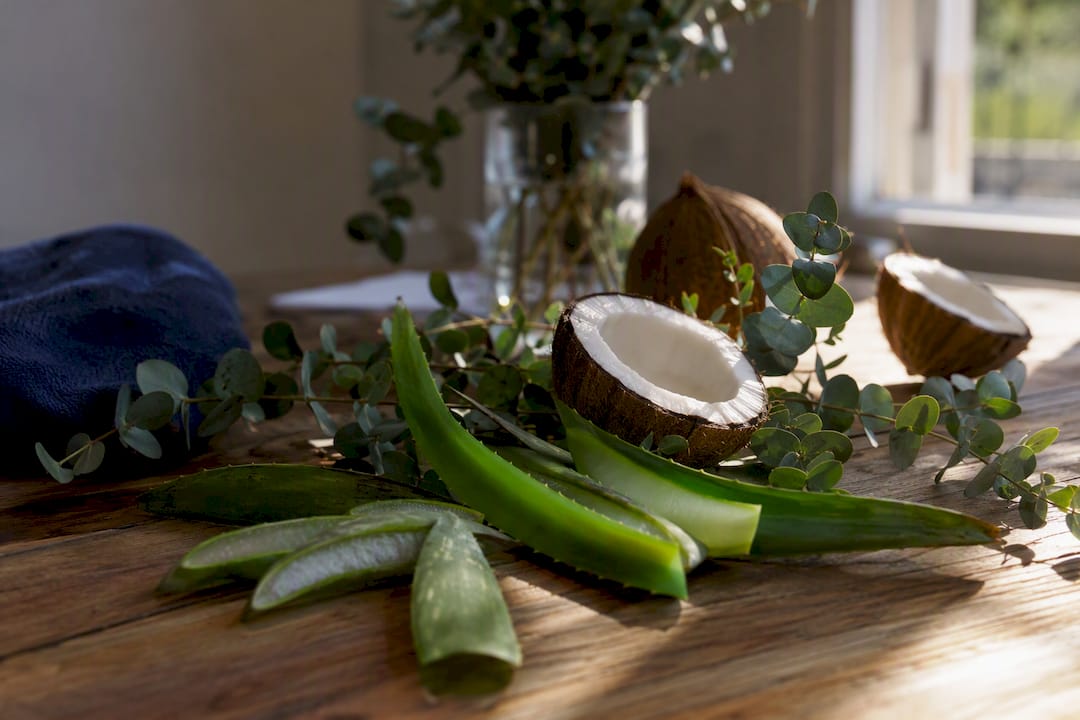
Not every “natural” ingredient is created equal, and some marketed as gentle are anything but. The ones with actual research behind them tend to work by supporting your scalp’s bacterial balance rather than nuking everything on contact.
Coconut oil has real data behind it. A 16-week study on coconut oil’s effect on the skin and scalp microbiome found it increased the abundance of beneficial bacterial commensals, the organisms your scalp actually wants around, associated with healthier skin. That is a meaningfully different mechanism than an antibacterial soap that clears everything indiscriminately, good bacteria included.
Plant extracts like Ziziphus joazeiro and Apium graveolens have also been studied in formulated shampoos, not just as isolated ingredients. A 4-week clinical study on a plant-based shampoo using these extracts reported an 18.6% reduction in transepidermal water loss, a 22.8% drop in redness, and a 29.23% reduction in scaling, all while preserving microbial diversity on the scalp.
Ingredients to avoid while your scalp is inflamed:
- Strong sulfates (sodium lauryl sulfate in particular), which strip natural oils aggressively.
- High-alcohol styling sprays or tonics, which dry and irritate compromised skin.
- Fragranced products with a long ingredient list you cannot easily pronounce.
Leave-on oils work best for barrier support between washes. Wash-off treatments, like a gentle medicated shampoo, work best when you need active cleansing without daily oil buildup. Learn more about how the scalp microbiome functions and why balance, not elimination, is the goal.
How Do You Perform a Safe At-Home Folliculitis Routine Step by Step?
Vague advice like “use gentle products” does not help much when you are staring at an irritated scalp trying to figure out exact amounts and timing. Here is the sequence, spelled out.
- Cleanse first. Wet hair with lukewarm water, apply a mild cleanser, massage for 60 to 90 seconds, then rinse until the water runs clear. Do not double-cleanse on inflamed skin.
- Compress next. Hold a warm, clean cloth against the area for 3 to 5 minutes, repeating 2 to 4 times daily if there is tenderness or visible bumps. Use a fresh cloth each time to avoid reintroducing bacteria.
- Spot-treat with oil carefully. Apply a small amount (about a dime-size drop for the scalp) directly to irritated areas, avoiding any open or draining spots entirely. Before using any new oil, patch-test it on your inner arm for 24 hours first.
- Go deeper once a week. Apply a plant-based oil or mask more broadly, leave it on for at least 30 minutes (overnight if your scalp tolerates it well), then wash out gently.
- Reassess constantly. If a product increases redness, itching, or stinging within a day of use, stop immediately. Improvement looks like calming, not a dramatic overnight fix.
Pro Tip: Apply oil to towel-dried, not soaking wet, hair. Water dilutes the oil’s contact with your scalp and cuts its effectiveness.
When Should You See a Dermatologist for Scalp Folliculitis?
Home care has limits, and knowing where they are protects you from letting something minor turn into something bigger.
- Symptoms that spread rapidly, worsen daily, or come with fever.
- Severe pain, swelling, or sores that ooze or drain persistently.
- No meaningful improvement after 7 to 10 days of consistent gentle care, which is the window most mild cases need to resolve.
A clinician will typically examine the scalp, ask about recent hair products or habits, and may take a sample to identify what is actually driving the irritation before recommending next steps.
CRISAN’s Founder Perspective on Long-Term Scalp Wellness
CRISAN Beauty started after our founder’s own postpartum hair loss, a season that made clear how much conflicting, overpromising advice exists in hair care. That experience shaped a simple rule for every product we formulate: no harsh stripping agents, no filler ingredients, and a bias toward carriers that work with the scalp’s microbiome instead of against it. Every product is made in the USA with that principle first.
We borrow the patience of Ayurvedic oiling traditions, longer contact time, consistent rhythm, but adapt it to modern safety standards: shorter pre-wash sessions for daily nourishment, and longer overnight oiling reserved for weekly deep care.
Healthier hair does not come from aggressive intervention. It comes from giving the scalp what it needs, consistently, and getting out of its way.
What Medical Treatments Exist for More Persistent Folliculitis?
While this guide focuses on non-prescription, at-home care for mild folliculitis, it helps to understand the broader treatment landscape so you know what a clinician might discuss if your case does not respond to gentle home routines.
For cases that do not resolve with self-care, dermatologists sometimes recommend topical or oral antibiotics when a bacterial cause is suspected, particularly staph-related folliculitis that keeps recurring. Antifungal medications, either topical creams or oral prescriptions, come into play when the irritation stems from yeast overgrowth rather than bacteria, which is a distinct diagnosis with a different treatment path. Corticosteroids, usually in low-strength topical form, may be used briefly to calm inflammation in specific circumstances, always under supervision given how they interact with skin barrier function over time.
None of these are decisions to make on your own. Each has a specific use case tied to what is actually causing the follicular inflammation, and using the wrong one, an antifungal on a bacterial issue, for instance, can prolong the problem rather than solve it. This is exactly why the self-care measures recommended by Mayo Clinic, like antibacterial cleansing and anti-dandruff shampoos with antifungal agents, are positioned as first-line steps before anything prescription-based enters the conversation. Mild, uncomplicated cases rarely need to go further than that.
How Do Dermatologists Diagnose Scalp Folliculitis?
Diagnosis usually starts with a visual exam. A dermatologist looks at the pattern, size, and distribution of the bumps, checking whether they cluster around hair follicles specifically (a hallmark of folliculitis) versus appearing more diffusely across the scalp.
They will typically ask about recent changes: new shampoos, hair oils, headwear, excessive sweating, or shaving habits, since these details often point directly to the trigger. In some cases, a clinician takes a swab or skin sample to identify whether bacteria, fungus, or another organism is behind the irritation, since treatment approaches differ substantially depending on the cause.
You should consult a dermatologist if bumps are widespread, unusually painful, accompanied by fever, or if they have not responded to consistent home care within the 7 to 10 day window most mild cases need. A professional evaluation also matters if you have recurring episodes, since repeated flare-ups sometimes point to an underlying skin condition rather than a one-off irritation. Waiting too long when symptoms are clearly escalating rarely helps and can make eventual treatment more involved than it needed to be.
Can Scalp Folliculitis Turn Into a More Serious Problem?
Most mild cases stay mild, especially with prompt, gentle care. But folliculitis can escalate under the wrong conditions, and knowing what escalation looks like helps you catch it early.
Picking at bumps or scratching irritated follicles is one of the most common ways a minor issue turns into a bigger one. It breaks the skin, introduces more bacteria, and can push a superficial irritation into deeper tissue. Left unaddressed, deeper folliculitis can develop into boils or clusters of infected follicles, which are more painful and take considerably longer to resolve.
Chronic or recurring folliculitis, flare-ups that keep coming back in the same area despite consistent self-care, sometimes signals that an underlying trigger, like a specific product, friction pattern, or skin condition, has not actually been addressed. In these cases, scarring or temporary hair thinning around the affected follicles becomes a real possibility, particularly with repeated inflammation in the same spot.
The takeaway is not to panic over every bump, but to take the 7 to 10 day self-care window seriously as a checkpoint, not a suggestion.
Is It Folliculitis or Something Else? Common Scalp Look-Alikes
Treating the wrong condition delays real relief, so it helps to know what folliculitis is not.
Seborrheic dermatitis causes flaking and redness but typically shows up as broader greasy patches rather than distinct bumps centered on individual follicles. Scalp psoriasis presents as thicker, well-defined scaly plaques, often with a silvery sheen, and tends to be more persistent and less responsive to gentle cleansing alone. Contact dermatitis from a new hair product usually causes widespread itching and redness that follows the product’s application pattern rather than clustering around hair follicles specifically.
Fungal scalp infections, like tinea capitis, can look similar to folliculitis but often come with more noticeable scaling, patchy hair loss, and sometimes a distinct odor. This distinction matters because a fungal cause needs an entirely different approach than a bacterial one.
If bumps are clearly centered on individual hairs and appeared somewhat suddenly, often after a specific trigger like a new product or excessive sweating, folliculitis is the more likely explanation. When in doubt, a dermatologist’s exam settles the question quickly, since the visual patterns genuinely differ once you know what to look for.
What Everyday Habits Make Folliculitis Worse?
Some of the most common triggers are things you might not think twice about. Heavy sweating from workouts, especially when hair and scalp sit damp under a hat or helmet for extended periods, creates a warm, moist environment where irritation-causing organisms thrive.

Hair products are another frequent culprit, particularly thick styling gels, heavy conditioners left too close to the scalp, or waxes that build up over days without a proper cleanse in between. Friction matters too: tight ponytails, tight-fitting caps, or headphones worn for hours can irritate follicles enough to trigger a flare, even without any product involved. Shaving or frequent trimming near already-sensitive skin is one of the more overlooked triggers, since razor friction alone can inflame follicles that were previously fine.
Humid climates and hot, sweaty commutes compound all of the above, which is part of why flare-ups often cluster seasonally for some people. Laundering pillowcases regularly and avoiding tight headwear reduces the odds of reinoculating your scalp after you have just calmed it down.
What Should You Actually Prioritize First?
Most advice on scalp folliculitis treats every irritation the same way: cleanse harder, apply something medicated, repeat. That approach misses the point. The research on coconut oil and plant-based formulations makes something clear that conventional advice often skips: an inflamed scalp usually responds better to support than to assault.
The biggest mistake we see is reaching for the strongest product available the moment bumps appear. Aggressive antibacterial washes or high-alcohol tonics might feel like they are “doing something,” but they frequently destabilize the very bacterial balance your scalp needs to heal, which can extend the flare-up rather than shorten it.
Prioritize consistency over intensity. A gentle cleanse, a warm compress, and a barrier-respecting oil applied on a predictable schedule will outperform a harsher, sporadic routine almost every time. Give it the full 7 to 10 days before judging results, and resist the urge to switch products every other day out of impatience.
— CRISAN
How CRISAN’s Plant-Based Products Fit Into Your Scalp Routine
Every step in this routine has a CRISAN counterpart built around the same microbiome-friendly philosophy: nourish, do not strip.
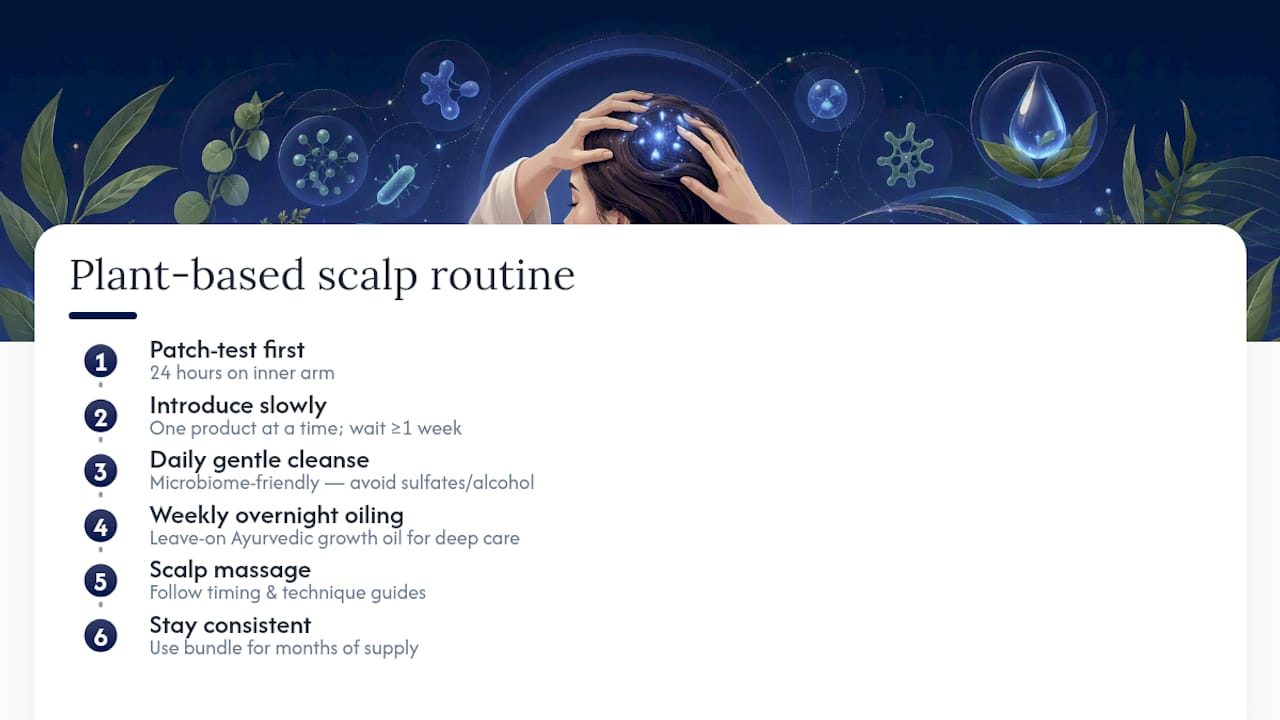
For weekly deep care and overnight oiling, our Ayurvedic hair growth oil for thinning hair is formulated as a leave-on treatment, exactly the kind of plant-based carrier that supports the scalp barrier without the harsh sulfates or high-alcohol formulas that can worsen sensitivity. If you are building a full routine rather than a single product, our hair growth oil bundle gives you enough supply to stay consistent for months, not just weeks, which matters far more than any single application.
Start with one product at a time. Patch-test on your inner arm for 24 hours before applying anything new to an already-irritated scalp, then give it at least a week before adding another step to your routine. This is the same patience that Ayurvedic oiling traditions have relied on for generations, just adapted to a modern, evidence-aware standard. If you want a broader read on technique before you buy anything, our guide to scalp oiling benefits walks through timing and massage approach in more depth, and the folks at Wellthious break down scalp massage technique if you want to pair oiling with proper massage form.
Ready to build your routine? Browse the full CRISAN hair growth oil lineup and pick the starting point that matches where your scalp is right now.
Sources
- Folliculitis treatment and prevention - Harvard Health
- Study: Coconut oil effects on skin/scalp microbiome - PubMed
- Folliculitis - Diagnosis and treatment - Mayo Clinic
- Plant-based shampoo clinical study (Ziziphus & Apium) - International Journal of Cosmetic Science


