


Yes, sun damages both hair and scalp, and the fastest protective routine is a wide-brim hat plus scalp SPF on partings and a UV-protective leave-in on hair lengths. Sun protection for hair means treating your scalp like the skin it is and your strands like the protein fiber they are. Act on three things before you head outside:
- Cover exposed skin. A wide-brim hat or UPF fabric blocks rays a spray can’t match.
- Treat your part line. A broad-spectrum SPF 30+ stick, spray, or powder goes on scalp skin, not hair.
- Coat your lengths. A UV-protective leave-in spray or cream goes on before you step into direct sun and gets reapplied every couple of hours or after a swim.
That last point matters more than most people realize. Dermatology-backed guidance from the Skin Cancer Foundation recommends broad-spectrum SPF 30 or higher specifically for exposed scalp skin, since a burn there carries the same long-term risks as a burn on your face.
Key Takeaways
Protecting hair from sun damage requires pairing a physical barrier like a hat with a scalp-specific SPF and a UV-protective leave-in, reapplied every two hours outdoors.
| Point | Details |
|---|---|
| Cover before you apply | A wide-brim hat or UPF fabric blocks rays that sprays alone can’t fully stop. |
| Treat the part line separately | Broad-spectrum SPF 30+ sticks, sprays, or powders belong on scalp skin, not just hair. |
| Reapply on a schedule | Refresh scalp SPF and leave-in protection roughly every two hours, and right after swimming. |
| Rinse and repair fast | Rinse chlorine or salt immediately, then follow with a hydrating mask to reseal the cuticle. |
| Layer plant-based oils | Crisanbeauty’s Ayurvedic oil and leave-in treatments work both as pre-sun sealants and post-sun repair steps. |
Table of Contents
- How Ultraviolet Rays Physically Harm Hair and Scalp
- A Quick Protection Routine for Before and During Sun Exposure
- Which Hair Sunscreen Products Actually Work?
- Why Your Scalp Needs Its Own Sun Protection
- How to Repair Hair After Sun and Pool Exposure
- How Crisanbeauty Fits Into a Sun-Smart Hair Routine
- Sources
How Ultraviolet Rays Physically Harm Hair and Scalp
Hair has no living cells to repair itself, so UV damage just accumulates. UVA rays penetrate deep enough to break down pigment molecules, which is why color-treated hair fades faster in summer. UVB rays act more on the surface, attacking the keratin proteins that hold each strand together. Research on UV damage published on PubMed confirms this split: UVA drives color change, while UVB drives the protein loss that makes hair brittle.
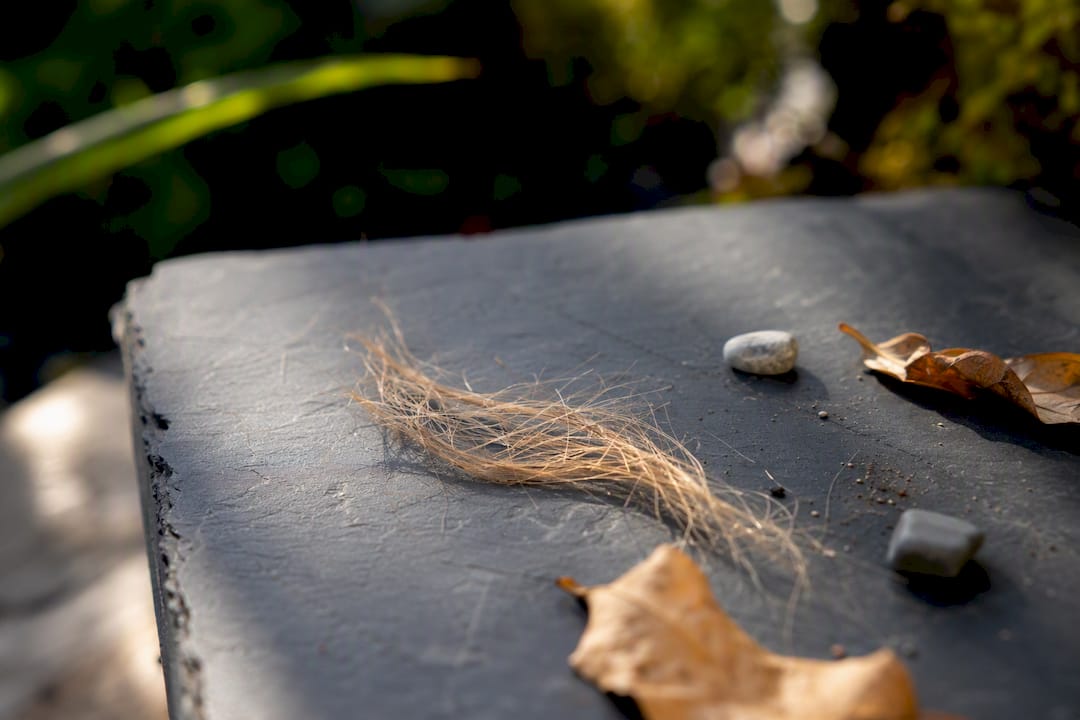
Left unchecked, that exposure erodes the cuticle (the hair’s outer shingle-like layer), breaks down internal proteins, oxidizes pigment, and can inflame hair follicles at the scalp. Cleveland Clinic’s guidance on hair and sun exposure notes that this drying effect weakens hair structure and strips color over time, leading to more brittleness and split ends.
Some hair types take the hit harder than others:
- Fine or light hair, which has thinner cuticle layers to begin with.
- Chemically treated or bleached hair, where the cuticle is already compromised.
- Thin hair or wide partings, where scalp skin gets direct, unbroken sun exposure.
A Quick Protection Routine for Before and During Sun Exposure
You don’t need a ten-step system. You need four moves, done in order, repeated on schedule.
- Put on a hat or UPF layer first. A wide-brimmed hat or tightly woven UPF cap blocks rays before any product has to work harder than it should.
- Apply scalp SPF to your part and hairline. Use a broad-spectrum stick, spray, or powder sunscreen formulated for scalp skin, not just your hair, to provide protection.
- Coat your lengths with a UV-protective leave-in. Apply a leave-in spray or cream to dry or damp hair before sun exposure, focusing on ends, where damage shows up first.
- Reapply after sweat or water contact. Sunscreen formulas break down with swimming, sweat, and toweling off, so plan to reapply roughly every two hours in direct sun, and immediately after a swim.
Layering a physical barrier with a topical product gives you the most realistic coverage for an actual day outside, not a lab test. Cleveland Clinic’s protective-routine advice backs this pairing approach as the most practical for daily life.
Pro Tip: Keep a travel-size scalp SPF stick in your bag all summer. It takes ten seconds to swipe along your part, and you’re far more likely to reapply something that lives in your pocket than something buried at the bottom of a beach bag.
Which Hair Sunscreen Products Actually Work?
Not every “UV protection” label means the same thing, and the format you choose should match your hair type and your actual routine, not just what’s trending.
- Sprays and mists distribute evenly and work well for fine or straight hair that gets weighed down easily. They’re the easiest to reapply midday.
- Leave-in conditioners with UV filters double as detanglers and protectants, which suits curly or textured hair that needs extra moisture anyway.
- Oils and silicone-based serums smooth the cuticle and add shine, but they seal in moisture rather than block UV rays on their own; pair them with an actual filter product, don’t substitute one for the other.
- Powders and sticks target the scalp specifically and skip the greasy residue that sprays sometimes leave on a part line.
When you’re comparing products, Vogue’s breakdown of sun protection for hair points to a few things worth checking: SPF level, whether the filter is broad-spectrum, water resistance if you swim, and whether it leaves a white cast. Antioxidant ingredients (think vitamin E or green tea extract) add a secondary layer of defense against oxidative damage, though they’re a complement to UV filters, not a replacement.
Why Your Scalp Needs Its Own Sun Protection
Your scalp is an extension of your facial skin, and it can burn just as easily, especially along a part line or a thinning crown where hair coverage has faded. Sunburn there doesn’t just hurt. It raises long-term skin cancer risk and can inflame the follicles that hair grows from, according to dermatologist guidance shared with Get The Gloss.
For targeted coverage:
- Use a stick or powder SPF for precise application right along the part, where a spray tends to miss.
- Choose a spray formula for broader coverage on a thinning crown or wide part.
- Reapply every two hours outdoors, and immediately after heavy sweat or swimming.
If your scalp is already sunburned, peeling, or you notice a new spot that looks unusual, that’s a conversation for a dermatologist, not a home remedy.
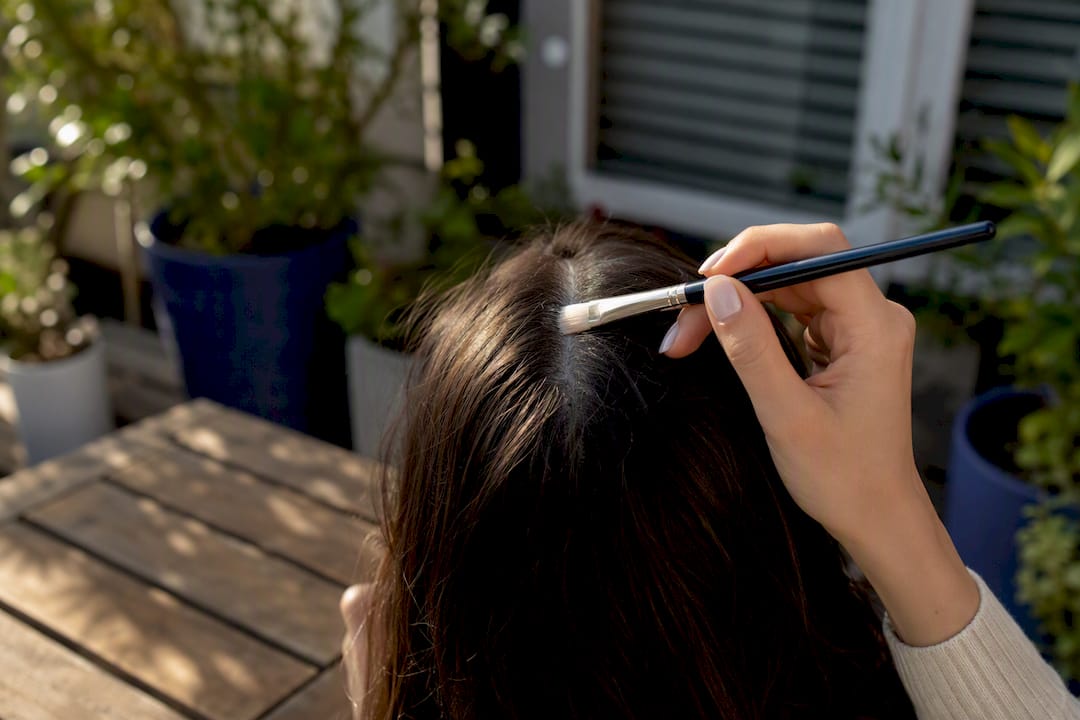
Pro Tip: Apply scalp SPF with a small makeup brush or cotton pad instead of your fingers. It gets the product into the part line evenly without leaving a greasy film on the surrounding hair.
How to Repair Hair After Sun and Pool Exposure
What you do in the hour after sun exposure matters almost as much as what you did before it.
- Rinse chlorine or salt water out immediately. Both strip moisture and leave residue that compounds UV damage if it sits on your strands overnight.
- Follow with a gentle cleanser, not a harsh clarifying shampoo, since sun-stressed hair is already more porous and fragile.
- Apply a hydrating mask or leave-in to replace lost moisture and help reseal the cuticle while it’s still open from heat and water exposure.
- Skip heat styling for a day or two after heavy sun exposure, giving the hair shaft a chance to recover before you add more stress.
- Rebalance weekly with a protein-and-hydration routine that restores cuticle integrity and slows further color fade.
Cleveland Clinic’s post-exposure advice specifically calls out rinsing chlorine and salt promptly as one of the simplest ways to limit cumulative damage. If pool water is a regular part of your summer, it’s also worth understanding how hard water interacts with hair, since mineral buildup compounds the same dryness sun exposure causes.
How Crisanbeauty Fits Into a Sun-Smart Hair Routine
Crisanbeauty builds its lineup around plant-based oils and leave-in style treatments rooted in Ayurvedic tradition, formulated and manufactured in the USA. That matters for a sun routine because the ingredients doing the sealing and repairing work are the same botanicals that have supported hair resilience for generations, not synthetic fillers.
Here’s how the products map onto the checklist above:
- Use a lightweight hair oil before sun exposure to help smooth the cuticle and add a layer of slip that reduces friction damage from wind and salt.
- Reach for a hydrating leave-in treatment daily through summer to keep lengths from drying out between washes.
- After a beach or pool day, a nourishing mask or hot oil treatment helps reseal moisture the sun pulled out.
Plant-based doesn’t mean weaker. It means the formula is working with your hair’s own structure instead of coating over the problem.
Crisanbeauty’s approach leans on plant-based scalp ingredients chosen for what they actually do for hair fiber and scalp skin, not just how they photograph on a shelf.
A founder’s note on why this routine matters
I started formulating Crisanbeauty products after my own postpartum hair loss, when I learned firsthand how fast stressed hair shows damage it didn’t have before. Sun exposure is one more stressor most people don’t think about until their ends start snapping. My own habit is simple: scalp SPF before I leave the house, and a leave-in reapplied if I’m outside past noon. Two habits, done consistently, beat a ten-step routine you abandon by July.
— CRISAN
Build your sun-season routine with Crisanbeauty
Crisanbeauty gives you a plant-based way to layer real protection into a routine you’ll actually keep, without the synthetic silicones or heavy fragrance loads found in a lot of drugstore sun sprays.
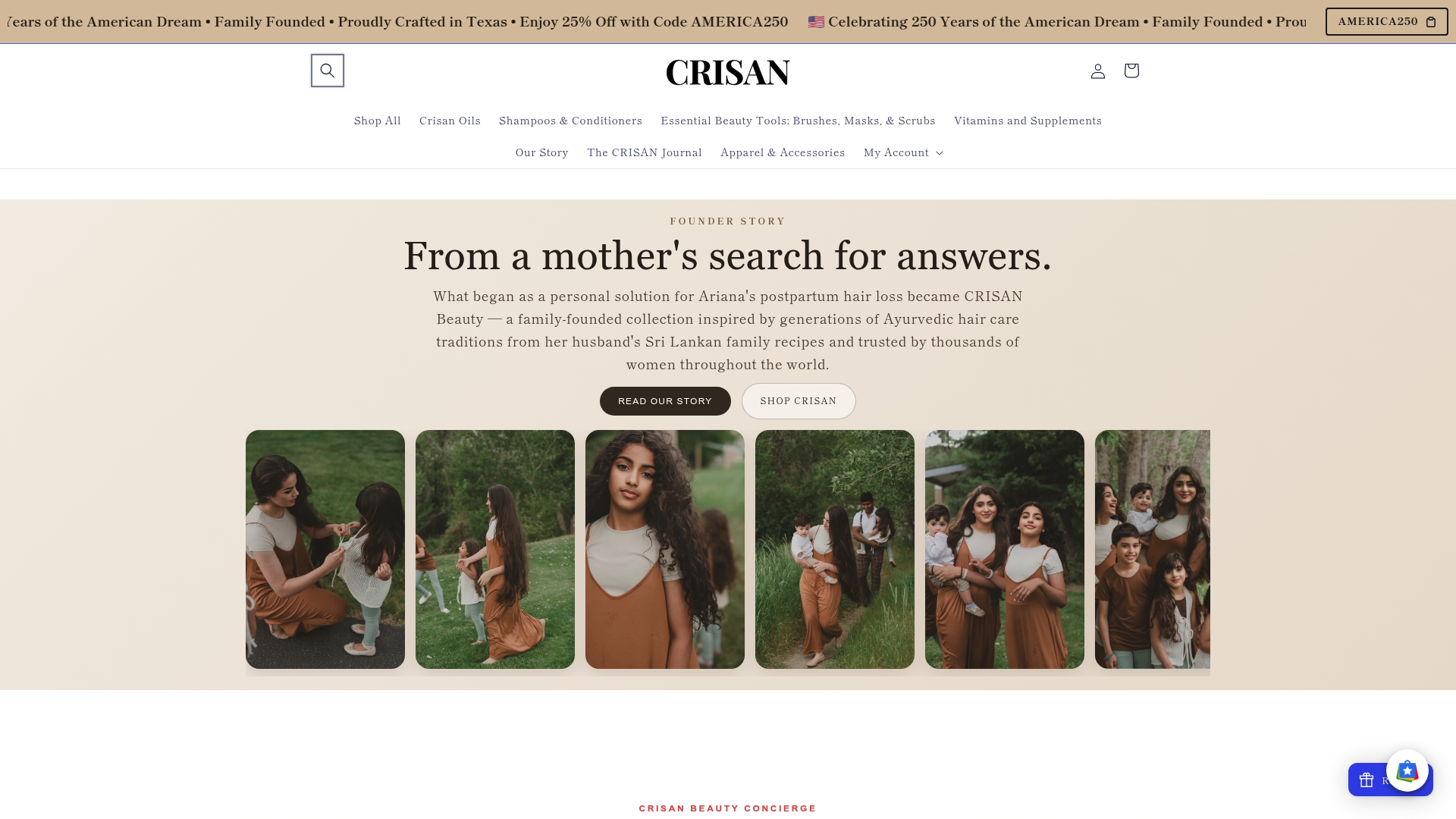
For sealing hair before a day outside and repairing it after, the Ayurvedic hair growth oil for thinning hair works as both a pre-sun cuticle smoother and a post-sun repair treatment, since it’s formulated to nourish strands from root to end. If you want to support hair resilience from the inside as well, the complete hair growth vitamins round out the routine for the months when sun exposure is heaviest. Every Crisanbeauty product is manufactured in the USA from botanical ingredients, so you know exactly what’s going into your hair before it goes out into the sun. Start with the oil in your next order and build your summer routine from there.
Sources
- How To Protect Your Hair From Sun Damage | Cleveland Clinic
- UV damage of the hair | PubMed
- Save Your Scalp from Sun Damage! - The Skin Cancer Foundation
- Everything You Need to Know About Sun Protection for the Hair | Vogue


