


Three habits protect hair under a hijab better than any product: fully drying your roots before covering, choosing low-tension styles and rotating where you place them, and adding a breathable, low-friction layer like a silk-lined undercap. Swap heavy creams for lightweight leave-ins on your lengths, deep-condition regularly, and see a dermatologist if thinning gets progressively worse or your scalp becomes painful.
TL;DR:
- Fully drying roots before covering prevents moisture trapping and fungal buildup, especially if you switch from damp to air-dried or microfiber wraps.
- Using low-tension styles and rotating bun placement reduces stress on follicles, decreasing the risk of traction alopecia over time.
- Breathable fabrics like silk-lined undercaps and smooth fibers help minimize friction and moisture loss, protecting hair from breakage during daily wear.
- Deep-conditioning once a week and regular scalp exfoliation can prevent buildup, dullness, and scalp issues caused by frequent covering and sweat.
- Adjust washing frequency seasonally and after heavy activity, using lighter products in humid weather and richer masks in dry, cold conditions.
Table of Contents
- What Is the Best Daily Routine for Hijab Hair Care?
- How Often Should You Deep-Condition Hair Under a Hijab?
- Which Fabrics and Undercaps Actually Protect Your Hair?
- How Do You Prevent Traction Alopecia From Hijab Styles?
- How Often Should You Wash Your Scalp Under a Hijab?
- How Do You Choose Hair Products for Hijab-Covered Hair?
- CRISAN’s Take on Founder-Tested, Plant-Based Hair Care
- How Should You Protect Your Hair While Sleeping in a Hijab?
- How Do You Part and Section Hair to Avoid Stress Under a Hijab?
- How Do You Prevent Breakage From Hijab Pins and Accessories?
- How Should You Adjust Hijab Hair Care by Season?
- A Realistic Way to Think About Caring for Hair Under Your Hijab
- How CRISAN Products Fit Into Your Hijab Hair Care Routine
- Sources
What Is the Best Daily Routine for Hijab Hair Care?
A good daily routine has three jobs: get your scalp dry, reduce pulling, and stop friction before it starts. None of this requires more than 10 extra minutes.
Start with your roots. If you cover damp hair, moisture gets trapped against the scalp for hours, which sets up the exact conditions that cause odor and fungal buildup, according to Vogue Arabia’s hijab hair care guide. Air-dry when you have time, or use a microfiber wrap to pull moisture out fast, followed by a cool setting on your blow-dryer if you’re in a rush. Roots first, always, even if your ends are still a little damp.
Next comes styling. A tight, high ponytail feels secure, but it concentrates stress on the same few follicles every single day. Loose buns, soft twists, and gentle braids anchor your hijab just as well without the pull.
- Dry your roots completely before you put anything on your head.
- Style loosely, low tension, no pulling at the hairline or nape.
- Layer a silk-lined undercap or headband underneath your outer scarf.
- Apply leave-in serum only to mid-lengths and ends, never near the scalp.
- Rotate your hair-tie placement and undercap wash day so nothing sits in one spot too long.
Pro Tip: Keep two or three undercaps in rotation and wash them weekly, the same way you would a pillowcase. A used undercap holds onto oil, sweat, and product residue that presses right back into your hairline the next time you wear it.
Where you put product matters as much as what you use. Heavy creams and butters near the scalp trap heat and moisture under a covering for six to ten hours a day, which is how long nearly half of hijab wearers keep their hair covered. Save the richer stuff for your ends.
How Often Should You Deep-Condition Hair Under a Hijab?
Once a week is the baseline most stylists and dermatology-adjacent guides recommend, with a pre-wash oil treatment added in whenever your ends feel dry or your scalp feels tight, per Vogue Arabia. Real routines shared by hijabi women in Coveteur’s profile series follow the same rhythm: one pampering session, targeted moisture on the mid-lengths and ends, nothing complicated.
A basic hot-oil treatment works like this: warm the oil slightly, apply it to lengths and mid-lengths (skip the roots), wrap in a warm towel for 20 to 30 minutes, then shampoo twice to fully rinse it out. Crisanbeauty’s hot oil treatment guide walks through the full process if you want more detail.
- Weekly: one deep-conditioning mask on lengths and ends.
- Weekly or biweekly: gentle scalp exfoliation to clear sweat, oil, and product buildup, since covered scalps accumulate residue faster than exposed ones.
- Monthly: trim split ends, launder every undercap in rotation, and check your products for buildup on the scalp.
Skip the exfoliation step and that buildup doesn’t just sit there. It can dull shine, clog follicles, and eventually contribute to the itching and flaking that makes covered hair feel worse by midweek.
Which Fabrics and Undercaps Actually Protect Your Hair?
Fabric choice changes how much moisture and friction your hair deals with every single hour it’s covered. Smooth, breathable fibers like silk, cotton, and modal let hair glide instead of catch, while stiff synthetics grab at the cuticle and pull moisture straight out of the shaft, according to Stylist’s hijab hair care guide.
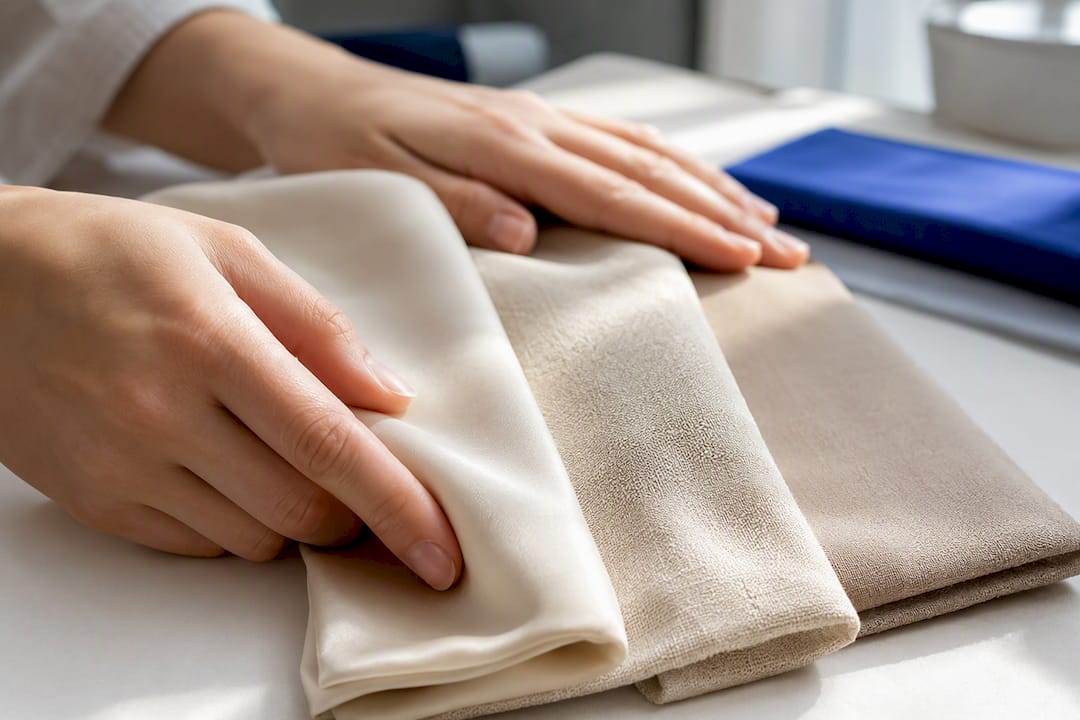
Silk-lined headbands and undercaps consistently come up as the single highest-impact, lowest-effort fix for friction and moisture loss. That’s a meaningful claim given how little effort it takes: swap a synthetic underlayer for a silk-lined one and you’re done.
When shopping for an undercap, look for:
- Bamboo or mesh panels that let the scalp breathe instead of trapping heat.
- A silk or satin lining anywhere the fabric touches your hairline.
- A soft, non-elastic band, or elastic wide enough that it doesn’t dig into your temples or nape.
- A fit that sits snug but never tight enough to leave a red line after you take it off.
Wash inner layers at least weekly, more often if you sweat during the day. A grimy undercap doesn’t just smell bad. It reintroduces the exact oil and bacteria your scalp exfoliation just removed.
How Do You Prevent Traction Alopecia From Hijab Styles?
Traction alopecia doesn’t happen from one tight ponytail. It happens from the same tight ponytail, in the same spot, every day for months. Thinning typically shows up first along the hairline and at the temples, right where elastic bands and pins sit hour after hour.
The fix isn’t complicated: loosen your styles and stop parking the tension in one place.
- Choose loose buns, low ponytails, or soft twists instead of high, tight styles.
- Use silk scrunchies or spiral hair ties instead of thin elastic bands that dig into strands.
- Pick smooth, rounded pins over sharp metal ones that catch and snag fine hair.
- Move your bun placement and part line every few days instead of parting in the same spot daily.
That last point matters more than most people realize. Rotating where you place tension is genuinely easier to stick with than overhauling your whole product routine, and it spreads mechanical stress across different follicles instead of wearing down the same ones repeatedly.
Pro Tip: If you notice a patch of shorter, wispy regrowth right along your hairline, that’s often an early sign of traction stress, not just breakage. Catching it early and loosening your styles for a few weeks usually reverses it before it becomes permanent.
How Often Should You Wash Your Scalp Under a Hijab?
Wash frequency depends on your scalp type, activity level, and climate. Oily scalps and hot climates usually need a wash every two to three days; drier scalps in cooler weather can stretch to once a week without trouble. Over-washing strips the scalp barrier and can actually make oiliness worse.
When you do wash, technique matters more than product:
- Focus shampoo at the roots and massage with fingertips, never nails, to lift oil and buildup without scratching the scalp.
- Rinse completely. Leftover shampoo residue under a covering for hours is a common, overlooked cause of itching.
- Condition only from mid-lengths to ends, keeping it off the scalp entirely.
- Use a clarifying rinse every few weeks if you notice dullness or odor between washes.
Dryness, dandruff, and heightened sensitivity tend to get worse the longer hair stays covered each day, which is why keeping the scalp balanced rather than stripped is the goal, not spotless perfection, per Pearlista’s hijab hair care guide. Crisanbeauty’s guide to natural scalp treatments covers gentler options if your scalp needs extra calming between washes.
See a dermatologist if you notice a scalp that’s painful to the touch, sudden diffuse thinning rather than gradual shedding, or patches that stay red and inflamed for more than a couple of weeks. Those symptoms go beyond what any routine adjustment can fix on its own.
How Do You Choose Hair Products for Hijab-Covered Hair?
Your scalp and your lengths need different things, and buying one product for both is where most routines go wrong.
For the scalp, look for gentle surfactants and calming botanical ingredients rather than anything heavy or fragranced. For lengths, humectants like glycerin and hyaluronic acid pull moisture in, while lightweight emollients such as squalane and jojoba seal it without weighing hair down, according to Crisanbeauty’s ingredient guidance for scalp health.
Avoid these near the scalp under hours of coverage:
- Heavy butters and thick oils that trap heat.
- Drying alcohols high on the ingredient list.
- Strong fragrances, which irritate a scalp that’s already covered and warm most of the day.
Texture rule of thumb: lightweight serums for daily use, richer masks reserved for weekly treatments on lengths only. When trying something new, introduce one product at a time, patch test it, and give it four to eight weeks before judging results. Hair changes slowly. Judging a product after a week tells you almost nothing.
CRISAN’s Take on Founder-Tested, Plant-Based Hair Care
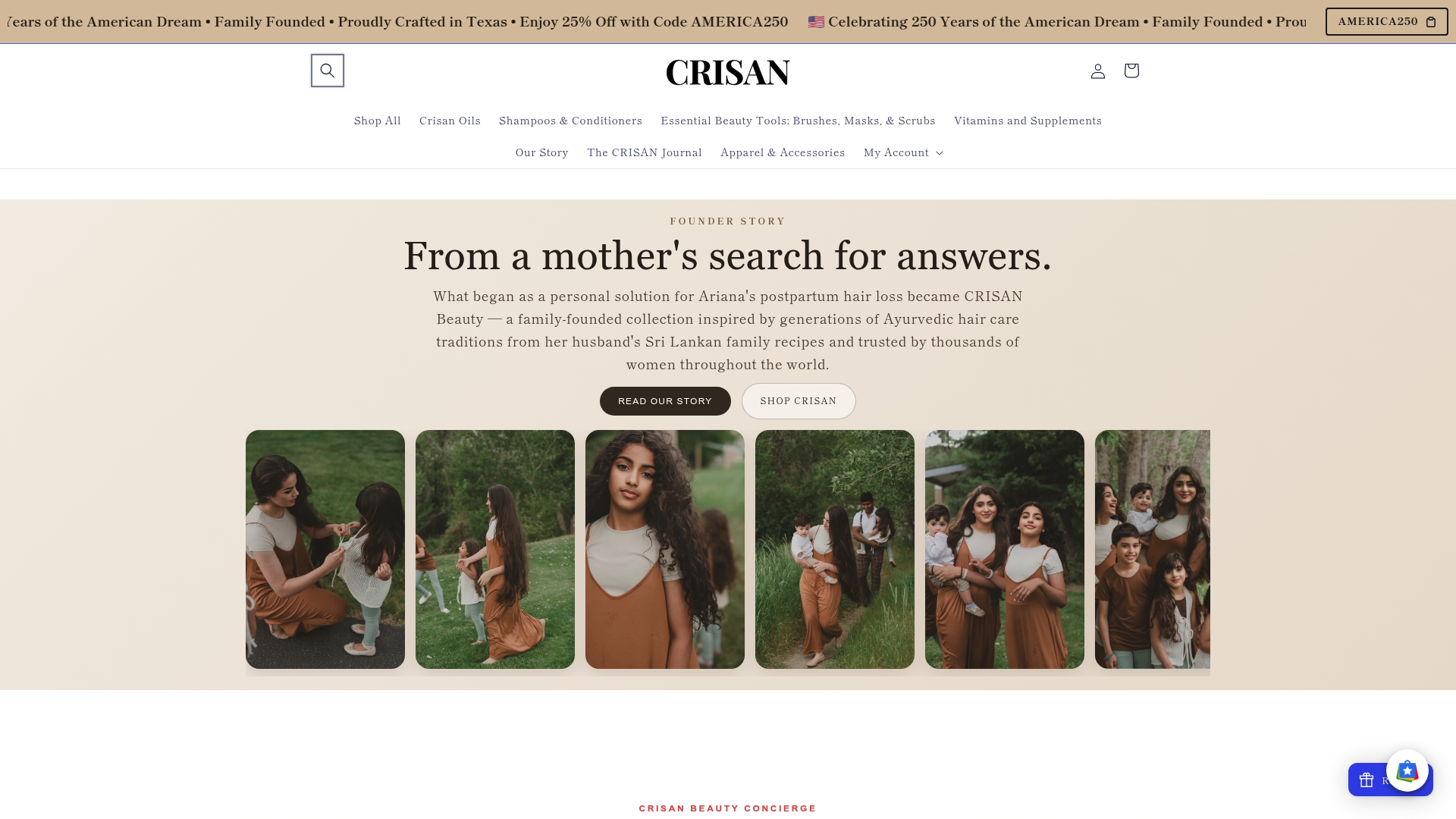
The product line started with a personal problem: postpartum hair loss that no generic routine solved. That experience shaped a focus on plant-based formulas and honest education instead of quick-fix promises, which matters in a space where most hijabi women say they learn hair care from social media rather than dermatology-backed sources.
A hibiscus rinse used once weekly can add slip and shine to mid-lengths without weighing down covered hair, and a light jojoba pre-wash applied 20 minutes before shampooing helps loosen buildup without stripping natural oils from the scalp.
Both fit easily into the weekly schedule already outlined above. For readers who want more detail, Crisanbeauty’s guide to scalp-nourishing herbs breaks down timing and application for several plant-based options.
How Should You Protect Your Hair While Sleeping in a Hijab?
Sleep is where a lot of quiet damage happens, because hair keeps rubbing against a pillowcase or sleep cap for seven or eight hours straight. Cotton pillowcases are rough on hair cuticles the same way synthetic scarves are rough during the day, so switching to a silk or satin pillowcase gives you the same friction reduction overnight that a silk undercap gives you during the day.
Before bed, take down any tight daytime style completely. Sleeping in the same bun you wore all day just adds nighttime hours of tension on top of daytime hours, doubling the mechanical stress on the same strands. Instead, loosely braid your hair or gather it into a soft, low pineapple style at the crown, using a silk scrunchie rather than a standard elastic.
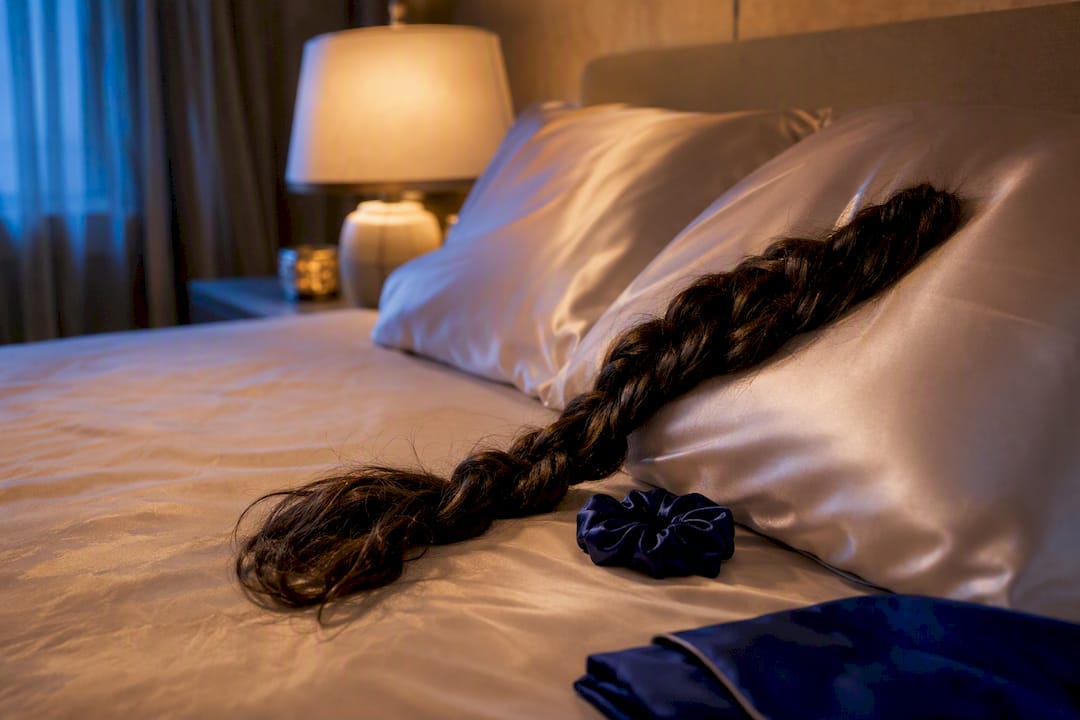
If your hair is prone to dryness, this is also a good moment to apply a small amount of lightweight leave-in or a few drops of oil to just your ends, never your scalp, since overnight is long enough for a light product to fully absorb. Some women wear a silk bonnet or a silk-lined sleep cap specifically to protect their style and lock in moisture without needing a full wash the next morning.
If you tend to move around a lot in your sleep, a silk pillowcase does double duty by protecting hair even when a bonnet slips off partway through the night. The two-minute nighttime routine, take the style down, apply a little product to the ends, protect with silk, prevents more breakage than almost any daytime product change.
How Do You Part and Section Hair to Avoid Stress Under a Hijab?
The same part line every single day is a quiet source of long-term thinning, because it puts consistent pressure and light stretching on one narrow strip of scalp for months or years at a time. Moving your part is one of the easiest changes with real payoff.
Try alternating between a center part, a slight side part, and a deeper side part across the week. If you wear your hair in a bun most days, rotate the bun’s position slightly, center one day, a bit left the next, a bit right after that, so the pulling force lands on different follicles instead of the exact same ones.
Sectioning matters too when you’re braiding or twisting before covering. Wide, loose sections put far less tension on the scalp than thin, tightly gathered ones. If you braid for texture or to keep hair contained under your hijab, aim for two or three big, loose sections instead of five or six tight ones.
This is a low-effort change with outsized results: a rotation strategy for parting and bun placement is often easier for people to stick with long-term than overhauling an entire product routine, because it takes no extra time and no new purchases. It simply means paying attention to where your fingers naturally go each morning and consciously choosing differently.
How Do You Prevent Breakage From Hijab Pins and Accessories?
Pins are convenient and also one of the most common, most overlooked causes of small daily breakage. A sharp metal pin catches on strands every time it’s inserted or removed, and over months that adds up to visible thinning right at the pin’s usual placement.
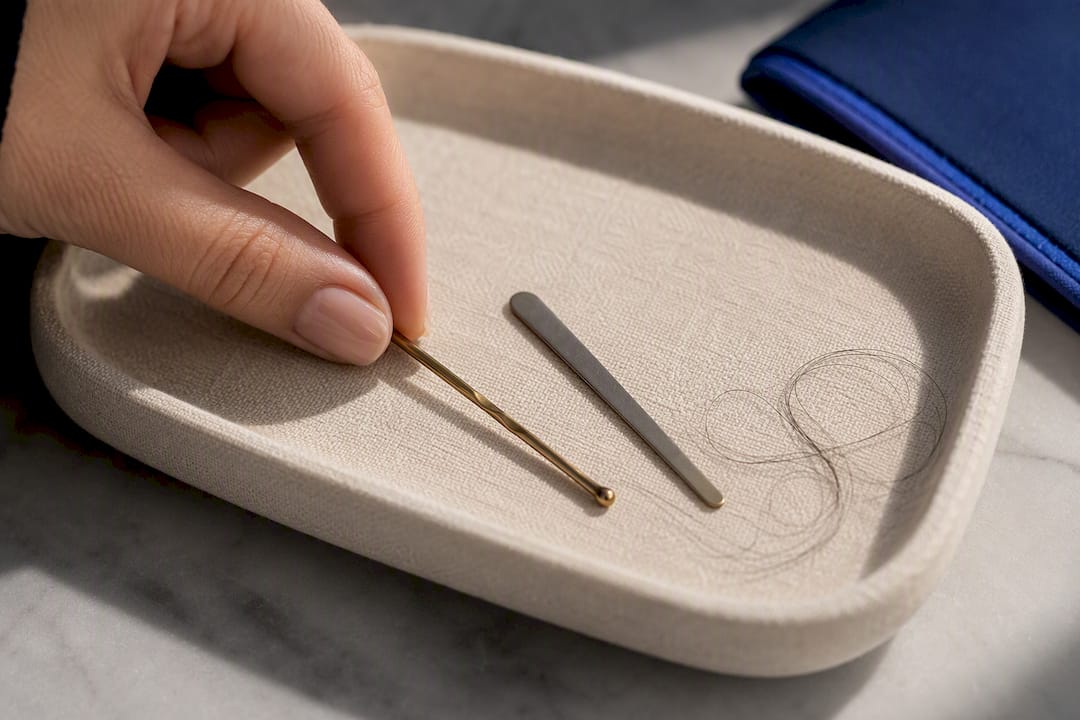
Switch to pins with rounded, smooth tips or silicone-coated ends wherever possible. Flat, wide pins distribute pressure across more hair than thin, sharp ones, which cuts down on the snagging that causes split ends and breakage near your part line.
The same logic applies to hair ties. A hijab pin combined with a thin rubber-band-style tie underneath is a common combination, and it’s rough on hair in two spots at once. Silk scrunchies or spiral coil ties reduce breakage significantly compared with standard elastics, because they grip fabric and hijab fabric alike without gripping and pulling individual strands.
A few habit changes go a long way:
- Insert pins into fabric layers, not directly against the scalp or hairline.
- Remove pins slowly, in the direction they went in, instead of pulling them straight out.
- Replace ties and pins the moment they show fraying, rust, or bent edges.
- Keep a small stash of backup pins and ties so you’re never reaching for a damaged one out of convenience.
How Should You Adjust Hijab Hair Care by Season?
Humidity and sweat change what your hair and scalp need month to month, and a routine that works in January often falls apart by July.
In hot, humid weather, sweat and moisture build up under a covering faster, which means more frequent washing, a lighter hand with leave-in products, and more attention to undercap laundering, sometimes every two or three days instead of weekly. Lightweight, water-based leave-ins work better than richer creams in this weather because heavy products mixed with sweat under a hijab tend to feel greasy and can clog follicles faster.
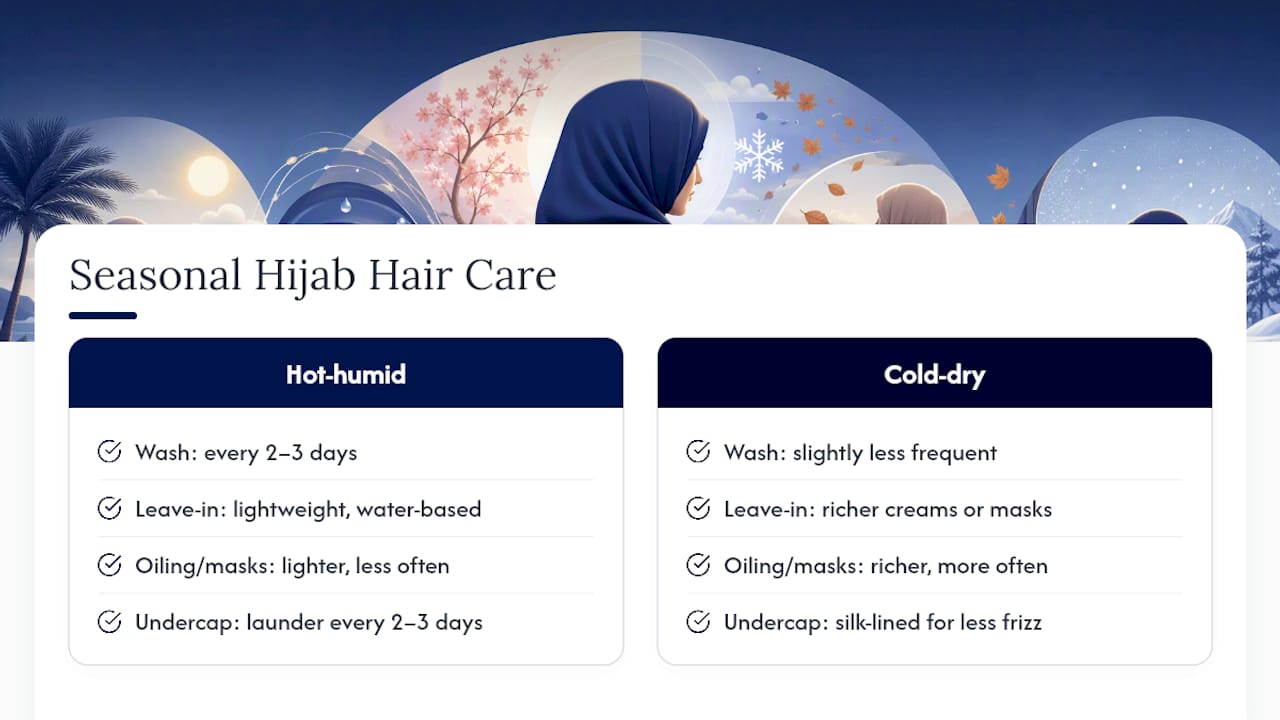
Cold, dry weather flips the problem. Indoor heating and cold outdoor air both pull moisture out of hair, so this is when richer masks, more frequent oiling, and a slightly less frequent wash schedule tend to serve hair better. Static and flyaways also increase in dry air, which is where a silk-lined undercap earns its keep twice over, reducing both friction and the frizz that comes with low humidity.
If you’re active, whether that’s exercise, a physical job, or just a hot commute, sweat is the variable to watch regardless of season. Rinsing the scalp with water alone between full washes, drying thoroughly before re-covering, and swapping to a fresh undercap after heavy sweating all matter more than which specific products sit on your shelf.
A Realistic Way to Think About Caring for Hair Under Your Hijab
Real change here comes from small, repeated habits, not a dramatic overhaul you try for a week and abandon. Pick one change from this guide, rotating your bun placement, switching to a silk undercap, adding a weekly mask, and give it a few weeks before adding another.
Hijab-specific guidance exists because generic hair advice often ignores the actual conditions covered hair deals with: hours of trapped warmth, repeated friction, and styles built around anchoring fabric rather than just looking good. That gap is exactly why routines built around real hijabi experience, not generic hair advice, matter so much. You don’t need a perfect routine. You need one that fits how you actually live and cover your hair.
— CRISAN
How CRISAN Products Fit Into Your Hijab Hair Care Routine
Once you’ve got the habits down, the right products just support what you’re already doing, they don’t replace it. Crisanbeauty’s Ayurvedic hair growth oil is built for exactly the weekly pre-wash treatment described earlier: apply it to lengths and mid-lengths, let it sit under a warm towel, then wash it out before your regular shampoo.
For daily care, a lightweight leave-in on the ends keeps hair hydrated without weighing it down under a covering, and Crisanbeauty’s daily hair vitamins round out the routine from the inside, supporting hair health systemically rather than just topically. All of it is formulated with plant-based ingredients and manufactured in the USA, a detail that traces back to Crisanbeauty’s own founder navigating postpartum hair loss and wanting real answers instead of vague promises.
If you’re building your routine from scratch, start with one product tied to one habit, the pre-wash oil paired with your weekly mask night is the easiest place to begin. Browse Crisanbeauty’s full lineup to find the pieces that match where your hair needs the most support right now.
Sources
- Incidence of hair loss concerns in women who wear the hijab (International Journal of Women’s Dermatology)
- A guide to hair care for hijabis (Vogue Arabia)
- The ultimate hijab hair guide to tackle hair loss and friction (Stylist)
- 4 Muslim Women Share Their Hair-Care Routines While Wearing Hijab (Coveteur)


