


Hot oil treatments reliably add moisture, smooth the cuticle to boost shine, and reduce frizz, and they can ease dry-scalp flakes when done safely. The catch: this is temporary sealing, not permanent repair, so it works best as regular maintenance rather than a one-time fix.
- Locks in moisture and softens strands
- Seals the cuticle for more shine, less frizz
- Loosens buildup and dry flakes on the scalp
- Wears off between applications, so consistency matters
- Keep the oil warm, never hot, to protect your scalp
Key Takeaways
Hot oil treatments deliver real, measurable benefits for moisture, shine, and scalp health, but the effect is maintenance, not permanent repair.
| Point | Details |
|---|---|
| Moisture and shine | Warmed oil coats the cuticle, sealing in moisture and smoothing the surface for shine and less frizz. |
| Coconut oil for damage | Coconut oil’s low molecular weight lets it penetrate the shaft and reduce protein loss during washing. |
| Scalp relief is real | Pre-wash oiling loosens dry scales and buildup, making the following shampoo more effective. |
| Safety comes first | Keep oil warm, not hot, test on your wrist, and dilute essential oils to about 1% for scalp use. |
| Crisanbeauty offers formulated blends | Crisanbeauty’s Ayurvedic Hair Growth Oil delivers pre-diluted, lab-tested ratios for thinning or textured hair. |
Table of Contents
- What Is a Hot Oil Treatment and How Does It Work?
- What Are the Real Benefits of Hot Oil Treatment?
- Which Hair Types Benefit Most From Hot Oil?
- Is a Hot Oil Treatment Safe for Everyone?
- What Is the Best Oil for a Hot Oil Treatment?
- How Do You Do a Hot Oil Treatment at Home?
- How Often Should You Do Hot Oil Treatments?
- What Does Crisanbeauty Recommend for Hot Oil Treatments?
- Our Take: What the Evidence Actually Supports
- Skip the Guesswork With a Formulated Blend
- Where to Read More on Hot Oil Treatments
- Frequently Asked Questions
- Sources
What Is a Hot Oil Treatment and How Does It Work?
A hot oil treatment means warming a plant oil, coconut, jojoba, argan, or a blend, and working it through damp or dry hair and scalp before rinsing. The warmth thins the oil slightly, which helps it spread and coat the hair shaft more evenly than cold oil would.
That coating is what does the real work. Oil molecules fill in rough spots on the cuticle, the hair’s outer layer, smoothing it down so light reflects more evenly and strands snag less on each other. Heat may help the oil move across the cuticle’s surface a bit more efficiently, though experts note the evidence that heating actually improves penetration is limited.
- Oil coats and smooths the cuticle layer
- Heat aids spreadability more than proven penetration
- Results fade with washing, so it’s maintenance, not restoration
What Are the Real Benefits of Hot Oil Treatment?
The benefits are specific and measurable, not vague marketing promises. Each one traces back to a distinct mechanism, and knowing which is which helps you set realistic expectations.
Moisture retention comes first. Warmed oil coats the strand and slows water loss, which is why hair feels softer and looks glossier right after treatment. That same coating action is what seals the cuticle and reduces frizz, since a smoother surface means less static and less flyaway.
Protein loss reduction is where the science gets more specific. Coconut oil has a low molecular weight that lets it penetrate the hair shaft and reduce protein loss during washing and grooming, one of the few oils with meaningful evidence behind this claim. Peer-indexed research on oil interactions with hair protein backs up why this matters for strength and manageability over time, especially for hair that’s already porous or chemically treated.
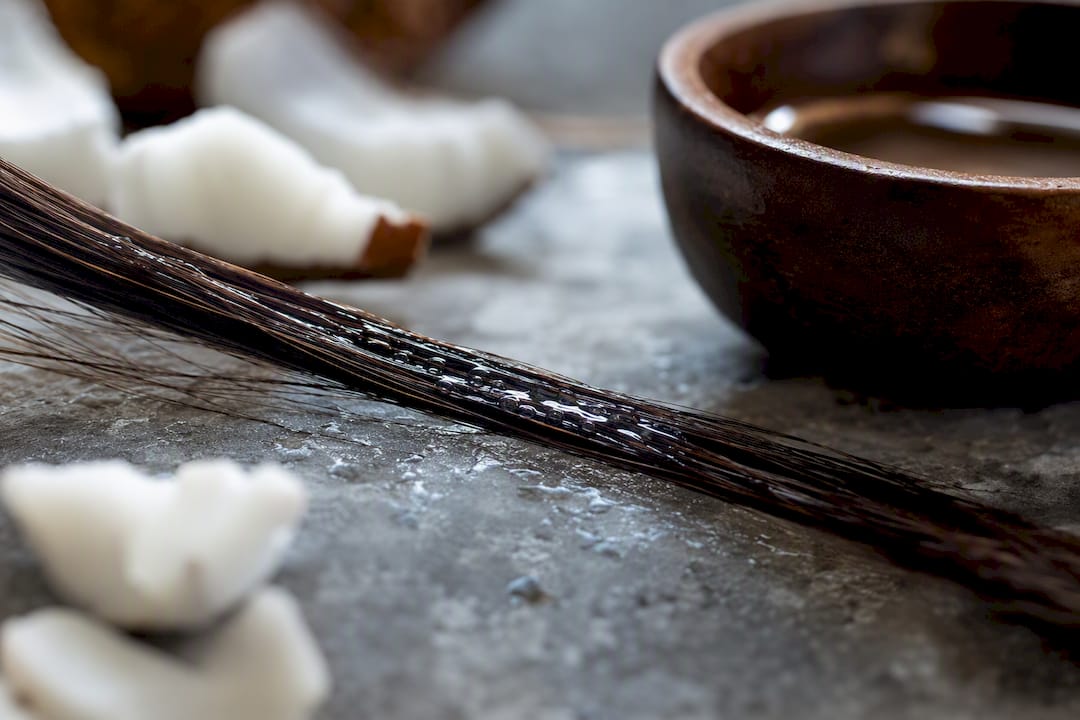
Pro Tip: If your hair snaps easily when wet or feels like cotton candy when dry, that’s a protein-loss signal. Coconut oil treatments address that specific issue better than most other oils.
Scalp relief is the most underrated benefit. Pre-wash oiling can dislodge dry scales and loosen product buildup, which makes the shampoo step that follows far more effective at actually cleaning the scalp instead of just cleaning the hair.
Many adults report chronic dry scalp symptoms that can respond to pre-wash oiling protocols, according to dermatology-backed guidance on the practice.
Hair growth claims deserve a caveat. Massaging warm oil into the scalp may temporarily boost circulation, but no reliable evidence ties hot oil treatments to new hair growth. Treat any growth claim with skepticism until it’s backed by something more than anecdote.
Which Hair Types Benefit Most From Hot Oil?
Textured, curly, and coily hair patterns benefit the most because their spiral shape makes it harder for natural scalp oils to travel down the shaft. That leaves ends chronically drier and more prone to breakage, which is exactly what hairstylists point to when explaining why textured hair needs more oiling support than straight hair does. High-porosity hair, the kind that absorbs moisture fast but loses it just as quickly, also responds well.
Run this quick checklist before you commit to a routine:
- Porosity check: Drop a clean strand in water. If it sinks fast, you’re high porosity and a good candidate.
- Scalp oiliness: If your scalp gets greasy within a day of washing, favor lighter oils like jojoba or skip scalp application entirely.
- Recent chemical work: If you’ve colored, relaxed, or permed within the last two weeks, wait before adding oil treatments to avoid uneven absorption.
- Thinning or shedding: If you’re experiencing active hair loss, talk to a dermatologist before starting any new oiling routine.
Is a Hot Oil Treatment Safe for Everyone?
Safety issues with hot oil treatments almost always come down to heat and dilution, not the oils themselves. Get those two things right and the risk drops close to zero.
- Warm the oil gently and always test it on the inside of your wrist before it touches your scalp.
- Never microwave oil in a sealed container; hot spots can form and burn skin without warning.
- Dilute any essential oil add-ins to roughly 1% or less for scalp use, and patch-test on your inner arm 24 hours ahead; for guidance on using essential oils safely, see rosemary oil for hair: grow and strengthen naturally.
- Skip treatments on an inflamed, actively flaking psoriasis-prone scalp, or during a flare of an existing scalp condition, without a dermatologist’s guidance.
- Rinse thoroughly. Leftover oil turns into buildup that weighs hair down and dulls shine over time.
Pro Tip: Warm oil in a glass jar set inside a bowl of hot water, the classic double-boiler method. It heats evenly and you control the temperature the entire time.
What Is the Best Oil for a Hot Oil Treatment?
The right oil depends on your hair’s porosity and your scalp’s oil production, not just what’s trending.
Coconut oil has the strongest evidence behind it. Its molecular structure lets it penetrate the shaft and prevent protein loss, making it a solid pick for porous, damaged, or color-treated hair. Jojoba oil mimics natural sebum closely enough that it absorbs without heaviness, so experts often recommend it for oil-prone scalps that coconut oil would weigh down.
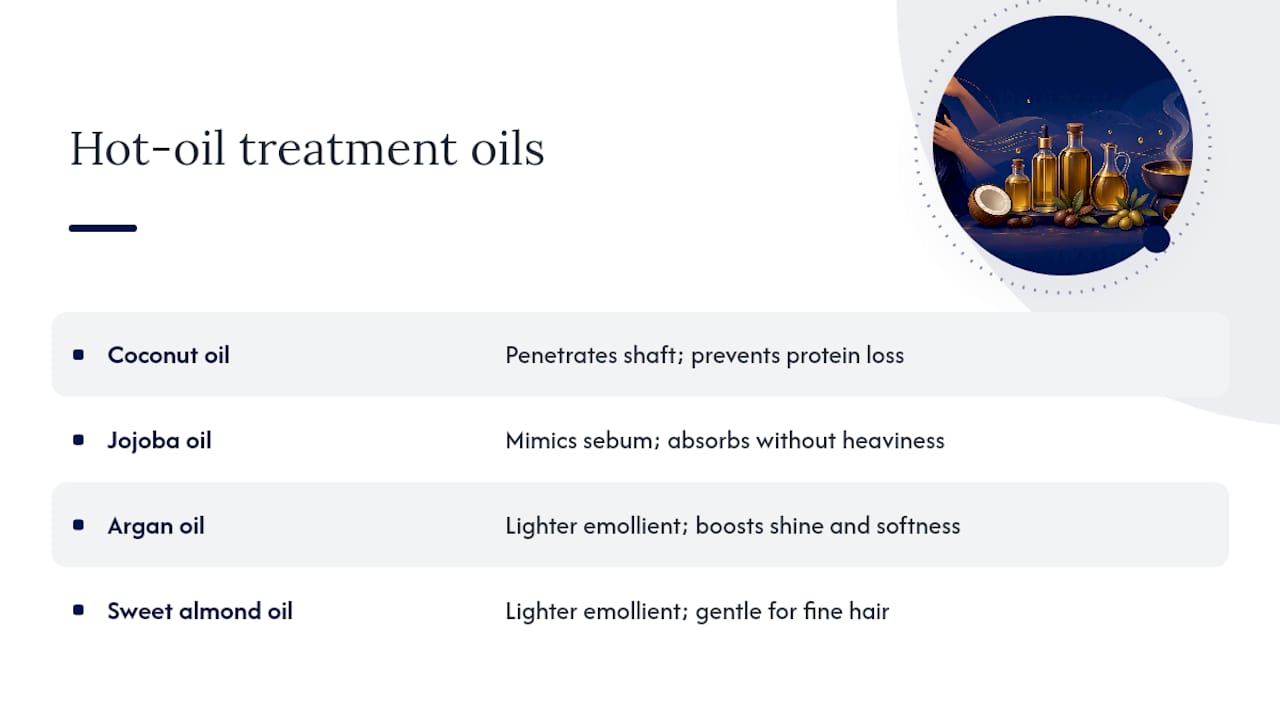
Argan and sweet almond oil sit in the middle. Both are lighter emollients that boost shine and softness without coconut’s deeper penetration, which makes them a gentler starting point for fine or fragile hair. If you’re blending oils, start with a light carrier and add heavier oils gradually. A breakdown of what each oil does at the ingredient level makes it easier to match oil to hair type instead of guessing.
How Do You Do a Hot Oil Treatment at Home?
Getting this right is less about the oil and more about sequence and timing.
- Start with clean, damp hair. Applying to freshly washed strands lets the oil absorb instead of sitting on top of old product residue.
- Warm the oil safely. Use the double-boiler jar method and test on your wrist. It should feel warm, never hot.
- Section your hair. Work the oil into the scalp first with circular fingertip massage, then pull the remainder through mid-lengths and ends.
- Cover and wait. A shower cap traps warmth. Fifteen to thirty minutes is typical; a hooded dryer speeds absorption if you have one.
- Rinse thoroughly. Double-shampoo or use a clarifying shampoo if oil residue remains after the first wash.
Pro Tip: Applying oil to damp, slightly open cuticles helps textured or high-porosity hair absorb more than applying to bone-dry strands does.
How Often Should You Do Hot Oil Treatments?
Once a week works for most dry or textured hair; every other week suits normal or fine hair that doesn’t need heavy intervention. Judge frequency by feel: if ends still feel rough a few days after treatment, move to weekly. If hair feels heavy or your roots look greasy sooner than usual, pull back.
- Weighed-down strands and limp roots signal overuse.
- Reduced curl definition or slipping styles often means buildup, not dryness.
- A clarifying wash resets things if you overshoot the schedule.
What Does Crisanbeauty Recommend for Hot Oil Treatments?
Crisanbeauty was built after a personal struggle with postpartum hair loss, which shapes how we think about oil treatments: as consistent maintenance, not a miracle fix. Every formula is manufactured in the USA with plant-based ingredients chosen for a reason, not for trend appeal.
Textured hair needs oils that actually reach the scalp and shaft, not just sit on the surface. That’s the standard we formulate against.
- Dilute essential oil add-ins to safe percentages before scalp contact, detailed here.
- Favor blends built for textured or high-porosity hair over single-note oils.
- Read ingredient labels the way you’d read a supplement label. Transparency should be the default, not the exception.
Our Take: What the Evidence Actually Supports
The evidence for hot oil treatments is stronger than skeptics assume and weaker than marketing suggests, which puts most of the useful truth in the middle. Moisture retention and cuticle sealing are well supported. Coconut oil’s protein-loss reduction has real research behind it. Scalp-buildup relief is dermatologist-backed and probably underused as a benefit. What’s not supported: any claim that hot oil “repairs” damaged hair at a structural level, or that it grows new hair.
Conventional advice tends to blur these lines, treating hot oil as a cure-all rather than a maintenance tool. That’s where most people go wrong. They expect one treatment to undo months of heat damage or chemical processing, get disappointed, and quit before the cumulative benefit shows up.
Prioritize consistency over intensity. A modest, weekly oiling routine with the right oil for your hair’s porosity will outperform an occasional, oil-drenched treatment done sporadically. Match the oil to your actual scalp and hair behavior, not to what influencers are using, and treat the scalp benefit as seriously as the shine benefit. It’s usually the one people skip.
Skip the Guesswork With a Formulated Blend
DIY hot oil treatments work, but measuring, diluting, and warming raw oils correctly every single week is where most people give up. Crisanbeauty’s Ayurvedic Hair Growth Oil solves that by pre-blending plant oils at safe, tested ratios, so you get the coconut oil penetration and scalp relief benefits without measuring drops of essential oil into a jar every time.
A productized oil makes the most sense when you want lab-tested consistency instead of trial-and-error blending, especially if you’re managing thinning hair or a sensitive scalp where dilution mistakes matter. Every Crisanbeauty formula is manufactured in the USA with ingredient transparency built in from the start, not added after the fact. If you’re ready to trade guesswork for a formulated routine, visit the Ayurvedic Hair Growth Oil page and start your next treatment with a blend already calibrated for thinning or damaged hair.
Where to Read More on Hot Oil Treatments
For readers who want to go deeper into the research and safety guidance behind this article:
- Healthline’s overview covers cuticle sealing, shine, and temperature safety in detail.
- Prevention’s breakdown explains coconut oil’s protein-loss evidence and scalp benefits.
- PubMed’s indexed research offers the clinical grounding behind oil and hair-protein interactions.
- Byrdie’s step-by-step guide gives practical application and washout tips from stylists.
Frequently Asked Questions
Do hot oil treatments actually repair damaged hair? Not structurally. They seal the cuticle and add moisture, which improves how damaged hair looks and feels, but they don’t rebuild broken bonds the way a keratin treatment does.
How long do hot oil treatment results last? Most people notice softness and shine fading within three to seven days, depending on wash frequency and hair porosity, which is why weekly or biweekly repetition matters more than one intense session.
Can hot oil treatments help with dandruff? They can help with dry-flake dandruff by loosening scales before shampooing, but they aren’t a treatment for fungal dandruff or active scalp conditions, which need targeted care.
What’s the best oil for a hot oil treatment on fine hair? Jojoba or a light argan blend works best on fine hair since coconut oil’s deeper penetration can feel heavy on finer strands.
Sources
- Hot Oil Treatment for Hair: Benefits and How to Do It Yourself
- Hot Oil Treatment for Hair: Benefits, Risks, and How to DIY
- How To DIY a Hot Oil Treatment for Hair, According to Pros
- PubMed entry related to oil/hair interactions


