


Overnight hair oiling works well for dry, damaged, textured, or color-treated hair, but it can backfire on oily or fine scalps. The Cleveland Clinic and Verywell Health both note that oil coats the hair shaft to lock in moisture overnight, which is why Crisanbeauty recommends it as a weekly, not daily, treatment. The one rule that matters most: wash it out completely the next morning.
TL;DR:
- Overnight oiling mainly benefits dry, damaged, or textured hair by reducing moisture loss and friction, but it offers no speed-up in hair growth.
- Oiling can cause scalp issues such as acne, folliculitis, or fungal infections, especially for those with oily skin or active scalp conditions, if left on for over eight hours.
- Applying a small amount of oil to mid-lengths and ends, warming it first, and washing out thoroughly in the morning minimizes buildup and scalp risks.
- Lighter oils like jojoba and argan are better for fine or low-porosity hair, while coconut or castor oils suit thicker, damaged hair, with formulated blends removing trial-and-error.
- Limit overnight treatments to a few times a week, and always wash out completely to avoid residue, irritation, or breakouts, especially if scalp or skin shows sensitivity.
Table of Contents
- What Does Overnight Oiling Actually Improve?
- Can Overnight Hair Oil Cause Scalp Problems?
- How Do You Prepare and Apply Oil for an Overnight Treatment?
- How Long Should You Leave Oil in Your Hair Overnight?
- Which Oils Work Best for Overnight Treatments?
- How Do You Wash Out Overnight Hair Oil Properly?
- What Does Crisanbeauty Recommend for Overnight Oiling?
- Integrating Overnight Oiling Into a Real Routine
- Should You Try a Formulated Overnight Oil Blend?
- Sources
- FAQ
What Does Overnight Oiling Actually Improve?
Oil forms a thin barrier around the hair’s outer layer, or cuticle, that limits how much water escapes while you sleep. That barrier also cuts down on the friction between strands that causes tangling and breakage against a pillow. Coconut oil in particular has been shown in peer-reviewed research to penetrate the hair shaft and reduce protein loss, which is a meaningfully different mechanism than oils that simply sit on the surface.
Here’s what a consistent overnight routine realistically delivers:
- Softer, smoother strands from reduced moisture loss overnight
- Less breakage caused by friction against cotton pillowcases
- Reduced frizz and easier detangling the next morning
- Noticeably improved manageability for curly or coarse textures
What it will not do is speed up hair growth at the follicle. Oiling protects the hair you already have and improves how it behaves. That is a real benefit, just not the same claim as growing hair faster, and it is worth knowing the difference before you judge results.
Can Overnight Hair Oil Cause Scalp Problems?
Yes, for some people. Oil left on the scalp for eight or more hours can clog pores, especially for anyone with naturally oily skin. That buildup can lead to scalp acne, folliculitis (inflamed hair follicles that look like small red bumps), or a flare of fungal overgrowth that makes flaking and itching worse.
Pillow transfer is the part people overlook. Oil migrates from your hairline onto your pillowcase and back onto your forehead and temples overnight, which is a common, under-discussed cause of breakouts along the hairline according to reporting on hair oiling risks.
Higher-risk groups include:
- People with oily or acne-prone skin, especially along the forehead and temples
- Anyone with active dandruff, seborrheic dermatitis, or eczema on the scalp
- People with sensitive or reactive skin who react to plant oils or fragrance additives
If you notice redness, new breakouts, or persistent itching after an overnight session, stop oiling immediately, shampoo thoroughly, and see a dermatologist if symptoms don’t clear within a few days. That single step avoids most of the complications tied to overnight oiling.
How Do You Prepare and Apply Oil for an Overnight Treatment?
A little goes further than most people expect, and application order matters more than the oil itself. Follow these steps:
- Patch test first. Apply a small amount to your inner arm or a small scalp section 24 hours before a full treatment if you’re using a new oil, especially one with essential oils added.
- Decide where oil is needed. Dry ends need more attention than an already-balanced scalp. If your scalp tends toward oily, skip it entirely and focus on mid-lengths to ends.
- Measure your amount. Start with 1 to 2 tablespoons for shoulder-length hair. You can always add more; you can’t easily undo an oversaturated head of hair.
- Warm the oil slightly. Rub it between your palms or set the bottle in warm water for a minute. Warm oil spreads more evenly and feels more pleasant on contact.
- Detangle and section. Comb through knots first, then divide hair into four sections so oil reaches every layer.
- Apply mid-lengths to ends first, working any remainder conservatively toward the scalp only if it’s dry.
- Massage for two to four minutes. This distributes the product and can feel genuinely relaxing before bed.
- Protect your pillow. A silk scarf, bonnet, or silk pillowcase keeps oil off your linens and cuts down on the friction that causes breakage in the first place.
- Wash out in the morning using the shampoo-on-dry-hair method described below.
Pro Tip: Apply oil at least an hour before bed if you can manage it, so most of the initial absorption happens while you’re still upright and not against a pillow.
How Long Should You Leave Oil in Your Hair Overnight?
A practical duration is several hours (about one sleep cycle) for most oils. Research on timing by oil weight suggests lighter oils need far less contact time (often 30 to 90 minutes) while heavier oils justify a full overnight stretch. Past 8 to 12 hours, the conditioning benefit levels off, and the extra time mostly just increases your risk of buildup and pillow transfer.
Frequency depends on your hair and scalp type:
- Dry, damaged, or curly hair may benefit from occasional overnight sessions
- Normal hair usually requires less frequent treatments
- Fine or oily scalps may find shorter pre-wash sessions preferable to overnight treatments
Pause overnight oiling entirely if you’re dealing with active scalp inflammation, you recently had a chemical or scalp treatment, or you’re still noticing residue after washing from your last session.
Which Oils Work Best for Overnight Treatments?
The right oil depends more on your hair’s density and porosity than on any single ingredient’s reputation. Lighter oils like jojoba, argan, or grapeseed absorb faster and are less likely to weigh down fine or low-porosity hair, which is exactly the texture most prone to looking flat after an overnight session.
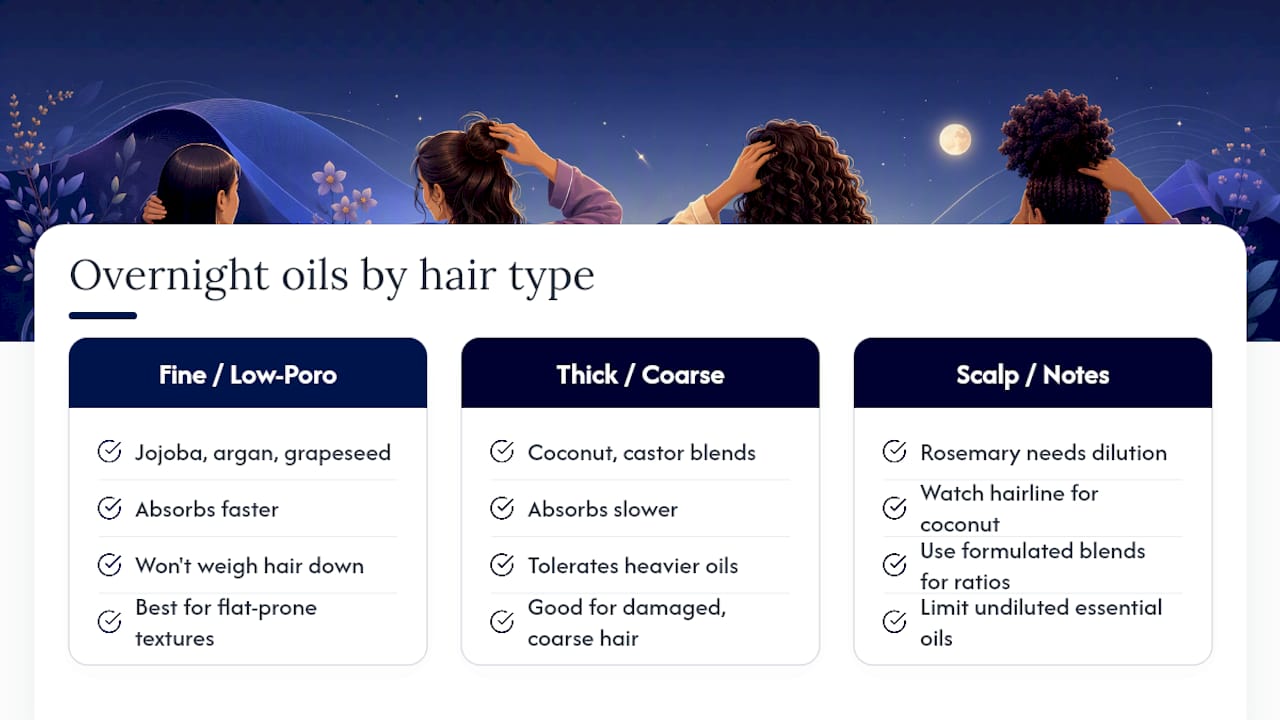
Thicker, coarser, or more damaged hair generally tolerates heavier oils better. Coconut oil and castor oil blends are common choices here, though coconut oil has a known comedogenic tendency on some skin types, so it’s worth watching your hairline for breakouts if you use it near the scalp.
Rosemary essential oil mixed into a carrier oil has become popular for scalp use, but the evidence behind its growth claims is limited and it must be properly diluted to avoid irritation. This is often where a formulated blend earns its place: a product built with multiple botanicals in tested proportions removes the guesswork of mixing your own dilution ratios. For deeper background on choosing between single oils, the Crisanbeauty Journal’s guide to hair strengthening oils breaks down ingredient roles in more detail.
How Do You Wash Out Overnight Hair Oil Properly?
Getting oil out completely takes more than one quick rinse. Follow this sequence:
- Shampoo on dry hair first. Apply shampoo directly to dry, oiled strands before adding any water. This breaks down the oil far more effectively than wetting hair first.
- Rinse with warm water, then shampoo a second time if hair still feels coated or greasy.
- Use a clarifying shampoo occasionally, especially if you notice a dull film building up after several sessions.
- Condition mid-lengths and ends only, skipping the scalp to avoid adding back the oiliness you just washed out.
- Skip heavy styling products the same day and reduce your oil amount next time if greasiness lingers past midday.
See a dermatologist if you notice persistent folliculitis, dandruff that keeps worsening despite washing, or any open sores near the hairline. Those symptoms go beyond what a routine adjustment can fix on its own.
What Does Crisanbeauty Recommend for Overnight Oiling?
Crisanbeauty was built on Ayurvedic tradition and manufactures every product in the USA, which shapes how we approach a practice as old as overnight oiling itself. Our routine mirrors the caution found in dermatologist guidance: apply conservatively, protect the scalp when it needs less rather than more, and always wash out completely.
- Our recommendation leans on conditioning benefits backed by research, without claims about growth
- We favor mid-lengths-to-ends application over heavy scalp saturation for most hair types
- Readers can go deeper on scalp-specific guidance in our scalp oiling benefits breakdown or our pre-wash oiling routine on the Crisanbeauty Journal
Integrating Overnight Oiling Into a Real Routine
The biggest mistake we see is treating overnight oiling as an all-or-nothing habit instead of something you adjust to your own hair. Start small, watch how your scalp responds over two or three weeks, and change your amount or frequency based on that feedback rather than a fixed rule. Always wash thoroughly the morning after, and check the Crisanbeauty Journal when you want a deeper routine for your specific hair type.
— CRISAN
Should You Try a Formulated Overnight Oil Blend?
If measuring, warming, and diluting single oils feels like more trial and error than you want, a formulated blend solves that problem by doing the ratio work for you. The CRISAN Ayurvedic Hair Growth Oil combines botanical ingredients in set proportions, so you’re not guessing how much rosemary oil is safe to mix into a carrier or whether your blend is too heavy for fine strands.
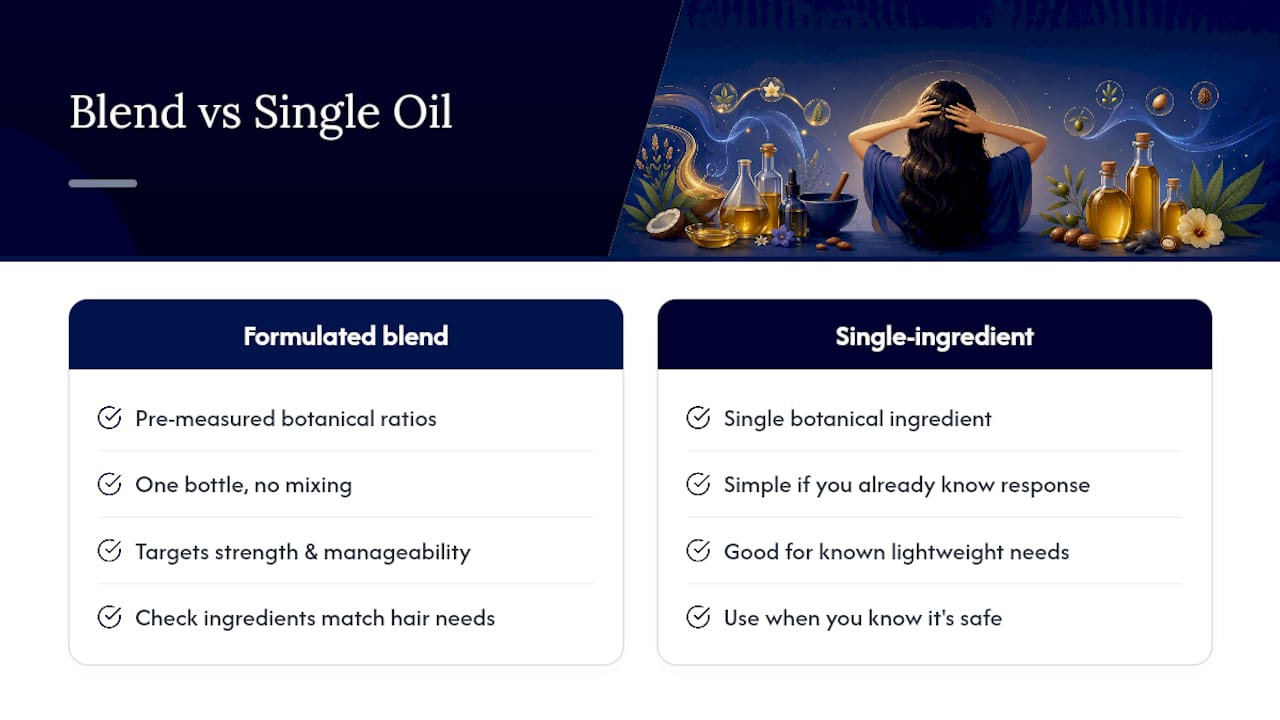
A single-ingredient oil like jojoba or argan still makes sense if you already know your hair responds well to it. But if you want targeted botanicals formulated specifically for strengthening and manageability, without buying three separate bottles and mixing them yourself, a formulated overnight blend is the more practical option. It’s worth checking the Ayurvedic hair growth oil landing page to see whether the ingredient list matches what your hair type needs before your next overnight session.
Sources
- Oiling your hair: Benefits, how to, and precautions (Cleveland Clinic)
- Is Oiling Hair Overnight Good or Bad? (Verywell Health)
- PubMed indexed study related to hair oil penetration and protective effects
- Does leaving oil in your hair overnight help? Know benefits and risks
FAQ
Is It Good to Oil Your Hair Overnight?
It’s generally good for dry, damaged, curly, or color-treated hair because the extended contact time deepens conditioning, but fine or oily hair often sees little benefit and can end up weighed down.
Is It Safe to Use Hair Oil Overnight?
It’s safe for most people when done once or twice a week and washed out completely the next morning, though those with oily skin, active dandruff, or eczema may face a higher risk of scalp acne or irritation.
Is It Okay to Put Oil in Hair at Night?
Yes, nighttime application is actually preferred by many stylists because it gives the oil six to eight hours of uninterrupted contact time, as long as you protect your pillowcase and wash thoroughly in the morning.
What Oil Is Best to Leave in Hair Overnight?
Lighter oils like jojoba or argan suit fine or low-porosity hair, while coconut and castor oil blends work better for thick or coarse, damaged hair; a formulated blend like an Ayurvedic hair oil removes the guesswork of mixing your own ratios.


